Loading...
Done
UEFA,Euro 2012, Warsaw

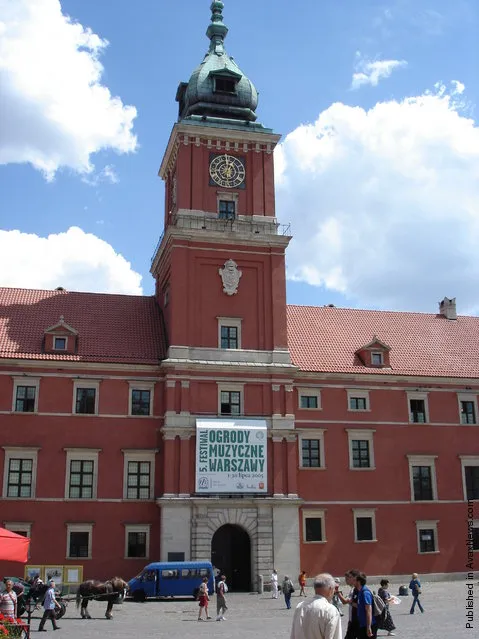
With the entry of Poland into the European Union in 2004, Warsaw is currently experiencing the biggest economic boom of its history. The opening match of UEFA Euro 2012 is scheduled to take place in Warsaw. (Photo by: ryarwood; Source: Flickr)
Details
06 Aug 2011 16:45:00
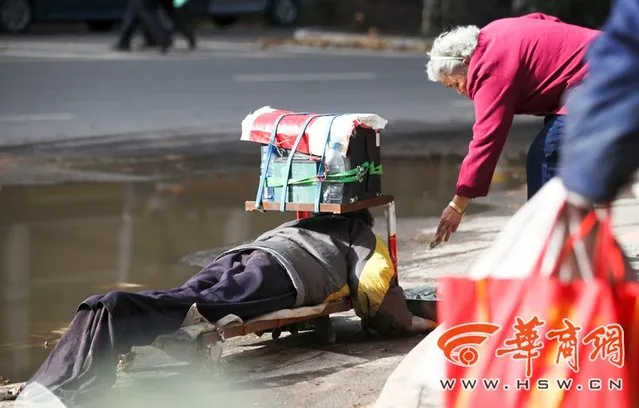
Fake Сrippled In China

Low economic conditions in China’s urban areas have sparked an increase of beggars faking disabilities in an attempt to gain more money. Cities like Shanghai and Hong Kong are littered with naive tourists who are more than willing to hand over a few yen to anyone appearing to be handicapped in anyway.
Details
28 May 2015 06:27:00
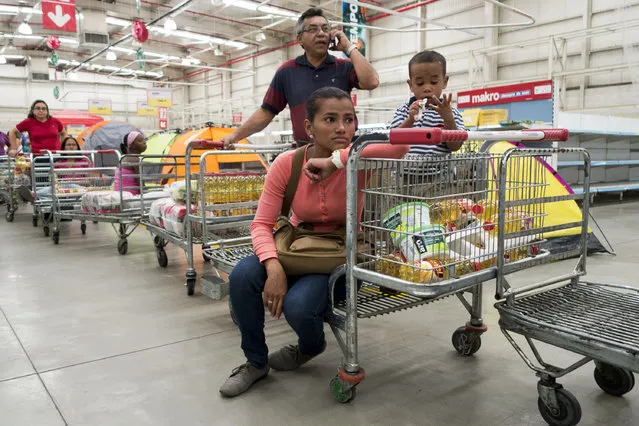
People line up to pay inside a Makro supermarket in Caracas, January 9, 2015. (Photo by Jorge Silva/Reuters)

People line up to pay inside a Makro supermarket in Caracas, January 9, 2015. Venezuela's socialist government decreed an “economic emergency” on Friday that will expand its powers and published the first data in a year that shows the depth of a recession fueled by low oil prices and a sputtering state-led model. (Photo by Jorge Silva/Reuters)
Details
18 Jan 2016 08:03:00
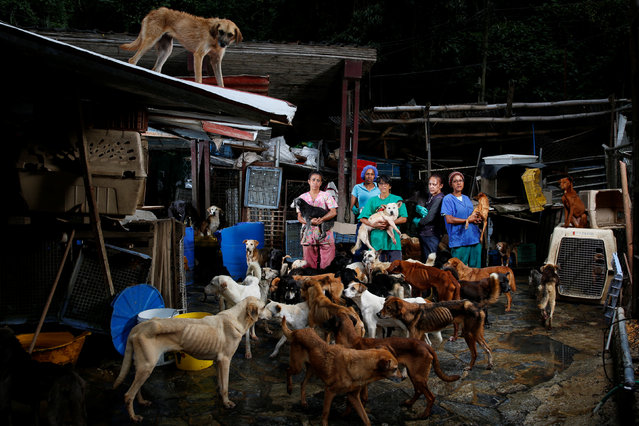
(L-R) Maria Silva, Milena Cortes, Maria Arteaga, Jackeline Bastidas and Gissy Abello pose for a picture at the Famproa dogs shelter where they work, in Los Teques, Venezuela, August 25, 2016. Venezuelans struggling to feed their families let alone their pets are dumping animals on the streets, in parks and at makeshift homes overrun with scrawny animals amid an economic crisis. An hour from Caracas in Los Teques, hundreds of dogs bark and run around the streets scavenging for food outside a makeshift shelter. People come by every few hours to hand over scrawny dogs which are fed by volunteers every day. Venezuela is undergoing a major economic and social crisis, with shortages of basic foods and medicines. Triple digit inflation is hitting everybody hard, including those who own pets. (Photo by Carlos Garcia Rawlins/Reuters)

(L-R) Maria Silva, Milena Cortes, Maria Arteaga, Jackeline Bastidas and Gissy Abello pose for a picture at the Famproa dogs shelter where they work, in Los Teques, Venezuela, August 25, 2016. Venezuelans struggling to feed their families let alone their pets are dumping animals on the streets, in parks and at makeshift homes overrun with scrawny animals amid an economic crisis. An hour from Caracas in Los Teques, hundreds of dogs bark and run around the streets scavenging for food outside a makeshift shelter. (Photo by Carlos Garcia Rawlins/Reuters)
Details
08 Sep 2016 10:01:00
A woman poses next to two mailboxes along a street in Taipei on August 11, 2015 that were reportedly bent by strong winds brought by Typhoon Soudelor over the weekend. The two iron mailboxes have become an unlikely attraction, drawing thousands of snap-happy visitors and have even become a backdrop to a wedding photo shoot. (Photo by Benjamin Yeh/AFP Photo)

A woman poses next to two mailboxes along a street in Taipei on August 11, 2015 that were reportedly bent by strong winds brought by Typhoon Soudelor over the weekend. The two iron mailboxes have become an unlikely attraction, drawing thousands of snap-happy visitors and have even become a backdrop to a wedding photo shoot. The typhoon, which hit in the early hours of August 8 and was billed as the most powerful typhoon this year, uprooted trees, brought down electricity poles, knocking out power to a record 4.3 million households, while leaving eight dead and four missing. (Photo by Benjamin Yeh/AFP Photo)
Details
12 Aug 2015 13:44:00
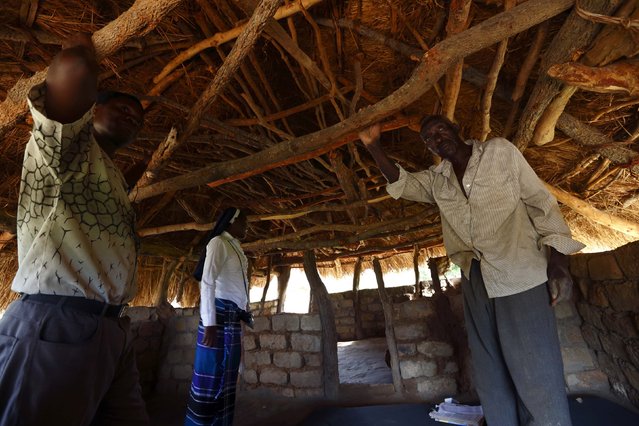
HIV-positive 71-year-old Sylverio Hachiploa (R) talks with caregivers Glandwel Muleya (L) and Sister Abigail Mwaka Mazuba (C) in his thatched hut during a visit by a home-based care team in the village of Nedwmba, south of the Chikuni Mission in the south of Zambia February 23, 2015. (Photo by Darrin Zammit Lupi/Reuters)

HIV-positive 71-year-old Sylverio Hachiploa (R) talks with caregivers Glandwel Muleya (L) and Sister Abigail Mwaka Mazuba (C) in his thatched hut during a visit by a home-based care team in the village of Nedwmba, south of the Chikuni Mission in the south of Zambia February 23, 2015. The caregivers in the Jesuit-run home-based care project at the Chikuni Mission run a capacity-building and empowerment project at the household level, offering training and assistance in crop-growing and animal rearing, as well as offering companionship, pastoral care and monitoring of the antiretroviral treatment compliance of HIV-AIDS patients. (Photo by Darrin Zammit Lupi/Reuters)
Details
25 Feb 2015 09:04:00
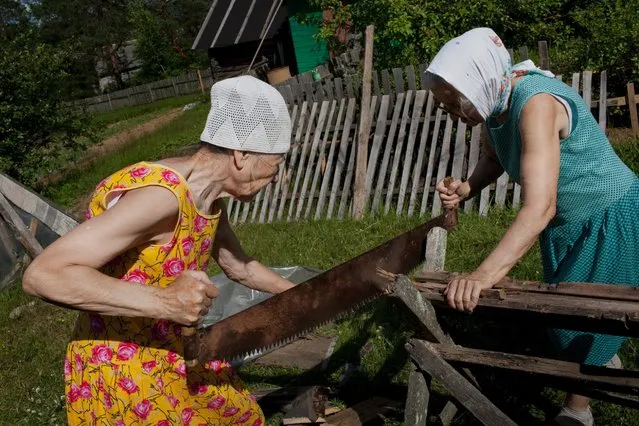
“Two-Handed Saw, 2014”. “Most of the neighbors have switched to power tools to run their households, the buzz of chain saws and weed-whackers overpowering the quieter sounds of country life, but my aunts hold on to the two-handed saw that's decades old, the sickle and scythe that need to be sharpened and polished after each use, the old axe that's becoming heavier each year. Each of these objects is familiar, holding memories of their brother, who succumbed to cancer a few years ago, of days before my grandfather lost his vision in the 50's, of busier days and longer futures”, Sablin told. (Photo by Nadia Sablin)

In northwest Russia, in a small village called Alekhovshchina, Nadia Sablin's aunts spend the warmer months together in the family home and live as the family has always lived, chopping wood to heat the house and making their own clothes. Sablin's book of photographs, “Aunties: The Seven Summers of Alevtina and Ludmila”, is published by Duke University Press. Here: “Two-Handed Saw, 2014”. (Photo by Nadia Sablin)
Details
25 Feb 2016 12:12:00
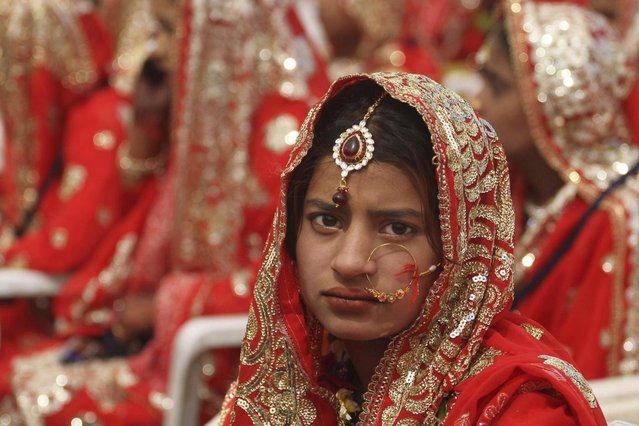
An Indian bride, sits during a mass marriage of 162 Muslim couples in Ahmadabad, India, Sunday, March 3, 2013. Mass marriages in India are organized by social organizations primarily to help the economically backward families who cannot afford the high ceremony costs as well as the customary dowry and expensive gifts that are still prevalent in many communities. (Photo by Ajit Solanki/AP Photo/LaPresse)

An Indian bride, sits during a mass marriage of 162 Muslim couples in Ahmadabad, India, Sunday, March 3, 2013. Mass marriages in India are organized by social organizations primarily to help the economically backward families who cannot afford the high ceremony costs as well as the customary dowry and expensive gifts that are still prevalent in many communities. (Photo by Ajit Solanki/AP Photo/LaPresse)
Details
04 Mar 2013 12:07:00