Loading...
Done
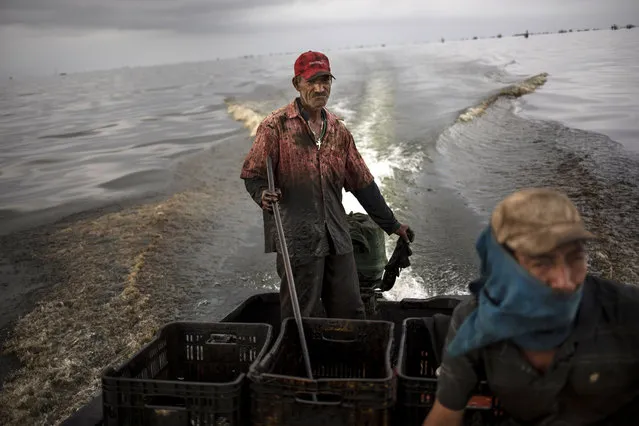
Fisherman Jose Miguel Perez, whose nickname is “Taliban”, navigates the oil infested waters of Lake Maracaibo, near Cabimas, Venezuela, May 21, 2019. Nobody lives as closely with the environmental fallout of Venezuela's collapsing oil industry as the fishermen who scratch out an existence on the blackened, sticky shores of Lake Maracaibo. (Photo by Rodrigo Abd/AP Photo)

Fisherman Jose Miguel Perez, whose nickname is “Taliban”, navigates the oil infested waters of Lake Maracaibo, near Cabimas, Venezuela, May 21, 2019. Nobody lives as closely with the environmental fallout of Venezuela's collapsing oil industry as the fishermen who scratch out an existence on the blackened, sticky shores of Lake Maracaibo. (Photo by Rodrigo Abd/AP Photo)
Details
26 Nov 2019 00:03:00
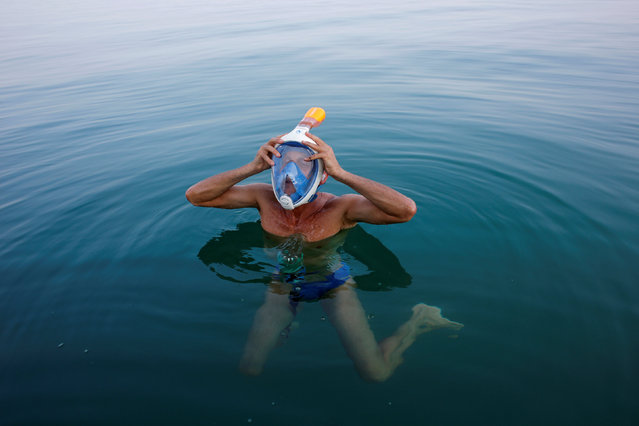
An environmental activist adjusts his mask while taking part in “The Dead Sea Swim Challenge”, swimming from the Jordanian to Israeli shore, to draw attention to the ecological threats facing the Dead Sea, in Kibbutz Ein Gedi, Israel November 15, 2016. (Photo by Nir Elias/Reuters)

An environmental activist adjusts his mask while taking part in “The Dead Sea Swim Challenge”, swimming from the Jordanian to Israeli shore, to draw attention to the ecological threats facing the Dead Sea, in Kibbutz Ein Gedi, Israel November 15, 2016. Swimmers from around the world plunged into the salty waters of the Dead Sea on Tuesday to attempt a seven-hour swim across the fabled lake in a bid to draw attention to its environmental degradation. Wearing protective masks and snorkels, 25 swimmers paddled through the muddy water to attempt the 9-mile (15-kilometer) swim from Jordan to Israel. (Photo by Nir Elias/Reuters)
Details
16 Nov 2016 10:59:00
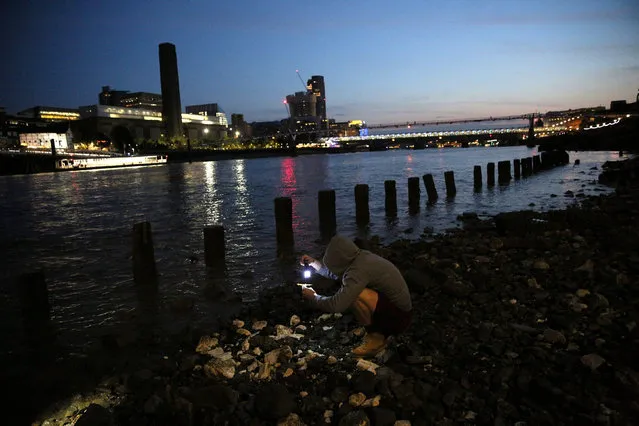
A mudlark uses a torch to look for items on the bank of the River Thames in London, Britain June 06, 2016. Mudlarking is believed to trace its origins to the 18th and 19th century, when scavengers searched the Thames' shores for items to sell. These days, history and archaeology fans are the ones hoping to find old relics such as coins, ceramics, artifacts or everyday items from across centuries. They wait for the low tide and then scour specific areas of exposed shores. "If you're in a field you could be out all day long, with the river you're restricted to about two or three hours," mudlark Nick Stevens said. While many just use the naked eye for their searches, others rely on metal detectors for which a permit from the Port of London Authority is needed. Digging also requires consent. (Photo by Neil Hall/Reuters)

A mudlark uses a torch to look for items on the bank of the River Thames in London, Britain June 06, 2016. Mudlarking is believed to trace its origins to the 18th and 19th century, when scavengers searched the Thames' shores for items to sell. These days, history and archaeology fans are the ones hoping to find old relics such as coins, ceramics, artifacts or everyday items from across centuries. their finds with the Portable Antiquities Scheme. Any item over 300 years old must be recorded. (Photo by Neil Hall/Reuters)
Details
27 Aug 2016 10:43:00
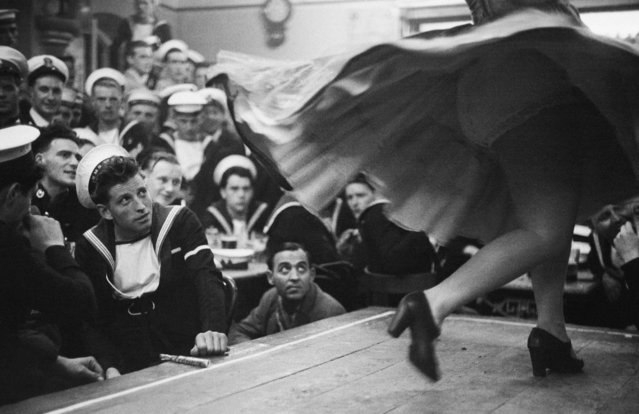
British sailors taking shore leave on the British dependency of Gibraltar visit the Suiza Bar to watch a Spanish dancer perform on August 05, 1954. These Spanish entertainers are under contract and must return over the border by 11 o'clock. (Photo by Bert Hardy/Getty Images)

British sailors taking shore leave on the British dependency of Gibraltar visit the Suiza Bar to watch a Spanish dancer perform on August 05, 1954. These Spanish entertainers are under contract and must return over the border by 11 o'clock. (Photo by Bert Hardy/Getty Images)
Details
19 May 2017 08:48:00
In this aerial view fishing boats are seen on the shore of the Lake Malawi at the Senga village on May 20, 2019 in Senga, Malawi. Hundreds of local traders gather each morning and afternoon at Senga, but fish populations are falling in Lake Malawi, Africa's third largest body of freshwater. (Photo by Gianluigi Guercia/AFP Photo)

In this aerial view fishing boats are seen on the shore of the Lake Malawi at the Senga village on May 20, 2019 in Senga, Malawi. Hundreds of local traders gather each morning and afternoon at Senga, but fish populations are falling in Lake Malawi, Africa's third largest body of freshwater. (Photo by Gianluigi Guercia/AFP Photo)
Details
18 Jul 2019 00:03:00
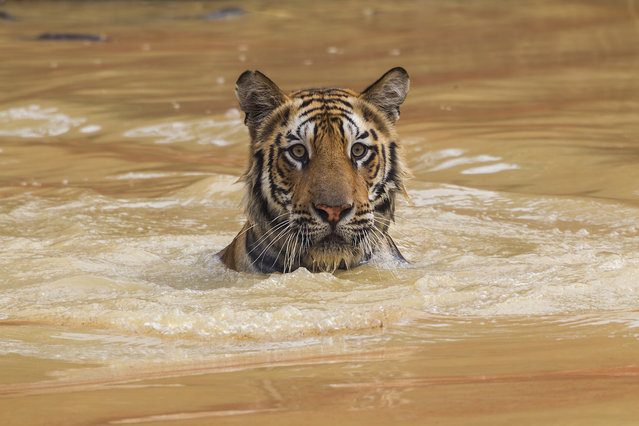
A 14-month-old cub, cooling off in a pond, is riveted by a deer that appeared near the shore. Tigers are powerful swimmers; they can easily cross rivers four to five miles wide and have been known to swim distances of up to 18 miles. (Photo by Steve Winter/National Geographic)

National Geographic photographer Steve Winter has spent most of his adult life shooting wild cats. Photo: A 14-month-old cub, cooling off in a pond, is riveted by a deer that appeared near the shore. Tigers are powerful swimmers; they can easily cross rivers four to five miles wide and have been known to swim distances of up to 18 miles. (Photo by Steve Winter/National Geographic)
Details
08 Apr 2014 11:52:00
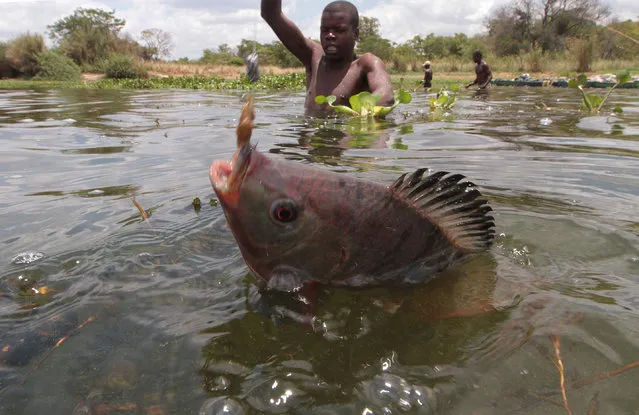
In this photo taken Wednesday, October 29, 2014, a fisherman catches a fish near the shores of Lake Chivero, west of Harare. (Photo by Tsvangirayi Mukwazhi/AP Photo)

In this photo taken Wednesday, October 29, 2014, a fisherman catches a fish near the shores of Lake Chivero, west of Harare. Illegal fishing can be hazardous in Zimbabwe, where poachers scan the banks for armed rangers and the water for crocodiles while they cast their rods. The country is in such a dire economic state that thousands of people, unable to find regular work, flock to Lake Chivero in hopes of catching fish, mostly bream, that they can sell for desperately needed income. (Photo by Tsvangirayi Mukwazhi/AP Photo)
Details
13 Nov 2014 13:55:00
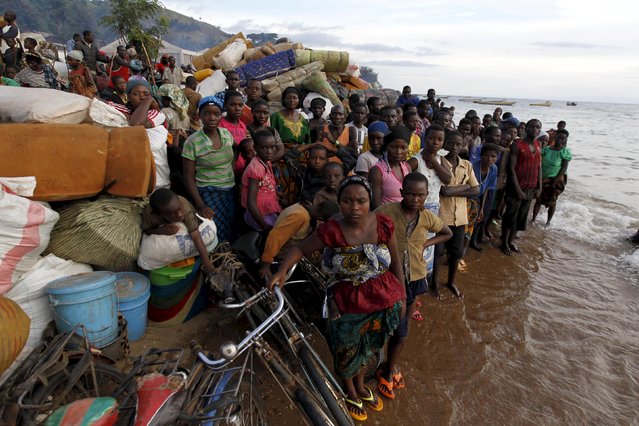
Burundian refugees gather on the shores of Lake Tanganyika in Kagunga village in Kigoma region in western Tanzania with their belongings, as they wait for MV Liemba to transport them to Kigoma township, May 17, 2015. (Photo by Thomas Mukoya/Reuters)

Burundian refugees gather on the shores of Lake Tanganyika in Kagunga village in Kigoma region in western Tanzania with their belongings, as they wait for MV Liemba to transport them to Kigoma township, May 17, 2015. Burundi's embattled President Pierre Nkurunziza sacked his defense and foreign ministers on Monday, five days after surviving an attempted coup by generals opposed to his bid for a third term in office. (Photo by Thomas Mukoya/Reuters)
Details
19 May 2015 11:50:00