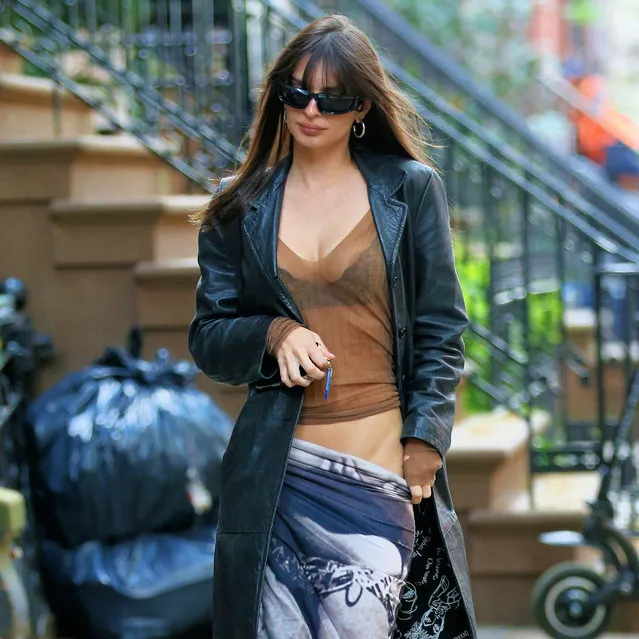
American model Emily Ratajkowski pulls down her skirt featuring a bikini imprint showing off her abs in New York City on April 24, 2023. (Photo by Christopher Peterson/Splash News and Pictures)
An armed tribesman loyal to Houthis steps on a US flag during an anti-USA and anti-Israel rally, in Sana'a, Yemen, 29 January 2024. (Photo by Yahya Arhab/EPA/EFE)
Revelers from Grande Rio Samba School perform during the night of the Carnival parade at the Sambadrome, in Rio de Janeiro, Brazil, on February 12, 2024. (Photo by Tita Barros/Reuters)
An instructor dances as participants follow the dance steps in a Bihu dance workshop ahead of the Rongali Bihu Festival in Guwahati, India, on April 8, 2025. (Photo by David Talukdar/NurPhoto/Rex Features/Shutterstock)
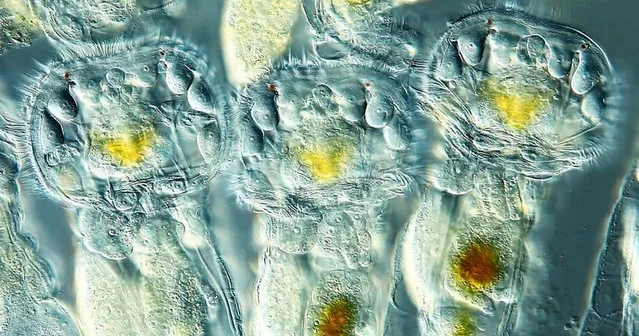
Microscope images forge an extraordinary bond between science and art, said Hidenao Tsuchiya, Olympus America's Vice President and General Manager for the Scientific Equipment Group. We founded this competition to focus on the fascinating stories coming out of today's life science research laboratories. The thousands of images that people have shared with the competition over the years reflect some of the most exciting work going on in research today – work that can help shed light on the living universe and ultimately save lives. We look at BioScapes and these beautiful images as sources of education and inspiration to us and the world
Kevin Kvasnicka (L) and Jesse Gonzales openly carry firearms as they watch U.S. Republican presidential nominee Donald Trump speak on a big screen television along East 4th street during the Republican National Convention in Cleveland, Ohio, U.S., July 21, 2016. (Photo by Adrees Latif/Reuters)
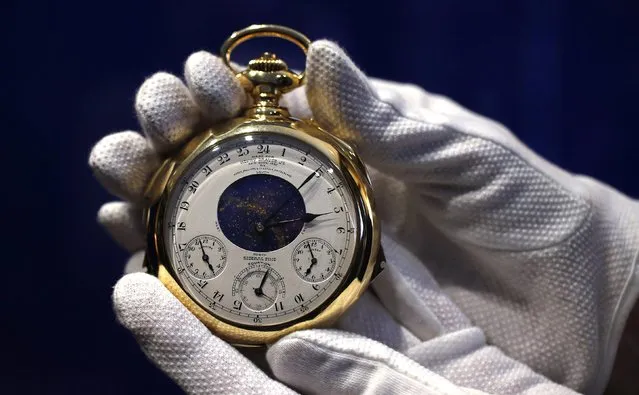
What makes a watch the most valuable in the world? It’s supercomplicated – literally. In 1925 banker Henry Graves Jr. (considered the greatest watch collector of the 20th century) commissioned Patek Philippe to create a unique gold pocket watch. When Graves finally received it – eight years later – it was the most complex timepiece ever created by human hands... (Photo by Suzanne Plunkett/Reuters)
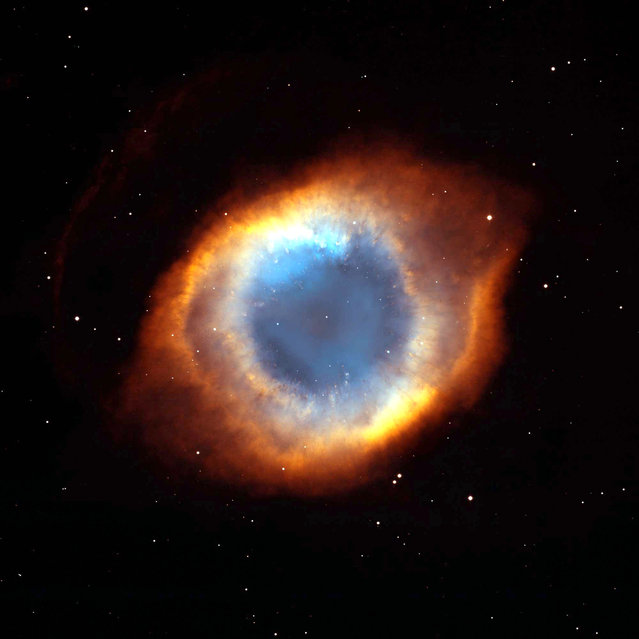
A coil-shaped Helix Nebula showing a fine web of filamentary “bicycle-spoke” features embedded in the colorful red and blue ring of gas. At 650 light-years away, the Helix is one of the nearest planetary nebulae to Earth. A planetary nebula is the glowing gas around a dying, Sun-like star. (Photo by Reuters/NASA)