Loading...
Done
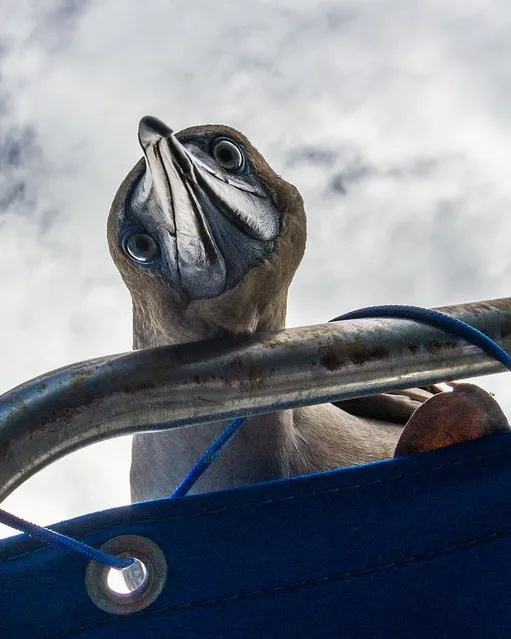
“Close-up. We had a juvenile Red-Footed Booby come visit us on the sun deck. I got some closeups with my ultrawide 11-16mm Tokina”. (Photo by Carl Fredrickson)

Situated in the Pacific Ocean some 620 miles (1,000 km) from the South American continent, these 19 islands and the surrounding marine reserve have been called a unique “living museum and showcase of evolution”. Photo: “Close-up. We had a juvenile Red-Footed Booby come visit us on the sun deck. I got some closeups with my ultrawide 11-16mm Tokina”. (Photo by Carl Fredrickson)
Details
04 Sep 2013 11:49:00
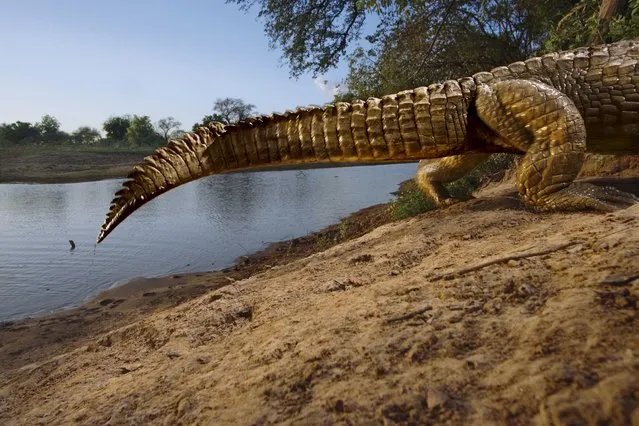
CT4 Crocodile cave on the Salamat river. Set up with Nathan Williamson last chip rain came while we were with the nomads. (Photo by Michael Nichols/National Geographic)

National Geographic has created “Air, Land & Sea: the 50 greatest wildlife photographs” exhibition. Here: CT4 Crocodile cave on the Salamat river. Set up with Nathan Williamson last chip rain came while we were with the nomads. (Photo by Michael Nichols/National Geographic)
Details
13 Sep 2018 00:03:00
A woman falls as police move in to disperse protesters in Trafalgar Square in London on September 26, 2020, at a “We Do Not Consent!” mass rally against vaccination and government restrictions designed to fight the spread of the novel coronavirus, including the wearing of masks and taking tests for the virus. (Photo by Justin Tallis/AFP Photo)

A woman falls as police move in to disperse protesters in Trafalgar Square in London on September 26, 2020, at a “We Do Not Consent!” mass rally against vaccination and government restrictions designed to fight the spread of the novel coronavirus, including the wearing of masks and taking tests for the virus. (Photo by Justin Tallis/AFP Photo)
Details
28 Sep 2020 00:07:00
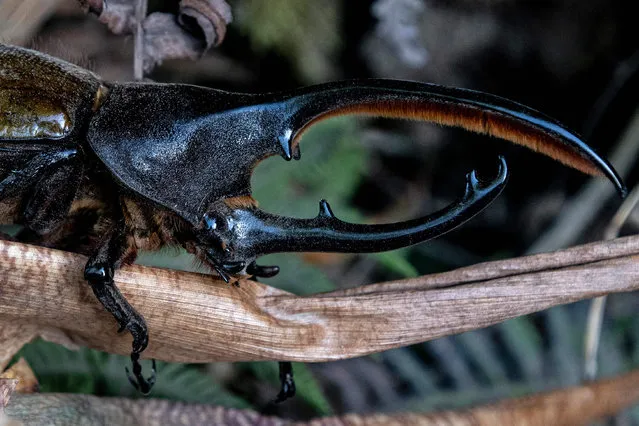
A Hercules beetle, one of the largest species of its kind, in seen at the Monteverde Cloud Forest Biological Reserve, in Puntarenas, Costa Rica, on May 23, 2023. In the Monteverde cloud forest, dense fog among the lush vegetation is increasingly rare and temperatures are increasing each year due to climate change. (Photo by Ezequiel Becerra/AFP Photo)

A Hercules beetle, one of the largest species of its kind, in seen at the Monteverde Cloud Forest Biological Reserve, in Puntarenas, Costa Rica, on May 23, 2023. In the Monteverde cloud forest, dense fog among the lush vegetation is increasingly rare and temperatures are increasing each year due to climate change. (Photo by Ezequiel Becerra/AFP Photo)
Details
21 Sep 2023 03:34:00
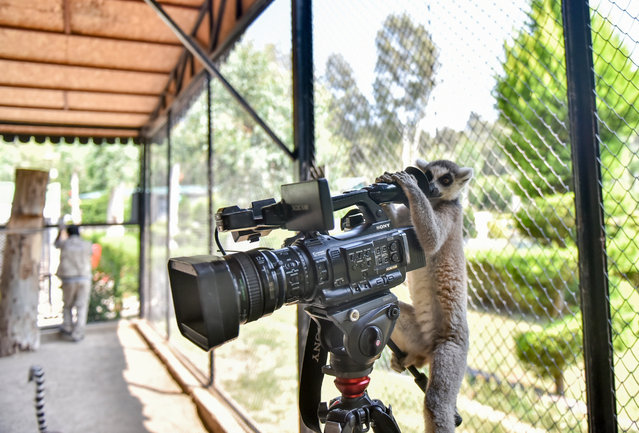
A lemur inspects a camera at Tarsus Nature Park in Mersin, Turkey on July 25, 2021. The population of lemurs, one of the inhabitants of Tarsus Nature Park, increases with new births every year. Lemurs are among the most interesting species in the zoo. (Photo by Serkan Avci/Anadolu Agency via Getty Images)

A lemur inspects a camera at Tarsus Nature Park in Mersin, Turkey on July 25, 2021. The population of lemurs, one of the inhabitants of Tarsus Nature Park, increases with new births every year. Lemurs are among the most interesting species in the zoo. (Photo by Serkan Avci/Anadolu Agency via Getty Images)
Details
15 Aug 2021 07:27:00
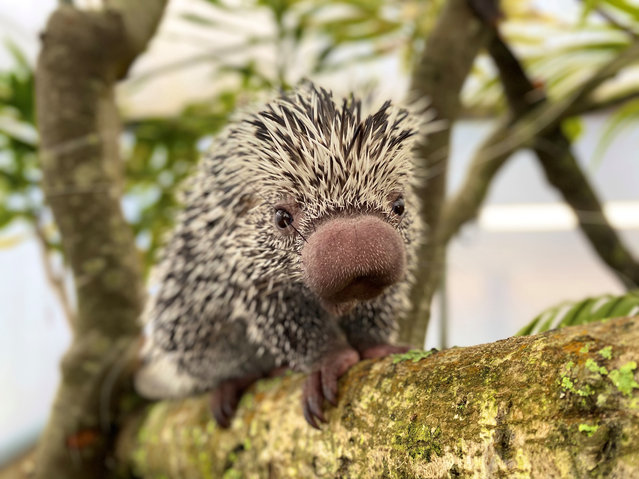
Runner-up, Heart and Minds: Nifty nose, by Samantha Allworthy at Longleat. Species: prehensile tailed porcupines. (Photo by Samantha Allworthy/BIAZA 2020 Photography Competition)

The British and Irish Association of Zoos and Aquariums (BIAZA) has announced the winning images in its annual photography competition. The 2020 winners show the important work of zoos and aquariums at an immensely challenging time. After months of closures, these conservation organisations are reeling from the financial impacts of the coronavirus pandemic. Here: Runner-up, Heart and Minds: Nifty nose, by Samantha Allworthy at Longleat. Species: prehensile tailed porcupines. (Photo by Samantha Allworthy/BIAZA 2020 Photography Competition)
Details
24 Jul 2020 00:03:00
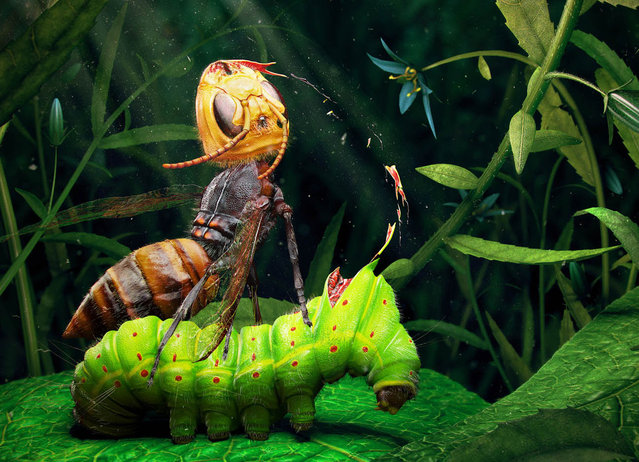
Deadly Insects Hornet

Hornets are insects that are the largest eusocial wasps. Some species can reach up to 5.5 cm (2.2 in) in length. The true hornets make up the genus Vespa and are distinguished from other vespines by the width of the vertex (part of the head behind the eyes), which is proportionally larger in Vespa and by the anteriorly rounded gasters (the section of the abdomen behind the wasp waist). The best known species is the European hornet (Vespa crabro), about 2–3.5 cm in length, widely distributed throughout Europe, Russia, North America and Northeast Asia.
Details
13 Oct 2014 10:17:00
Of all the species affected by river regulation in Australia, the ibis is one of the few that has changed its behaviour and moved to coastal cities. (Photo by Rick Stevens/The Guardian)

Tip turkey, dumpster chook, rubbish raptor – the Australian white ibis goes by many unflattering names. But it is a true urban success story, scavenging to survive in cities across Australia as wetlands have been lost. Wildlife photographer Rick Stevens captured them in Sydney. Here: Of all the species affected by river regulation in Australia, the ibis is one of the few that has changed its behaviour and moved to coastal cities. (Photo by Rick Stevens/The Guardian)
Details
11 Apr 2018 00:03:00