Loading...
Done
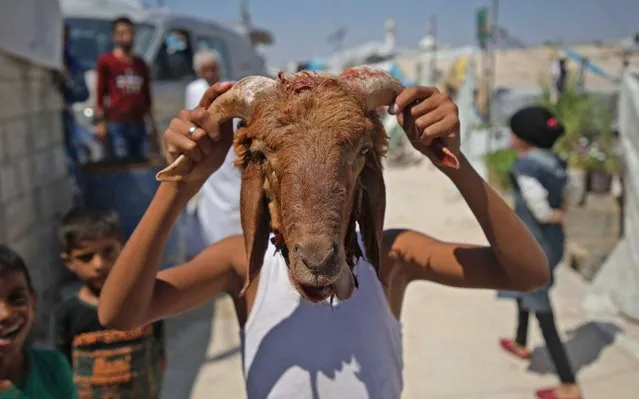
A Syrian boy plays with the head of a sacrificed sheep at a DIP camp for Interally Displaced Persons near the town of Aqrabat in Syria's northern Idlib province on August 12, 2019. Known as the “big” festival, Eid Al-Adha is celebrated each year by Muslims sacrificing various animals according to religious traditions, including cows, camels, goats and sheep. The festival marks the end of the Hajj pilgrimage to Mecca and commemorates Prophet Abraham's readiness to sacrifice his son to show obedience to God. (Photo by Aaref Watad/AFP Photo)

A Syrian boy plays with the head of a sacrificed sheep at a DIP camp for Interally Displaced Persons near the town of Aqrabat in Syria's northern Idlib province on August 12, 2019. Known as the “big” festival, Eid Al-Adha is celebrated each year by Muslims sacrificing various animals according to religious traditions, including cows, camels, goats and sheep. The festival marks the end of the Hajj pilgrimage to Mecca and commemorates Prophet Abraham's readiness to sacrifice his son to show obedience to God. (Photo by Aaref Watad/AFP Photo)
Details
15 Aug 2019 00:05:00
Lebanese women smoke nargileh (water pipe) and watch a streaming broadcast of the FIFA World Cup 2022 group G soccer match between Brazil and Switzerland, at a café-restaurant in the area of Sabtiyeh, north of Beirut, on November 28, 2022. Lebanon being hit hard by the economic crisis, the country did not obtain the rights to broadcast the 2022 World Cup this year, depriving Lebanese fans of the World Cup. (Photo by Joseph Eid/AFP Photo)

Lebanese women smoke nargileh (water pipe) and watch a streaming broadcast of the FIFA World Cup 2022 group G soccer match between Brazil and Switzerland, at a café-restaurant in the area of Sabtiyeh, north of Beirut, on November 28, 2022. Lebanon being hit hard by the economic crisis, the country did not obtain the rights to broadcast the 2022 World Cup this year, depriving Lebanese fans of the World Cup. (Photo by Joseph Eid/AFP Photo)
Details
22 Dec 2022 05:45:00
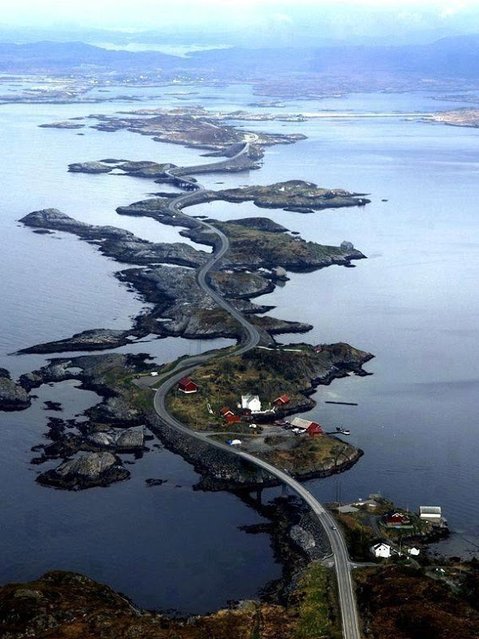
The Atlantic Road, Norway

The Atlantic Ocean Road or the Atlantic Road (Norwegian: Atlanterhavsveien) is a 8.3-kilometer (5.2 mi) long section of County Road 64 that runs through an archipelago in Eide and Averøy in Møre og Romsdal, Norway. It passes by Hustadvika, an unsheltered part of the Norwegian Sea, connecting the island of Averøy with the mainland and Romsdalshalvoya peninsula. It runs between the villages of Karvag on Averoy and Vevang in Eida. It is built on several small islands and skerries, which are connected by several causeways, viaducts and eight bridges – the most prominent being Storseisundet Bridge.
Details
18 Jan 2014 11:42:00
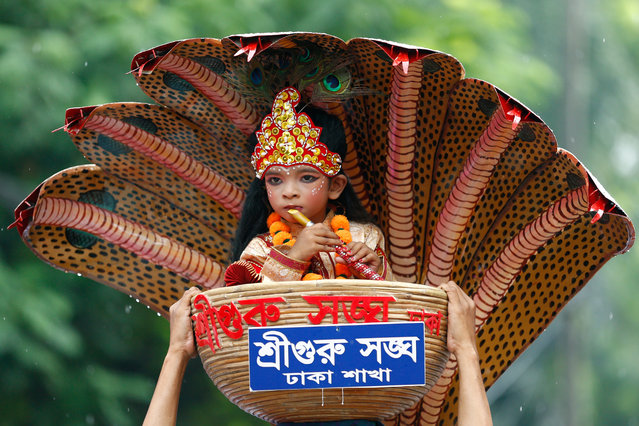
A boy dressed as Lord Krishna is pictured while Hindu devotees march on the streets to celebrate Janmashtami festival, which marks the birth anniversary of Lord Krishna, in Dhaka, August 14, 2017. (Photo by Mohammad Ponir Hossain/Reuters)

A boy dressed as Lord Krishna is pictured while Hindu devotees march on the streets to celebrate Janmashtami festival, which marks the birth anniversary of Lord Krishna, in Dhaka, August 14, 2017. (Photo by Mohammad Ponir Hossain/Reuters)
Details
19 Aug 2017 08:37:00
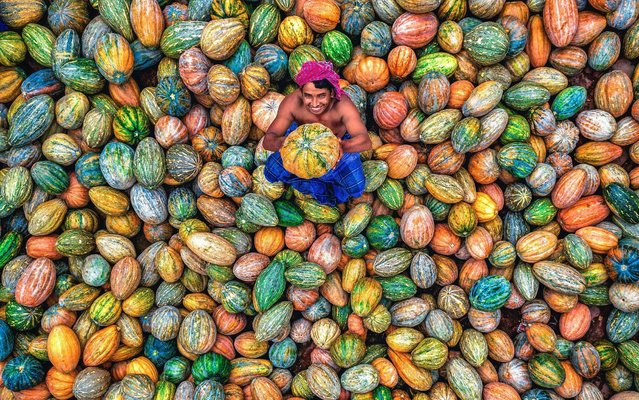
Hundreds of colourful pumpkins and squash create an extraordinary rainbow scene at a vegetable wholesale market in Bangladesh on August 1, 2019. A seller sits among his vibrant wares which are produced by farmers from local villages. (Photo by Abdul Momin/Solent News)

Hundreds of colourful pumpkins and squash create an extraordinary rainbow scene at a vegetable wholesale market in Bangladesh on August 1, 2019. A seller sits among his vibrant wares which are produced by farmers from local villages. (Photo by Abdul Momin/Solent News)
Details
05 Oct 2019 00:05:00
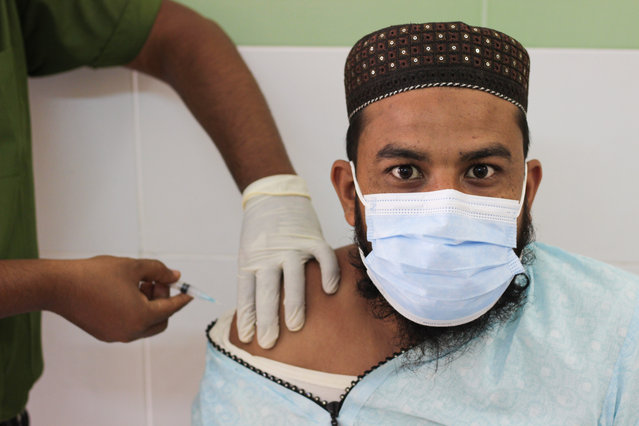
Medical staff administering the dose of Moderna COVID-19 Vaccine at the M A G Osmani Medical College & Hospital vaccination center in Sylhet, Bangladesh on July 26, 2021. (Photo by Md Rafayat Haque Khan/ZUMA Press Wire/Rex Features/Shutterstock)

Medical staff administering the dose of Moderna COVID-19 Vaccine at the M A G Osmani Medical College & Hospital vaccination center in Sylhet, Bangladesh on July 26, 2021. (Photo by Md Rafayat Haque Khan/ZUMA Press Wire/Rex Features/Shutterstock)
Details
01 Aug 2021 04:45:00
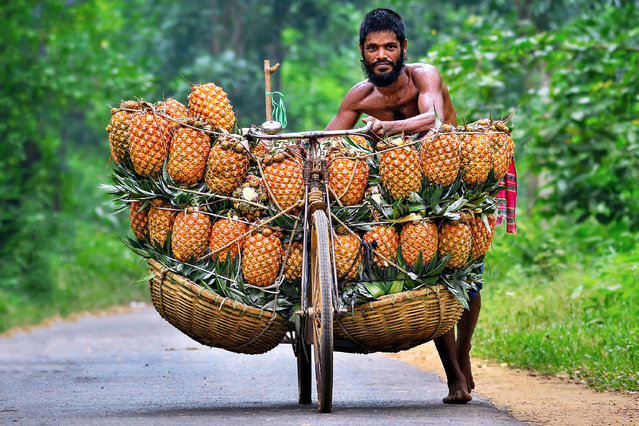
Cyclists desperately try to keep their heavily-laden bicycles upright as they arrive at a market with baskets full of pineapples on August 23, 2018. The men travel up to 12 and a half miles with two baskets tied to the sides of their bikes, carrying between 50 and 100 pineapples to sell. Each of the bicycles is so heavily laden with fruit it is impossible for the men to actually ride their bikes, instead having to walk alongside them. When they arrive at the market place in Madhupur, Bangladesh, buyers will pay up to 30 Taka for a pineapple – the equivalent of around 28 pence. (Photo by Abdul Momin/Solent News & Photo Agency UK)

Cyclists desperately try to keep their heavily-laden bicycles upright as they arrive at a market with baskets full of pineapples on August 23, 2018. The men travel up to 12 and a half miles with two baskets tied to the sides of their bikes, carrying between 50 and 100 pineapples to sell. Each of the bicycles is so heavily laden with fruit it is impossible for the men to actually ride their bikes, instead having to walk alongside them. When they arrive at the market place in Madhupur, Bangladesh, buyers will pay up to 30 Taka for a pineapple – the equivalent of around 28 pence. (Photo by Abdul Momin/Solent News & Photo Agency UK)
Details
21 Sep 2018 00:03:00
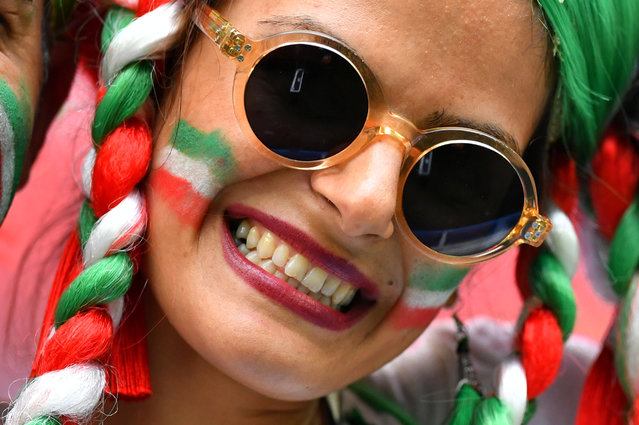
An Iran fan attends the Russia 2018 World Cup Group B football match between Morocco and Iran at the Saint Petersburg Stadium in Saint Petersburg on June 15, 2018. (Photo by Dylan Martinez/Reuters)

An Iran fan attends the Russia 2018 World Cup Group B football match between Morocco and Iran at the Saint Petersburg Stadium in Saint Petersburg on June 15, 2018. (Photo by Dylan Martinez/Reuters)
Details
17 Jun 2018 08:41:00