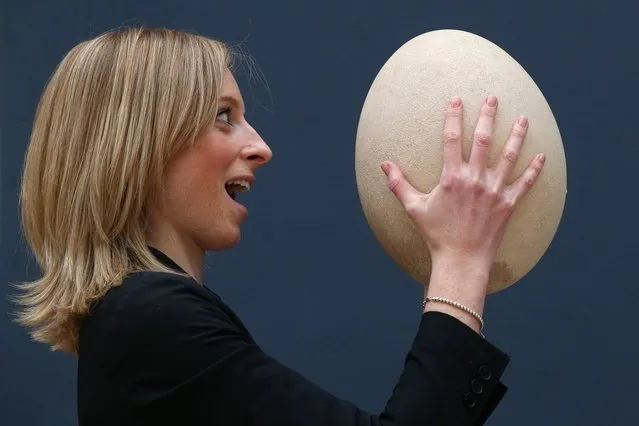
An employee at Christie's auction house examines a complete sub-fossilised elephant bird egg on March 27, 2013 in London, England. The elephant bird egg is expected to fetch 30,000 GBP when it features in Christie's “Travel, Science and Natural History” sale, which is to be held on April 24, 2013 in London. (Photo by Oli Scarff)
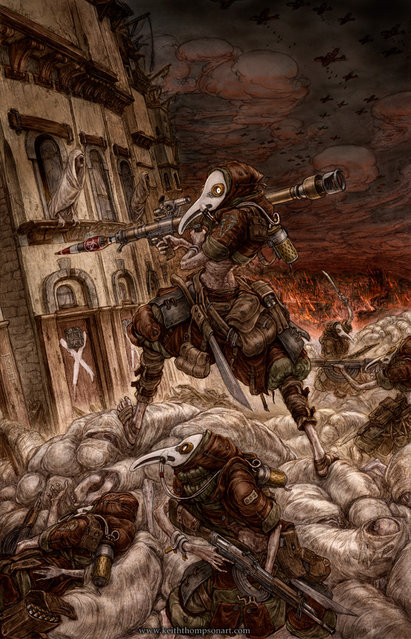
The civilised world lies on its knees, a sickness wracking its body. The affliction causes a necrotising of tissues so perfectly uniform in distribution that victims take on the appearance of corpses long before death occurs due to organ failure or secondary infections. ...
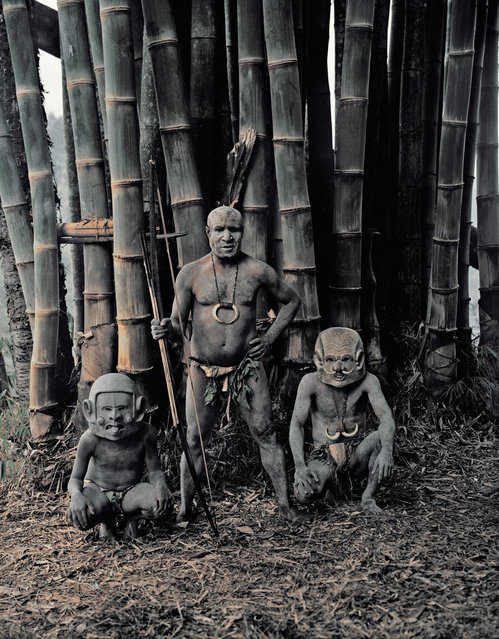
“Asaro from the Eastern Highlands”. The mudmen could not cover their faces with mud because the people of Papua New Guinea thought that the mud from the Asaro river was poisonous. So instead of covering their faces with this alleged poison, they made masks from pebbles that they heated and water from the waterfall, with unusual designs such as long or very short ears either going down to the chin or sticking up at the top, long joined eyebrows attached to the top of the ears, horns and sideways mouths. (Photo and caption by Jimmy Nelson)
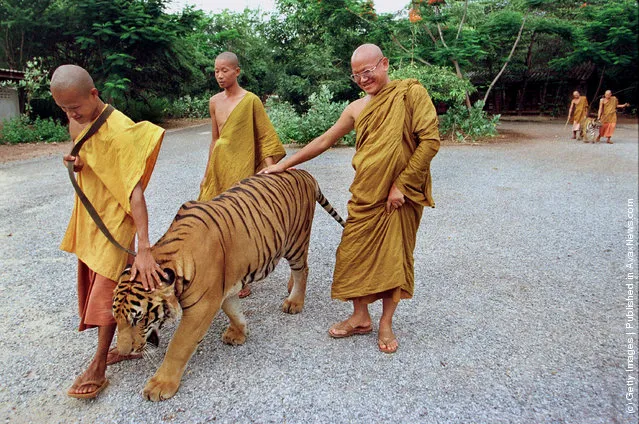
Monks take a tiger out of its cage for an afternoon walk June 5, 2001 at the Wat Pa Luangta Bua monastery in Kanchanaburi, Thailand. (Photo by Paula Bronstein/Getty Images)
Switzerland's Zoe Verge-Depre, right, sets up a shot for Esmee Boebner in a beach volleyball match against Canada at the 2024 Summer Olympics, Wednesday, July 31, 2024, in Paris, France. (Photo by Robert F. Bukat/AP Photoy)
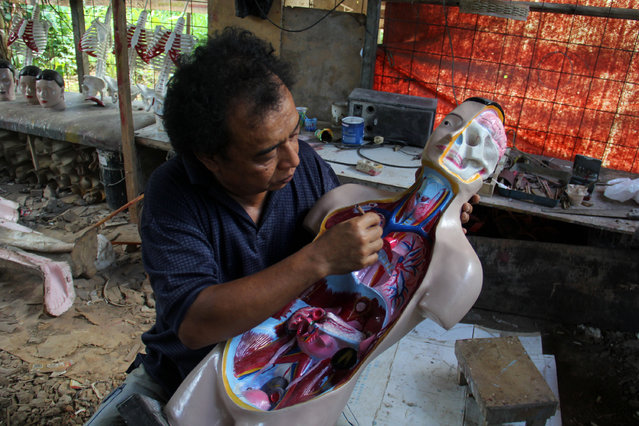
A craftsman works on making human anatomy mannequins on April 23, 2014 in Depok, West Java, Indonesia. The mannequins are made from fiberglass and will be used in schools, hospitals and laboratories. (Photo by Nurcholis Anhari Lubis/Getty Images)
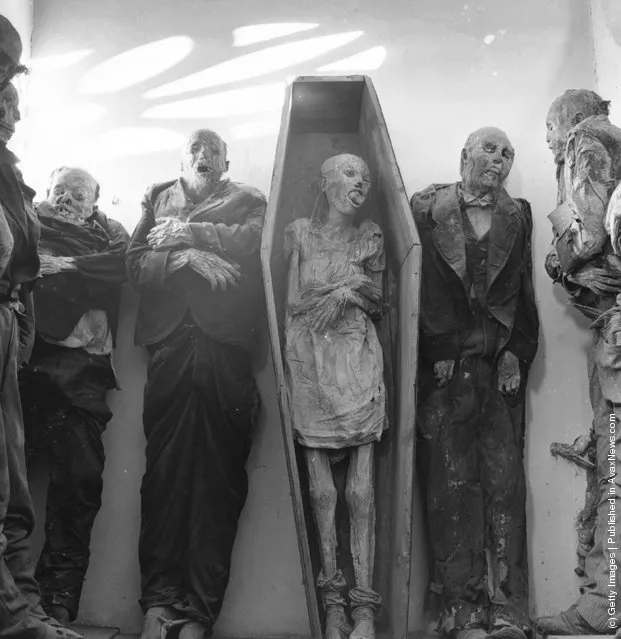
Dried and shrivelled corpses, some fully clothed and some in coffins, line the wall of a vault of the Pantheon Cemetery on the summit of Cerro del Trozado in Mexico. They were removed from the crypts because of non-payment of cemetery fees. The hot dry air stopped the bodies from rotting. Most of them were placed here between the turn of the century and WW I. (Photo by Three Lions/Getty Images). Circa 1955