Loading...
Done
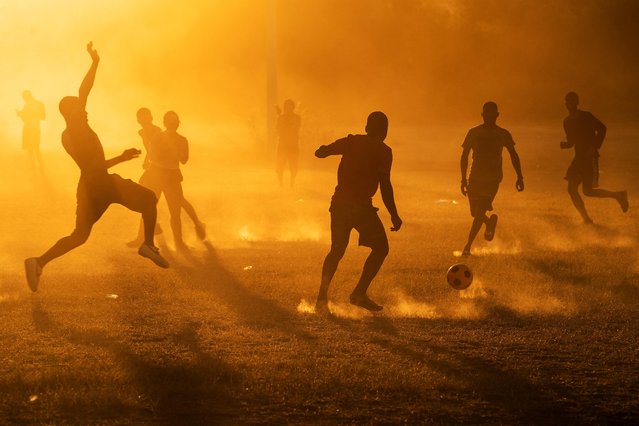
Migrants seeking asylum in the U.S., who returned to the Mexican side of the border to avoid deportation, play soccer in a makeshift migrant camp in Braulio Fernandez Ecological Park in Ciudad Acuna, Mexico, September 22, 2021. (Photo by Go Nakamura/Reuters)

Migrants seeking asylum in the U.S., who returned to the Mexican side of the border to avoid deportation, play soccer in a makeshift migrant camp in Braulio Fernandez Ecological Park in Ciudad Acuna, Mexico, September 22, 2021. (Photo by Go Nakamura/Reuters)
Details
23 Oct 2021 08:38:00
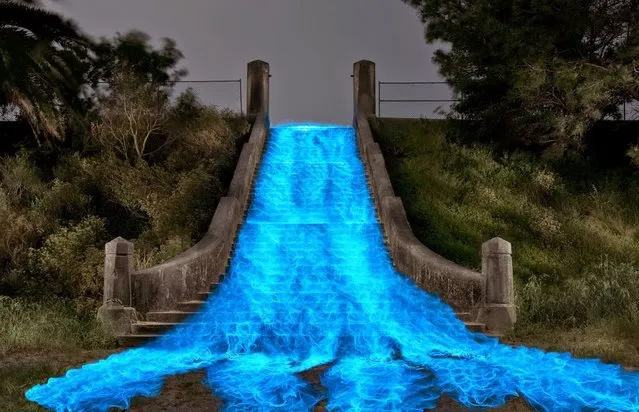
Winner of the NSW (New South Wales) prize: Peter Solness said: “I wanted to re-imagine the lost waterways, so I got my light-painting tools to work. In this image, water is being released from the top of the historic Centennial Park No. 2 Reservoir, which was built in 1925 and holds 90 megalitres of water. After 89 years of incarceration these waters now run free!”. (Photo by Peter Solness/Head On)

Touching and dramatic portraits and landscape shots have won prizes at Australia's prestigious photography prize. Photo: Winner of the NSW (New South Wales) prize: Peter Solness said: “I wanted to re-imagine the lost waterways, so I got my light-painting tools to work. In this image, water is being released from the top of the historic Centennial Park No. 2 Reservoir, which was built in 1925 and holds 90 megalitres of water. After 89 years of incarceration these waters now run free!”. (Photo by Peter Solness/Head On)
Details
21 May 2014 11:11:00
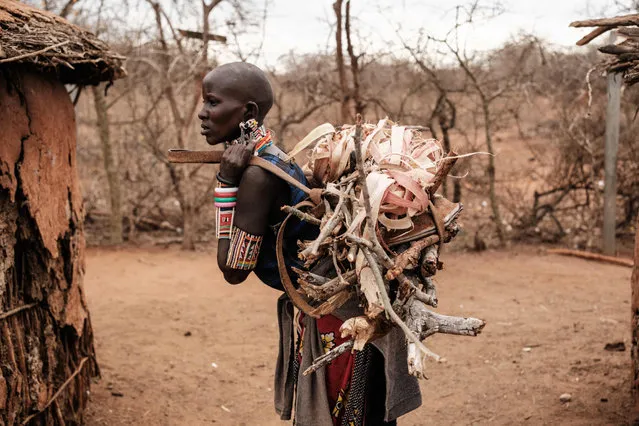
A Maasai woman arrives with collected firewoods at a village nearby Selenkay Conservancy, a community-owned conservation area running by a private company, in Amboseli, Kenya, on June 22, 2022. The camp's ten luxurious tents see tourists flocking again, after the shutdown linked to Covid-19. They observe in small groups elephants, giraffes, antelopes or lions on 5,000 hectares, located on the edge of Amboseli National Park, in the south of the country, and have a glimpse of the life of the Masai, the owners of the land. (Photo by Yasuyoshi Chiba/AFP Photo)

A Maasai woman arrives with collected firewoods at a village nearby Selenkay Conservancy, a community-owned conservation area running by a private company, in Amboseli, Kenya, on June 22, 2022. The camp's ten luxurious tents see tourists flocking again, after the shutdown linked to Covid-19. They observe in small groups elephants, giraffes, antelopes or lions on 5,000 hectares, located on the edge of Amboseli National Park, in the south of the country, and have a glimpse of the life of the Masai, the owners of the land. (Photo by Yasuyoshi Chiba/AFP Photo)
Details
22 Jul 2022 04:32:00
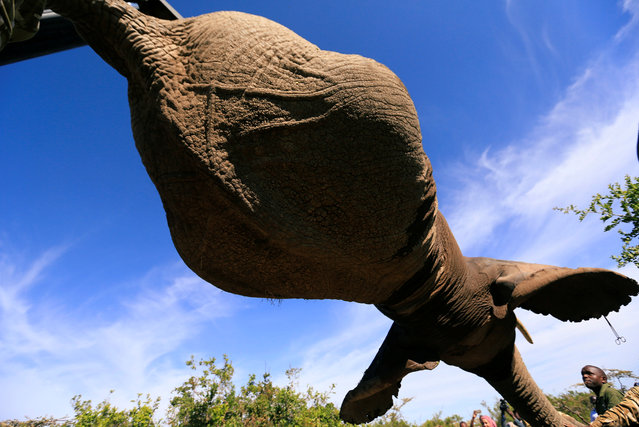
Kenya Wildlife Service (KWS) rangers load a tranquilized elephant onto a truck during a translocation exercise to Ithumba Camp in Tsavo East National Park, in Solio Ranch in Nyeri County, Kenya, February 21, 2018. Wildlife officials in Kenya kicked off a relocation operation for 30 elephants, fitting monitoring collars on the tranquilized animals before using cranes to swing them, inverted with bound feet and scything tusks, onto flatbed trucks. (Photo by Thomas Mukoya/Reuters)

Kenya Wildlife Service (KWS) rangers load a tranquilized elephant onto a truck during a translocation exercise to Ithumba Camp in Tsavo East National Park, in Solio Ranch in Nyeri County, Kenya, February 21, 2018. Wildlife officials in Kenya kicked off a relocation operation for 30 elephants, fitting monitoring collars on the tranquilized animals before using cranes to swing them, inverted with bound feet and scything tusks, onto flatbed trucks. (Photo by Thomas Mukoya/Reuters)
Details
23 Feb 2018 00:04:00
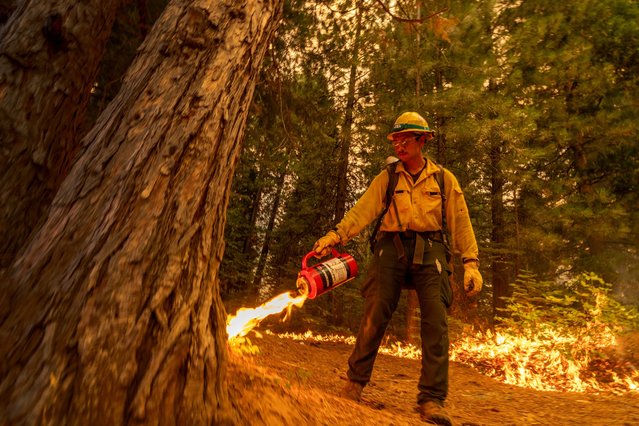
Flames quickly grow as firefighters set a backfire on the eastern front of the Park Fire, which has grown to 360,141 acres and is 12 percent contained, on July 28, 2024 near Chico, California. Strong winds and dried vegetation fueled the fire that exploded 70,000 acres in the first 24 hours after a man allegedly pushed a burning car into a ravine to intentionally set the blaze. In 2018, more than 18,000 structures were destroyed and 85 people killed in the nearby town of Paradise when the Camp Fire entrapped thousand of people and became the deadliest and most destructive fire in California history. (Photo by David McNew/Getty Images)

Flames quickly grow as firefighters set a backfire on the eastern front of the Park Fire, which has grown to 360,141 acres and is 12 percent contained, on July 28, 2024 near Chico, California. Strong winds and dried vegetation fueled the fire that exploded 70,000 acres in the first 24 hours after a man allegedly pushed a burning car into a ravine to intentionally set the blaze. (Photo by David McNew/Getty Images)
Details
07 Aug 2024 04:47:00
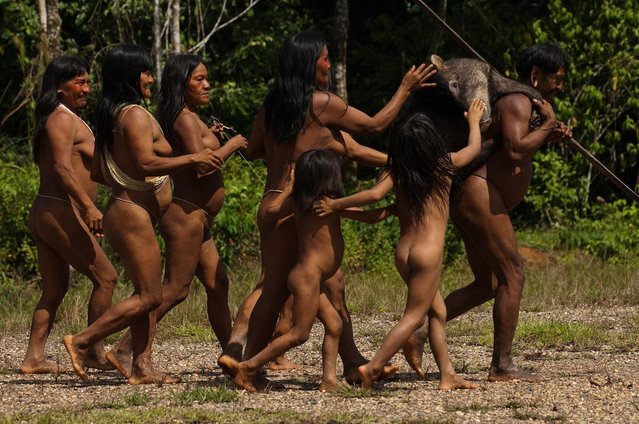
Spectacular images offering insight into the lives of the Huaorani people in the Ecuadorian Amazon have been revealed showing how they use traditional methods to hunt monkeys for food. The stunning pictures were taken by conservation photographer Pete Oxford from Torquay, Devon in the Ecuadorian Amazon. “The Huaorani Indians are a forest people highly in tune with their environment. Many are now totally acculturated since the 1950s by missionaries”, said Pete. “Today they face radical change to their culture to the proximity of oil exploration within their territory and the Yasuni National Park and Biosphere Reserve, they are vastly changed. Some still live very traditionally and for this shoot, through my Huaorani friend, a direct relative of those photographed he wanted to depict them as close to their original culture as possible. They still largely hunt with blow pipes and spears eating a lot of monkeys and peccaries”. The Huaorani are also known as the Waorani, Waodani or the Waos and are native Amerindians. Their lands are located between the Curaray and Napo rivers and speak the Huaorani language. Pete says that during his visit he was welcomed into the group and hopes that ancient cultures can be saved. Here: The tribe were seen celebrating after a hunter returned to camp with a wild pig. (Photo by Pete Oxford/Mediadrumworld.com)

Spectacular images offering insight into the lives of the Huaorani people in the Ecuadorian Amazon have been revealed showing how they use traditional methods to hunt monkeys for food. The stunning pictures were taken by conservation photographer Pete Oxford from Torquay, Devon in the Ecuadorian Amazon. Here: The tribe were seen celebrating after a hunter returned to camp with a wild pig. (Photo by Pete Oxford/Mediadrumworld.com)
Details
20 Jan 2017 07:58:00
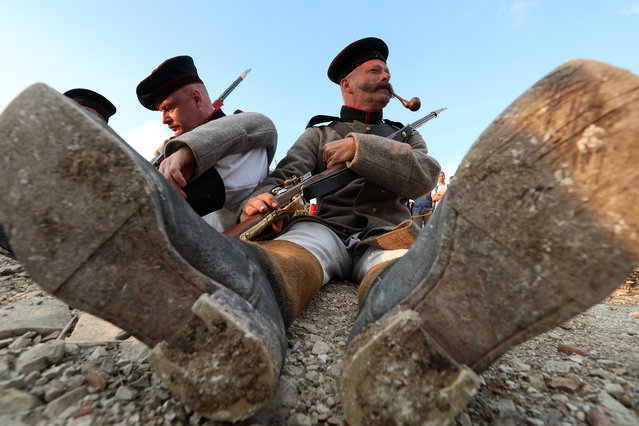
Enthusiasts participate in the historical re-enactment of the Sevastopol Fortress assault, which took place during the Crimean War of 1853-1856, at a military historical festival in Sevastopol, Crimea, September 5, 2020. (Photo by Alexey Pavlishak/Reuters)

Enthusiasts participate in the historical re-enactment of the Sevastopol Fortress assault, which took place during the Crimean War of 1853-1856, at a military historical festival in Sevastopol, Crimea, September 5, 2020. (Photo by Alexey Pavlishak/Reuters)
Details
21 Sep 2020 00:01:00
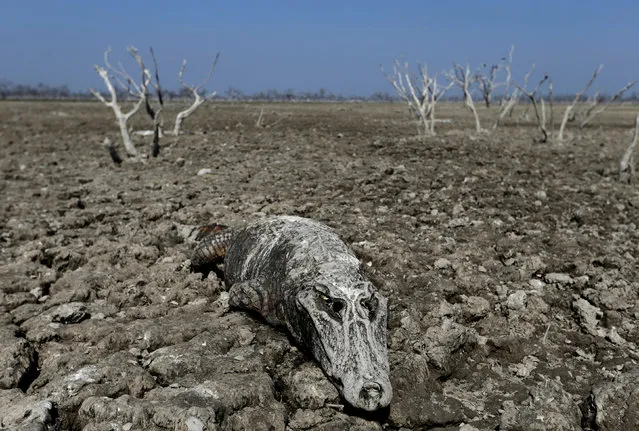
The carcass of a yacare caiman lies in the dried-up river bed of the Pilcomayo river in Boqueron, Paraguay, August 14, 2016. In Paraguay, alongside the Pilcomayo River, black vultures flew over a shrinking pond where a group of crocodilian reptiles known as yacare caimans sought refuge. Water from the river, which divides Paraguay and Argentina in the area of the Gran Chaco, was scarce. This is not an uncommon sight in the region of General Diaz, about 700 kilometres (435 miles) northwest of the country's capital Asuncion, where the Pilcomayo's waters form lakes and streams that give life to capybaras, birds and caimans. “The river's situation is critical. No water is forecast to enter the basin until December, as happens every year”, said Alcides Gonzalez, a resident of the area. (Photo by Jorge Adorno/Reuters)

The carcass of a yacare caiman lies in the dried-up river bed of the Pilcomayo river in Boqueron, Paraguay, August 14, 2016. In Paraguay, alongside the Pilcomayo River, black vultures flew over a shrinking pond where a group of crocodilian reptiles known as yacare caimans sought refuge. Water from the river, which divides Paraguay and Argentina in the area of the Gran Chaco, was scarce. This is not an uncommon sight in the region of General Diaz, about 700 kilometres (435 miles) northwest of the country's capital Asuncion, where the Pilcomayo's waters form lakes and streams that give life to capybaras, birds and caimans. (Photo by Jorge Adorno/Reuters)
Details
03 Nov 2016 12:40:00