Loading...
Done


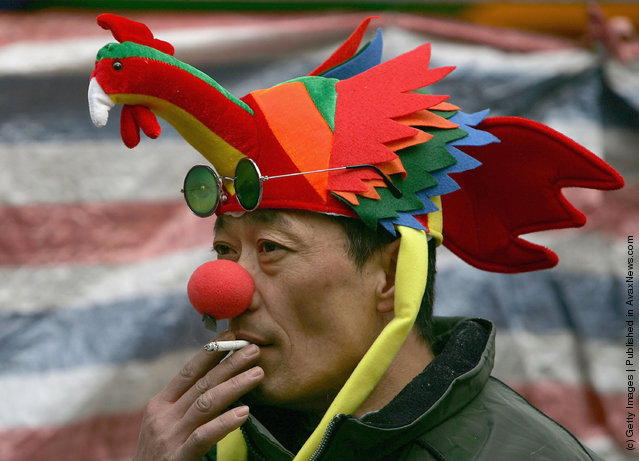
A Chinese vendor wears a rooster hat as he smokes a cigarette at his souvenir stall at a fair at Temple of Earth, on the eve of Chinese New Year February 8, 2005 in Beijing, China. Chinese started February 8, to celebrate the New Year of the Rooster. (Photo by Andrew Wong/Getty Images)
Details
14 May 2011 13:54:00
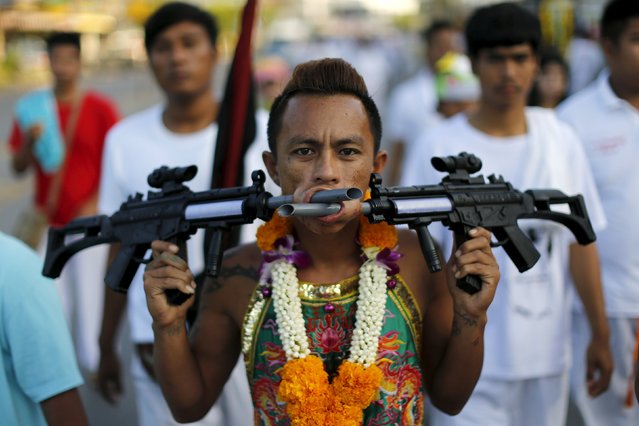
A devotee of the Chinese Ban Tha Rue shrine walks with guns pierced through his cheeks during a procession celebrating the annual vegetarian festival in Phuket, Thailand, October 17, 2015.

A devotee of the Chinese Ban Tha Rue shrine walks with guns pierced through his cheeks during a procession celebrating the annual vegetarian festival in Phuket, Thailand, October 17, 2015. The festival, featuring face-piercing, spirit mediums and strict vegetarianism celebrates the local Chinese community's belief that abstinence from meat and various stimulants during the ninth lunar month of the Chinese calendar will help them obtain good health and peace of mind. (Photo by Jorge Silva/Reuters)
Details
20 Oct 2015 08:01:00
Detian Waterfall - China

Ban Gioc – Detian Falls are two waterfalls on the Quây Sơn River, in Chinese Guichun River, straddling the Sino-Vietnamese border, located in the Karst hills of Daxin County, Guangxi (Chinese side), and in Trùng Khánh District, Cao Bằng province on the Vietnamese side, 272 km (169 mi) north of Hanoi. In Vietnamese, the two falls are considered as two parts of one waterfall with the sole name Bản Giốc. The two parts are called as: thác chính (Main waterfall) and thác phụ (Subordinate waterfall). Chinese texts sometimes name both falls from the Détiān falls on the Chinese side. During the summer rains the two waterfalls may join together.
Details
21 Nov 2013 12:37:00
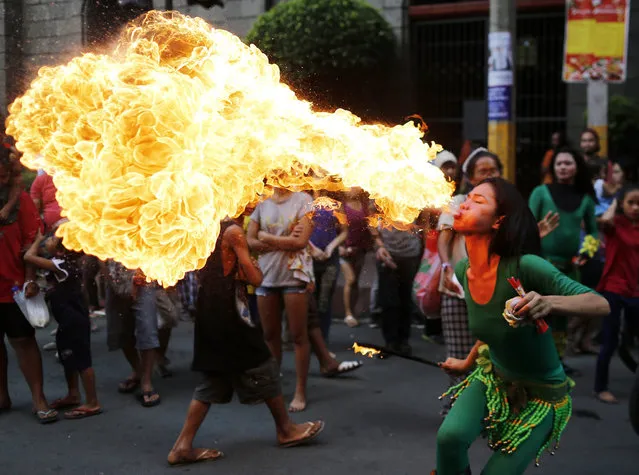
A Filipino dancer performs with fire to mark the Chinese Lunar New Year in Manila's Chinatown, Philippines, 28 January 2017. Chinese around the world celebrate the Lunar New Year on 28 January 2017, the first day of the year of rooster. (Photo by Francis R. Malasig/EPA)

A Filipino dancer performs with fire to mark the Chinese Lunar New Year in Manila's Chinatown, Philippines, 28 January 2017. Chinese around the world celebrate the Lunar New Year on 28 January 2017, the first day of the year of rooster. (Photo by Francis R. Malasig/EPA)
Details
29 Jan 2017 12:02:00


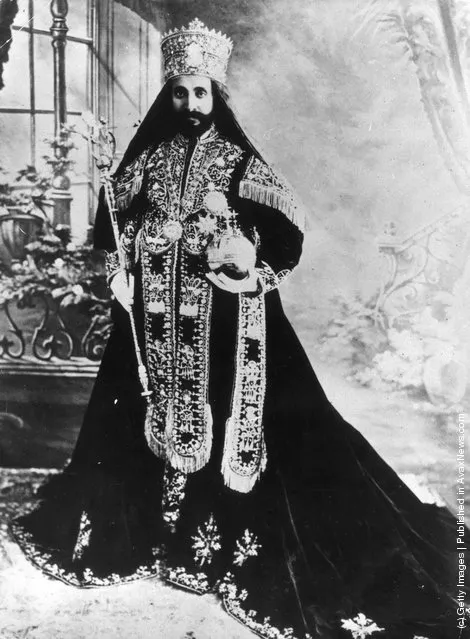
“Haile Selassie I (23 July 1892 – 27 August 1975), born Tafari Makonnen, was Ethiopia's regent from 1916 to 1930 and Emperor of Ethiopia from 1930 to 1974. The heir to a dynasty that traced its origins to the 13th century, and from there by tradition back to King Solomon and Queen Makeda, Empress of Axum, known in the Abrahamic tradition as the Queen of Sheba. Haile Selassie is a defining figure in both Ethiopian and African history.

Haile Selassie is revered as the returned Messiah of the Bible, God incarnate, among the Rastafari movement, the number of followers of which is estimated between 200,000 and 800,000. Begun in Jamaica in the 1930s, the Rastafari movement perceives Haile Selassie as a messianic figure who will lead a future golden age of eternal peace, righteousness, and prosperity. He himself remained an Ethiopian Orthodox Christian throughout his life”. – Wikipedia

Photo: Negusa Negasti, Emperor of Ethiopia Haile Selassie I, known as “Lord of Lords”, “The Conquering Lion of the tribe of Judah”, “Light of the world”, “Elect of God”, in full ceremonial regalia following his coronation. (Photo by Hulton Archive/Getty Images)

Details
21 Jun 2011 11:04:00
A dog poses in traditional Chinese dress on Yaowarat Road in Chinatown on the eve of Lunar New Year on January 20, 2023 in Bangkok, Thailand. The Chinese diaspora of Southeast Asia is celebrating a lively Lunar New Year as COVID-19 restrictions have been removed. It is traditionally a time for people to meet their relatives and take part in celebrations with families. In Thailand, which has a sizeable population of Chinese lineage, people gather with family and celebrate with feasts and visits to temples. (Photo by Lauren DeCicca/Getty Images)

A dog poses in traditional Chinese dress on Yaowarat Road in Chinatown on the eve of Lunar New Year on January 20, 2023 in Bangkok, Thailand. The Chinese diaspora of Southeast Asia is celebrating a lively Lunar New Year as COVID-19 restrictions have been removed. It is traditionally a time for people to meet their relatives and take part in celebrations with families. In Thailand, which has a sizeable population of Chinese lineage, people gather with family and celebrate with feasts and visits to temples. (Photo by Lauren DeCicca/Getty Images)
Details
09 Feb 2023 05:04:00
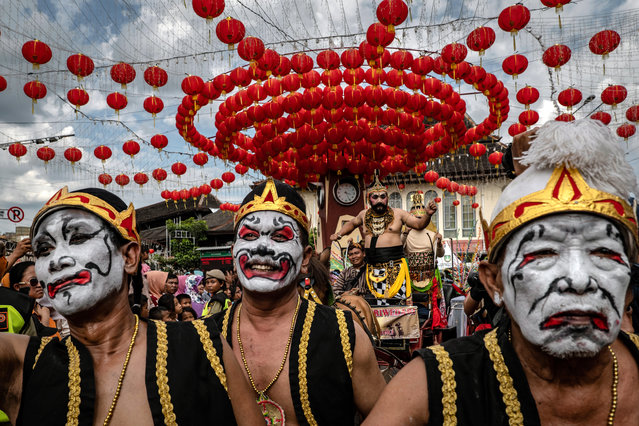
Participants perform parade in the street during Grebeg Sudiro festival on January 19, 2020 in Solo City, Central Java, Indonesia. Grebeg Sudiro festival is held as a prelude to the Chinese New Year, which falls on January 25th this year, welcoming the Year of the Rat. People bring offerings known as gunungan, including Chinese sweetcakes piled up into the shape of mountains, which are paraded in the streets followed by Chinese and Javanese performers. (Photo by Ulet Ifansasti/Getty Images)

Participants perform parade in the street during Grebeg Sudiro festival on January 19, 2020 in Solo City, Central Java, Indonesia. Grebeg Sudiro festival is held as a prelude to the Chinese New Year, which falls on January 25th this year, welcoming the Year of the Rat. People bring offerings known as gunungan, including Chinese sweetcakes piled up into the shape of mountains, which are paraded in the streets followed by Chinese and Javanese performers. (Photo by Ulet Ifansasti/Getty Images)
Details
23 Jan 2020 00:01:00
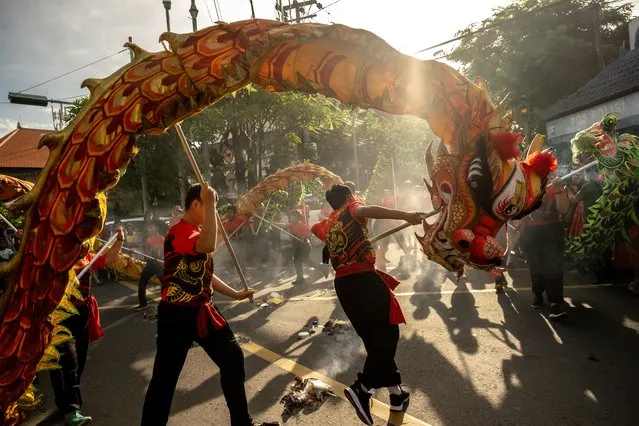
Balis Chinese community perform the dragon dance during Chinese New Year called Ngelawang ceremony on January 21, 2023 in Kuta, Bali, Indonesia. The Chinese diaspora of Southeast Asia is celebrating Lunar New Year, as COVID-19 restrictions have been removed, it is traditionally a time for people to meet their relatives and take part in celebrations with families. In Indonesia, ethnic Chinese families visited temples to celebrate the Year of the Rabbit on January 22. The Chinese community in Bali observes Chinese New Year in accordance with Balinese customs. In multiculturalism, the Balis-Chinese community believes that the performance of the dragon dance, the lion dance called Barong Sai, and offerings to the unseen world will safeguard the community from calamity and balance between the seen and unseen world. (Photo by Agung Parameswara/Getty Images)

Balis Chinese community perform the dragon dance during Chinese New Year called Ngelawang ceremony on January 21, 2023 in Kuta, Bali, Indonesia. The Chinese diaspora of Southeast Asia is celebrating Lunar New Year, as COVID-19 restrictions have been removed, it is traditionally a time for people to meet their relatives and take part in celebrations with families. In Indonesia, ethnic Chinese families visited temples to celebrate the Year of the Rabbit on January 22. (Photo by Agung Parameswara/Getty Images)
Details
29 Jan 2023 00:38:00