Loading...
Done
In this February 2, 2015 photo, tourists jump as they pose for a picture, after disembarking from the Ocean Nova cruise ship, on King George Island, Antarctica. This tourist season, which runs November through March, more than 37,000 visitors are expected to walk on the coldest continent on Earth, about 10 percent more than the year before. (Photo by Natacha Pisarenko/AP Photo)

In this February 2, 2015 photo, tourists jump as they pose for a picture, after disembarking from the Ocean Nova cruise ship, on King George Island, Antarctica. This tourist season, which runs November through March, more than 37,000 visitors are expected to walk on the coldest continent on Earth, about 10 percent more than the year before. (Photo by Natacha Pisarenko/AP Photo)
Details
22 Mar 2015 11:31:00
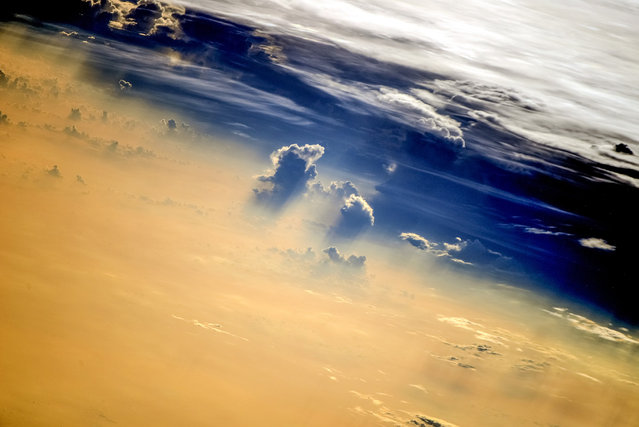
Image of the Clouds taken in August 2014 by astronauts on board the International Space Station (ISS).  A year from space photographs of hurricanes, typhoons and meteorite craters show an astronauts-eye view of our planet from hundreds of miles above the earth. The illuminating images were taken by astronauts onboard the International Space Station (ISS) over the course of 2014. (Photo by NASA/SPL/Barcroft Media)

Image of the Clouds taken in August 2014 by astronauts on board the International Space Station (ISS). A year from space photographs of hurricanes, typhoons and meteorite craters show an astronauts-eye view of our planet from hundreds of miles above the earth. The illuminating images were taken by astronauts onboard the International Space Station (ISS) over the course of 2014. (Photo by NASA/SPL/Barcroft Media)
Details
31 Dec 2014 14:47:00
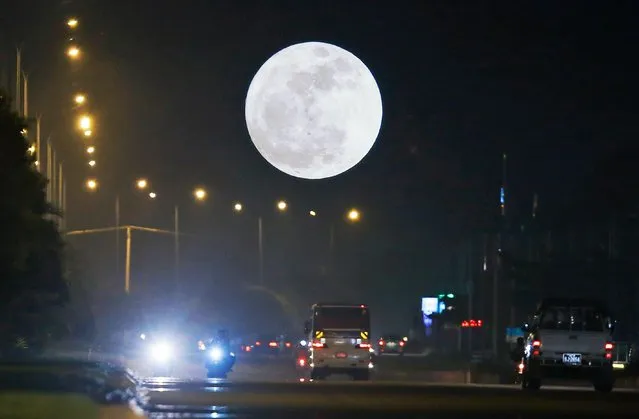
A so-called “Supermoon” dominates the sky while traffic rolls in the streets in Naypyitaw, Myanmar, 03 December 2017. According to the National Aeronautics and Space Administration (NASA) a series of three “Supermoons” – dubbed the “Supermoon trilogy” – will appear in the sky on 03 December 2017, on 01 January 2018 and and 31 January 2018. A 'Supermoon' commonly is a full moon at its closest distance to the earth with the moon appearing larger than usual. (Photo by Hein Htet/EPA/EFE)

A so-called “Supermoon” dominates the sky while traffic rolls in the streets in Naypyitaw, Myanmar, 03 December 2017. According to the National Aeronautics and Space Administration (NASA) a series of three “Supermoons” – dubbed the “Supermoon trilogy” – will appear in the sky on 03 December 2017, on 01 January 2018 and and 31 January 2018. A “Supermoon” commonly is a full moon at its closest distance to the earth with the moon appearing larger than usual. (Photo by Hein Htet/EPA/EFE)
Details
05 Dec 2017 07:45:00
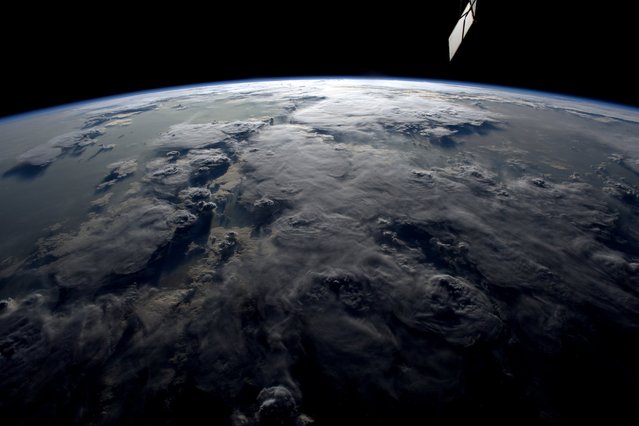
European Space Agency astronaut Tim Peake will return home after a six-month long mission on the International Space Station,on June 18, 2016. Peake was the first British ESA astronaut to visit the ISS and captured hundreds of photographs of the Earth during his mission. Here: “Lots of sun-glint right now during our whole orbit – we haven't seen a sunset for over 3 days”, he wrote. (Photo by Tim Peake/ESA/NASA)

European Space Agency astronaut Tim Peake will return home after a six-month long mission on the International Space Station,on June 18, 2016. Peake was the first British ESA astronaut to visit the ISS and captured hundreds of photographs of the Earth during his mission. Here: “Lots of sun-glint right now during our whole orbit – we haven't seen a sunset for over 3 days”, he wrote. (Photo by Tim Peake/ESA/NASA)
Details
18 Jun 2016 13:08:00
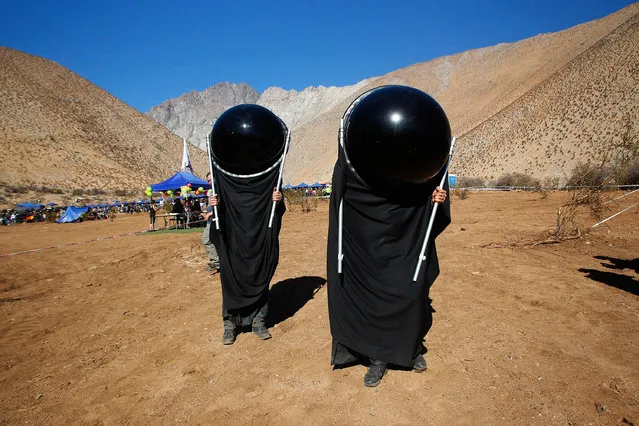
Chileans watch the sky with special suits prior to a total solar eclipse on July 2, 2019 in Paiguano, Chile. Around 25,0000 tourists arrived to Paiguano, a small town of around 1,000 inhabitants in the Elqui Valley, 650 km away Santiago. This is the only Earth's total solar eclipse of 2019 and the first one since 2017. From this point, the sun will fully disappear for around two minutes. It is best visible from a stripe in the South Pacific, Chile and Argentina. (Photo by Marcelo Hernandez/Getty Images)

Chileans watch the sky with special suits prior to a total solar eclipse on July 2, 2019 in Paiguano, Chile. Around 25,0000 tourists arrived to Paiguano, a small town of around 1,000 inhabitants in the Elqui Valley, 650 km away Santiago. This is the only Earth's total solar eclipse of 2019 and the first one since 2017. From this point, the sun will fully disappear for around two minutes. It is best visible from a stripe in the South Pacific, Chile and Argentina. (Photo by Marcelo Hernandez/Getty Images)
Details
04 Jul 2019 00:05:00
An offering of a dried baby llama and fake U.S. burn in honor of Pachamama, or Mother Earth, during a New Year ritual on Turriturrini Mountain on the outskirts of Huarina, Bolivia, Friday, June 21, 2024. Aymara Indigenous communities are celebrating the Andean New Year 5,532 or “Willka Kuti” which translates to “Return of the sun” in Aymara. (Photo by Juan Karita/AP Photo)

An offering of a dried baby llama and fake U.S. burn in honor of Pachamama, or Mother Earth, during a New Year ritual on Turriturrini Mountain on the outskirts of Huarina, Bolivia, Friday, June 21, 2024. Aymara Indigenous communities are celebrating the Andean New Year 5,532 or “Willka Kuti” which translates to “Return of the sun” in Aymara. (Photo by Juan Karita/AP Photo)
Details
31 Jul 2024 06:29:00
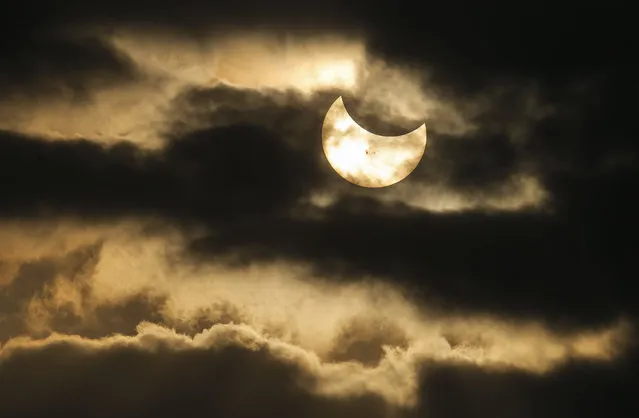
A partial solar eclipse is seen in a break in the clouds during rush hour in downtown Wichita Kan., Thursday, Oct. 23, 2014. (AP Photo/The Wichita Eagle, Travis Heying)

A partial solar eclipse is seen in a break in the clouds during rush hour in downtown Wichita Kan., Thursday, October 23, 2014. A partial eclipse occurs when the moon covers a portion of the sun as seen from the Earth. (AP Photo/The Wichita Eagle, Travis Heying)
Details
24 Oct 2014 12:38:00
Chris Keegan By Cosmic Creatures

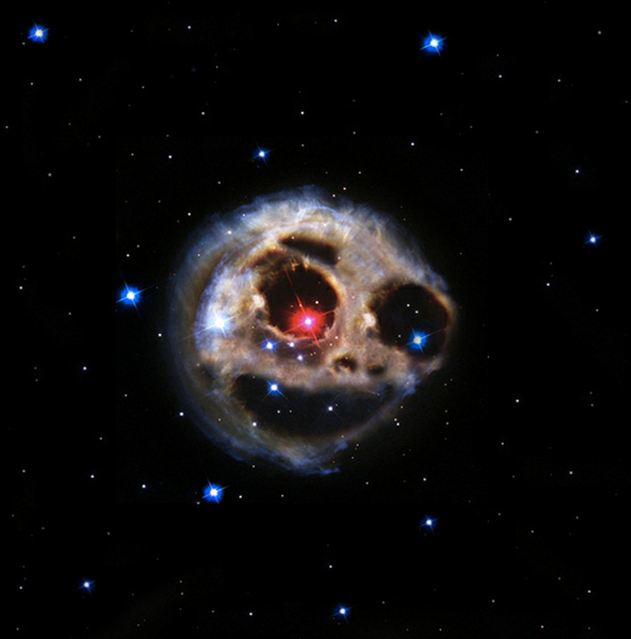
Looking up at the sky and forming images from the stars has been going on for just about as long as human life has existed, but that was only what could be seen from the Earth. Digital illustrator Chris Keegan has taken constellations to a whole new level with the use of images from NASA’s Chandra X-ray Observatory.
Details
10 Jun 2015 09:50:00