Loading...
Done
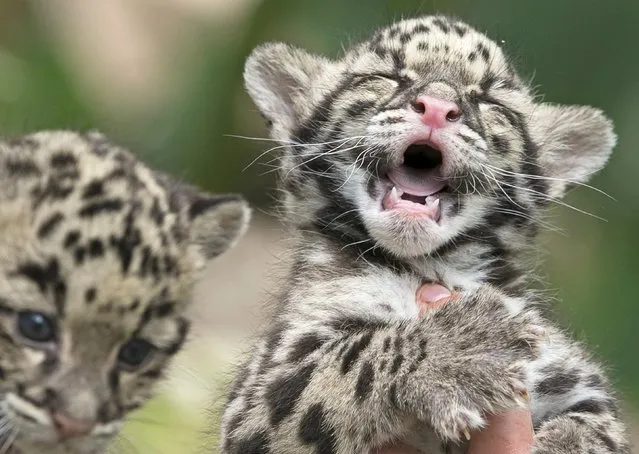
Baby clouded leopards, born early in March 2015, are presented by zoo keepers at the Olmense Zoo in Olmen, Belgium, April 16, 2015. (Photo by Yves Herman/Reuters)

Baby clouded leopards, born early in March 2015, are presented by zoo keepers at the Olmense Zoo in Olmen, Belgium, April 16, 2015. The clouded leopard is an endangered species with only some 10,000 specimen remaining on earth, said Robby Van der Velden, a biologist at the Olmense Zoo. (Photo by Yves Herman/Reuters)
Details
17 Apr 2015 09:44:00
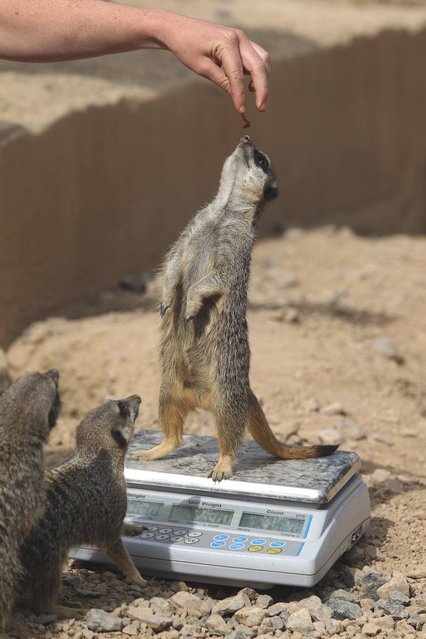
Meerkats are weighed and measured during the ZSL London Zoo 's annual weigh-in on August 22, 2012 in London, England

Meerkats are weighed and measured during the ZSL London Zoo 's annual weigh-in on August 22, 2012 in London, England. The height and mass of every animal in the zoo, of which there are over 16,000, needs to be recorded. The measurements are collated in the Zoological Information Management System, from which zoologists can use the data to compare information on thousands of endangered species. (Photo by Oli Scarff)
Details
23 Aug 2012 07:56:00


With their affinity for hunting, sneaking, and hidden blade-like retractable claw, cats are really the assassins of the animal world. They're not as intimidating when they're kittens dressed up as assassins from the upcoming Assassin's Creed Unity, but what they lack in deadliness they more than make up for in cuteness. YouTube user Mr.TVCow posted the video, in which four hooded kittens hunt down a french soldier, much like like in a number of trailers for Assassin's Creed Unity. They use their eagle vision ability, parkour after their target, and perform lethal aerial assassinations, and yes, it's as unbearably adorable as it sounds.
Details
29 Sep 2014 15:34:00
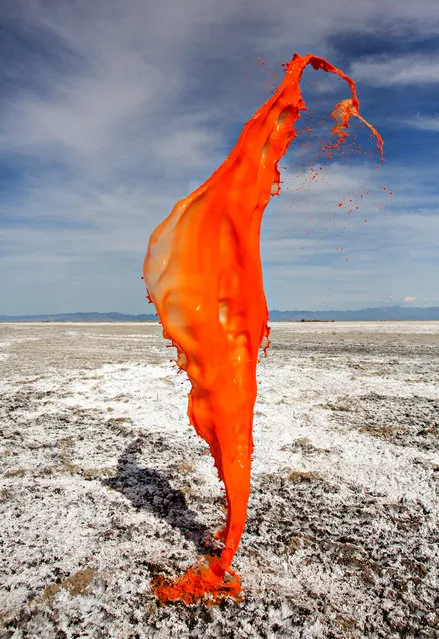
“Orange Salt Flats”. (Photo by Floto/Warner)

The photography duo of Floto+Warner created the series, “Colorant”, from an idea that stemmed out of a previous series and the fascination of landscapes, with results that leave one in awe. Creating shapes, not experienced in nature, they tossed colored water in the air to capture “a momentary graffiti of air and space”. Using a high shutter speed to capture these fleeting moments, Floto/Warner has produced a multi-medium series with jaw-dropping results. Photo: “Orange Salt Flats”. (Photo by Floto/Warner)
Details
02 Jul 2014 10:26:00


It looks like 2024 has ended and we are still alive (although of course it's not evening yet). Well, let's wish ourselves the same in the future. If someone wants to put USDT TRC20 under the tree: TDWPvSi7RY4wNZPukDRyKghhLGTGsRNRBe (nobody will put anything, of course – but you understand, it's a ritual). Happy New Year! And now disco.
Details
31 Dec 2024 04:28:00
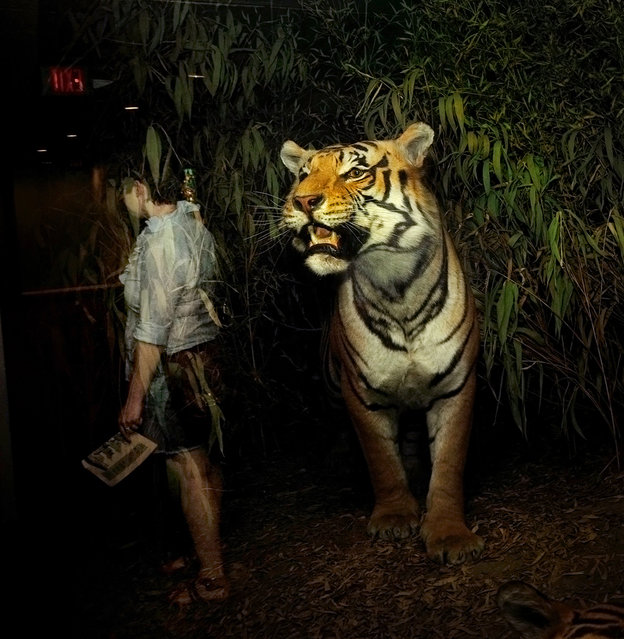
“Natural History”: Tiger. (Photo by Traer Scott)

“Natural History” is a series of completely candid single exposure images that merge the living and the dead to create allegorical narratives of our troubled co-existence with nature. Ghost-like reflections of modern visitors viewing wildlife dioramas are juxtaposed against the antique taxidermied subjects housed behind thick glass, their faces molded into permanent expressions of fear, aggression or fleeting passivity. After decades of over-hunting, climate change, poaching and destruction of habitat, many of these long dead diorama specimens now represent endangered or completely extinct species”. – Traer Scott. (Photo by Traer Scott)
Details
27 Oct 2014 11:39:00
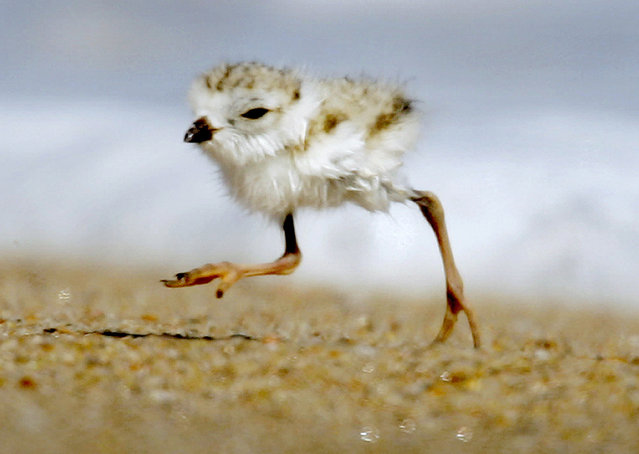
In this July 12, 2007 file photo, a two-day-old piping plover runs along a beach in the Quonochontaug Conservation Area in Westerly, R.I. A court fight to protect the piping plover, a bird listed as “threatened” under the federal Endangered Species Act, is holding up a $207 million plan to replenish sand along a 19-mile stretch of shoreline on New York's Fire Island. The sand was eroded during Superstorm Sandy. (Photo by Steven Senne/AP Photo)

In this July 12, 2007 file photo, a two-day-old piping plover runs along a beach in the Quonochontaug Conservation Area in Westerly, R.I. (Photo by Steven Senne/AP Photo)
Details
25 Nov 2014 11:28:00
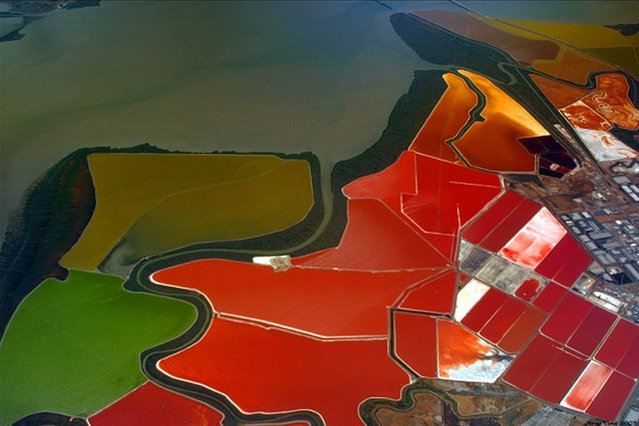
Salt ponds in San Francisco Bay

Salt evaporation ponds, also called salterns or salt pans, are shallow artificial ponds designed to produce salts from sea water or other brines. The seawater or brine is fed into large ponds and water is drawn out through natural evaporation which allows the salt to be subsequently harvested. The ponds also provide a productive resting and feeding ground for many species of waterbirds, which may include endangered species. The ponds are commonly separated by levees.
Details
11 Oct 2012 12:49:00