Loading...
Done
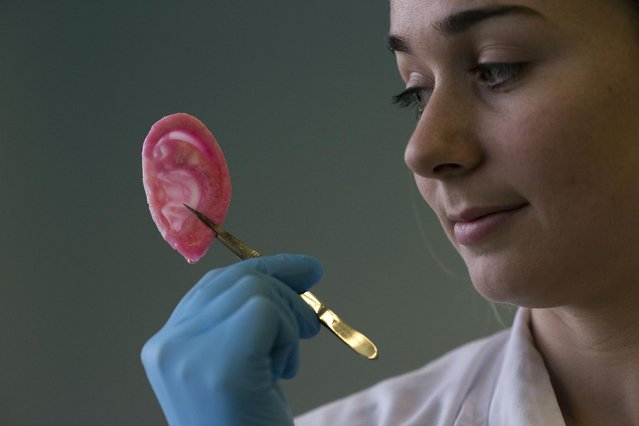
Dr Michelle Griffin, a plastic research fellow, poses for photographs with a synthetic polymer ear at her research facility in the Royal Free Hospital in London, Monday, March 31, 2014. (Photo by Matt Dunham/AP Photo)

In a north London hospital, scientists are growing noses, ears and blood vessels in the laboratory in a bold attempt to make body parts using stem cells. It is among several labs around the world, including in the U.S., that are working on the futuristic idea of growing custom-made organs in the lab. (Photo by Matt Dunham/AP Photo)
Details
10 Apr 2014 09:21:00
Inmates are seen at the transgender gallery in La Joya prison on the outskirts of Panama City, Panama February 3, 2016. (Photo by Carlos Jasso/Reuters)

Inmates are seen at the transgender gallery in La Joya prison on the outskirts of Panama City, Panama February 3, 2016. Inmates of La Joya prison on the outskirts of Panama City are housed in makeshift cells amid heavy overcrowding, living in grimy conditions and with limited medical attention. Many prisoners in the Central American nation languish for years without being sentenced. (Photo by Carlos Jasso/Reuters)
Details
14 Apr 2016 11:51:00
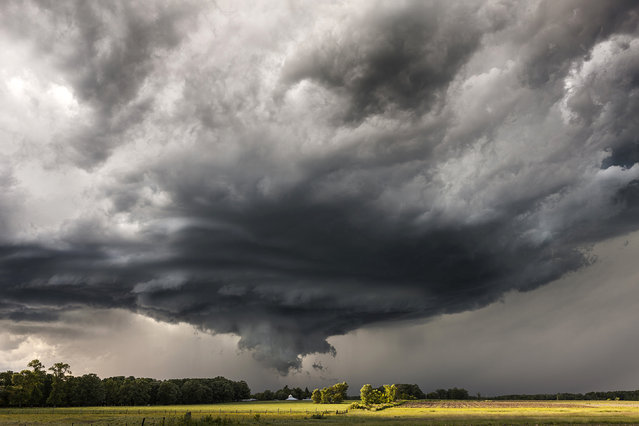
Supercell in Minnesota, near Browerville, Minnesota in 2014. (Photo by Camille Seaman/Caters News)

These stunning images show the phwoar-some power of some of Americas most extreme weather. Camille Seaman’s wondrous work features huge super cells, crashing lightning and gale-force winds. The roaming photographer has chased storms across the US from Iowa to Wyoming and from Minnesota to Texas. Her favorite places to chase are Kansas, Nebraska and South Dakota – notorious hotspots for spectacular storms. Here: Supercell in Minnesota, near Browerville, Minnesota in 2014. (Photo by Camille Seaman/Caters News)
Details
26 Jan 2015 12:10:00
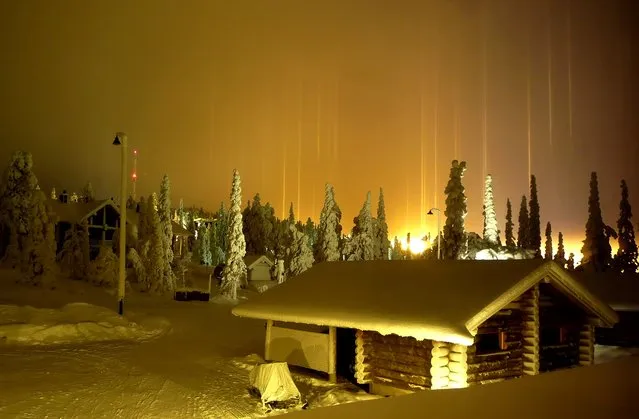
Mysterious Light Pillar

A light pillar is a visual phenomenon created by the reflection of light from ice crystals with near horizontal parallel planar surfaces. The light can come from the Sun (usually at or low to the horizon) in which case the phenomenon is called a sun pillar or solar pillar. It can also come from the Moon or from terrestrial sources such as streetlights.
Details
03 May 2014 15:17:00
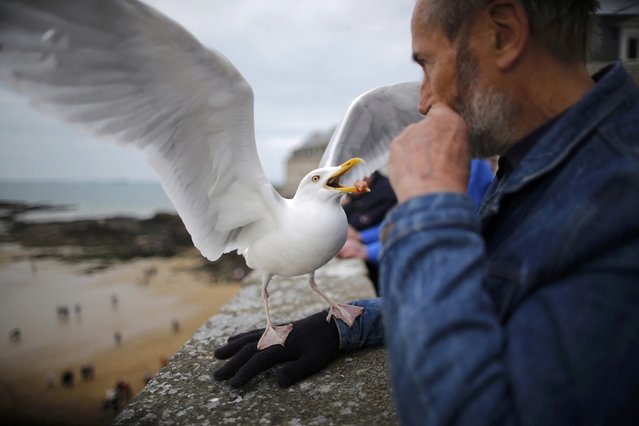
A man feeds a seagull during a record low tide in Saint Malo, western France, March 21, 2015. (Photo by Stephane Mahe/Reuters)

A man feeds a seagull during a record low tide in Saint Malo, western France, March 21, 2015. Towns on France's North Atlantic coast braced for their first giant tide of the millennium on Saturday as the full moon and this week's solar eclipse combined to create an ocean surge not seen since 1997. (Photo by Stephane Mahe/Reuters)
Details
22 Mar 2015 10:37:00
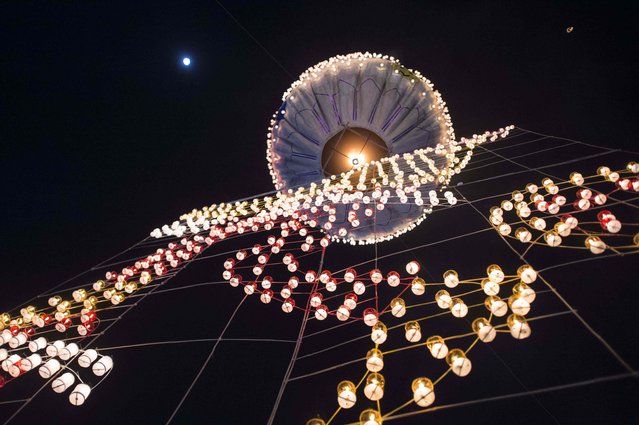
This picture taken on November 11, 2016 shows participants releasing a hot- air balloon during the Tazaungdaing Lighting Festival at Taunggyi in Myanmar' s northeastern Shan State. (Photo by Ye Aung Thu/AFP Photo)

This picture taken on November 11, 2016 shows participants releasing a hot- air balloon during the Tazaungdaing Lighting Festival at Taunggyi in Myanmar' s northeastern Shan State. The skies of central Myanmar were set ablaze this week with the beginning of the Taunggyi fire balloon festival, one of the most beautiful and dangerous celebrations in Asia. Brightly coloured balloons with hundreds of homemade fireworks woven into their frames are sent soaring into the night sky, showering down cascades of sparks onto adoring crowds. (Photo by Ye Aung Thu/AFP Photo)
Details
14 Nov 2016 10:08:00
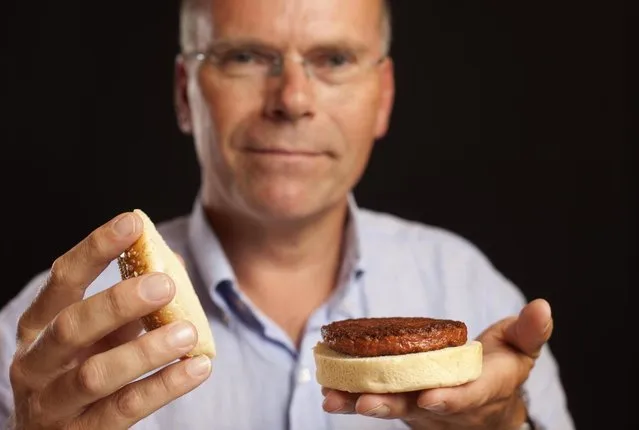
In this handout image provided by Ogilvy, a burger made from cultured beef, which has been developed by Professor Mark Post of Maastricht University in the Netherlands (pictured) is shown to the media during a press conference on August 5, 2013 in London, England. Cultured Beef could help solve the coming food crisis and combat climate change with commercial production of Cultured Beef beginning within ten to twenty years. (Photo by David Parry via Getty Images)

In this handout image provided by Ogilvy, a burger made from cultured beef, which has been developed by Professor Mark Post of Maastricht University in the Netherlands (pictured) is shown to the media during a press conference on August 5, 2013 in London, England. The in-vitro burger, cultured from cattle stem cells, the first example of what its creator says could provide an answer to global food shortages and help combat climate change, was fried in a pan and tasted by two volunteers. The burger is the result of years of research by Dutch scientist Mark Post, a vascular biologist at the University of Maastricht, who is working to show how meat grown in petri dishes might one day be a true alternative to meat from livestock.The meat in the burger has been made by knitting together around 20,000 strands of protein that has been cultured from cattle stem cells in Post's lab. (Photo by David Parry)

Details
06 Aug 2013 08:48:00


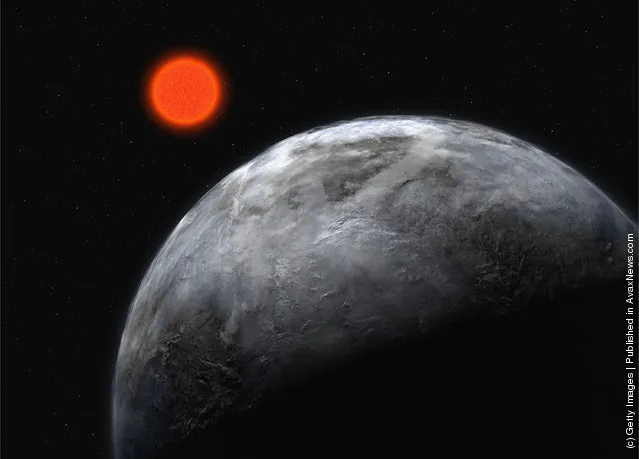
In this artist's impression supplied by the ESO (European Southern Observatory) on April 25, 2007, the planetary system around the red dwarf, Gliese 581, is pictured showing what astronomers believe is the most earth like planet found outside our solar system to date. Using the ESO 3.6-m telescope in Chile, astronomers have uncovered the planet which could have water running on its surface. The planet orbits the faint star Gliese 581, which is 20.5 light-years away in the constellation Libra. (Photo by ESO via Getty Images)
Details
12 Apr 2011 11:00:00