Loading...
Done
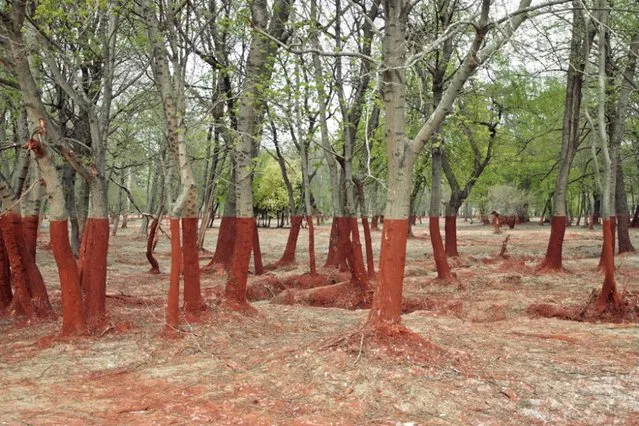
Ajka alumina plant accident

The photograph you see above isn’t the result of Photoshop or infrared photography. Captured by Spanish photographer Palíndromo Mészáros, it shows what the landscape of Ajka, Hungary looked like half a year after the Ajka alumina plant accident — an industrial disaster in which 35 million cubic feet of toxic waste flooded the land to a height of around 6.5 feet. Mészáros lined up the thick red line caused by the sludge with the horizon line to obtain this surreal image.
Details
13 Jul 2012 05:24:00
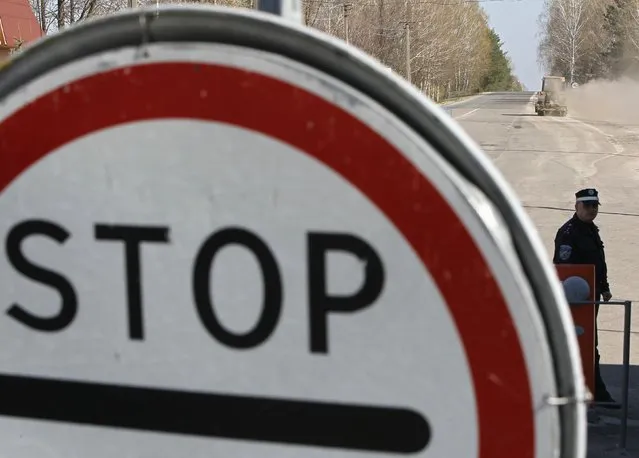
A guard stands at Dityatki checkpoint, marking a 30 km (18-mile) zone around the Chernobyl nuclear power plant April 23, 2013. Ukraine will mark the 27th anniversary of the Chernobyl disaster, the world's worst civil nuclear accident, on April 26. (Photo by Gleb Garanich/Reuters)

A guard stands at Dityatki checkpoint, marking a 30 km (18-mile) zone around the Chernobyl nuclear power plant April 23, 2013. Ukraine will mark the 27th anniversary of the Chernobyl disaster, the world's worst civil nuclear accident, on April 26. (Photo by Gleb Garanich/Reuters)
Details
27 Apr 2013 09:27:00
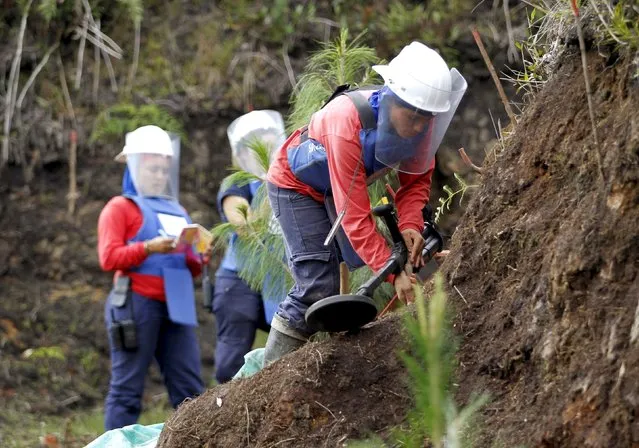
Natalia Arango works with her mine detector in a zone of landmines planted by rebels groups near Sonson in Antioquia province, November 19, 2015. (Photo by Fredy Builes/Reuters)

Natalia Arango works with her mine detector in a zone of landmines planted by rebels groups near Sonson in Antioquia province, November 19, 2015. Women's work takes on a nontraditional meaning for fifteen Colombian women who work to rid the Antioquia Mountains of deadly landmines as the country edges closer to a peace agreement with Marxist rebels to end over a decade of conflict which has claimed 220,000 lives. (Photo by Fredy Builes/Reuters)
Details
27 Nov 2015 04:44:00
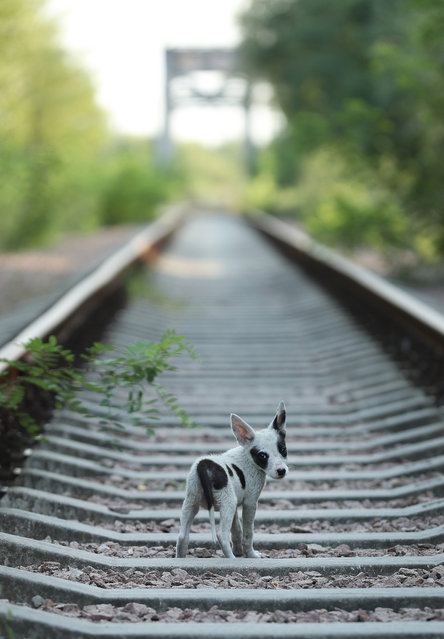
A stray puppy walks along abandoned train tracks near the Chernobyl nuclear power plant on August 19, 2017 near Chornobyl, Ukraine. (Photo by Sean Gallup/Getty Images)

A stray puppy walks along abandoned train tracks near the Chernobyl nuclear power plant on August 19, 2017 near Chornobyl, Ukraine. An estimated 900 stray dogs live in the exclusion zone, many of them likely the descendants of dogs left behind following the mass evacuation of residents in the aftermath of the 1986 nuclear disaster at Chernobyl. (Photo by Sean Gallup/Getty Images)
Details
24 Aug 2017 09:28:00
Flowers In The Wild By Adnan Mirani

The Plants like flower grow up in the wild. Spring 2014 near Paveh, Kermanshah, Iran
Details
23 Jul 2014 12:13:00
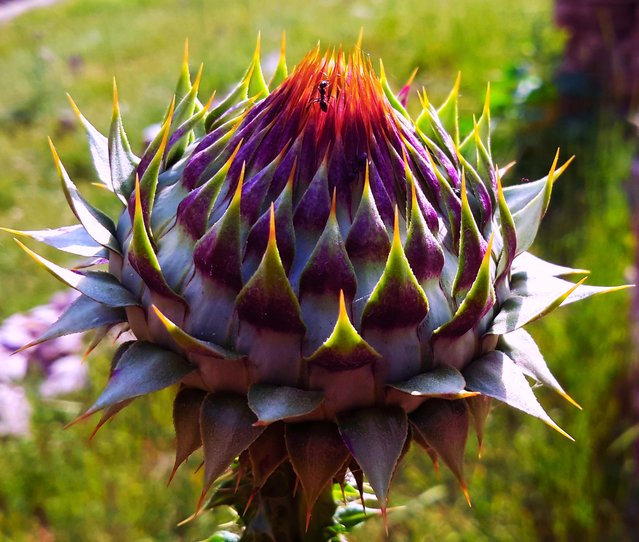
A Kiss From Mother Nature - Psychotria Elata

Psychotria is a genus containing some 1900 species within the plant family Rubiaceae. Members of the genus are small understorey trees in tropical forests. The former genus Cephaelis is considered a synomym of Psychotria.
Details
28 May 2013 10:07:00
A tourist stands on the shore of a private beach in Naama Bay, Sharm el-Sheikh, south Sinai, Egypt, Sunday, November 8, 2015. Britain's foreign secretary says airport security in many cities will need to be overhauled if it is confirmed the Russian plane crash in the Sinai was caused by a bomb planted by the Islamic State group or someone inspired by the militants. (Photo by Vinciane Jacquet/AP Photo)

A tourist stands on the shore of a private beach in Naama Bay, Sharm el-Sheikh, south Sinai, Egypt, Sunday, November 8, 2015. Britain's foreign secretary says airport security in many cities will need to be overhauled if it is confirmed the Russian plane crash in the Sinai was caused by a bomb planted by the Islamic State group or someone inspired by the militants. (Photo by Vinciane Jacquet/AP Photo)
Details
10 Nov 2015 08:00:00
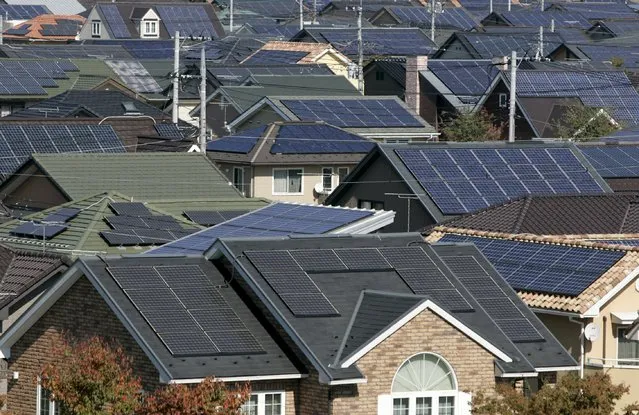
Rooftops of solar powered houses are pictured in Ota, 80 km northwest of Tokyo in this October 28, 2008 file photo. One by one, Japan is turning off the lights at the giant oil-fired power plants that propelled it to the ranks of the world's top industrialised nations. With nuclear power in the doldrums after the Fukushima disaster, it's solar energy that is becoming the alternative. (Photo by Yuriko Nakao/Reuters)

Rooftops of solar powered houses are pictured in Ota, 80 km northwest of Tokyo in this October 28, 2008 file photo. One by one, Japan is turning off the lights at the giant oil-fired power plants that propelled it to the ranks of the world's top industrialised nations. With nuclear power in the doldrums after the Fukushima disaster, it's solar energy that is becoming the alternative. Solar power is set to become profitable in Japan as early as this quarter, according to the Japan Renewable Energy Foundation (JREF), freeing it from the need for government subsidies and making it the last of the G7 economies where the technology has become economically viable. (Photo by Yuriko Nakao/Reuters)
Details
24 Nov 2015 08:04:00