Loading...
Done
A mudlark uses a torch to look for items on the bank of the River Thames in London, Britain June 06, 2016. Mudlarking is believed to trace its origins to the 18th and 19th century, when scavengers searched the Thames' shores for items to sell. These days, history and archaeology fans are the ones hoping to find old relics such as coins, ceramics, artifacts or everyday items from across centuries. They wait for the low tide and then scour specific areas of exposed shores. "If you're in a field you could be out all day long, with the river you're restricted to about two or three hours," mudlark Nick Stevens said. While many just use the naked eye for their searches, others rely on metal detectors for which a permit from the Port of London Authority is needed. Digging also requires consent. (Photo by Neil Hall/Reuters)

A mudlark uses a torch to look for items on the bank of the River Thames in London, Britain June 06, 2016. Mudlarking is believed to trace its origins to the 18th and 19th century, when scavengers searched the Thames' shores for items to sell. These days, history and archaeology fans are the ones hoping to find old relics such as coins, ceramics, artifacts or everyday items from across centuries. their finds with the Portable Antiquities Scheme. Any item over 300 years old must be recorded. (Photo by Neil Hall/Reuters)
Details
27 Aug 2016 10:43:00
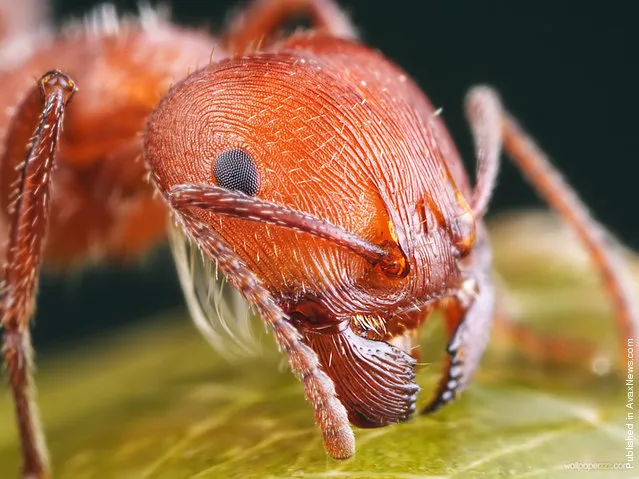
Ants

Once upon a time a myth was born that insects, unlike animals, are just a machines that not capable of learning and survive only based on their instincts. That myth has become the widespread opinion. Of course, this opinion is indeed erroneous, like many other widespread opinions. Let us try to find out which part is a myth and which part is true.
Details
30 Oct 2011 11:34:00
Cuban girls dressed as nurses and a lizard wait for their turn to dance during a visit by the Gay Men's Chorus of Washington in Havana July 13, 2015. The choir made its first appearance on July 12, 2015 in Cuba as part of a tour that will include a dozen concerts in the context of the restoration of relations between the island and the United States. (Photo by Enrique de la Osa/Reuters)

Cuban girls dressed as nurses and a lizard wait for their turn to dance during a visit by the Gay Men's Chorus of Washington in Havana July 13, 2015. The choir made its first appearance on July 12, 2015 in Cuba as part of a tour that will include a dozen concerts in the context of the restoration of relations between the island and the United States. (Photo by Enrique de la Osa/Reuters)
Details
22 Jul 2015 12:19:00
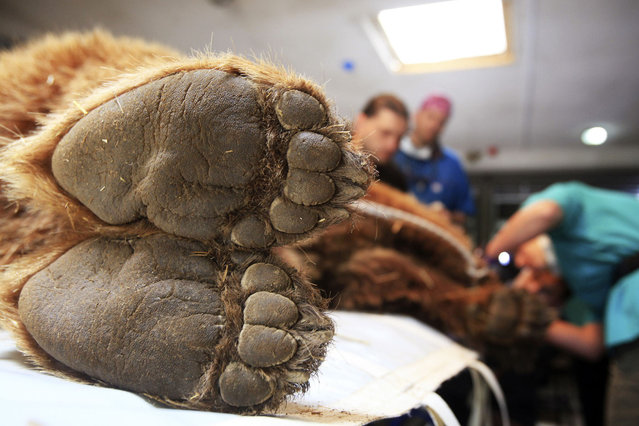
A brown bear is checked by foreign veterinaries and local staff members at the Four Paws Bear Sanctuary in Pristina, on May 9, 2014. (Photo by Hazir Reka/Reuters)

A brown bear is checked by foreign veterinaries and local staff members at the Four Paws Bear Sanctuary in Pristina, on May 9, 2014. (Photo by Hazir Reka/Reuters)
Details
10 May 2014 15:00:00
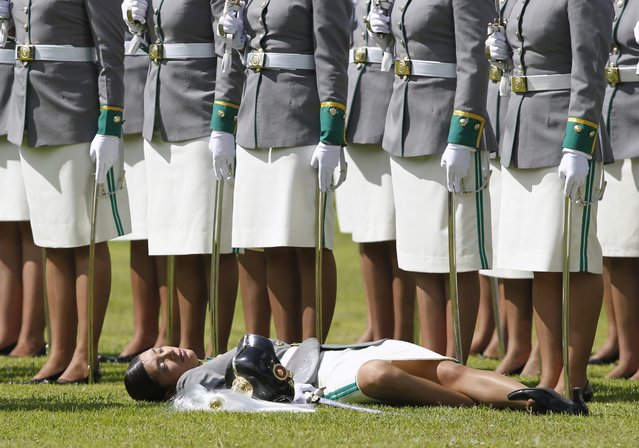
A cadet lies on the grass after collapsing during a promotion ceremony at a police school in Bogota December 7, 2012. (Photo by John Vizcaino/Reuters)

A cadet lies on the grass after collapsing during a promotion ceremony at a police school in Bogota December 7, 2012. (Photo by John Vizcaino/Reuters)
Details
19 Dec 2012 12:32:00
People stand in queue keeping social distance beside a Covid-19 awareness scarecrows placed by Chennai municipality at a market during a government-imposed nationwide lockdown as a preventive measure against the COVID-19 coronavirus, in Chennai on April 11, 2020. (Photo by Arun Sankar/AFP Photo)

People stand in queue keeping social distance beside a Covid-19 awareness scarecrows placed by Chennai municipality at a market during a government-imposed nationwide lockdown as a preventive measure against the COVID-19 coronavirus, in Chennai on April 11, 2020. (Photo by Arun Sankar/AFP Photo)
Details
13 Apr 2020 00:07:00
Kamchatka brown bears at Kurile Lake in Kamchatka peninsula’s volcanic terrain, Russia on August, 2017. Kamchatka brown bears are generally not dangerous to humans, and only 1% of encounters result in attack. (Photo by Igor Ivanko/Anadolu Agency/Getty Images)

Kamchatka brown bears at Kurile Lake in Kamchatka peninsula’s volcanic terrain, Russia on August, 2017. Kamchatka brown bears are generally not dangerous to humans, and only 1% of encounters result in attack. (Photo by Igor Ivanko/Anadolu Agency/Getty Images)
Details
03 Sep 2017 07:17:00
A girl smiles as her hair is blown by a strong wind in the Chinatown area in Yokohama, near Tokyo, Friday, January 27, 2017. (Photo by Koji Sasahara/AP Photo)

A girl smiles as her hair is blown by a strong wind in the Chinatown area in Yokohama, near Tokyo, Friday, January 27, 2017. (Photo by Koji Sasahara/AP Photo)
Details
29 Jan 2017 11:49:00