Loading...
Done
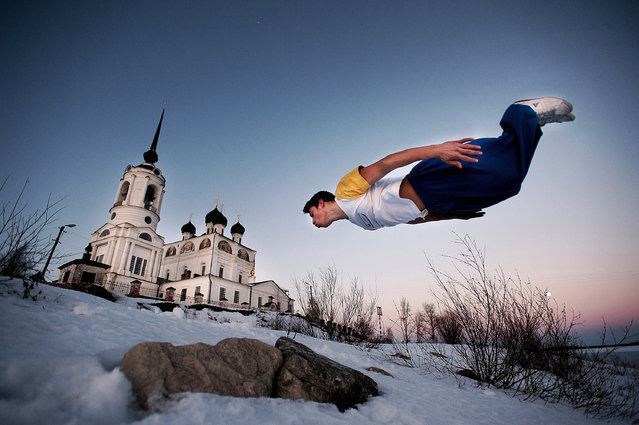
Anton Unitsyn, Russia. Shortlist, Professional , Daily Life. Parkour jumpers on their daily training. On the background – one of the main Solvychegodsk sights – Blagoveshchensky Cathedral. This church is among 3 churches, that survived soviet times. At the begining of 20th century there were 13 churches in Solvichegodsk. After breakdown of the communism, Solvichegodsk as many small towns in russia is stuck in it's past. Despite everything, people in Solvichegodsk still belive in their positive future, and wait for wind of change. (Photo by Anton Unitsyn/Sony World Photography Awards)

Anton Unitsyn, Russia. Shortlist, Professional , Daily Life. Parkour jumpers on their daily training. On the background – one of the main Solvychegodsk sights – Blagoveshchensky Cathedral. This church is among 3 churches, that survived soviet times. At the begining of 20th century there were 13 churches in Solvichegodsk. After breakdown of the communism, Solvichegodsk as many small towns in russia is stuck in it's past. Despite everything, people in Solvichegodsk still belive in their positive future, and wait for wind of change. (Photo by Anton Unitsyn/Sony World Photography Awards)
Details
25 Feb 2016 12:16:00
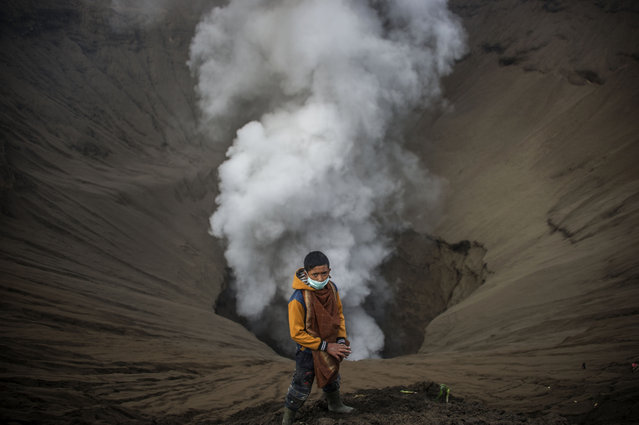
An Indonesian boy waits as he prepares to catch offerings released by Hindu devotees of the Tengger tribe during the Yadnya Kasada festival, on the crater of Mount Bromo in Probolinggo on July 21, 2016. During the annual Yadnya Kasada festival the Tenggerese climb Mount Bromo, an active volcano, and seek the blessing from the main deity Hyang Widi Wasa by presenting offerings of rice, fruit, livestock and other local produce. (Photo by Juni Kriswanto/AFP Photo)

An Indonesian boy waits as he prepares to catch offerings released by Hindu devotees of the Tengger tribe during the Yadnya Kasada festival, on the crater of Mount Bromo in Probolinggo on July 21, 2016. During the annual Yadnya Kasada festival the Tenggerese climb Mount Bromo, an active volcano, and seek the blessing from the main deity Hyang Widi Wasa by presenting offerings of rice, fruit, livestock and other local produce. (Photo by Juni Kriswanto/AFP Photo)
Details
22 Jul 2016 12:33:00
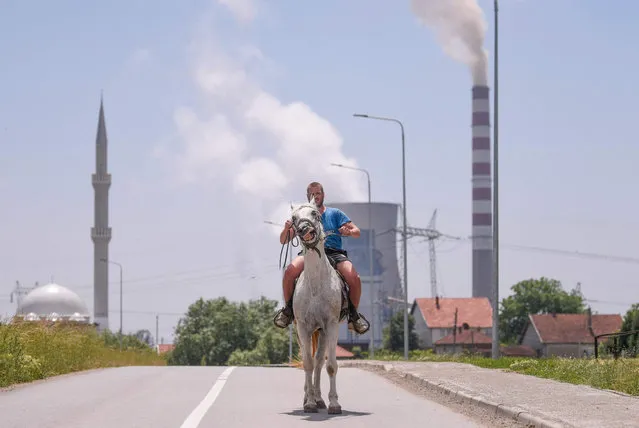
A man rides his horse next to Kosovo's coal-fired power plant near the town of Obilic on May 30, 2022. Two coal-fired power plants, Kosova A and Kosova B, are the main source of the alarming air pollution levels in Kosovo, and particularly in the town of Obilic, which is located between the two plants and near to their ash disposal sites and open-pit lignite mines. (Photo by Armend Nimani/AFP Photo)

A man rides his horse next to Kosovo's coal-fired power plant near the town of Obilic on May 30, 2022. Two coal-fired power plants, Kosova A and Kosova B, are the main source of the alarming air pollution levels in Kosovo, and particularly in the town of Obilic, which is located between the two plants and near to their ash disposal sites and open-pit lignite mines. (Photo by Armend Nimani/AFP Photo)
Details
01 Jun 2022 05:38:00
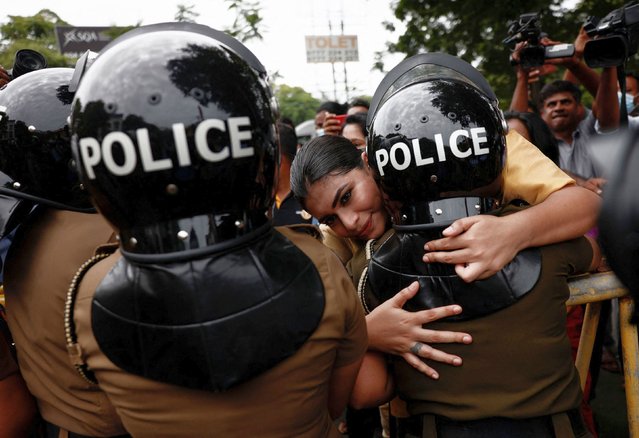
Hirunika Premachandra, a politician and a leader of Samagi Vanitha Balawegaya, a part of the main opposition party Samagi Jana Balawegaya, hugs a female police member during a protest near Sri Lanka's Prime Minister Ranil Wickremesinghe's private residence, amid the country's economic crisis, in Colombo, Sri Lanka on June 22, 2022. (Photo by Dinuka Liyanawatte/Reuters)

Hirunika Premachandra, a politician and a leader of Samagi Vanitha Balawegaya, a part of the main opposition party Samagi Jana Balawegaya, hugs a female police member during a protest near Sri Lanka's Prime Minister Ranil Wickremesinghe's private residence, amid the country's economic crisis, in Colombo, Sri Lanka on June 22, 2022. (Photo by Dinuka Liyanawatte/Reuters)
Details
24 Jun 2022 03:36:00
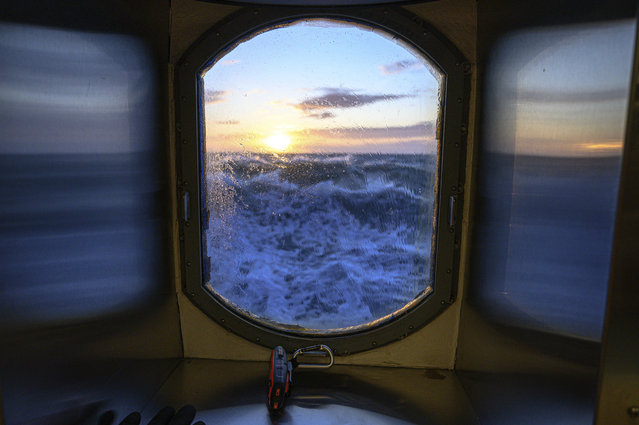
This November 8, 2019, photo provided by John Guillote shows a view from the main lab of the Sikuliaq in the Chukchi Sea. University of Washington scientists onboard the research vessel are studying the changes and how less sea ice will affect coastlines, which already are vulnerable to erosion because increased waves delivered by storms. More erosion would increase the chance of winter flooding in villages and danger to hunters in small boats. (Photo by John Guillote via AP Photo)

This November 8, 2019, photo provided by John Guillote shows a view from the main lab of the Sikuliaq in the Chukchi Sea. University of Washington scientists onboard the research vessel are studying the changes and how less sea ice will affect coastlines, which already are vulnerable to erosion because increased waves delivered by storms. More erosion would increase the chance of winter flooding in villages and danger to hunters in small boats. (Photo by John Guillote via AP Photo)
Details
26 Aug 2021 08:22:00
An anti-lockdown activist dressed as Father Christmas is arrested in Grosvenor Square during a demonstration in London, England, on November 28, 2020. London is to return to “Tier 2” or “high alert” covid-19 restrictions once the current England-wide coronavirus lockdown ends next Wednesday. All three of the tiers, assigned to local authorities across England, have been strengthened since the lockdown began on November 5, however, with the main impacts to be felt by the hospitality sector. (Photo by Mark Thomas/i-Images)

An anti-lockdown activist dressed as Father Christmas is arrested in Grosvenor Square during a demonstration in London, England, on November 28, 2020. London is to return to “Tier 2” or “high alert” covid-19 restrictions once the current England-wide coronavirus lockdown ends next Wednesday. All three of the tiers, assigned to local authorities across England, have been strengthened since the lockdown began on November 5, however, with the main impacts to be felt by the hospitality sector. (Photo by Mark Thomas/i-Images)
Details
30 Nov 2020 00:07:00
Villagers from the Porto Novo community load into their canoes arapaima or pirarucu, the largest freshwater fish species in South America and one of the largest in the world, while fishing in Poco Fundo lake along a branch of the Solimoes river, one of the main tributaries of the Amazon, in the Mamiraua nature reserve near Fonte Boa about 600 km (373 miles) west of Manaus, November 26, 2013. (Photo by Bruno Kelly/Reuters)

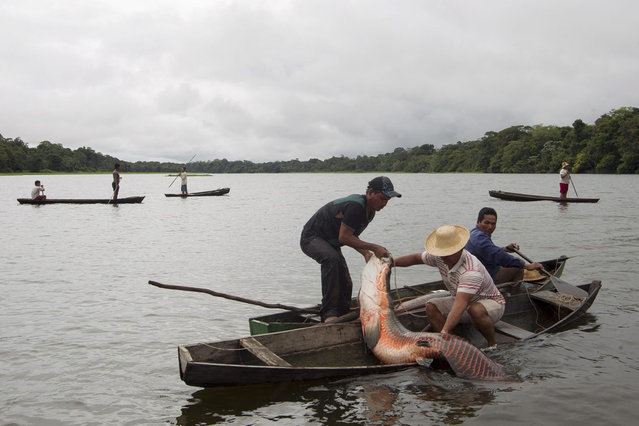
Villagers from the Porto Novo community load into their canoes arapaima or pirarucu, the largest freshwater fish species in South America and one of the largest in the world, while fishing in Poco Fundo lake along a branch of the Solimoes river, one of the main tributaries of the Amazon, in the Mamiraua nature reserve near Fonte Boa about 600 km (373 miles) west of Manaus, November 26, 2013. Catching the arapaima, a fish that is sought after for its meat and is considered by biologists to be a living fossil, is only allowed once a year by Brazil's environmental protection agency. The minimum size allowed for a fisherman to keep an arapaima is 1.5 meters (4.9 feet). (Photo by Bruno Kelly/Reuters)
Details
17 Dec 2013 08:03:00
Master of throat singing (or Khoomei) Aikhan Orzhak (L) and model Choigana Kertek, dressed in traditional costume, perform during sunset at the Aldyn Bulak area on the bank of the Yenisei River outside the village of Ust-Elegest in Tuva region, Southern Siberia, Russia, October 7, 2015. The region is inhabited by Tuvans, historically cattle-herding nomads, who nowadays practise two main confessions - Buddhism and Shamanism. (Photo by Ilya Naymushin/Reuters)

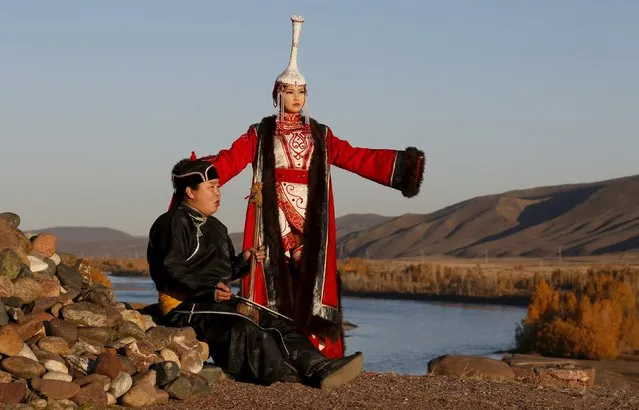
Master of throat singing (or Khoomei) Aikhan Orzhak (L) and model Choigana Kertek, dressed in traditional costume, perform during sunset at the Aldyn Bulak area on the bank of the Yenisei River outside the village of Ust-Elegest in Tuva region, Southern Siberia, Russia, October 7, 2015. The region is inhabited by Tuvans, historically cattle-herding nomads, who nowadays practise two main confessions – Buddhism and Shamanism. (Photo by Ilya Naymushin/Reuters)
Details
17 Oct 2015 08:03:00