Loading...
Done
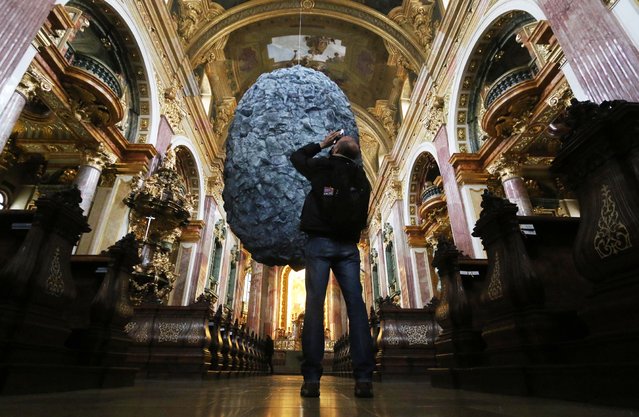
A visitor takes a photo of a boulder plastic made of synthetic material called “To be in Limbo” hangs from the ceiling of the 20 meter high Jesuit Church in Vienna, Austria, Tuesday, November 25, 2014. (Photo by Ronald Zak/AP Photo)

A visitor takes a photo of a boulder plastic made of synthetic material called “To be in Limbo” hangs from the ceiling of the 20 meter high Jesuit Church in Vienna, Austria, Tuesday, November 25, 2014. The eight meter high, hollow and 700 kilogram heavy sculpture from the artists group Steinbrener/Dempf and Huber is supposed to symbolize faith and its threatening moments. The installation will remain until April 19, 2015 and then move to a church in Hamburg, Germany. (Photo by Ronald Zak/AP Photo)
Details
29 Nov 2014 12:08:00
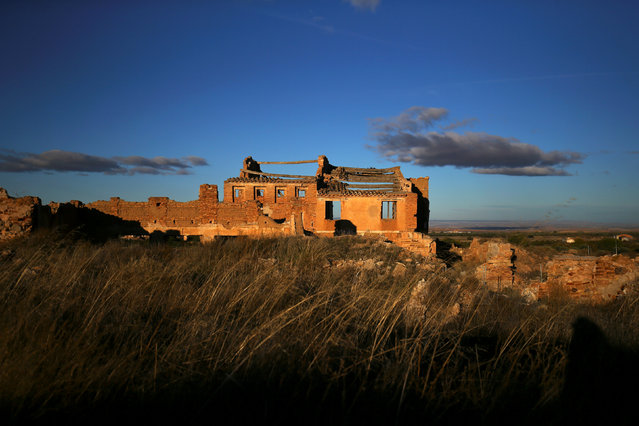
Ruins of a building are seen in the old village of Belchite, in northern Spain, November 13, 2016. (Photo by Andrea Comas/Reuters)

Ruins of a building are seen in the old village of Belchite, in northern Spain, November 13, 2016. Almost 80 years ago Tomas Ortin fled under the cover of night from his home in the small town of Belchite on Spain's northern plains to escape with hundreds of others from one of the bloodiest battles of the country's civil war. At 94 years old, Ortin now lives just across the road from Belchite, which has lain in ruins since Republican forces attacked it, a symbol of the destruction caused by the 1936-1939 war in which an estimated 500,000 people died. (Photo by Andrea Comas/Reuters)
Details
30 Nov 2016 12:31:00
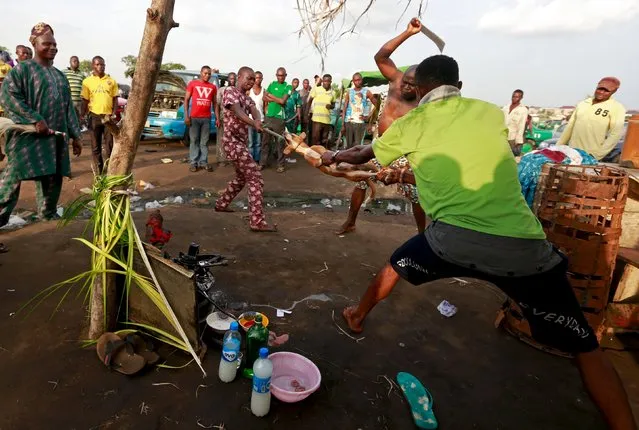
Chief priest Gbenga Saala raises a cutlass to kill a dog during an annual prayer and sacrifice celebration of the iron god Ogun in Abuja, Nigeria, June 23, 2015. (Photo by Afolabi Sotunde/Reuters)

Chief priest Gbenga Saala raises a cutlass to kill a dog during an annual prayer and sacrifice celebration of the iron god Ogun in Abuja, Nigeria, June 23, 2015. Every year worshippers offer a dog as sacrifice to Ogun, a traditional Nigerian deity, in hope of an auspicious year ahead. Taxi drivers, blacksmiths, panel beaters and mechanics – trades that depend on metal for their livelihood – pay homage to Ogun, led by high priest Gbenga Saala. As part of the ceremony, the priest pours the dog’s blood on symbols of these workers’ trade: keys, spanners and other tools piled up in a metal barrel. (Photo by Afolabi Sotunde/Reuters)
Details
15 Sep 2015 13:56:00
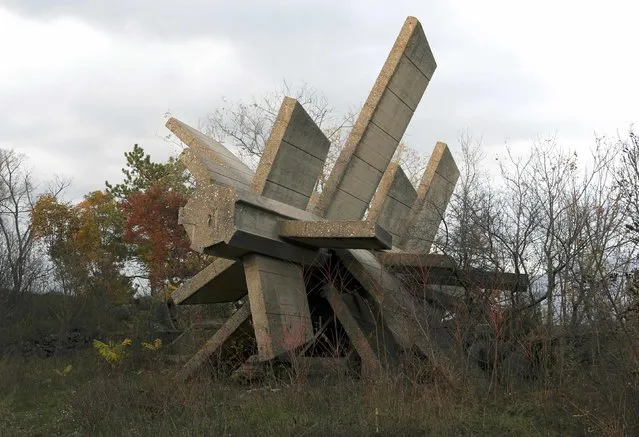
General view of the monument to memory of soldiers who liberated the city of Knin, in Knin, Croatia November 10, 2014. (Photo by Antonio Bronic/Reuters)

General view of the monument to memory of soldiers who liberated the city of Knin – in Knin, Croatia on November 10, 2014. Across the former Yugoslavia stand giant monuments to a state that no longer exists, once visited and celebrated during public holidays such as Republic Day on November 29, marking the creation of socialist Yugoslavia. Many are now neglected or ignored, aging symbols of a joint state forged during World War Two but torn apart by nationalism half a century later. Republic Day is no longer marked in any of the seven independent states that emerged from its ashes. (Photo by Antonio Bronic/Reuters)
Details
01 Dec 2014 14:00:00
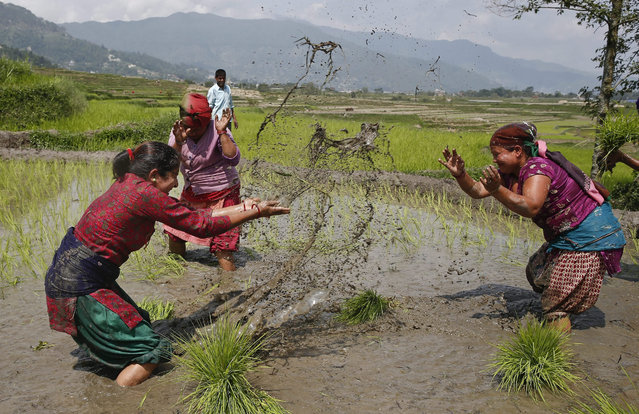
Nepalese women farmers spray mud water at each other while planting rice in a paddy field during the National Paddy Day in the village of Jitpur in Kathmandu, Nepal, 30 June 2015. On this day, known as Asar Pandra, farmers begin the annual rice planting season and mark the day with various festivities such as preparing rice meals with muddy water, spreads mud among farmers. (Photo by Narendra Shrestha/EPA)

Nepalese women farmers spray mud water at each other while planting rice in a paddy field during the National Paddy Day in the village of Jitpur in Kathmandu, Nepal, 30 June 2015. On this day, known as Asar Pandra, farmers begin the annual rice planting season and mark the day with various festivities such as preparing rice meals with muddy water, spreads mud among farmers. The Mud being a symbol for a prosperous season. The agricultural sector contributes about 60 per cent to Nepal's gross domestic product. (Photo by Narendra Shrestha/EPA)
Details
01 Jul 2015 13:16:00
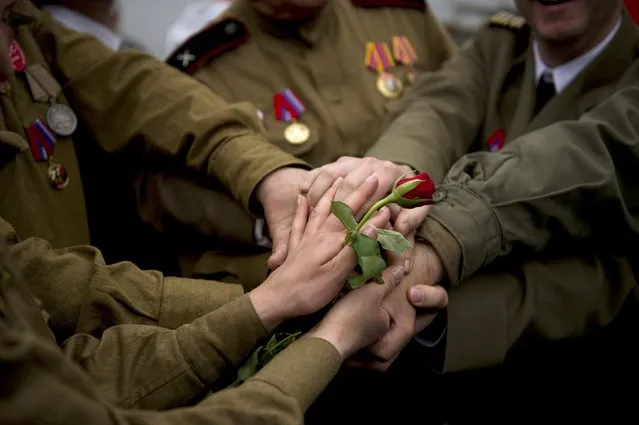
Members of a historical re-enactment group dressed as U.S. and Soviet Army soldiers take part in Elbe Day celebrations, in eastern German city of Torgau at the river Elbe, April 25, 2015. (Photo by Stefanie Loos/Reuters)

Members of a historical re-enactment group dressed as U.S. and Soviet Army soldiers take part in Elbe Day celebrations, in eastern German city of Torgau at the river Elbe, April 25, 2015. Elbe Day commemorates the encounter of the Allies 70 years ago, on the 25th of April 1945 when American and Soviet army units joined together on the destroyed bridge over the river Elbe. The photograph of the meaningful handshake made its way around the world and became a symbol of the near end of World War II in Europe. (Photo by Stefanie Loos/Reuters)
Details
26 Apr 2015 08:58:00
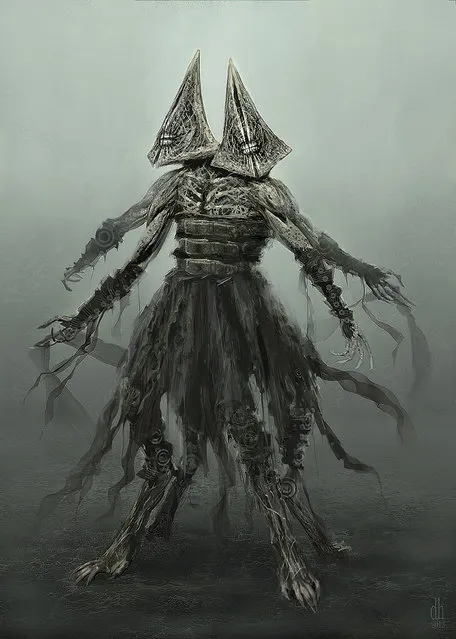
Awesome Zodiac Monsters By Damon Hellandbrand

Have you ever found something mesmerizing in the beautifully and intricately drawn visages of beasts? Damon Hellandbrand finds it to be true, which is the reason why he depicted each of the zodiac signs in a completely new light. Only their main characteristics remain, such as Cancer`s pincers and Scorpio`s stinger, while everything else was completely altered. Other zodiac signs are recognized by their prominent features, such as Gemini`s two heads, Libra`s symbol of balance that looks like two connected cages, and Sagittarius`s bow. Every picture, when looked at separately, resembles a concept art, taken from a video game. However, their combination forms a horrific, yet mystifying puzzle of Zodiac signs. (Photo by Damon Hellandbrand)
Details
15 Jan 2015 13:56:00
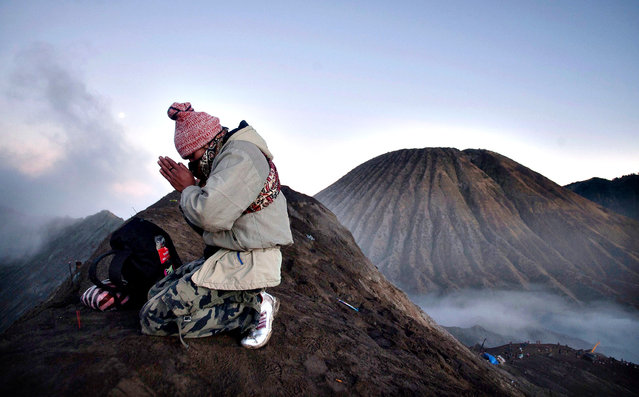
A Tengger tribesman prays at Mount Bromo during the annual Kasada ceremony in East Java on August 12, 2014. The Kasada ceremony is a festival held every 14th day of the Kasada month in the traditional Hindu lunar calender to honour Sang Hyang Widhi (God Almighty) and is based on the legend of Roro Anteng and Joko Seger from the Majapahit Kingdom, from which their Tengger tribe name originates. (Photo by Juni Kriswanto/AFP Photo)

A Tengger tribesman prays at Mount Bromo during the annual Kasada ceremony in East Java on August 12, 2014. The Kasada ceremony is a festival held every 14th day of the Kasada month in the traditional Hindu lunar calender to honour Sang Hyang Widhi (God Almighty) and is based on the legend of Roro Anteng and Joko Seger from the Majapahit Kingdom, from which their Tengger tribe name originates. Hundreds of worshippers from the Tengger tribe offer food and livestock as a symbolic sacrifice which they throw into the crater for the blessings of safety and prosperity to their familyies and community. (Photo by Juni Kriswanto/AFP Photo)
Details
16 Aug 2014 11:19:00