Loading...
Done
Upper Atmosphere Research Satellite (UARS)

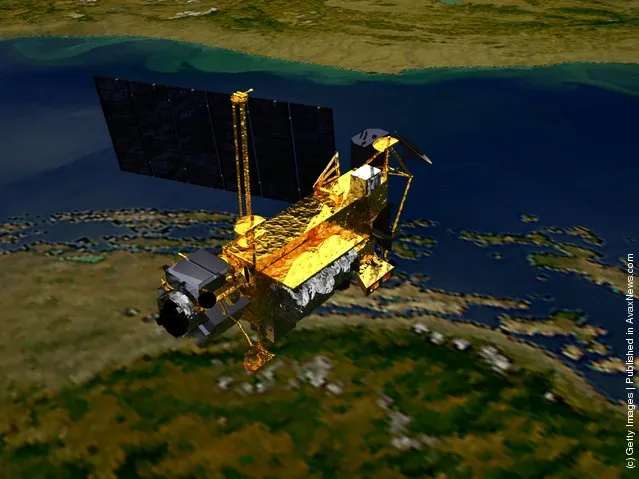
In this artist illustration handout from the National Aeronautics and Space Administration (NASA), the Upper Atmosphere Research Satellite (UARS) is seen. According to NASA, the 12,500 pound satellite will fall from orbit into earth's atmosphere anytime between September 22 through 24. It is estimated that the space craft will break up into about 100 pieces, with an estimated 26 of which could hit the earth over a possible 500 mile debris field. (Illustration by NASA via Getty Images)
Details
21 Sep 2011 10:49:00
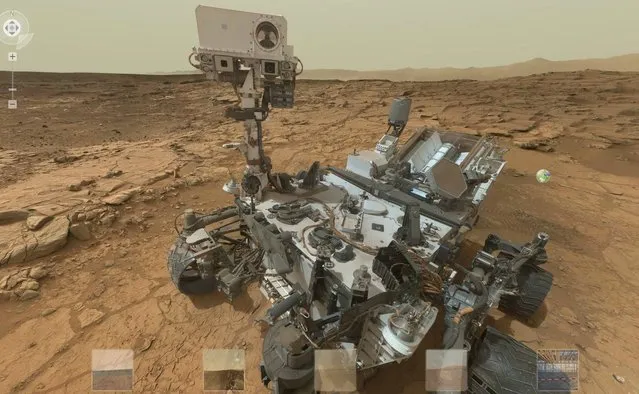
Mars Panorama (Photo by NASA/JPL-Caltech/MSSS/Andrew Bodrov)

360Cities PRO member Andrew Bodrov has just published another stunning panorama stitched from images taken by the Curiosity Rover on Mars. Photo: “Mars Panorama – Curiosity Rover: Martian Solar Day 177” (Photo by NASA/JPL-Caltech/MSSS/Andrew Bodrov)
Details
16 Feb 2013 09:58:00
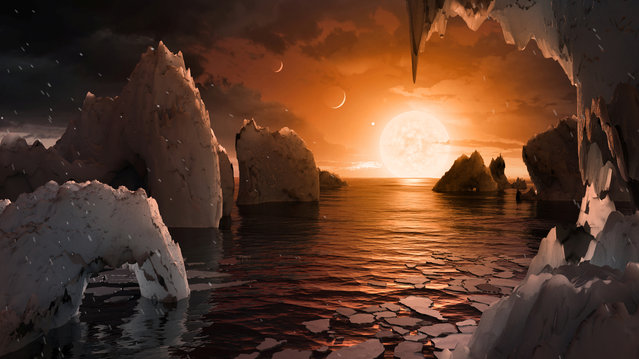
The possible surface of TRAPPIST-1f, one of seven newly discovered planets in the TRAPPIST-1 system that scientists using the Spitzer Space Telescope and ground based telescopes have discovered. (Photo by Reuters/NASA/JPL-Caltech)

The possible surface of TRAPPIST-1f, one of seven newly discovered planets in the TRAPPIST-1 system that scientists using the Spitzer Space Telescope and ground based telescopes have discovered. (Photo by Reuters/NASA/JPL-Caltech)
Details
07 Mar 2017 00:02:00
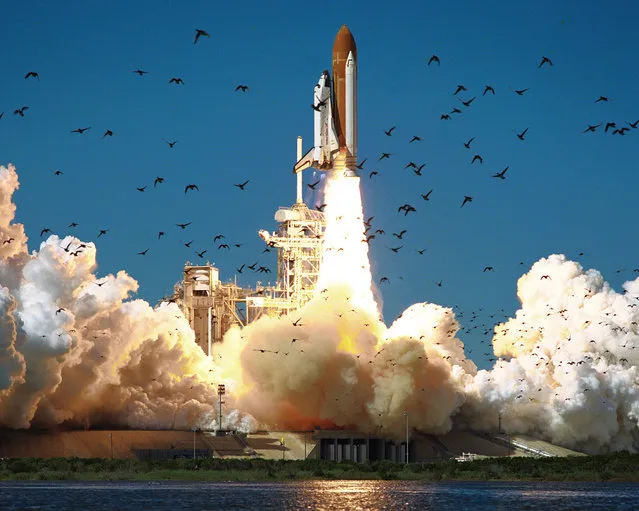
A wide-angle view shows the ascent of the shuttle Challenger on January 28, 1986. In the seconds after ignition, the rocket engines' hot blast began the process of destruction. (Photo by NASA)

A wide-angle view shows the ascent of the shuttle Challenger on January 28, 1986. In the seconds after ignition, the rocket engines' hot blast began the process of destruction. (Photo by NASA)
Details
28 Jan 2016 12:28:00
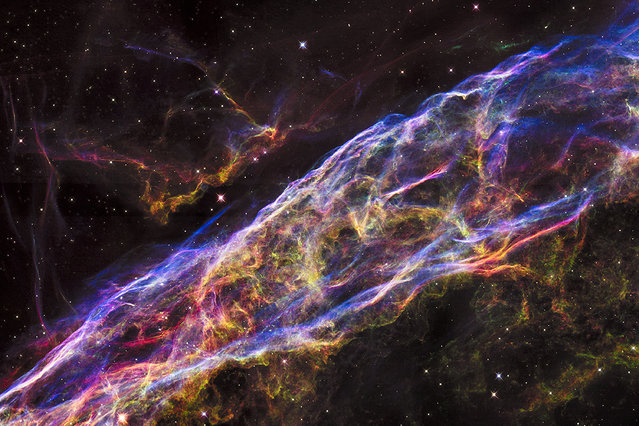
A small section of the expanding remains of the Veil Nebula, a massive star that exploded about 8,000 years ago. The entire nebula is 110 light-years across, covering six full moons on the sky as seen from Earth, and resides about 2,100 light-years away in the constellation Cygnus, the Swan. Image taken by NASA's Hubble Space Telescope. Released September 24, 2015. (Photo by Reuters/NASA/ESA/Hubble Heritage Team)

A small section of the expanding remains of the Veil Nebula, a massive star that exploded about 8,000 years ago. The entire nebula is 110 light-years across, covering six full moons on the sky as seen from Earth, and resides about 2,100 light-years away in the constellation Cygnus, the Swan. Image taken by NASA's Hubble Space Telescope. Released September 24, 2015. (Photo by Reuters/NASA/ESA/Hubble Heritage Team)
Details
10 Dec 2015 08:01:00


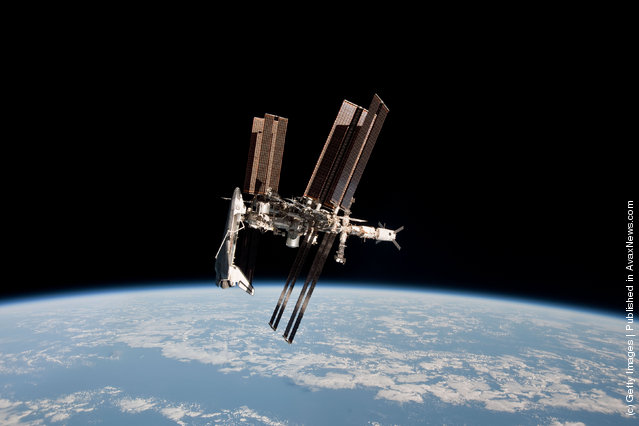
In this handout image provided by the European Space Agency (ESA) and NASA, the International Space Station and the docked space shuttle Endeavour orbit Earth during Endeavour's final sortie on May 23, 2011 in Space. Italian astronaut Paolo Nespoli captured the first-ever images of an orbiter docked to the International Space Station from the viewpoint of a departing vessel as he returned to Earth in a Soyuz capsule. (Photo by Paolo Nespoli - ESA/NASA via Getty Images)
Details
09 Jun 2011 11:28:00
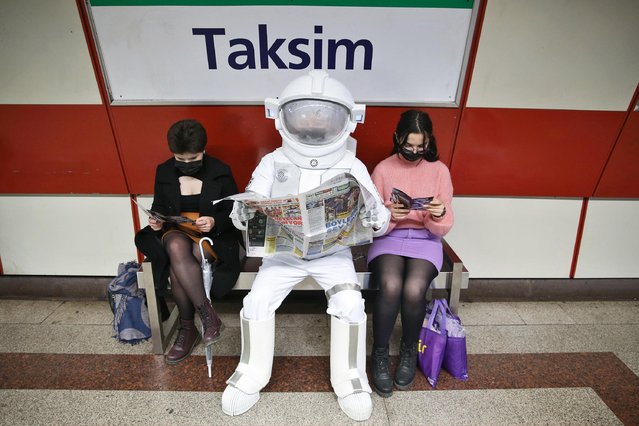
A person dressed as an astronaut is seen at a metro station in Istanbul, Turkey on December 6, 2021. A man with an astronaut outfit walked around the city's metro stations as part of the promotion of NASA Space Exhibition, which reflects 50 years of space studies and experiences of the NASA, to be opened at Metropol Istanbul Mall. (Photo by Mehmet Murat Onel/Anadolu Agency via Getty Images)

A person dressed as an astronaut is seen at a metro station in Istanbul, Turkey on December 6, 2021. A man with an astronaut outfit walked around the city's metro stations as part of the promotion of NASA Space Exhibition, which reflects 50 years of space studies and experiences of the NASA, to be opened at Metropol Istanbul Mall. (Photo by Mehmet Murat Onel/Anadolu Agency via Getty Images)
Details
16 Oct 2022 03:35:00
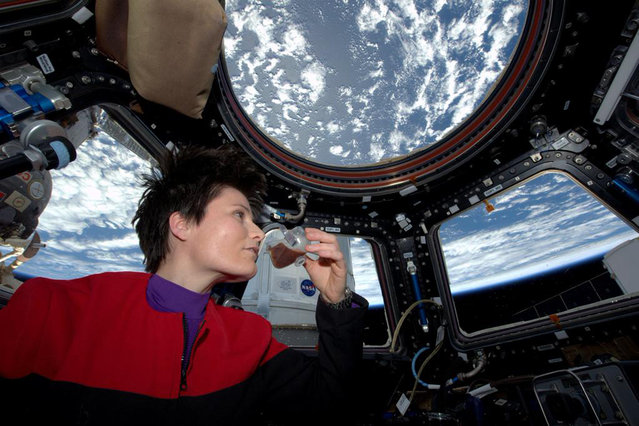
In this photo posted on Twitter, Sunday, May 3, 2015, and provided by NASA, Italian astronaut Samantha Cristoforetti sips espresso from a cup designed for use in zero-gravity, on the International Space Station. Cristoforetti, the first Italian woman in space, fired up the first espresso machine in space, which uses small capsules, or pods, of espresso coffee. (Photo by AP Photo/NASA)

In this photo posted on Twitter, Sunday, May 3, 2015, and provided by NASA, Italian astronaut Samantha Cristoforetti sips espresso from a cup designed for use in zero-gravity, on the International Space Station. Cristoforetti, the first Italian woman in space, fired up the first espresso machine in space, which uses small capsules, or pods, of espresso coffee. (Photo by AP Photo/NASA)
Details
09 May 2015 12:26:00