Loading...
Done
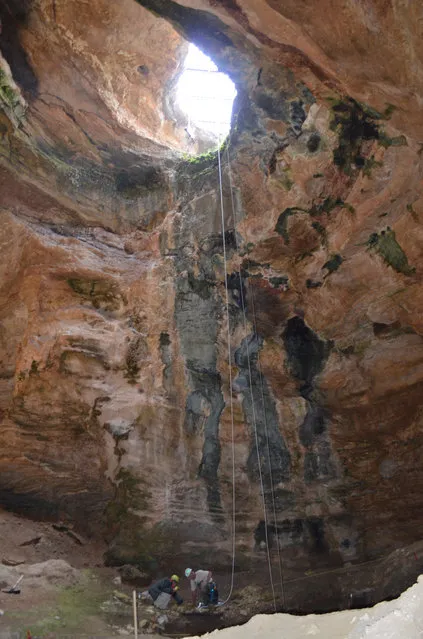
This July 2014 image provided by the Bureau of Land Management shows the interior of the Natural Trap Cave in north-central Wyoming. The cave holds the remains of tens of thousands of animals, including many now-extinct species, from the late Pleistocene period tens of thousands of years ago. Scientists have resumed digging for the first time in more than 30 years. (Photo by AP Photo/Bureau of Land Management)

This July 2014 image provided by the Bureau of Land Management shows the interior of the Natural Trap Cave in north-central Wyoming. The cave holds the remains of tens of thousands of animals, including many now-extinct species, from the late Pleistocene period tens of thousands of years ago. Scientists have resumed digging for the first time in more than 30 years. (Photo by AP Photo/Bureau of Land Management)
Details
10 Aug 2014 10:35:00
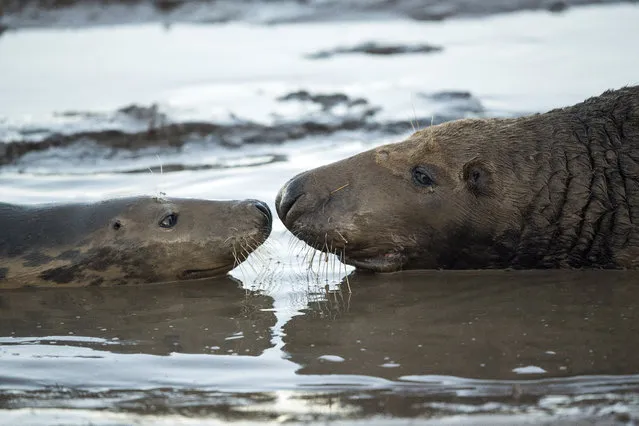
A Grey Seal pup and it's mother lay in the mud at the Lincolnshire Wildlife Trust's Donna Nook nature reserve on November 24, 2014 in Grimsby, England. Seal pup numbers have increased on last year with over 800 pups born at the reserve so far. Large bull seals are the first to arrive at the reserve in late October or early November where they will wait for females. (Photo by Dan Kitwood/Getty Images)

A Grey Seal pup and it's mother lay in the mud at the Lincolnshire Wildlife Trust's Donna Nook nature reserve on November 24, 2014 in Grimsby, England. Seal pup numbers have increased on last year with over 800 pups born at the reserve so far. Large bull seals are the first to arrive at the reserve in late October or early November where they will wait for females. (Photo by Dan Kitwood/Getty Images)
Details
26 Nov 2014 15:11:00
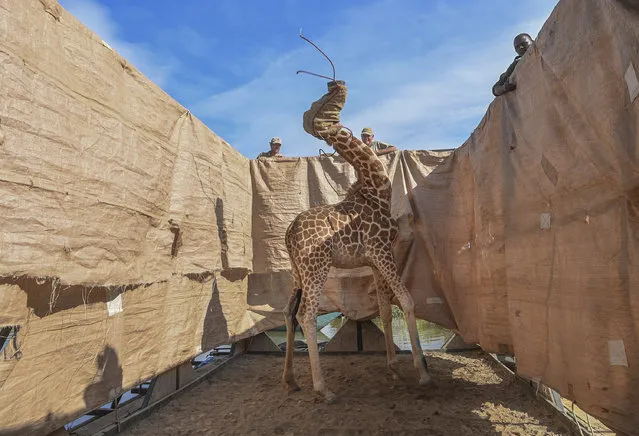
In this image released by World Press Photo, Thursday April 15, 2021, by Ami Vitale for CNN, titled Rescue of Giraffes from Flooding Island, which won the first prize in the Nature Singles category, shows A Rothschild's giraffe (Giraffa camelopardalis rothschildi) is transported to safety in a custom-built barge from a flooded Longicharo Island, Lake Baringo, in western Kenya, on Dec. 3, 2020. (Photo by Ami Vitale for CNN, World Press Photo via AP Photo)

In this image released by World Press Photo, Thursday April 15, 2021, by Ami Vitale for CNN, titled Rescue of Giraffes from Flooding Island, which won the first prize in the Nature Singles category, shows A Rothschild's giraffe (Giraffa camelopardalis rothschildi) is transported to safety in a custom-built barge from a flooded Longicharo Island, Lake Baringo, in western Kenya, on Dec. 3, 2020. (Photo by Ami Vitale for CNN, World Press Photo via AP Photo)
Details
16 Apr 2021 09:45:00
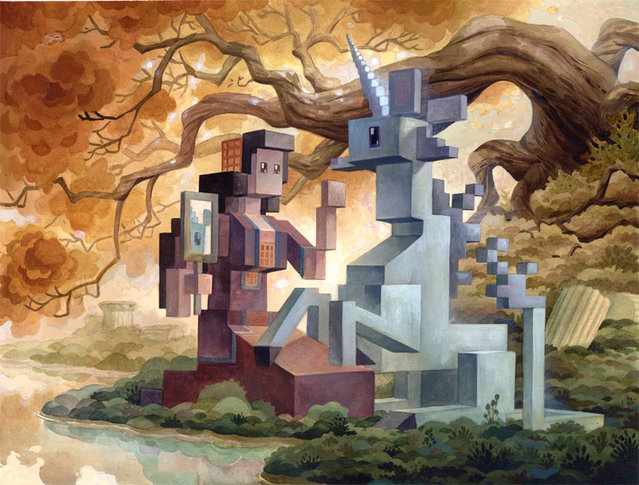
Pixelated Wilderness Illustrations

These Laura Bifano “Menagerie” images will surely mess with your eyes as you begin to lose sight of what’s real and what’s virtual. Inspired by her love of nature and of video game graphics, this artist made a unique collection of painted, pixelated animals, fusing the two distinct aesthetics in a harmonious and breathtaking manner.
Details
29 Nov 2012 10:31:00
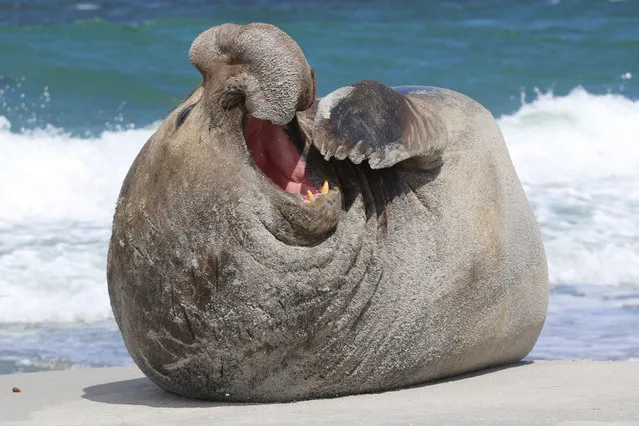
Elephant Seal. (Photo by David Crocker/Caters News Agency)

These hilarious photos show some of nature’s mightiest animals — yawning away! (Actually – not always; AvaxNews). The images were taken by photographers across the world, from the African savannas to the Pacific Ocean. Here: Elephant Seal. (Photo by David Crocker/Caters News Agency)
Details
20 Sep 2019 00:01:00
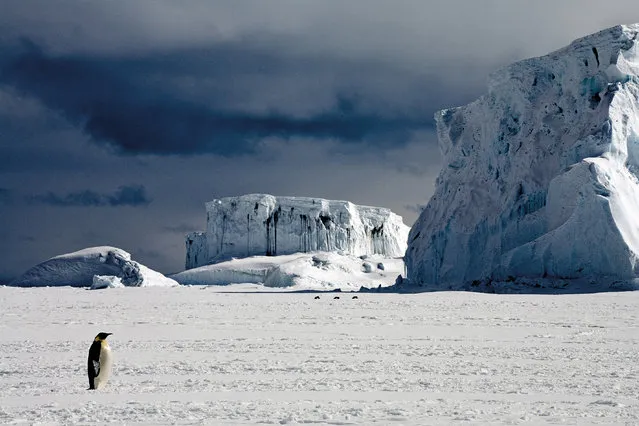
Image from Camille Seamans new book, “Melting Away”. (Photo by Camille Seaman/Barcroft Media)

Documenting the effects of climate change first hand over the past eight years, Camille Seaman fears we may be on the road to the last iceberg. Photographing the enormous frozen floats at both poles for the past eight years, the Californian adventurer has seen the receding ice shelves and experienced the changing warmer weather. Feeling that her intimate and emotional work documents a snapshot of history, Camille presents her series “The Last Iceberg” as a study of what she sees as the personality of each huge iceberg. Drawing parallels with the famous novel, “The Last of the Mohicans”, Camille, 42, wonders whether these unique, almost alien natural features will become a thing of the past or part of nature's renewal process. (Photo by Camille Seaman/Barcroft Media)
Details
02 Dec 2014 12:10:00
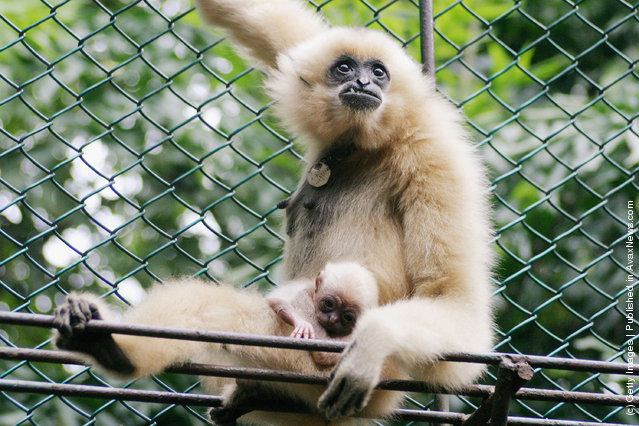
Newborn White-Cheeked Gibbon Nomascus

“Nomascus is the second most speciose genus of gibbons (family Hylobatidae). Originally this genus was a subgenus of Hylobates, and all individuals were considered one species, Hylobates concolor. Species within Nomascus are characterized by 52 chromosomes. Some species are all black, some light with a distinct black tuft of crown fur, and some by distinct, light-colored cheek patches. Nomascus is found from southern China (Yunnan) to southern Vietnam, and also on Hainan Island. One of the genus' species, Nomascus nasutus, has been deemed “the most critically endangered ape species in the world”. All of the species in this genus are endangered or critically endangered”. – Wikipedia

Photo: A newborn White-Cheeked Gibbon clings to its mother in the Nanning Zoo on April 12, 2004 in Nanning, Guangxi province, China. The White-Cheeked Gibbon's natural habitat is Southern China as well as Vietnam and Laos. They are classified as highly endangered and are on the brink of extinction due to poaching and reduction of natural rainforests. (Photo by Getty Images)
Details
12 Aug 2011 11:51:00
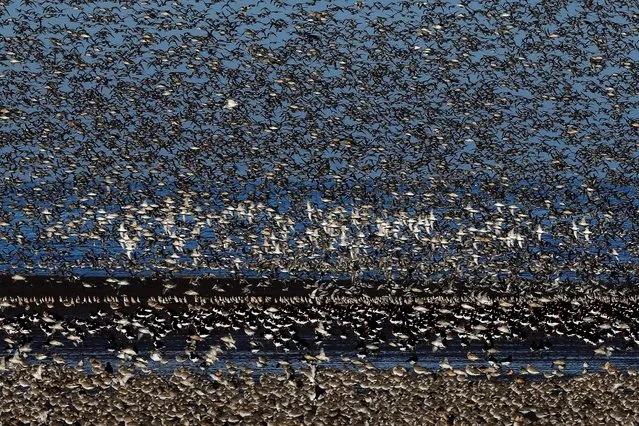
Waders flock together seeking new feeding grounds during the incoming tide. (Photo by Dan Kitwood/Getty Images via The Palm Beach Post)

“The RSPB’s Snettisham Nature Reserve lies on the edge of The Wash, one of the most important bird estuaries in the United Kingdom. The Wash, on England’s east coast, supports over 300,000 birds, and Snettisham sometimes holds more than a third of them”. – The Palm Beach Post. Photo: Waders flock together seeking new feeding grounds during the incoming tide. (Photo by Dan Kitwood/Getty Images via The Palm Beach Post)
Details
11 Sep 2013 11:18:00