Loading...
Done
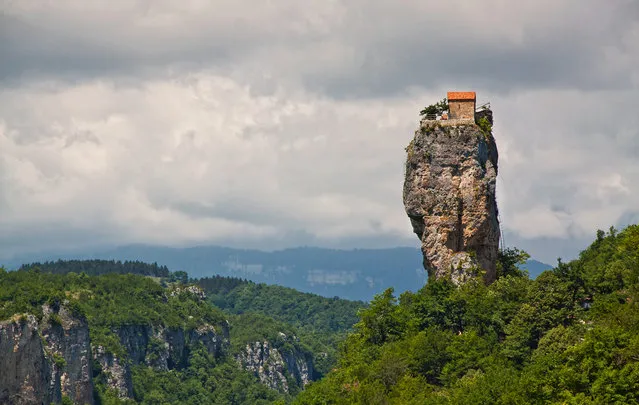
Katskhi Pillar In Georgia

The Katskhi pillar is a natural limestone monolith located at the village of Katskhi in western Georgian region of Imereti, near the town of Chiatura. It is approximately 40 metres (130 ft) high, and overlooks the small river valley of Katskhura, a right affluent of the Q'virila.
Details
13 Jun 2014 12:01:00
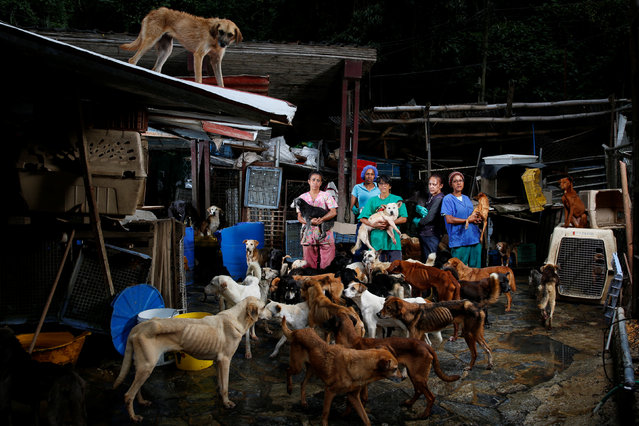
(L-R) Maria Silva, Milena Cortes, Maria Arteaga, Jackeline Bastidas and Gissy Abello pose for a picture at the Famproa dogs shelter where they work, in Los Teques, Venezuela, August 25, 2016. Venezuelans struggling to feed their families let alone their pets are dumping animals on the streets, in parks and at makeshift homes overrun with scrawny animals amid an economic crisis. An hour from Caracas in Los Teques, hundreds of dogs bark and run around the streets scavenging for food outside a makeshift shelter. People come by every few hours to hand over scrawny dogs which are fed by volunteers every day. Venezuela is undergoing a major economic and social crisis, with shortages of basic foods and medicines. Triple digit inflation is hitting everybody hard, including those who own pets. (Photo by Carlos Garcia Rawlins/Reuters)

(L-R) Maria Silva, Milena Cortes, Maria Arteaga, Jackeline Bastidas and Gissy Abello pose for a picture at the Famproa dogs shelter where they work, in Los Teques, Venezuela, August 25, 2016. Venezuelans struggling to feed their families let alone their pets are dumping animals on the streets, in parks and at makeshift homes overrun with scrawny animals amid an economic crisis. An hour from Caracas in Los Teques, hundreds of dogs bark and run around the streets scavenging for food outside a makeshift shelter. (Photo by Carlos Garcia Rawlins/Reuters)
Details
08 Sep 2016 10:01:00
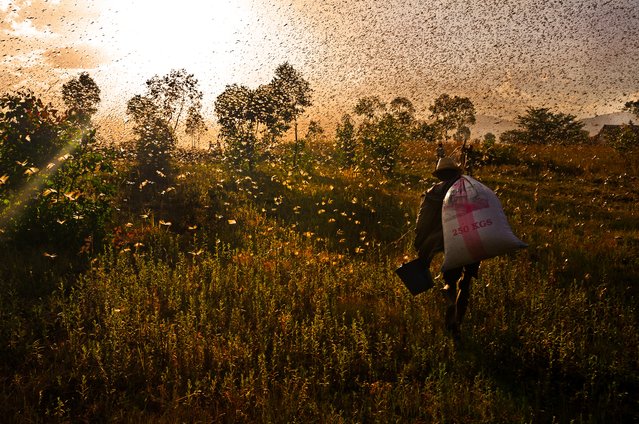
“Locusts & Men”. Oppression, interaction, collaboration. In the life cycle of nature nothing is lost, but the coexistence of different species is sometimes difficult. In Madagascar periodically returns the archaic antagonism between man and the migratory locust, in a circle of life where the two species are looking for space and food for their survival. Photo location: Madagascar, 2013. (Photo and caption by Michele Martinelli/National Geographic Photo Contest)

“Locusts & Men”. Oppression, interaction, collaboration. In the life cycle of nature nothing is lost, but the coexistence of different species is sometimes difficult. In Madagascar periodically returns the archaic antagonism between man and the migratory locust, in a circle of life where the two species are looking for space and food for their survival. At the end of the day a man walks home carrying on his shoulders the heavy bag which contains the locusts captured during the day. The insects provide nutritious meals for the man and his family. Photo location: Madagascar, 2013. (Photo and caption by Michele Martinelli/National Geographic Photo Contest)

ATTENTION! All pictures are presented in high resolution. To see Hi-Res images – just TWICE click on any picture. In other words, click small picture – opens the BIG picture. Click BIG picture – opens VERY BIG picture.
Details
03 Dec 2013 10:59:00
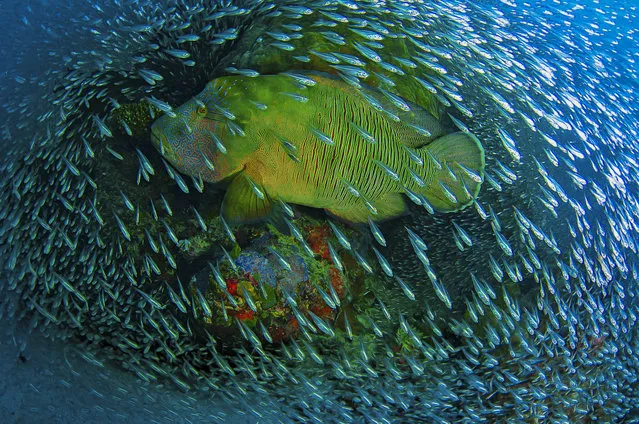
“7584 Fish”. On a windy day right after a Cyclone passed the far northern Great Barrier Reef i took some friends out to the reef. Never before i saw that many glass fish on this particular coral “bommie”. Just when i setup my camera, this Napoleon Wrasse swam right through the school of fish building a living frame. Photo location: Cairns, Great Barrier Reef, Flynn Reef, Australia. (Photo and caption by Christian Miller/National Geographic Photo Contest)

“7584 Fish”. On a windy day right after a Cyclone passed the far northern Great Barrier Reef i took some friends out to the reef. Never before i saw that many glass fish on this particular coral “bommie”. Just when i setup my camera, this Napoleon Wrasse swam right through the school of fish building a living frame. Photo location: Cairns, Great Barrier Reef, Flynn Reef, Australia. (Photo and caption by Christian Miller/National Geographic Photo Contest)
Details
07 Oct 2014 11:48:00
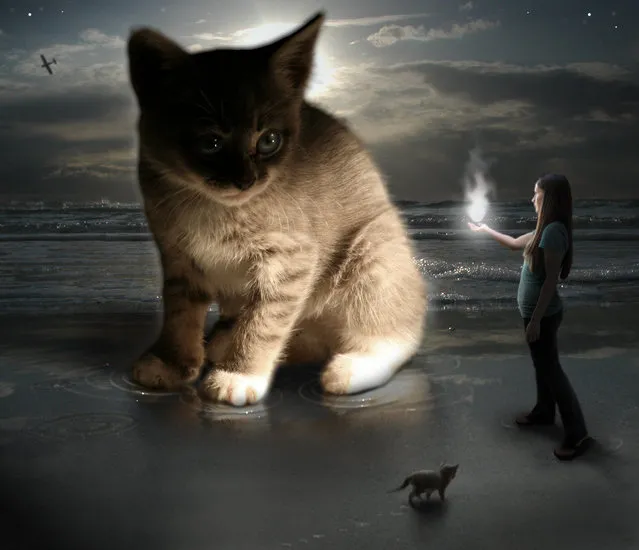
“First lesson”. (Photo and caption by Don Donald Cecil)

“First lesson”. (Photo and caption by Don Donald Cecil)
Details
25 Mar 2015 11:20:00
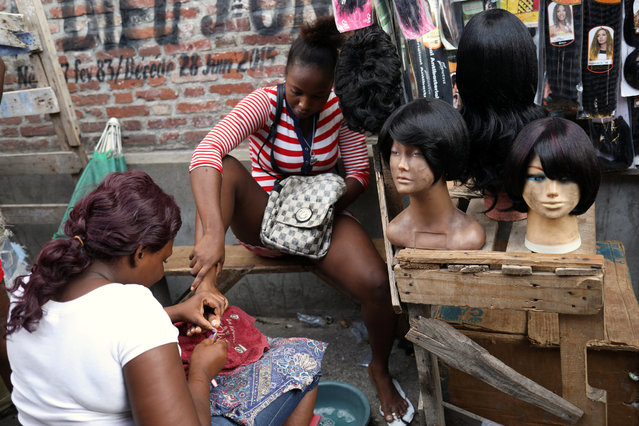
A woman gets a pedicure in Port-au-Prince, Haiti, on October 13, 2017. (Photo by Andres Martinez Casares/AP Photo)

A woman gets a pedicure in Port-au-Prince, Haiti, on October 13, 2017. (Photo by Andres Martinez Casares/AP Photo)
Details
18 Jan 2018 06:22:00
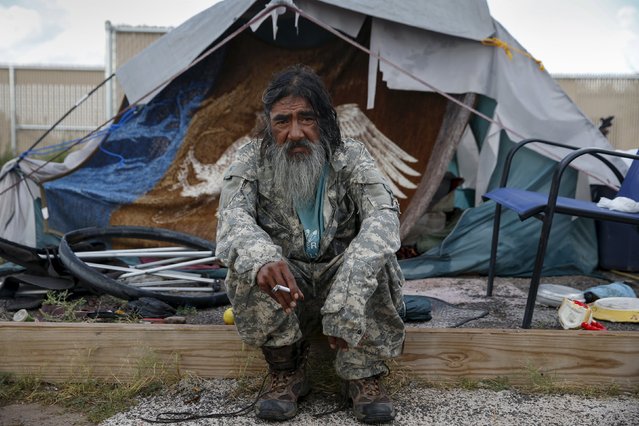
Daniel J. Wabsey, a 58-year-old war veteran, sits outside his tent at Camp Hope in Las Cruces, New Mexico October 6, 2015. “I've been traveling for 35 or 38 years. Getting inside would take a while to get used to. I just want to be able to eat, sleep and be safe. We all get along and understand in Camp Hope. We've all been there. With common sense you can survive out here”, Wabsey said. Camp Hope describe themselves as an “alternative transitional living project for the homeless”. Around 50 people live at the camp. (Photo by Shannon Stapleton/Reuters)

Daniel J. Wabsey, a 58-year-old war veteran, sits outside his tent at Camp Hope in Las Cruces, New Mexico October 6, 2015. “I've been traveling for 35 or 38 years. Getting inside would take a while to get used to. I just want to be able to eat, sleep and be safe. We all get along and understand in Camp Hope. We've all been there. With common sense you can survive out here”, Wabsey said. Camp Hope describe themselves as an “alternative transitional living project for the homeless”. Around 50 people live at the camp. (Photo by Shannon Stapleton/Reuters)
Details
19 Dec 2015 08:05:00
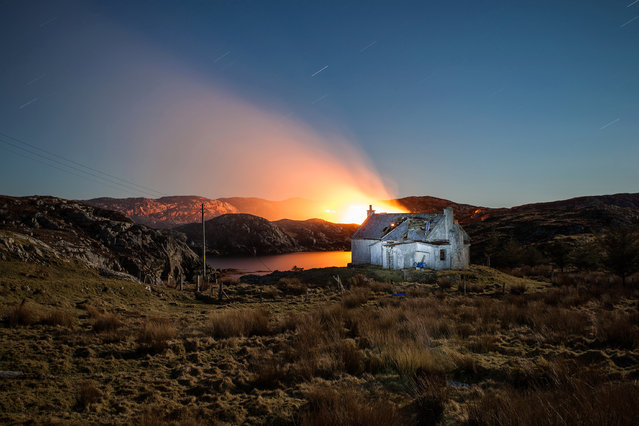
“Peat Fire”. Taken in March 2013 on the east coast of Harris. The fire is from muir-burning, when farmers burn off grasses and heather to improve grazing for their sheep. (Photo by John Maher/The Guardian)

Photographer John Maher, once the drummer with punk bank Buzzcocks, travelled to the Outer Hebrides to photograph abandoned crofters’ cottages – many of which, like this one, have seemingly been untouched since. Here: “Peat Fire”. Taken in March 2013 on the east coast of Harris. The fire is from muir-burning, when farmers burn off grasses and heather to improve grazing for their sheep. (Photo by John Maher/The Guardian)
Details
19 Aug 2016 11:39:00