Loading...
Done
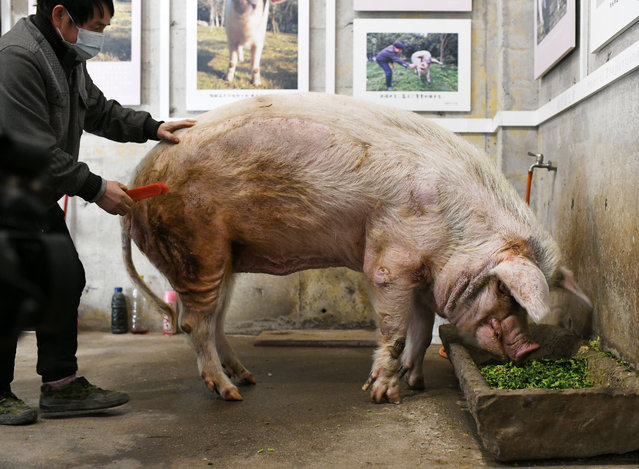
Zhu Jianqiang, or “strong-willed pig”, famous for surviving more than a month buried in the ruins after the magnitude-8.0 Wenchuan earthquake in 2008, feeds on food sent by admirers wishing it a safe winter in Jianchuan Museum, Chengdu city, southwest China's Sichuan province, 11 January 2021. (Photo by Rex Features/Shutterstock)

Zhu Jianqiang, or “strong-willed pig”, famous for surviving more than a month buried in the ruins after the magnitude-8.0 Wenchuan earthquake in 2008, feeds on food sent by admirers wishing it a safe winter in Jianchuan Museum, Chengdu city, southwest China's Sichuan province, 11 January 2021. (Photo by Rex Features/Shutterstock)
Details
19 Jan 2021 00:01:00
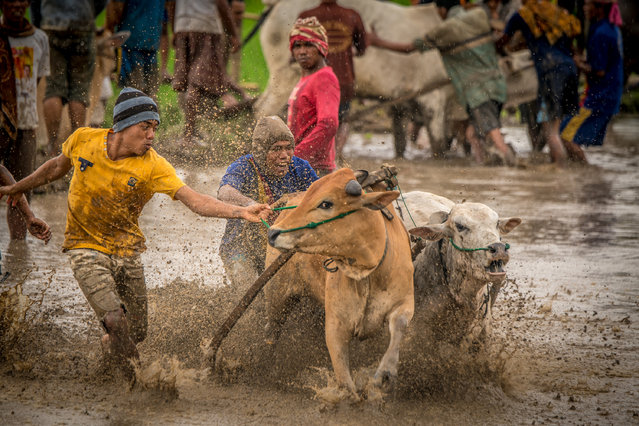
Cows rush through mud and water while jockey holds onto their tails, on March 12, 2016 in Padang, West Sumatra, Indonesia. (Photo by Teh Han Lin/Barcroft Images)

Cows rush through mud and water while jockey holds onto their tails, on March 12, 2016 in Padang, West Sumatra, Indonesia. For hundreds of years these farmers have competed in one of the worldís most oddest races in the hopes of showing off their cattle. Known as Pacu Jawi the traditional cow race takes place in Padang, West Sumatra, and has become the highlight of the year for locals. (Photo by Teh Han Lin/Barcroft Images)
Details
20 Jan 2017 08:07:00
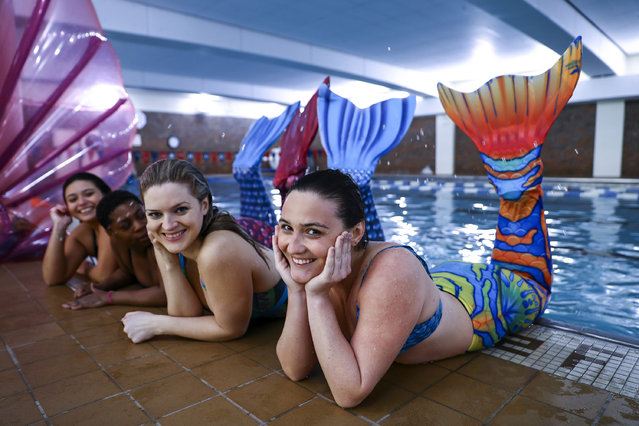
Women practice swimming with mermaid tails at AquaMermaid swimming school, a mermaid training school in Chicago, United States on March 19, 2017. Participants are fulfilling their lifelong ambitions of becoming mermaids with a new type of fitness mermaid swimming. (Photo by Bilgin S. Amaz/Anadolu Agency/Getty Images)

Women practice swimming with mermaid tails at AquaMermaid swimming school, a mermaid training school in Chicago, United States on March 19, 2017. Participants are fulfilling their lifelong ambitions of becoming mermaids with a new type of fitness mermaid swimming. (Photo by Bilgin S. Amaz/Anadolu Agency/Getty Images)
Details
23 Mar 2017 10:42:00
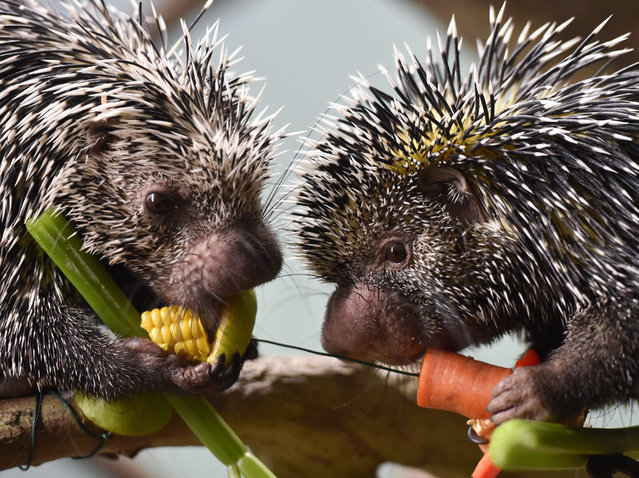
The coendou porcupine couple 'Joppi' (L) and 'Fletcher' nibble at a vegetables in their enclosure at the zoo in Frankfurt am Main, Germany, 03 December 2015. Coendou porcupines are nocturnal rodents related to porcupines and guinea pigs and native to the rain forests of Central and South America as well as Trinidad. (Photo by Arne Dedert/EPA)

The coendou porcupine couple 'Joppi' (L) and 'Fletcher' nibble at a vegetables in their enclosure at the zoo in Frankfurt am Main, Germany, 03 December 2015. Coendou porcupines are nocturnal rodents related to porcupines and guinea pigs and native to the rain forests of Central and South America as well as Trinidad. (Photo by Arne Dedert/EPA)
Details
05 Dec 2015 08:03:00
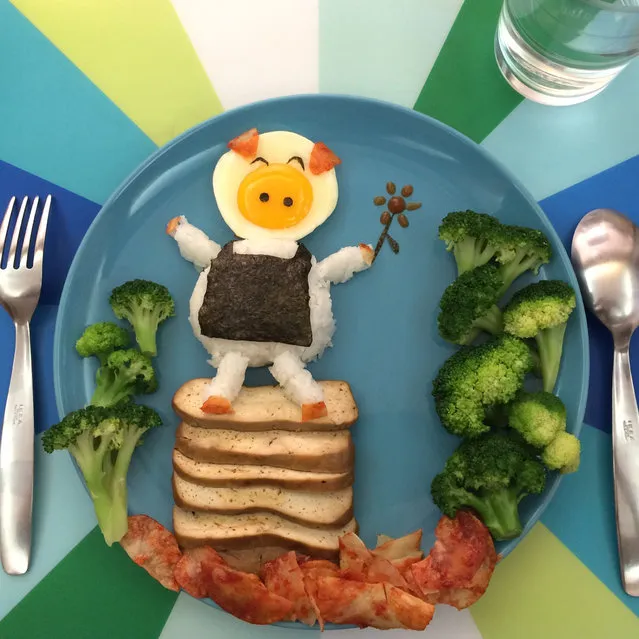
Annes egg art a smiling pig standing on a tower of toast with a sushi roll apron. (Photo by Anne Widya/Caters News)

A creative mother has come up with a novel way of making sure her children eat their breakfasts – by using eggs to make works of art. Sculpted into a variety of extraordinary designs, culinary genius, Anne Widya, uses sunny side up eggs to make sure her children's plates are always cleared. Here: Annes egg art a smiling pig standing on a tower of toast with a sushi roll apron. (Photo by Anne Widya/Caters News)
Details
23 Nov 2014 12:39:00
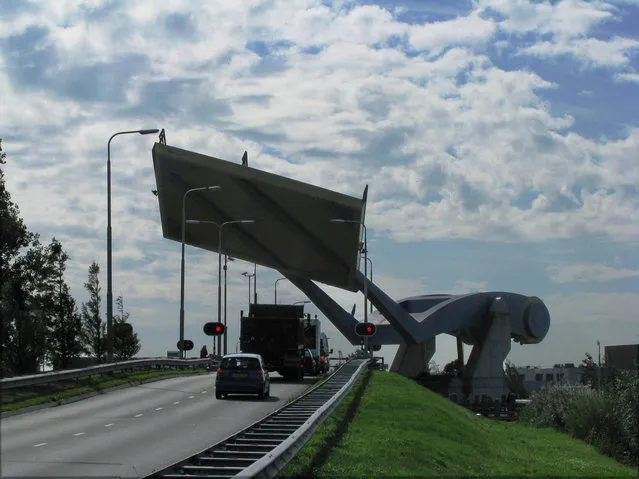
Slauerhoff Bridge, Netherlands

The Slauerhoffbrug (English: Slauerhoff Bridge) is a fully automatic bascule bridge (aka tail bridge) in the city of Leeuwarden in the Netherlands. It uses two arms to swing a section of road in and out of place within the road itself. It is also known as the “Slauerhoffbrug ‘Flying’ Drawbridge”. A tail bridge can quickly and efficiently be raised and lowered from one pylon (instead of hinges). This quickly allows water traffic to pass while only briefly stalling road traffic. The deck is 15 m by 15 m. It is painted in yellow and blue, representative of Leeuwarden's flag and seal.
Details
06 Nov 2013 10:34:00
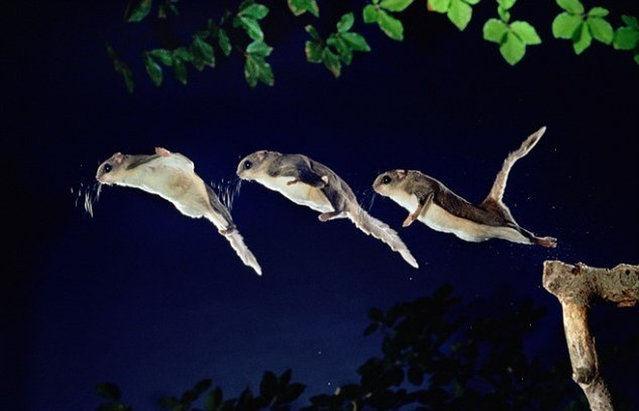
 Flying Squirrel

Flying squirrels are not capable of powered flight like birds or bats; instead, they glide between trees. They are capable of obtaining lift within the course of these flights, with flights recorded to 90 meters (295 ft). The direction and speed of the animal in midair is varied by changing the positions of its two arms and legs, largely controlled by small cartilaginous wrist bones. This changes the tautness of the patagium, a furry parachute-like membrane that stretches from wrist to ankle. It has a fluffy tail that stabilizes in flight. The tail acts as an adjunct airfoil, working as an air brake before landing on a tree trunk.
Details
07 Aug 2012 16:29:00
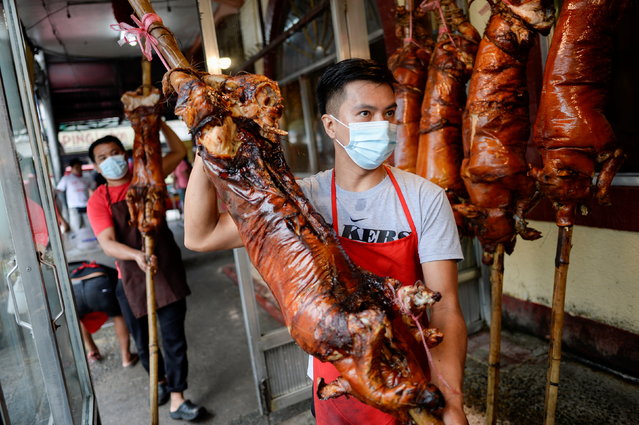
Workers wearing face masks as a protection against the coronavirus disease (COVID-19) carry roasted pigs, locally known as “lechon”, at a restaurant, in Quezon City, Metro Manila, Philippines, December 21, 2020. (Photo by Lisa Marie David/Reuters)

Workers wearing face masks as a protection against the coronavirus disease (COVID-19) carry roasted pigs, locally known as “lechon”, at a restaurant, in Quezon City, Metro Manila, Philippines, December 21, 2020. (Photo by Lisa Marie David/Reuters)
Details
17 Feb 2021 09:41:00