Loading...
Done
This Thursday, January 22, 2015 photo made with a long exposure shows the glow from a Noctiluca scintillans algal bloom along the seashore in Hong Kong. The luminescence, also called Sea Sparkle, is triggered by farm pollution that can be devastating to marine life and local fisheries, according to University of Georgia oceanographer Samantha Joye. (Photo by Kin Cheung/AP Photo)

This Thursday, January 22, 2015 photo made with a long exposure shows the glow from a Noctiluca scintillans algal bloom along the seashore in Hong Kong. The luminescence, also called Sea Sparkle, is triggered by farm pollution that can be devastating to marine life and local fisheries, according to University of Georgia oceanographer Samantha Joye. Noctiluca itself does not produce neurotoxins like other similar organisms do. But its role as both prey and predator tends can eventually magnify the accumulation of toxins in the food chain, according to R. Eugene Turner at Louisiana State University. (Photo by Kin Cheung/AP Photo)
Details
23 Jan 2015 13:12:00
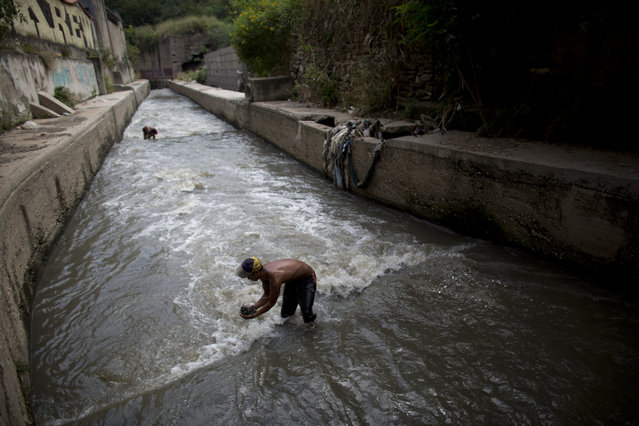
In this November 30, 2017 photo, Douglas scoops up mud from the bottom of the polluted Guaire River, in search of gold and anything valuable he can sell, in Caracas, Venezuela. Some stretches of the river smell of sewer while others emit a toxic odor of fuel, a stench that stays in ones nose for hours after leaving the water. (Photo by Ariana Cubillos/AP Photo)

In this November 30, 2017 photo, Douglas scoops up mud from the bottom of the polluted Guaire River, in search of gold and anything valuable he can sell, in Caracas, Venezuela. Some stretches of the river smell of sewer while others emit a toxic odor of fuel, a stench that stays in ones nose for hours after leaving the water. (Photo by Ariana Cubillos/AP Photo)
Details
11 Jan 2018 07:35:00
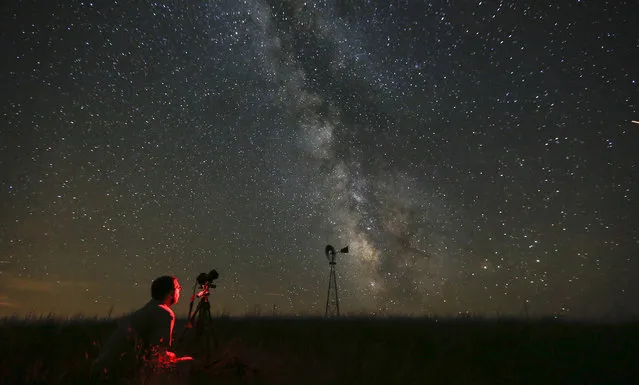
In this Wednesday, July 23, 2014 file photo, Omaha photographer Lane Hickenbottom photographs the night sky in a pasture near Callaway, Neb. With no moon in the sky, the Milky Way was visible to the naked eye. More than one-third of the world’s population can no longer see the Milky Way because of man-made lights, according to a scientific paper by Light Pollution Science and Technology Institute's Fabio Falchi and his team members, published on Friday, June 10, 2016. (Photo by Travis Heying/The Wichita Eagle via AP Photo)

In this Wednesday, July 23, 2014 file photo, Omaha photographer Lane Hickenbottom photographs the night sky in a pasture near Callaway, Neb. With no moon in the sky, the Milky Way was visible to the naked eye. More than one-third of the world’s population can no longer see the Milky Way because of man-made lights, according to a scientific paper by Light Pollution Science and Technology Institute's Fabio Falchi and his team members, published on Friday, June 10, 2016. (Photo by Travis Heying/The Wichita Eagle via AP Photo)
Details
11 Jun 2016 12:37:00
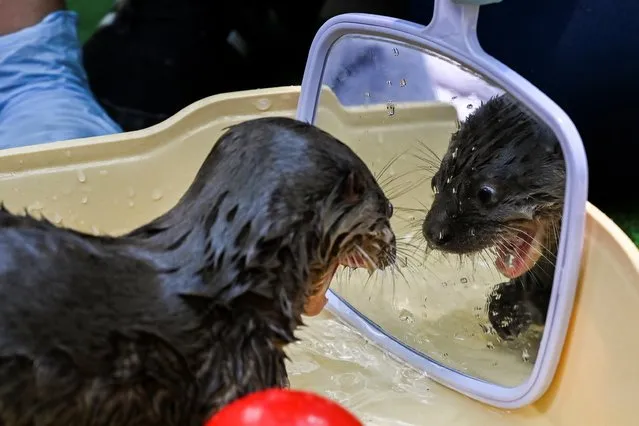
A river otter (lontra longicaudis) of 6-weeks-old looks in the mirror during a bath in the Animal Welfare Unit of the Zoo in Cali, Colombia, on October 22, 2019. The baby otter was found abandoned brought to the Cali Zoo for breeding, for its extensive experience in raising these species. According to the International Union for Conservation of Nature the river otter (lontra longicaudis) are in danger of extinction, because of mining, agriculture, pollution of rivers and housing construction in their habitat. (Photo by Luis Robayo/AFP Photo)

A river otter (lontra longicaudis) of 6-weeks-old looks in the mirror during a bath in the Animal Welfare Unit of the Zoo in Cali, Colombia, on October 22, 2019. The baby otter was found abandoned brought to the Cali Zoo for breeding, for its extensive experience in raising these species. According to the International Union for Conservation of Nature the river otter (lontra longicaudis) are in danger of extinction, because of mining, agriculture, pollution of rivers and housing construction in their habitat. (Photo by Luis Robayo/AFP Photo)
Details
27 Oct 2019 00:03:00
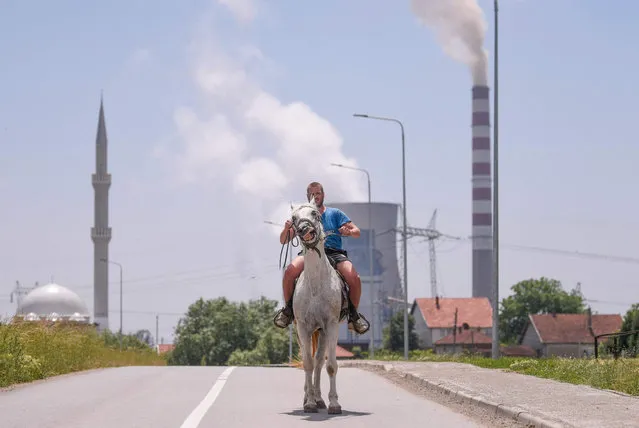
A man rides his horse next to Kosovo's coal-fired power plant near the town of Obilic on May 30, 2022. Two coal-fired power plants, Kosova A and Kosova B, are the main source of the alarming air pollution levels in Kosovo, and particularly in the town of Obilic, which is located between the two plants and near to their ash disposal sites and open-pit lignite mines. (Photo by Armend Nimani/AFP Photo)

A man rides his horse next to Kosovo's coal-fired power plant near the town of Obilic on May 30, 2022. Two coal-fired power plants, Kosova A and Kosova B, are the main source of the alarming air pollution levels in Kosovo, and particularly in the town of Obilic, which is located between the two plants and near to their ash disposal sites and open-pit lignite mines. (Photo by Armend Nimani/AFP Photo)
Details
01 Jun 2022 05:38:00
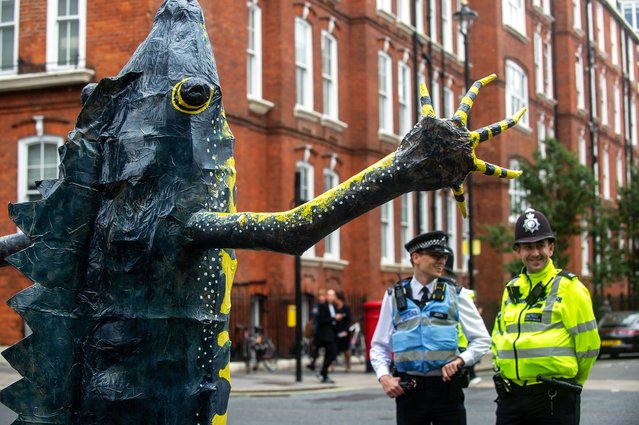
Hundreds of people from a range of NGOs and campaign groups protest to demand the immediate restoration of nature at DEFRA – Department for Environment Food & Rural Affairs on September 28, 2023 in London, England. The 2023 State of Nature Report revealed that approximately one in six species in Great Britain, including turtle doves and hazel dormice, are at risk of extinction, citing climate change, intensive farming, and pollution as major threats, with a 19% average decline in monitored plant and animal populations since 1970. (Photo by Guy Smallman/Getty Images)

Hundreds of people from a range of NGOs and campaign groups protest to demand the immediate restoration of nature at DEFRA – Department for Environment Food & Rural Affairs on September 28, 2023 in London, England. The 2023 State of Nature Report revealed that approximately one in six species in Great Britain, including turtle doves and hazel dormice, are at risk of extinction, citing climate change, intensive farming, and pollution as major threats, with a 19% average decline in monitored plant and animal populations since 1970. (Photo by Guy Smallman/Getty Images)
Details
09 Dec 2024 04:11:00
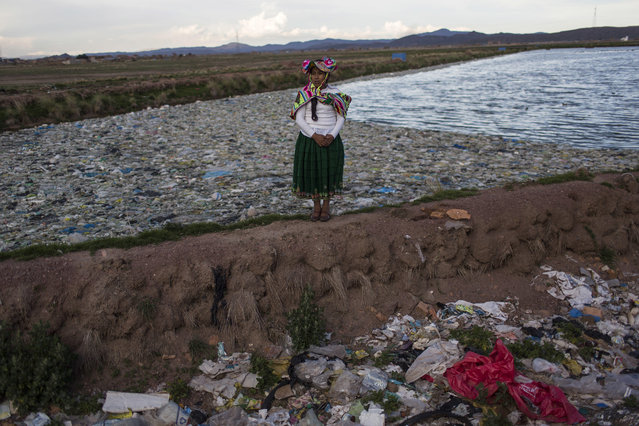
In this February 1, 2017 photo, environmental activist Maruja Inquilla poses for a photo next to a Municipal waste treatment plant with water that flows into Lake Titicaca, in Juliaca, in the Puno region of Peru. “If the frogs could talk they would say, This is killing me”," said Inquilla, who recently showed up at the Puno governor's house carrying plastic bags filled with hundreds of dead frogs in protest. (Photo by Rodrigo Abd/AP Photo)

In this February 1, 2017 photo, environmental activist Maruja Inquilla poses for a photo next to a Municipal waste treatment plant with water that flows into Lake Titicaca, in Juliaca, in the Puno region of Peru. “If the frogs could talk they would say, This is killing me”," said Inquilla, who recently showed up at the Puno governor's house carrying plastic bags filled with hundreds of dead frogs in protest. (Photo by Rodrigo Abd/AP Photo)
Details
04 Mar 2017 00:02:00
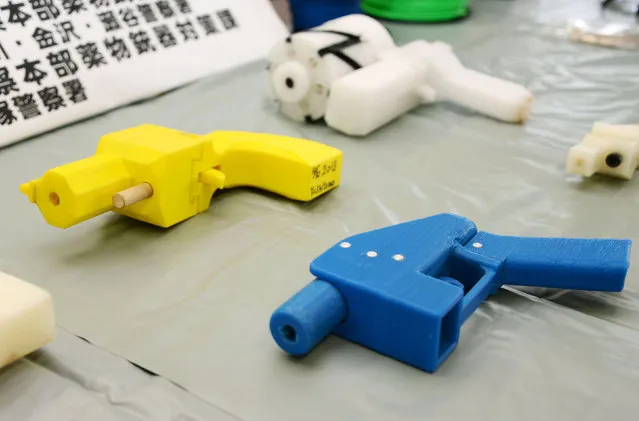
Seized plastic handguns which were created using 3D printing technology are displayed at Kanagawa police station in Yokohama, south of Tokyo, in this photo taken by Kyodo May 8, 2014. (Photo by Reuters/Kyodo)

Seized plastic handguns which were created using 3D printing technology are displayed at Kanagawa police station in Yokohama, south of Tokyo, in this photo taken by Kyodo May 8, 2014. Yoshimoto Imura became the first man to be arrested in Japan for illegal possession of two guns he created himself using 3D printing technology, Japanese media said on Thursday. The 27-year-old, a college employee in the city of Kawasaki, was arrested after police found video online posted by Imura claiming to have produced his own guns. Gun possession is strictly regulated in Japan. Police raided Imura's home and found five guns, two of which could fire real bullets, Japanese media said. (Photo by Reuters/Kyodo)
Details
12 May 2014 10:46:00