Loading...
Done
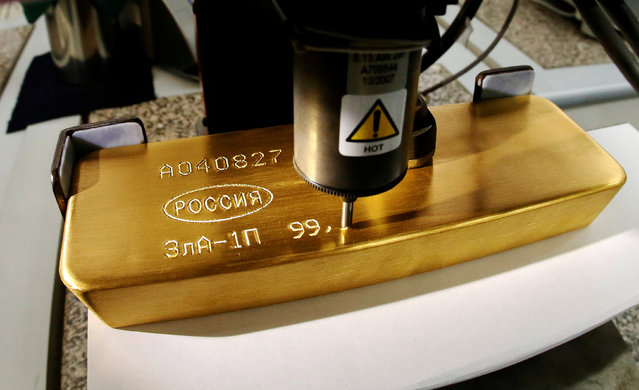
A machine engraves information on an ingot of 99.99 percent pure gold at the Krastsvetmet non-ferrous metals plant, one of the world's largest producers in the precious metals industry, in the Siberian city of Krasnoyarsk, Russia October 24, 2016. (Photo by Ilya Naymushin/Reuters)

A machine engraves information on an ingot of 99.99 percent pure gold at the Krastsvetmet non-ferrous metals plant, one of the world's largest producers in the precious metals industry, in the Siberian city of Krasnoyarsk, Russia October 24, 2016. (Photo by Ilya Naymushin/Reuters)
Details
26 Oct 2016 10:36:00
Zuo Tong of China performs on floor exercise during the women's team artistic gymnastics event of the 19th Asian Games in Hangzhou, China, Monday, September 25, 2023. China team won the gold. (Photo by Aaron Favila/AP Photo)

Zuo Tong of China performs on floor exercise during the women's team artistic gymnastics event of the 19th Asian Games in Hangzhou, China, Monday, September 25, 2023. China team won the gold. (Photo by Aaron Favila/AP Photo)

Details
02 Oct 2023 05:26:00
Gold medalist Mujinga Kambundji, of Switzerland, left, and silver medalist Ewa Swoboda, of Poland, celebrate after finishing the Women 60 meters final at the European Athletics Indoor Championships at Atakoy Arena in Istanbul, Turkey, Friday, March 3, 2023. (Photo by AP Photo/Stringer)

Gold medalist Mujinga Kambundji, of Switzerland, left, and silver medalist Ewa Swoboda, of Poland, celebrate after finishing the Women 60 meters final at the European Athletics Indoor Championships at Atakoy Arena in Istanbul, Turkey, Friday, March 3, 2023. (Photo by AP Photo/Stringer)
Details
13 Mar 2023 05:18:00
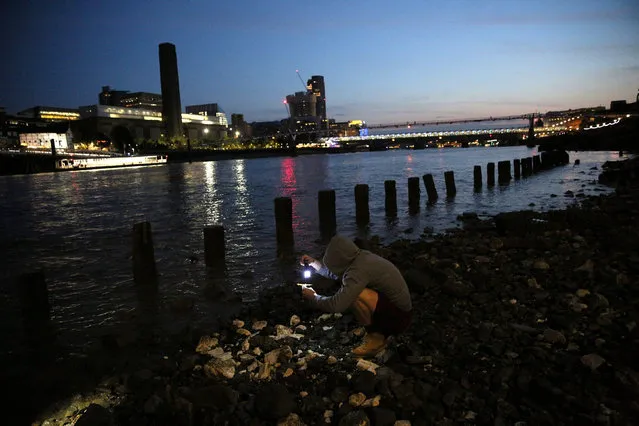
A mudlark uses a torch to look for items on the bank of the River Thames in London, Britain June 06, 2016. Mudlarking is believed to trace its origins to the 18th and 19th century, when scavengers searched the Thames' shores for items to sell. These days, history and archaeology fans are the ones hoping to find old relics such as coins, ceramics, artifacts or everyday items from across centuries. They wait for the low tide and then scour specific areas of exposed shores. "If you're in a field you could be out all day long, with the river you're restricted to about two or three hours," mudlark Nick Stevens said. While many just use the naked eye for their searches, others rely on metal detectors for which a permit from the Port of London Authority is needed. Digging also requires consent. (Photo by Neil Hall/Reuters)

A mudlark uses a torch to look for items on the bank of the River Thames in London, Britain June 06, 2016. Mudlarking is believed to trace its origins to the 18th and 19th century, when scavengers searched the Thames' shores for items to sell. These days, history and archaeology fans are the ones hoping to find old relics such as coins, ceramics, artifacts or everyday items from across centuries. their finds with the Portable Antiquities Scheme. Any item over 300 years old must be recorded. (Photo by Neil Hall/Reuters)
Details
27 Aug 2016 10:43:00
An athlete pulls a 15-tonne truck during a Truck-Pull event marking the upcoming Independence Day in the Belarus capital Minsk, on July 3, 2014. The former Soviet nation celebrates its Independence Day on July 3 in memory of the end of Belarus occupation by Nazi Germany troops during the Red Army main summer offensive in 1944. (Photo by Sergei Gapon/AFP Photo)

An athlete pulls a 15-tonne truck during a Truck-Pull event marking the upcoming Independence Day in the Belarus capital Minsk, on July 3, 2014. The former Soviet nation celebrates its Independence Day on July 3 in memory of the end of Belarus occupation by Nazi Germany troops during the Red Army main summer offensive in 1944. (Photo by Sergei Gapon/AFP Photo)
Details
05 Jul 2014 12:13:00
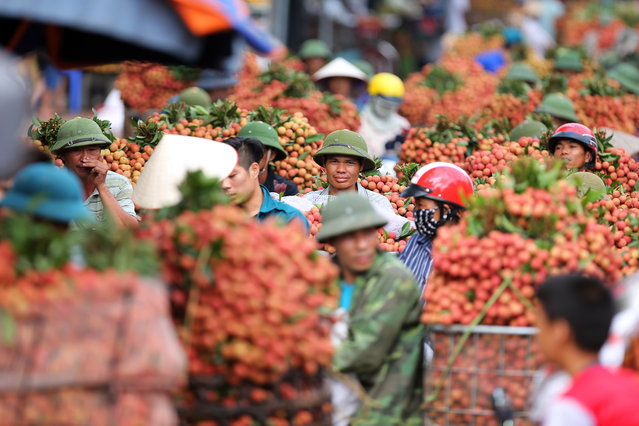
People carry lychee for sale on a motorbike on a street in Luc Ngan, Bac Giang province, Vietnam, 22 June 2016. Lychee output in Bac Giang province is expected to reach 130,000 tonnes this year. China is still Vietnam's main lychee export market so far, buying around 60 percent of the annual crop, according to official reports. (Photo by Luong Thai Linh/EPA)

People carry lychee for sale on a motorbike on a street in Luc Ngan, Bac Giang province, Vietnam, 22 June 2016. Lychee output in Bac Giang province is expected to reach 130,000 tonnes this year. China is still Vietnam's main lychee export market so far, buying around 60 percent of the annual crop, according to official reports. (Photo by Luong Thai Linh/EPA)
Details
30 Jun 2016 11:25:00
This aerial picture taken on August 16, 2020, shows the MV Wakashio bulk carrier that had run aground and broke into two parts near Blue Bay Marine Park, Mauritius. A ship that has leaked more than 1,000 tonnes of oil in pristine waters off the Mauritius coast has split into two, its Japanese operator said August 16, 2020. (Photo by AFP Photo/Stringer)

This aerial picture taken on August 16, 2020, shows the MV Wakashio bulk carrier that had run aground and broke into two parts near Blue Bay Marine Park, Mauritius. A ship that has leaked more than 1,000 tonnes of oil in pristine waters off the Mauritius coast has split into two, its Japanese operator said August 16, 2020. (Photo by AFP Photo/Stringer)
Details
08 Sep 2020 00:03:00
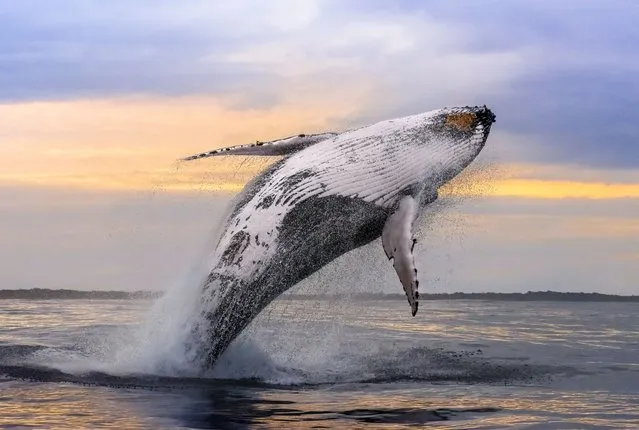
A 40-tonne humpback launching out of the water in an incredible breach in New South Wales, Australia on October 2022 in front of a sunset. The humpback whale can grow up to 56 feet long and typically covers 9,900 miles a year as it travels through the oceans of the world. Humpback whales are a species of Baleen whale, meaning they don't have teeth. Instead, they have baleen which helps them to filter feed. Their main source of food is krill or tiny bait fish. (Photo by Jodie Lowe/Media Drum Images)

A 40-tonne humpback launching out of the water in an incredible breach in New South Wales, Australia on October 2022 in front of a sunset. The humpback whale can grow up to 56 feet long and typically covers 9,900 miles a year as it travels through the oceans of the world. Humpback whales are a species of Baleen whale, meaning they don't have teeth. Instead, they have baleen which helps them to filter feed. Their main source of food is krill or tiny bait fish. (Photo by Jodie Lowe/Media Drum Images)
Details
30 Oct 2022 04:28:00