Loading...
Done
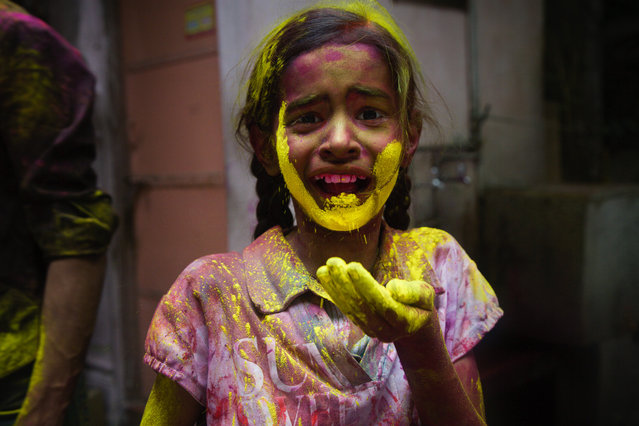
Jaipur, India, 2013, (Photo by Takehiko Yagi/The Guardian)

Takehiko Yagi is a rising star in Japanese photography, and his vibrant pictures of the Hindu spring festival of Holi won the Grand Prize at the fourth annual Nikkei National Geographic Photo Prize. Diving into the Colors of Holi is his first exhibition in the US, on show at Foto Care Gallery in New York until 28 September, 2016. Here: Jaipur, India, 2013, (Photo by Takehiko Yagi/The Guardian)
Details
23 Sep 2016 09:05:00
Initially the project started when I was working in Atlanta. About four years ago, a roommate of mine had a Yorkie and we thought it would be funny to take some photos of this really cute dog with a few handguns. Once my friends saw the photos they started asking me to take pictures of their dogs with other firearms. (Photo and caption by Ben Haulenbeek/Puppies with guns calendar 2015)

Initially the project started when I was working in Atlanta. About four years ago, a roommate of mine had a Yorkie and we thought it would be funny to take some photos of this really cute dog with a few handguns. Once my friends saw the photos they started asking me to take pictures of their dogs with other firearms... (Photo and caption by Ben Haulenbeek/Puppies with guns calendar 2015)
Details
14 Dec 2014 11:59:00
Lv Mengmeng, who was born in 1995, poses for a photograph in Shanghai August 22, 2014. When asked if she would like siblings, Mengmeng said: “Maybe brothers, because I think they could protect me”. (Photo by Carlos Barria/Reuters)

Reuters Photographer Carlos Barria photographed a person born in each year China's one child policy has been in existence; from a man born in 1979, to a baby born in 2014, and asked them if they would have like to have siblings. Here: Lv Mengmeng, who was born in 1995, poses for a photograph in Shanghai August 22, 2014. When asked if she would like siblings, Mengmeng said: “Maybe brothers, because I think they could protect me”. (Photo by Carlos Barria/Reuters)
Details
06 Oct 2014 08:20:00
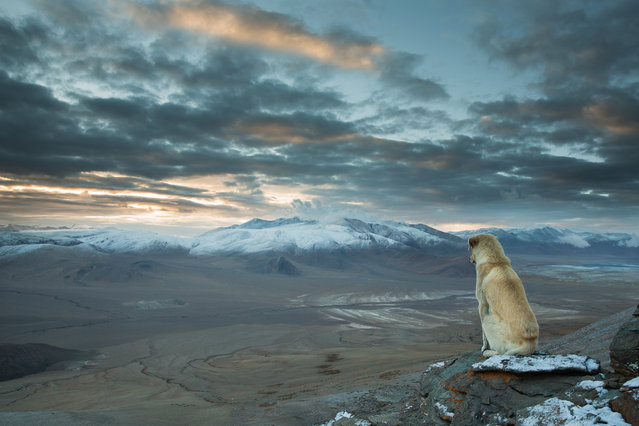
“Himalayan Dog”. This dog just appeared out of nowhere and followed us for an entire week during our trekking trip in the Himalayan outback. He always used to sleep in front of our tent and guarded us in the nights. When I decided to get up at 4 a.m. to climb the next 5000 m peak for sunrise he accompanied me as well. On the top he was sitting for the entire 30 minutes on this place looking straight into the countryside. Photo location: Ladakh, India. (Photo and caption by Sebastian Wahlhuetter/National Geographic Photo Contest)

“Himalayan Dog”. This dog just appeared out of nowhere and followed us for an entire week during our trekking trip in the Himalayan outback. He always used to sleep in front of our tent and guarded us in the nights. When I decided to get up at 4 a.m. to climb the next 5000 m peak for sunrise he accompanied me as well. On the top he was sitting for the entire 30 minutes on this place looking straight into the countryside. Photo location: Ladakh, India. (Photo and caption by Sebastian Wahlhuetter/National Geographic Photo Contest)
Details
01 Apr 2014 10:47:00
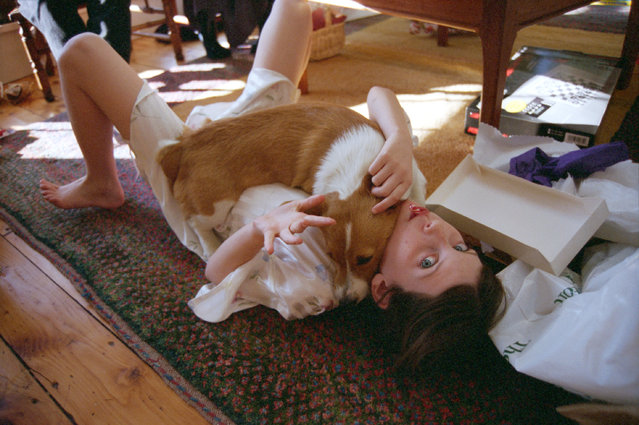
«After Presents», 1996. Siri Kaur: “I was 14 when Simran was born in 1990. We have different mothers, so we grew up separately and I made pictures with her whenever I saw her. The work of Sally Mann and Nan Goldin gave me permission to see my family as a valid art subject. This image shows the aftermath of Christmas morning. Simran is unselfconsciously lounging on the floor, melding into her beloved dog”. (Photo by Siri Kaur)

«After Presents», 1996. Siri Kaur: “I was 14 when Simran was born in 1990. We have different mothers, so we grew up separately and I made pictures with her whenever I saw her. The work of Sally Mann and Nan Goldin gave me permission to see my family as a valid art subject. This image shows the aftermath of Christmas morning. Simran is unselfconsciously lounging on the floor, melding into her beloved dog”. (Photo by Siri Kaur)
Details
10 Aug 2025 04:03:00
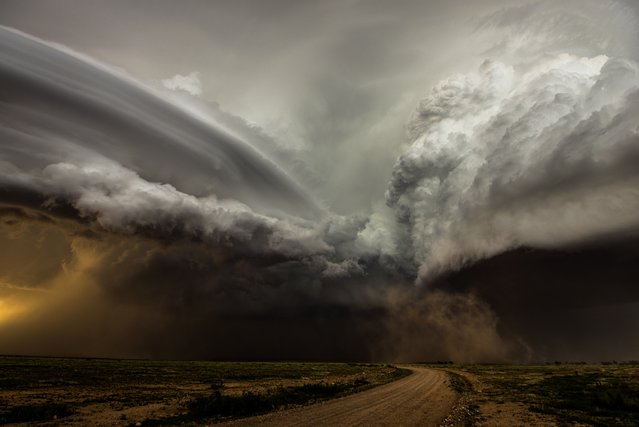
Clash of the storms, New Mexico, US by Camelia Czuchnicki. “A clash between two storm cells in New Mexico, US, each with its own rotating updraft. The curved striations of the oldest noticeable against the new bubbling convection of the newer. It was a fantastic sight to watch and it’s the rarity of such scenes that keep drawing me back to the US Plains each year”. (Photo by Camelia Czuchnicki/Weather Photographer of the Year 2016)

Clash of the storms, New Mexico, US by Camelia Czuchnicki. “A clash between two storm cells in New Mexico, US, each with its own rotating updraft. The curved striations of the oldest noticeable against the new bubbling convection of the newer. It was a fantastic sight to watch and it’s the rarity of such scenes that keep drawing me back to the US Plains each year”. (Photo by Camelia Czuchnicki/Weather Photographer of the Year 2016)
Details
16 Sep 2016 11:11:00
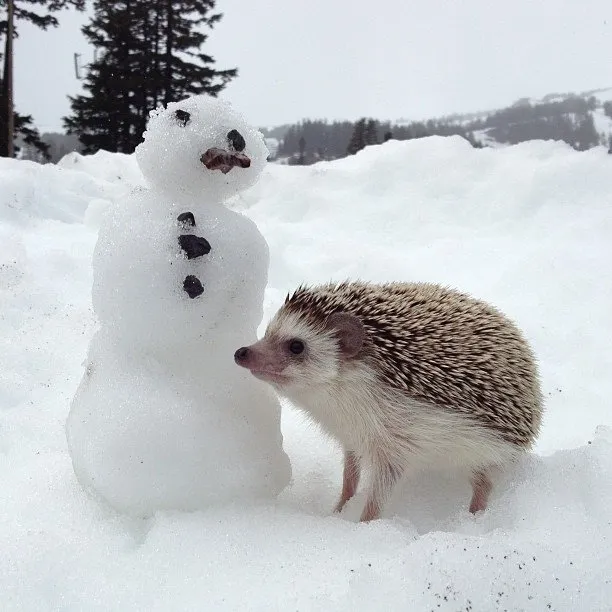
The Fantastic Adventures Of Biddy The Hedgehog

“The other day while taking photos of our Hedgehog I thought of your site! Me and my gf have a Hedgehog named Biddy that we enjoy taking on road trips/adventures. We made a hash tag on Instagram that we use every time we post a photo of him.” From Cuteporter Thomas U.
Details
13 Jun 2013 09:06:00
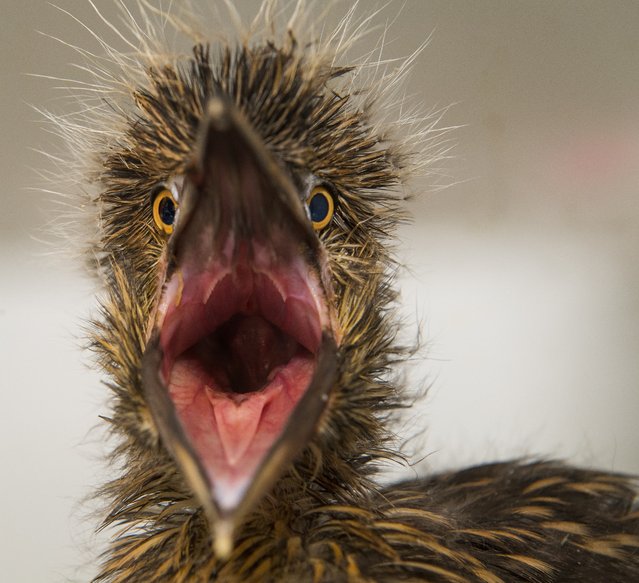
A baby Black-crowned Night Heron squawks in its incubator while being cared for at City Wildlife rescue and rehabilitation center in Washington, DC on May 31, 2017. The heron is one of several that have been brought to CW by the staff at The National Zoo over the past few years. The heron is a native bird and has made an established rookery inside the zoo grounds over a hundred years ago.  Every year at this time, some of the chicks get pushed or fall out of the nest and require human care.  Because the birds are native and not part of the Smithsonian collection, they partnered with CW to rehabilitate the herons for re-release back to the flock inside Zoo. They're reintroduced back to their flock so that they can migrate together in the Fall. The Black-crowned heron usually migrates from the DC area down to southeast North Carolina, some going as far as Jacksonville, FL in winter. The Black-crowned heron is the species of greatest conservation need in the District of Columbia because their numbers are in such rapid decline due to habitat loss. (Photo Linda Davidson/The Washington Post)

A baby Black-crowned Night Heron squawks in its incubator while being cared for at City Wildlife rescue and rehabilitation center in Washington, DC on May 31, 2017. The heron is one of several that have been brought to CW by the staff at The National Zoo over the past few years. (Photo Linda Davidson/The Washington Post)
Details
04 Jun 2017 08:04:00