Loading...
Done
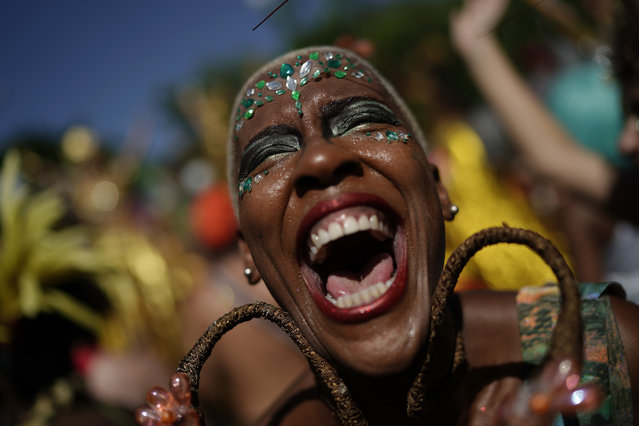
A reveler in costume laughs during the “Cordao do Boitata” street party in Rio de Janeiro, Brazil, Sunday, February 24, 2019, one of the many parades before the official start of Carnival on March 1. (Photo by Leo Correa/AP Photo)

A reveler in costume laughs during the “Cordao do Boitata” street party in Rio de Janeiro, Brazil, Sunday, February 24, 2019, one of the many parades before the official start of Carnival on March 1. (Photo by Leo Correa/AP Photo)
Details
01 Mar 2019 11:32:00
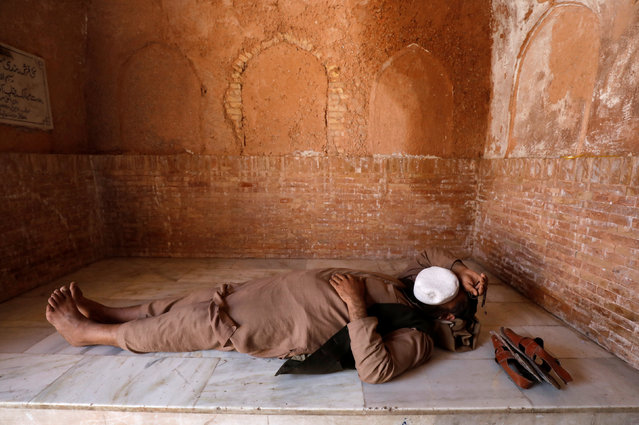
A man with a cap on his face sleeps on a floor at the Mahabat Khan Mosque in Peshawar, Pakistan on March 4, 2019. (Photo by Fayaz Aziz/Reuters)

A man with a cap on his face sleeps on a floor at the Mahabat Khan Mosque in Peshawar, Pakistan on March 4, 2019. (Photo by Fayaz Aziz/Reuters)
Details
20 Apr 2019 00:05:00


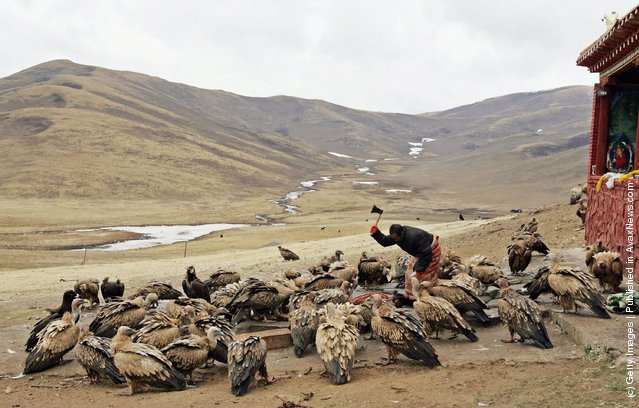
“Sky burial or ritual dissection was once a common funerary practice in Tibet wherein a human corpse is cut in specific locations and placed on a mountaintop, exposing it to the elements or the mahabhuta and animals – especially to birds of prey. The location of the sky burial preparation and place of execution are understood in the Vajrayana traditions as charnel grounds. In Tibet the practice is known as jhator, which literally means, «giving alms to the birds»”. – Wikipedia

Photo: A burial master chops bones of a body to feed vultures during a celestial burial ceremony on April 19, 2006 in Dari County of Guoluo Prefecture, Qinghai Province, northwest China. Celestial burial is a traditional funeral of Tibetan people, which began in the 7th century. (Photo by China Photos/Getty Images)

Details
18 Jun 2011 12:12:00
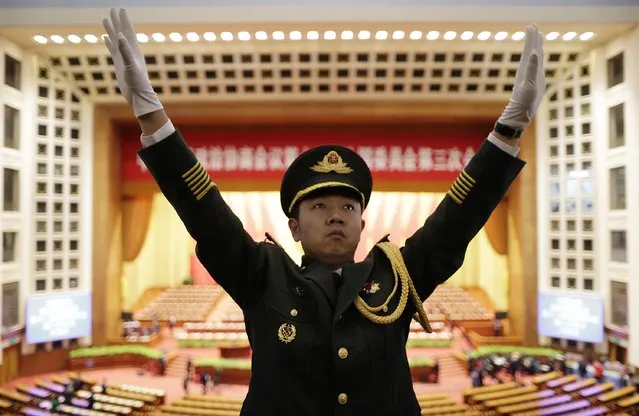
A military band conductor practices during rehearsal ahead of the opening session of Chinese People's Political Consultative Conference (CPPCC) at the Great Hall of the People in Beijing, March 3, 2015. REUTERS/Jason Lee

A military band conductor practices during rehearsal ahead of the opening session of Chinese People's Political Consultative Conference (CPPCC) at the Great Hall of the People in Beijing, March 3, 2015. REUTERS/Jason Lee
Details
06 Mar 2015 09:10:00
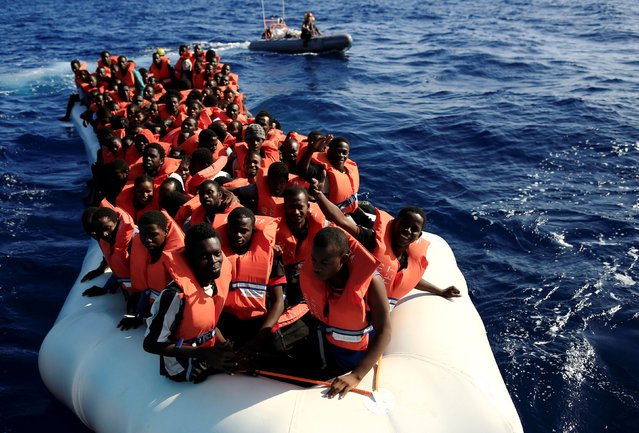
An overcrowded dinghy with migrants from different African countries is followed by members of the German NGO Jugend Rettet as they approach the Iuventa vessel during a rescue operation, off the Libyan coast in the Mediterranean Sea  September 21, 2016. (Photo by Zohra Bensemra/Reuters)

An overcrowded dinghy with migrants from different African countries is followed by members of the German NGO Jugend Rettet as they approach the Iuventa vessel during a rescue operation, off the Libyan coast in the Mediterranean Sea September 21, 2016. (Photo by Zohra Bensemra/Reuters)
Details
23 Sep 2016 09:34:00
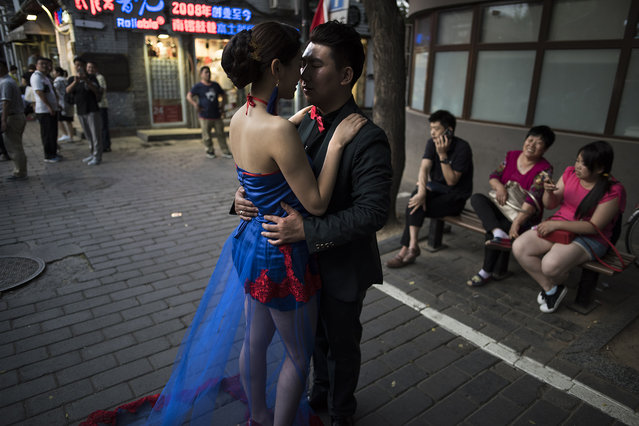
China has recently relaxed its one child policy that was used to control a burgeoning population. A couple has their wedding photo taken in an old quarter of Beijing on May 24, 2016. (Photo by Michael Robinson Chavez/The Washington Post)

China has recently relaxed its one child policy that was used to control a burgeoning population. A couple has their wedding photo taken in an old quarter of Beijing on May 24, 2016. (Photo by Michael Robinson Chavez/The Washington Post)
Details
27 Sep 2016 09:14:00
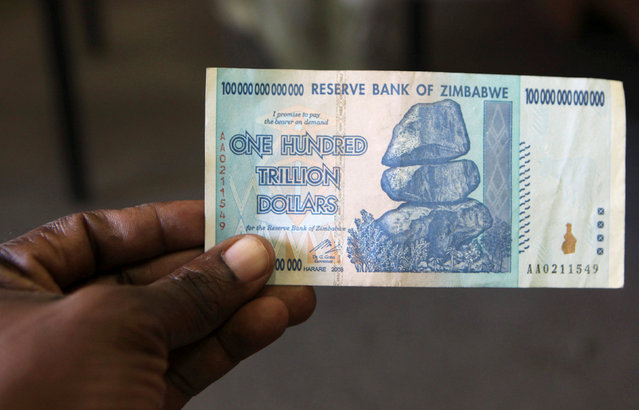
A man holds up for a picture a one hundred trillion Zimbabwean dollars note inside a shop in Harare, Zimbawe, June 12, 2015. (Photo by Philimon Bulawayo/Reuters)

A man holds up for a picture a one hundred trillion Zimbabwean dollars note inside a shop in Harare, Zimbawe, June 12, 2015. Hyperinflation in Zimbabwe was a period of currency instability that began in the late 1990s shortly after the confiscation of private farms from landowners, towards the end of Zimbabwean involvement in the Second Congo War. During the height of inflation from 2008 to 2009, it was difficult to measure Zimbabwe's hyperinflation because the government of Zimbabwe stopped filing official inflation statistics. However, Zimbabwe's peak month of inflation is estimated at 79.6 billion percent in mid-November 2008. (Photo by Philimon Bulawayo/Reuters)
Details
25 Oct 2016 10:08:00
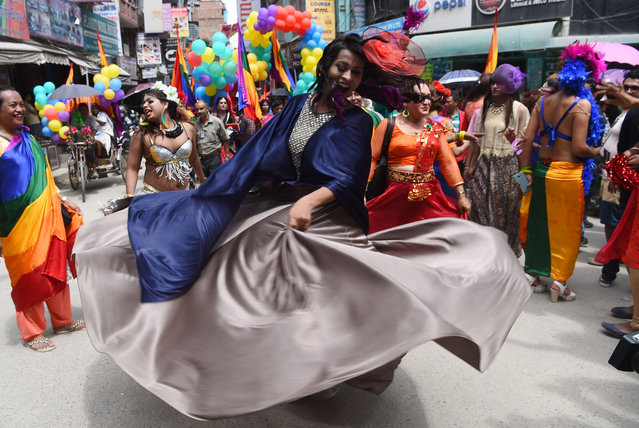
Nepali members of the LGBT community take part in a Gay Pride parade in Kathmandu on August 8, 2017. Scores of gays, lesbians, transvestites and transsexuals from across the country took part in the rally to spread their campaign for sexual rights in the country. In 2013 Nepal introduced citizenships with a third gender option and began issuing passports reflecting the same in 2015. (Photo by Prakash Mathema/AFP Photo)

Nepali members of the LGBT community take part in a Gay Pride parade in Kathmandu on August 8, 2017. Scores of gays, lesbians, transvestites and transsexuals from across the country took part in the rally to spread their campaign for sexual rights in the country. In 2013 Nepal introduced citizenships with a third gender option and began issuing passports reflecting the same in 2015. (Photo by Prakash Mathema/AFP Photo)
Details
09 Aug 2017 07:43:00