Loading...
Done
Festival-goers wash on Shipyard Island, the venue of the 24th Sziget (Island) Festival in Northern Budapest, Hungary, 15 August 2016. (Photo by Szabó Gábor/Origo.hu)

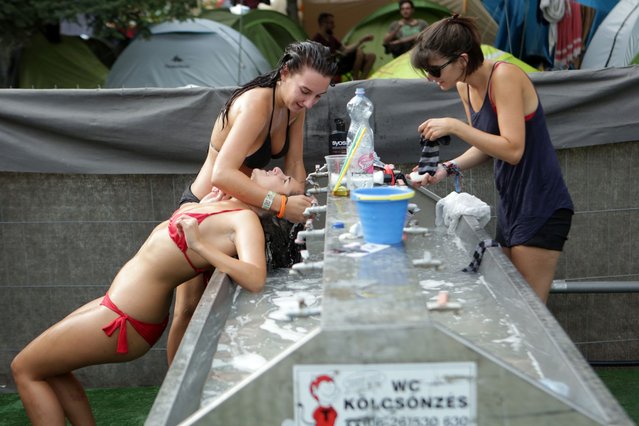
Festival-goers wash on Shipyard Island, the venue of the 24th Sziget (Island) Festival in Northern Budapest, Hungary, 15 August 2016. The venue, one of the biggest cultural events of Europe, offers art exhibitions, theatrical and circus performances and above all music concerts from 10 to 17 August. (Photo by Szabó Gábor/Origo.hu)
Details
17 Aug 2016 11:36:00
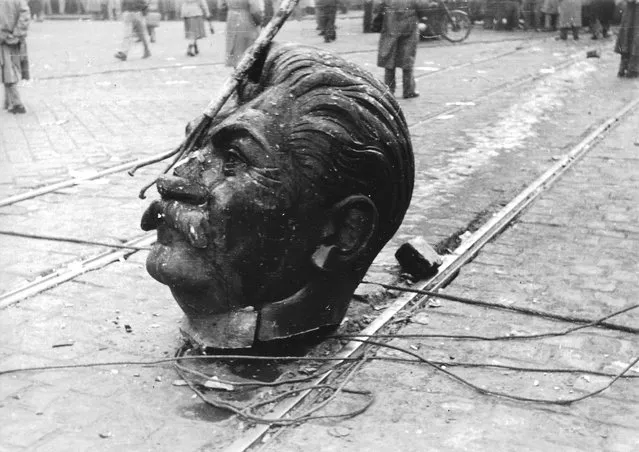
Josef Stalin's head is left in a Budapest street after a statue to the communist dictator was torn from its plinth during the Hungarian Revolution in 1956. (Photo by Robert Hofbauer/Radio Free Europe/Radio Liberty)

Josef Stalin's head is left in a Budapest street after a statue to the communist dictator was torn from its plinth during the Hungarian Revolution in 1956. (Photo by Robert Hofbauer/Radio Free Europe/Radio Liberty)
Details
01 Aug 2020 00:05:00
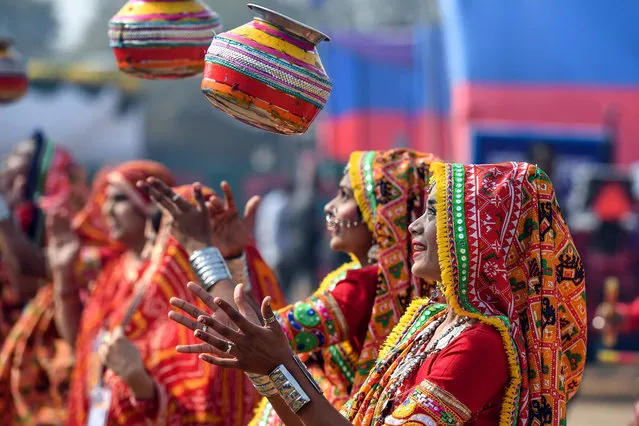
Performers wearing traditional outfits from Gujarat state perform during a press preview of tableaux participating in the forthcoming Republic Day parade in New Delhi on January 22, 2020. (Photo by Prakash Singh/AFP Photo)

Performers wearing traditional outfits from Gujarat state perform during a press preview of tableaux participating in the forthcoming Republic Day parade in New Delhi on January 22, 2020. (Photo by Prakash Singh/AFP Photo)
Details
29 Jan 2020 00:05:00
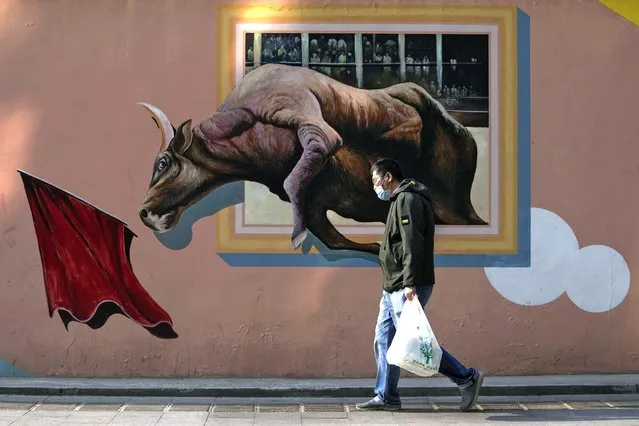
A man wearing a face mask to help protect from the coronavirus carries a bag of groceries as he walks by a mural depicting an iconic financial market bull statue near the central business district, Monday, April 18, 2022, in Beijing. China’s economic growth edged up to a still-weak 4.8% over a year earlier in the first three months of 2022 as spreading coronavirus outbreaks prompted shutdowns of major industrial cities. (Photo by Andy Wong/AP Photo)

A man wearing a face mask to help protect from the coronavirus carries a bag of groceries as he walks by a mural depicting an iconic financial market bull statue near the central business district, Monday, April 18, 2022, in Beijing. (Photo by Andy Wong/AP Photo)
Details
19 May 2022 04:41:00
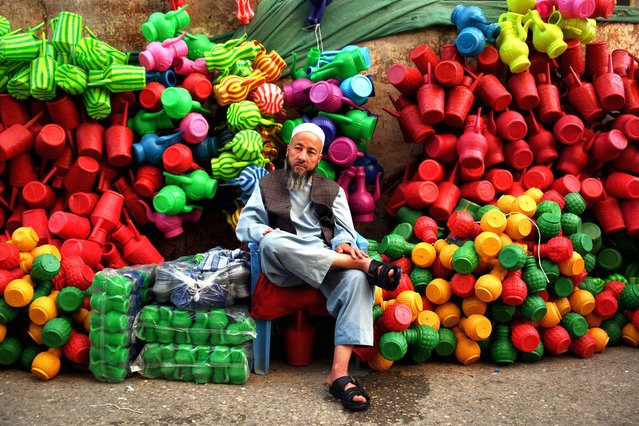
An Afghan vendor waits for customers at his stall selling plastic cans in a market in Mazar-i-Sharif on June 15, 2025. (Photo by Atif Aryan/AFP Photo)

An Afghan vendor waits for customers at his stall selling plastic cans in a market in Mazar-i-Sharif on June 15, 2025. (Photo by Atif Aryan/AFP Photo)
Details
29 Aug 2025 03:06:00
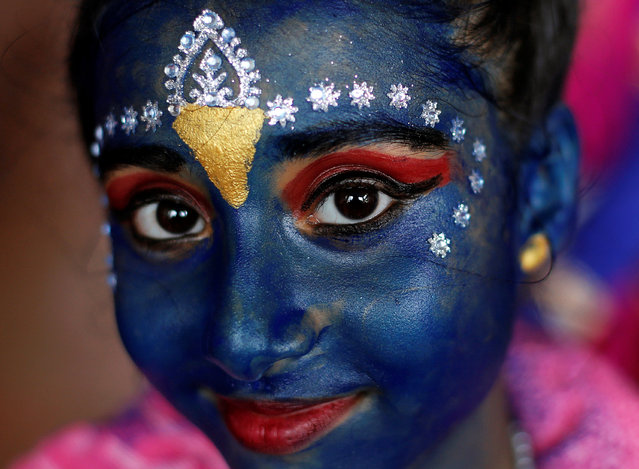
A student participates in celebrations ahead of the Janmashtami festival, which marks the birth anniversary of Lord Krishna in Mumbai, India, August 23, 2016. (Photo by Danish Siddiqui/Reuters)

A student participates in celebrations ahead of the Janmashtami festival, which marks the birth anniversary of Lord Krishna in Mumbai, India, August 23, 2016. (Photo by Danish Siddiqui/Reuters)
Details
24 Aug 2016 11:56:00
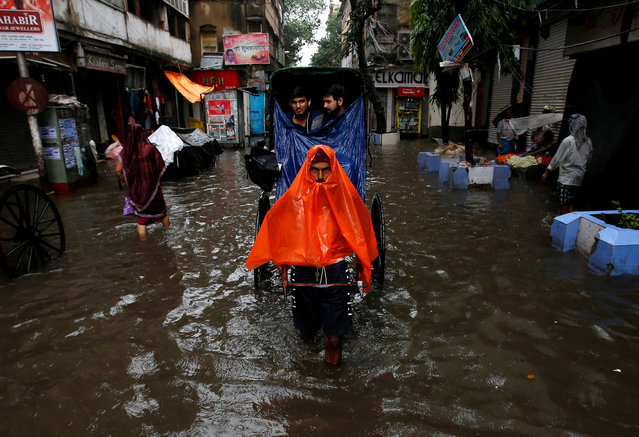
A rickshaw puller transports passengers through a water-logged street after heavy rain in Kolkata, India on June 26, 2018. (Photo by Rupak De Chowdhuri/Reuters)

A rickshaw puller transports passengers through a water-logged street after heavy rain in Kolkata, India on June 26, 2018. (Photo by Rupak De Chowdhuri/Reuters)
Details
03 Jul 2018 00:05:00
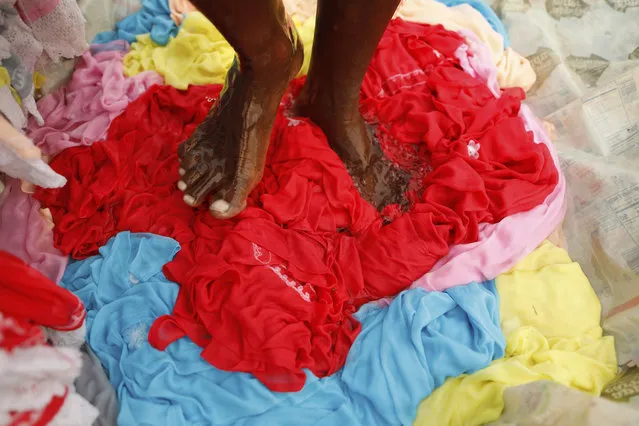
A dhobi, or a washerman washes cloths on the banks of the River Gomti in Lucknow, India, Saturday, September 12, 2020. Dhobis are traditional laundry workers who wash clothes by hand and dry them in the sun, an occupation which has been in existence for generations. Most cities in India have a Dhobi Ghat, or washermen's area, where the city's pile of clothes is laundered. This practice is still popular in India, despite of modern technology. Around 1,000 families work in Lucknow's Dhobi Ghat. However, in light of the novel coronavirus, their wages have decreased drastically. With each family earning around US$100-200 per month. (Photo by Rajesh Kumar Singh/AP Photo)

A dhobi, or a washerman washes cloths on the banks of the River Gomti in Lucknow, India, Saturday, September 12, 2020. Dhobis are traditional laundry workers who wash clothes by hand and dry them in the sun, an occupation which has been in existence for generations. Most cities in India have a Dhobi Ghat, or washermen's area, where the city's pile of clothes is laundered. This practice is still popular in India, despite of modern technology. Around 1,000 families work in Lucknow's Dhobi Ghat. However, in light of the novel coronavirus, their wages have decreased drastically. With each family earning around US$100-200 per month. (Photo by Rajesh Kumar Singh/AP Photo)
Details
25 Sep 2020 00:03:00