Loading...
Done
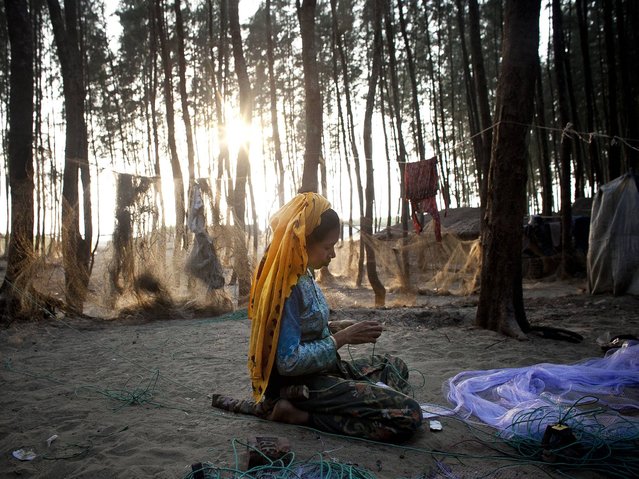
32 year old Mahada Khatum repairs a fishing net outside her home in the Shamalapur Rohingya refugee settlement in Chittagong district. Some years ago she escaped violence and discrimination from the Zomgara Baharchara village in the Meherulla district of Myanmar. (Photo by Getty Images/Stringer)

32 year old Mahada Khatum repairs a fishing net outside her home in the Shamalapur Rohingya refugee settlement on April 11, 2014 in Chittagong district, Bangladesh. Some years ago she escaped violence and discrimination from the Zomgara Baharchara village in the Meherulla district of Myanmar. (Photo by Getty Images/Stringer)
Details
20 Apr 2014 09:30:00
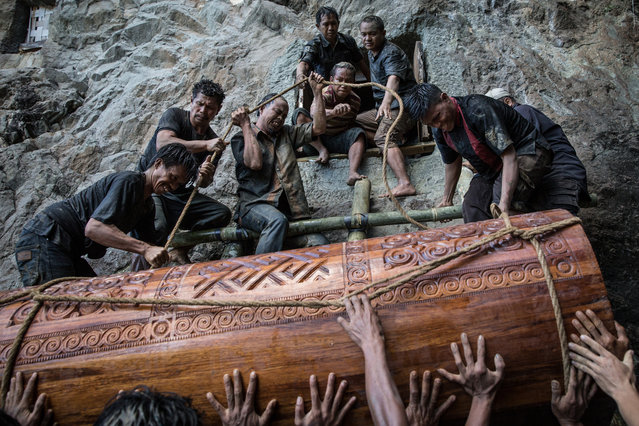
It is said that Torajans are people who “live to die”. For this Indonesian ethnic group, funerals are such extravagant events that they sometimes attract tourists. Families can postpone burials years (and the deceased are considered sick and hosted at home until the funeral) until the family can raise enough money and gather as many relatives as possible. And then it’s a jubilant multiday social event with a parade, dances and animal sacrifices. Agung Parameswara photographed these funerary practices when he traveled to South Sulawesi province, where the Torajans live. But often, their funeral isn’t the last time the dead are seen. In August, crypts are opened, coffins are slid back out and bodies delicately unsheathed. This tender ritual is known as Ma’Nene, which is customarily performed every few years. (Photo by Agung Parameswara/The Washington Post)

It is said that Torajans are people who “live to die”. For this Indonesian ethnic group, funerals are such extravagant events that they sometimes attract tourists. Families can postpone burials years (and the deceased are considered sick and hosted at home until the funeral) until the family can raise enough money and gather as many relatives as possible. And then it’s a jubilant multiday social event with a parade, dances and animal sacrifices. Agung Parameswara photographed these funerary practices when he traveled to South Sulawesi province, where the Torajans live. (Photo by Agung Parameswara/The Washington Post)
Details
06 Oct 2016 09:15:00
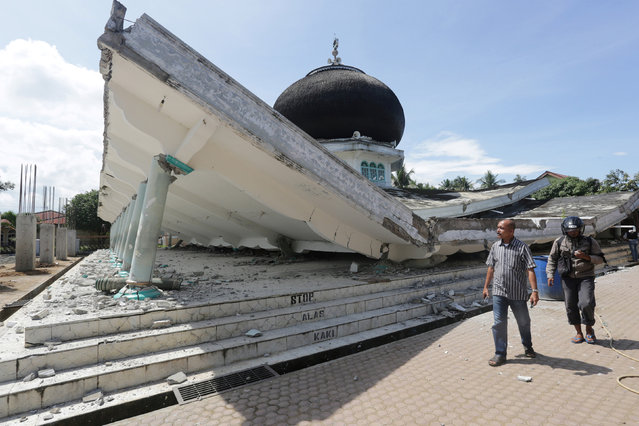
People walk near a collapsed mosque following an earthquake in Meuredu, Pidie Jaya in the northern province of Aceh, Indonesia December 7, 2016. (Photo by Irwansyah Putra/Reuters/Antara Foto)

People walk near a collapsed mosque following an earthquake in Meuredu, Pidie Jaya in the northern province of Aceh, Indonesia December 7, 2016. (Photo by Irwansyah Putra/Reuters/Antara Foto)
Details
08 Dec 2016 12:55:00
Singers “Elle & The Pocket Belles” attend day 3 “Ladies Day” of the Qatar Goodwood Festival on August 3, 2017 in Chichester, England. (Photo by David Hartley/PA Wire)

Singers “Elle & The Pocket Belles” attend day 3 “Ladies Day” of the Qatar Goodwood Festival on August 3, 2017 in Chichester, England. (Photo by David Hartley/PA Wire)
Details
04 Aug 2017 09:19:00
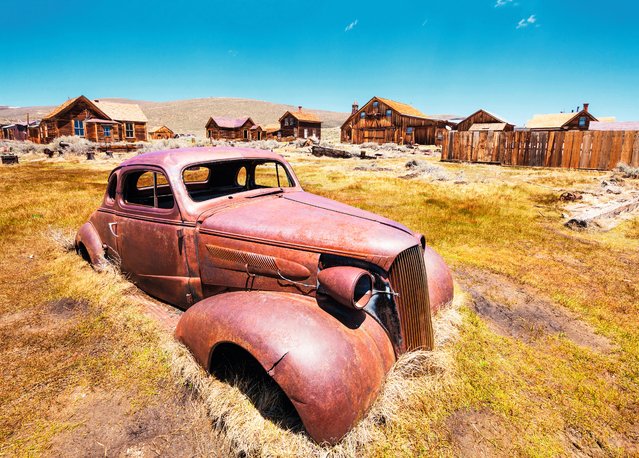
Bodie, Mono County, California. Gold was discovered at Bodie in 1859 (just after the initial California gold rush) and it went from mining camp to boomtown. Its decline began in 1880, when word spread of new boomtowns elsewhere. The Standard Consolidated Mine closed in 1913, and four years later the Bodie Railway was abandoned. By 1940 the population was down to 40. Today, Bodie is maintained in a state of arrested decay as a visitor attraction. (Photo by Alamy Stock Photo)

Kieron Connolly’s new book of photographs of more than 100 once-busy and often elegant buildings gives an idea of how the world might look if humankind disappeared. Here: Bodie, Mono County, California. Gold was discovered at Bodie in 1859 (just after the initial California gold rush) and it went from mining camp to boomtown. Its decline began in 1880, when word spread of new boomtowns elsewhere. The Standard Consolidated Mine closed in 1913, and four years later the Bodie Railway was abandoned. By 1940 the population was down to 40. Today, Bodie is maintained in a state of arrested decay as a visitor attraction. (Photo by Alamy Stock Photo)
Details
07 Sep 2016 09:50:00
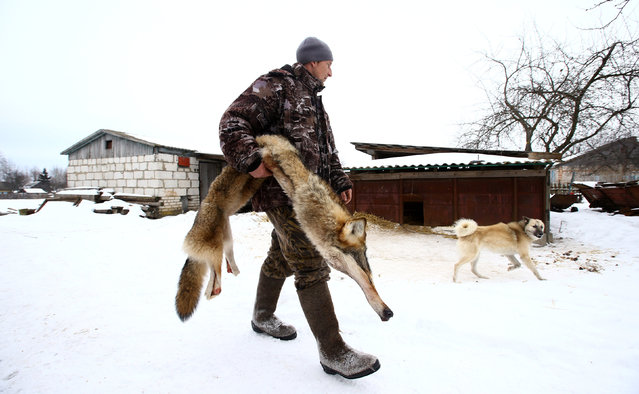
Nikolay Skidan, a hunter, carries the skin of a wolf in the village of Khrapkovo, Belarus February 1, 2017. (Photo by Vasily Fedosenko/Reuters)

Nikolay Skidan, a hunter, carries the skin of a wolf in the village of Khrapkovo, Belarus February 1, 2017. Wolf fur grows thickest in winter, so Belarussian hunter Vladimir Krivenchik only sets his traps once snow is on the ground. He and his wife live on the edge of the Chernobyl exclusion zone – 2,600 square km of land on the Belarus-Ukraine border that was contaminated by a nuclear disaster in 1986. (Photo by Vasily Fedosenko/Reuters)
Details
16 Feb 2017 00:04:00
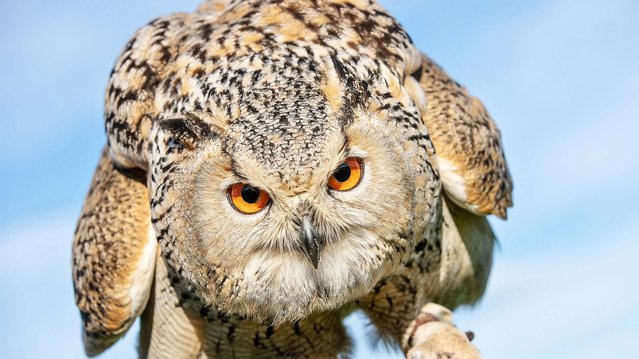
A Siberian eagle owl, which can grow up to 71cm tall, is among a collection of 60 birds of prey at SMJ Falconry near Oxenhope, West Yorkshire, England. (Photo by Charlotte Graham)

A Siberian eagle owl, which can grow up to 71cm tall, is among a collection of 60 birds of prey at SMJ Falconry near Oxenhope, West Yorkshire, England. (Photo by Charlotte Graham)
Details
03 Mar 2019 00:03:00
A drag queen goes through security a RuPaul’s DragCon in Los Angeles, USA on May 26, 2019. (Photo by Ronen Tivony/SOPA Images/Rex Features/Shutterstock)

A drag queen goes through security a RuPaul’s DragCon in Los Angeles, USA on May 26, 2019. (Photo by Ronen Tivony/SOPA Images/Rex Features/Shutterstock)
Details
29 May 2019 00:07:00