Loading...
Done
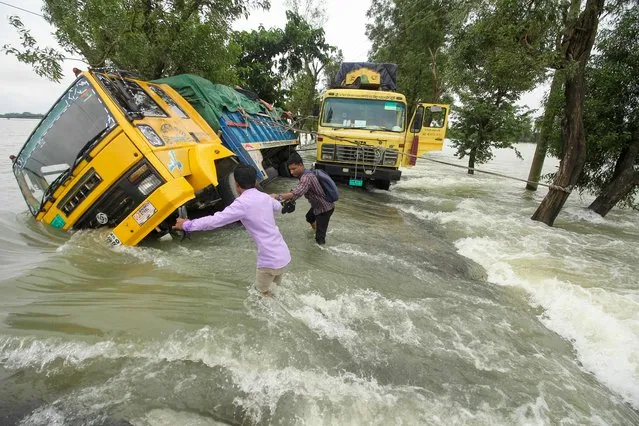
People wade past stranded trucks on a flooded street in Sunamganj on June 21, 2022. Floods are a regular menace to millions of people in low-lying Bangladesh, but experts say climate change is increasing their frequency, ferocity and unpredictability. (Photo by Mamun Hossain/AFP Photo)

People wade past stranded trucks on a flooded street in Sunamganj on June 21, 2022. Floods are a regular menace to millions of people in low-lying Bangladesh, but experts say climate change is increasing their frequency, ferocity and unpredictability. (Photo by Mamun Hossain/AFP Photo)
Details
01 Jul 2022 02:36:00
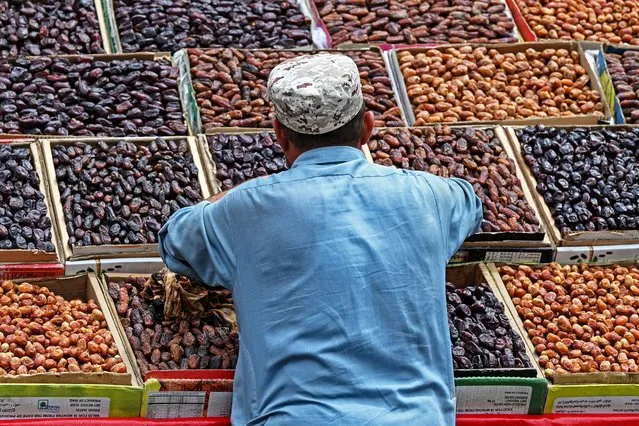
A vendor arranges dates on his cart at a market in Rawalpindi on June 1, 2023. (Photo by Farooq Naeem/AFP Photo)

A vendor arranges dates on his cart at a market in Rawalpindi on June 1, 2023. (Photo by Farooq Naeem/AFP Photo)
Details
18 Aug 2023 03:34:00
“Flashy Lady”. (Photo and caption by Roderique Arisiaman)

Some artists want to convey some deep message through their art, while some are simply satisfied with shocking the audience. Roderique Arisiaman is the latter kind. Though his works do not play on the strings of our emotion, they can pique the interest with their flashy and sometimes humorous appearance. Many of his works have a zombie theme, and are surprisingly well done, especially the one where a man pushes his fingers through his cheek and into his eye. If given the chance, Roderique Arisiaman would probably do a great job of designing a poster for some zombie apocalypse movie. (Photo and caption by Roderique Arisiaman)
Details
18 Mar 2015 09:27:00
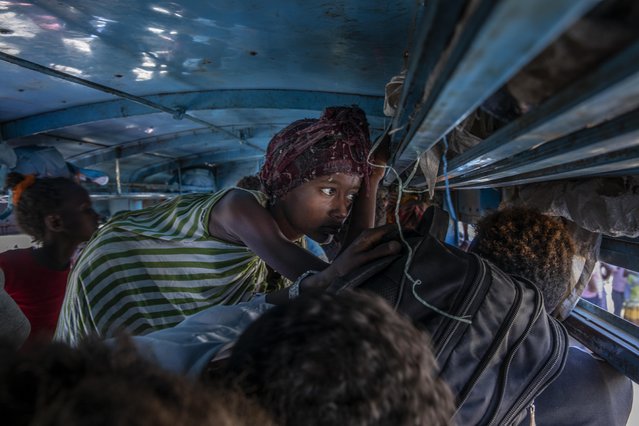
Tigray refugees who fled the conflict in the Ethiopia's Tigray ride a bus going to the Village 8 temporary shelter, near the Sudan-Ethiopia border, in Hamdayet, eastern Sudan, Tuesday, December 1, 2020. (Photo by Nariman El-Mofty/AP Photo)

Tigray refugees who fled the conflict in the Ethiopia's Tigray ride a bus going to the Village 8 temporary shelter, near the Sudan-Ethiopia border, in Hamdayet, eastern Sudan, Tuesday, December 1, 2020. (Photo by Nariman El-Mofty/AP Photo)
Details
11 Dec 2020 00:01:00
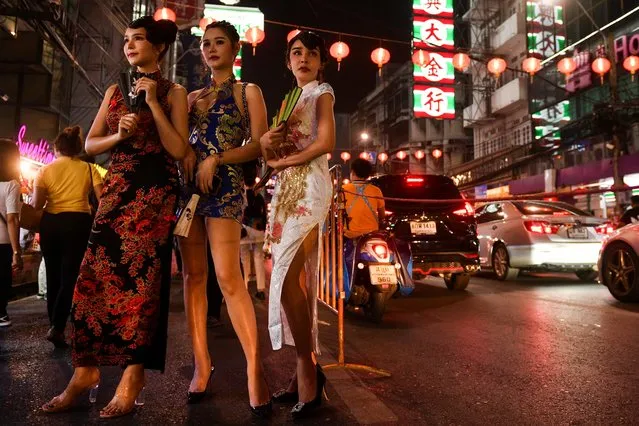
Women stand on a street ahead of the Lunar New Year celebration at the Chinatown in Bangkok, Thailand, February 10, 2021. (Photo by Chalinee Thirasupa/Reuters)

Women stand on a street ahead of the Lunar New Year celebration at the Chinatown in Bangkok, Thailand, February 10, 2021. (Photo by Chalinee Thirasupa/Reuters)
Details
13 Feb 2021 10:35:00
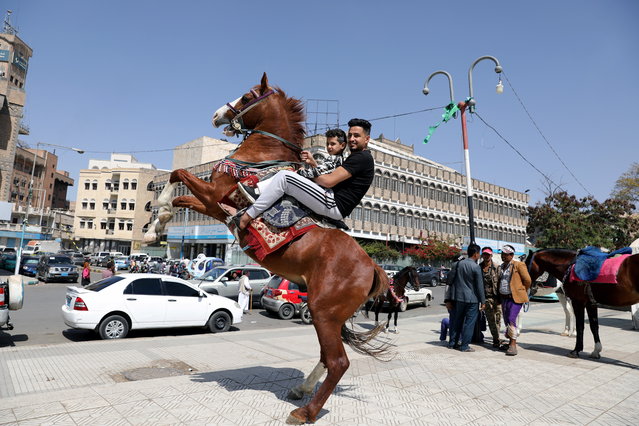
A man and his son ride a horse at Tahrir Square in Sanaa, Yemen on January 21, 2021. (Photo by Khaled Abdullah/Reuters)

A man and his son ride a horse at Tahrir Square in Sanaa, Yemen on January 21, 2021. (Photo by Khaled Abdullah/Reuters)
Details
17 Mar 2021 10:26:00
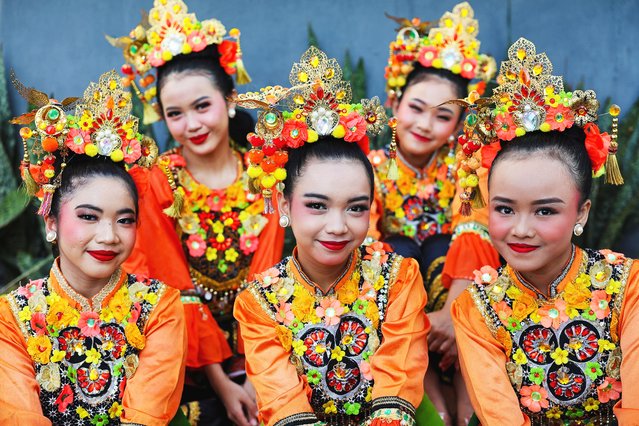
Dancers pose for a photo as they prepare during Festival Cilung or “Love the Environment” Festival, where boats made from recycled materials, mostly plastic bottles, sail on the Ciliwung River, one of the most polluted rivers in the world, to raise public awareness about river pollution, in Jakarta, Indonesia, on September 28, 2025. (Photo by Willy Kurniawan/Reuters)

Dancers pose for a photo as they prepare during Festival Cilung or “Love the Environment” Festival, where boats made from recycled materials, mostly plastic bottles, sail on the Ciliwung River, one of the most polluted rivers in the world, to raise public awareness about river pollution, in Jakarta, Indonesia, on September 28, 2025. (Photo by Willy Kurniawan/Reuters)
Details
08 Nov 2025 04:13:00
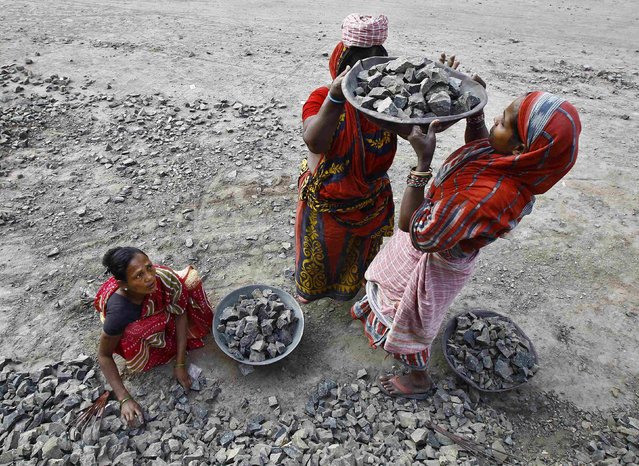
Women labourers work at the construction site of a road in Kolkata January 8, 2015. Across towns and cities in India, it is not uncommon to see women cleaning building sites, carrying bricks and or shoveling gravel - helping construct the infrastructure necessary for the country's economic and social development. (Photo by Rupak De Chowdhuri/Reuters)

Women labourers work at the construction site of a road in Kolkata January 8, 2015. Across towns and cities in India, it is not uncommon to see women cleaning building sites, carrying bricks and or shoveling gravel – helping construct the infrastructure necessary for the country's economic and social development. They help build roads, railway tracks, airports, and offices. They lay pipes for clean water supplies, cables for telecommunications, and dig the drains for sewage systems. But although women make up at least 20 percent of India's 40 million construction workers, they are less recognized than male workers with lower pay and often prone to safety hazards and sexual harassment. They are often unaware of their rights or scared to complain, say activists now trying to campaign for better treatment of women in the construction industry. (Photo by Rupak De Chowdhuri/Reuters)

Details
15 Jan 2015 13:47:00