Loading...
Done
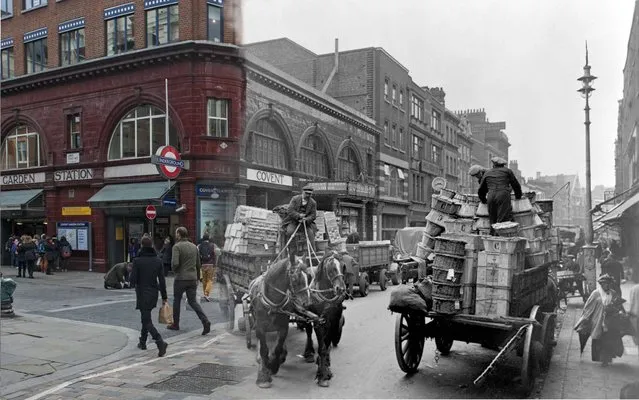
A street scene in London’s Covent Garden with the underground station and a horse and cart in the background in c.1930 and the same street in 2014. (Photo by Museum of London/Streetmuseum app)

“For most Londoners, the most common view they enjoy as they trudge to work is the back of another commuter's head. But now, thanks to the Streetmuseum app, anyone traipsing through the capital's streets can step back in time to see what London looked like in the 19th and 20th century compared with today – all in the same image”. – Joe Krishnan via The Independent. Photo: A street scene in London’s Covent Garden with the underground station and a horse and cart in the background in c.1930 and the same street in 2014. (Photo by Museum of London/Streetmuseum app)
Details
27 Feb 2014 06:48:00
Art "Grow" by Andreas Prei

Andreas Preis is a Berlin-based German artist who studied communications design in Nuremberg.
Following an advertising internship with Springer & Jacoby he turned his attention toward freelance design and illustration. Andreas’ style mixes digital and traditional art, combining hand-drawings, cross-hatching, and color with digital media. In his latest project entitled Grow, Andreas Preis creates an incredible series of animal crests using his unique style to create these wonderful works of art.
Details
18 Aug 2013 12:05:00
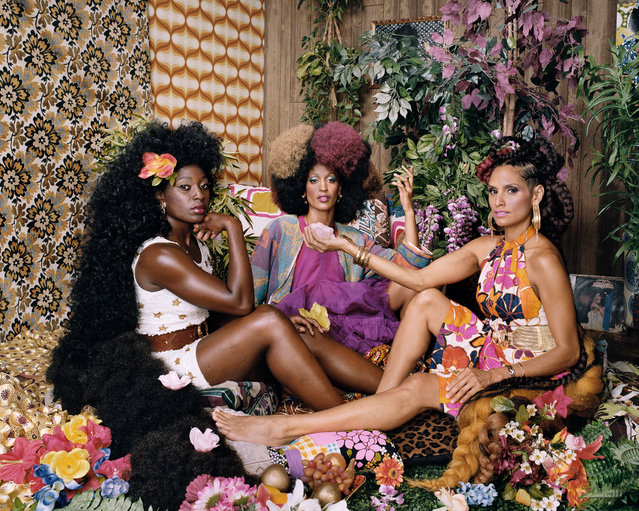
Les Trois Femmes Deux, 2018. (Photo by Mickalene Thomas/Courtesy of Yancey Richardson Gallery, New York)

Vast collection of fine art photography about to open at Pier 24 in Manhattan. One of the world's most prestigious annual photography events, The Photography Show is the longest-running and foremost exhibition dedicated to the photographic medium, offering a wide range of museum-quality work, including contemporary, modern, and 19th-century photographs as well as photo-based art, video, and new media. Here: Les Trois Femmes Deux, 2018. (Photo by Mickalene Thomas/Courtesy of Yancey Richardson Gallery, New York)
Details
04 Apr 2019 00:01:00
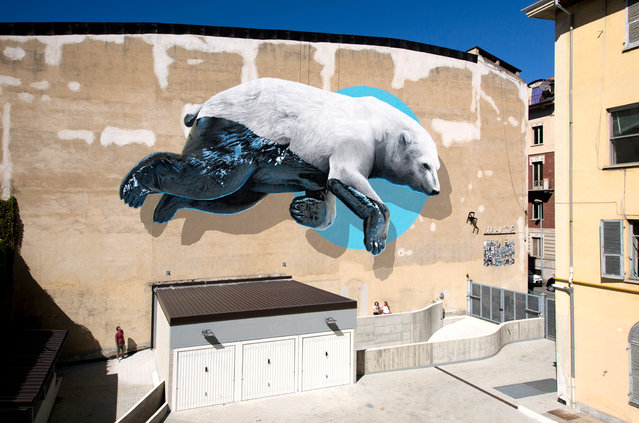
A polar bear whose bottom half is caked in oily black gunk. A whale wrapped in striped fabric: a pseudo straightjacket. These are the messes climate change leaves behind, the things we know are happening but often don’t have the opportunity to see with our own eyes. Swiss street art duo Christian Rebecchi and Pablo Togni, otherwise known as NeverCrew, met in art school when they were 15 and started making work together soon after. As a team, the artists adorn the world with eye-popping and gut-wrenching images depicting the consequences of humanity’s actions on earth. Here: “Black machine” mural painting and installation on the Colosseo theater in Turin, Italy, in September 2015. (Photo by NeverCrew/The Huffington Post)

A polar bear whose bottom half is caked in oily black gunk. A whale wrapped in striped fabric: a pseudo straightjacket. These are the messes climate change leaves behind, the things we know are happening but often don’t have the opportunity to see with our own eyes. Swiss street art duo Christian Rebecchi and Pablo Togni, otherwise known as NeverCrew, met in art school when they were 15 and started making work together soon after. As a team, the artists adorn the world with eye-popping and gut-wrenching images depicting the consequences of humanity’s actions on earth. (Photo by NeverCrew/The Huffington Post)
Details
13 Aug 2016 11:09:00
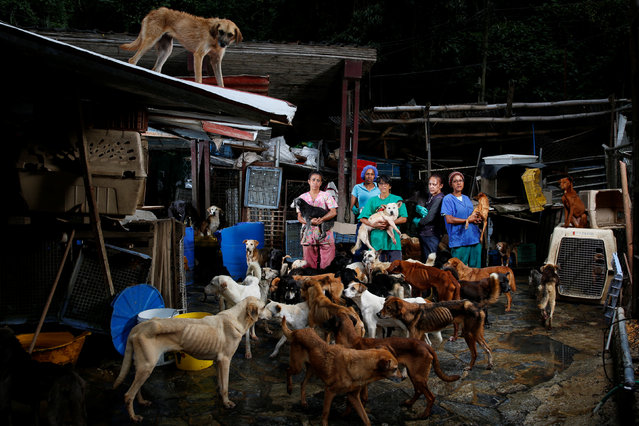
(L-R) Maria Silva, Milena Cortes, Maria Arteaga, Jackeline Bastidas and Gissy Abello pose for a picture at the Famproa dogs shelter where they work, in Los Teques, Venezuela, August 25, 2016. Venezuelans struggling to feed their families let alone their pets are dumping animals on the streets, in parks and at makeshift homes overrun with scrawny animals amid an economic crisis. An hour from Caracas in Los Teques, hundreds of dogs bark and run around the streets scavenging for food outside a makeshift shelter. People come by every few hours to hand over scrawny dogs which are fed by volunteers every day. Venezuela is undergoing a major economic and social crisis, with shortages of basic foods and medicines. Triple digit inflation is hitting everybody hard, including those who own pets. (Photo by Carlos Garcia Rawlins/Reuters)

(L-R) Maria Silva, Milena Cortes, Maria Arteaga, Jackeline Bastidas and Gissy Abello pose for a picture at the Famproa dogs shelter where they work, in Los Teques, Venezuela, August 25, 2016. Venezuelans struggling to feed their families let alone their pets are dumping animals on the streets, in parks and at makeshift homes overrun with scrawny animals amid an economic crisis. An hour from Caracas in Los Teques, hundreds of dogs bark and run around the streets scavenging for food outside a makeshift shelter. (Photo by Carlos Garcia Rawlins/Reuters)
Details
08 Sep 2016 10:01:00
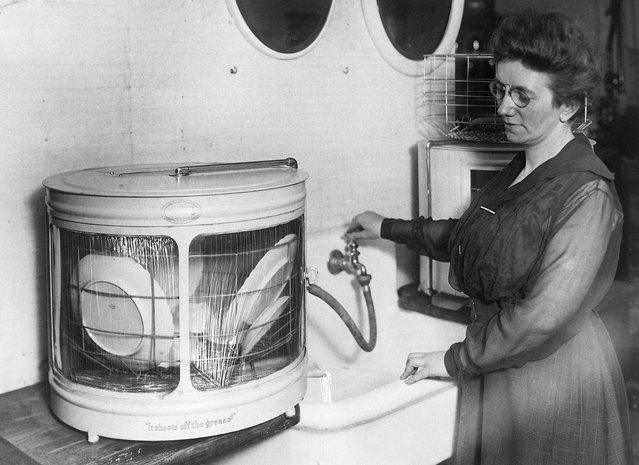
All the drugery of dishwashing in this three-times -a day task, which comes to the house wife who does her own house work, has been eliminated by the new dish washer shown in the photograph on April 25, 1921. It is the invention of a Cincinnati school teacher, who sought to make things a bit more pleasant for his wife. Incedently, his idea was worth 12,00 to him, for a manufacturing concern thought so much of the “dish-washer” they purchased the rights and will seek to add a little joy to thousands of other housewives. With the aid of only hot water, dishes placed in a wire rack and set into the drum are made clean and spotless in two minutes. (Photo by Bettmann Archive/Getty Images)

All the drugery of dishwashing in this three-times -a day task, which comes to the house wife who does her own house work, has been eliminated by the new dish washer shown in the photograph on April 25, 1921. It is the invention of a Cincinnati school teacher, who sought to make things a bit more pleasant for his wife. Incedently, his idea was worth 12,00 to him, for a manufacturing concern thought so much of the “dish-washer” they purchased the rights and will seek to add a little joy to thousands of other housewives. With the aid of only hot water, dishes placed in a wire rack and set into the drum are made clean and spotless in two minutes. (Photo by Bettmann Archive/Getty Images)
Details
08 Jul 2021 10:25:00
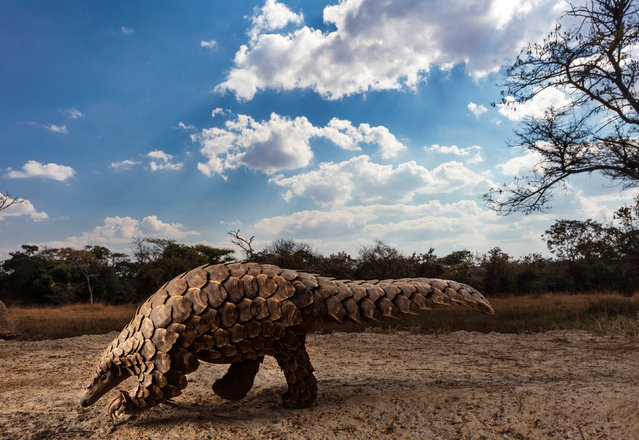
Pangolins in Crisis: Brent Stirton, South Africa; 1st place, Natural world and wildlife. “Pangolins are the world’s most illegally trafficked mammals, with an estimated one million trafficked to Asia in the last 10 years. Their scales are used in traditional Chinese and Vietnamese medicine, and their meat is sold as a high-priced delicacy. As a result, pangolins are listed as critically endangered and anyone who trades or consumes them is breaking the law. This body of work exposes the trade, while exploring aspects of illegality and celebrating the people who are trying to save these animals”. (Photo by Brent Stirton/Sony World Photography Awards 2020)

Pangolins in Crisis: Brent Stirton, South Africa; 1st place, Natural world and wildlife. “Pangolins are the world’s most illegally trafficked mammals, with an estimated one million trafficked to Asia in the last 10 years. Their scales are used in traditional Chinese and Vietnamese medicine, and their meat is sold as a high-priced delicacy. As a result, pangolins are listed as critically endangered and anyone who trades or consumes them is breaking the law. This body of work exposes the trade, while exploring aspects of illegality and celebrating the people who are trying to save these animals”. (Photo by Brent Stirton/Sony World Photography Awards 2020)
Details
11 Jun 2020 00:05:00
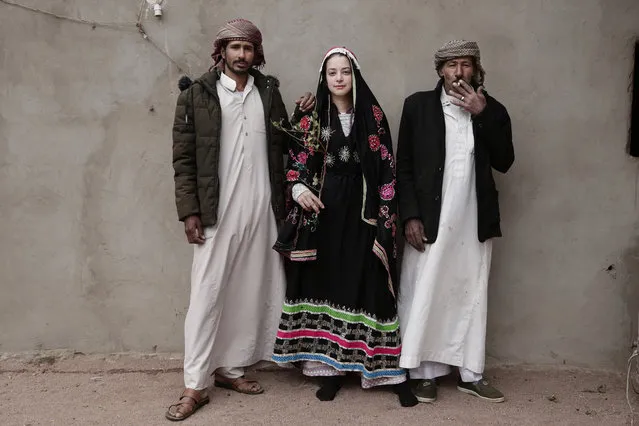
In this March 31, 2019 photo, an Egyptian student borrows a Bedouin wedding dress to pose for a photograph with Bedouin men from the Hamada tribe, in Wadi Sahw, Abu Zenima, in South Sinai, Egypt. Four Bedouin women are for the first time leading tours in Egypt’s Sinai Peninsula, breaking new ground in their deeply conservative community, where women almost never work outside the home or interact with outsiders.  The tourists can only be women, and the tours can’t go overnight. Each day before the sun sets, the group returns to the Hamada’s home village in Wadi Sahu, a narrow desert valley. (Photo by Nariman El-Mofty/AP Photo)

In this March 31, 2019 photo, an Egyptian student borrows a Bedouin wedding dress to pose for a photograph with Bedouin men from the Hamada tribe, in Wadi Sahw, Abu Zenima, in South Sinai, Egypt. Four Bedouin women are for the first time leading tours in Egypt’s Sinai Peninsula, breaking new ground in their deeply conservative community, where women almost never work outside the home or interact with outsiders. The tourists can only be women, and the tours can’t go overnight. Each day before the sun sets, the group returns to the Hamada’s home village in Wadi Sahu, a narrow desert valley. (Photo by Nariman El-Mofty/AP Photo)
Details
11 Apr 2019 00:01:00