Loading...
Done
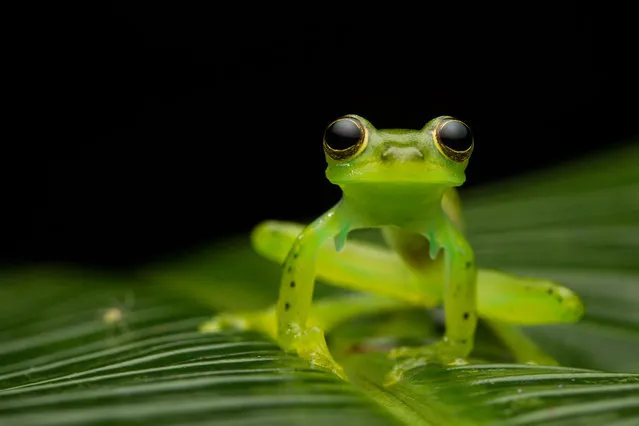
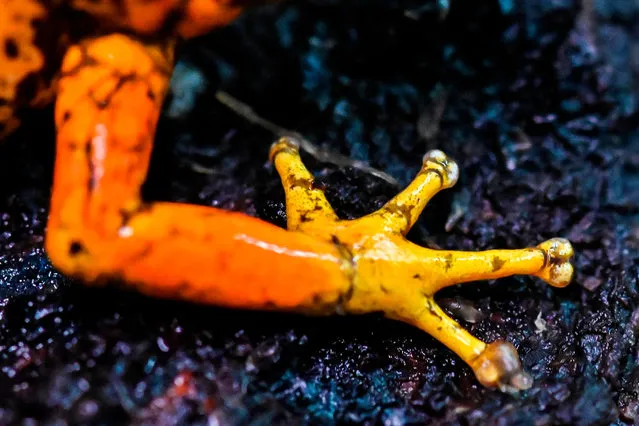
A leg of a “diablito” frog (Oophaga sylvatica) is photographed in a laboratory at a laboratory in the zoo of Cali, Colombia, on July 19, 2019. Colombia is the second country with the largest number of amphibians in the world after Brazil. More than 40% of amphibian species worldwide are in danger of extinction. (Photo by Luis Robayo/AFP Photo)

A leg of a “diablito” frog (Oophaga sylvatica) is photographed in a laboratory at a laboratory in the zoo of Cali, Colombia, on July 19, 2019. Colombia is the second country with the largest number of amphibians in the world after Brazil. More than 40% of amphibian species worldwide are in danger of extinction. (Photo by Luis Robayo/AFP Photo)
Details
28 Nov 2020 00:03:00
An image captured by Jasmine Vink, the winner of the wildlife and animal category and overall winner in Australian Photography’s 2018 Photographer of the Year competition. (Photo by Jasmine Vink/Australia's 2018 Photographer of the Year by Panasonic)

An image captured by Jasmine Vink, the winner of the wildlife and animal category and overall winner in Australian Photography’s 2018 Photographer of the Year competition. (Photo by Jasmine Vink/Australia's 2018 Photographer of the Year by Panasonic)
Details
06 Feb 2019 00:03:00
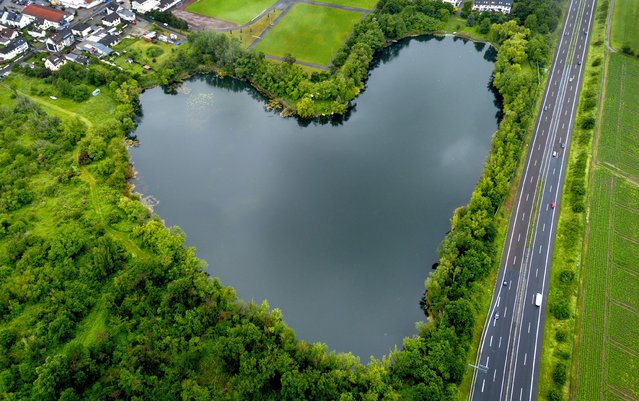
An areal view of the lake in the form of a heart in Rodgau, near Frankfurt, Germany, Friday, May 24, 2024. (Photo by Michael Probst/AP Photo)

An areal view of the lake in the form of a heart in Rodgau, near Frankfurt, Germany, Friday, May 24, 2024. (Photo by Michael Probst/AP Photo)
Details
02 Jul 2024 00:16:00
A bride gets tested for the coronavirus disease (COVID-19) at a nucleic acid testing site, following the coronavirus disease (COVID-19) outbreak in Shanghai, China on November 15, 2022. (Photo by Aly Song/Reuters)

A bride gets tested for the coronavirus disease (COVID-19) at a nucleic acid testing site, following the coronavirus disease (COVID-19) outbreak in Shanghai, China on November 15, 2022. (Photo by Aly Song/Reuters)
Details
23 Nov 2022 04:11:00
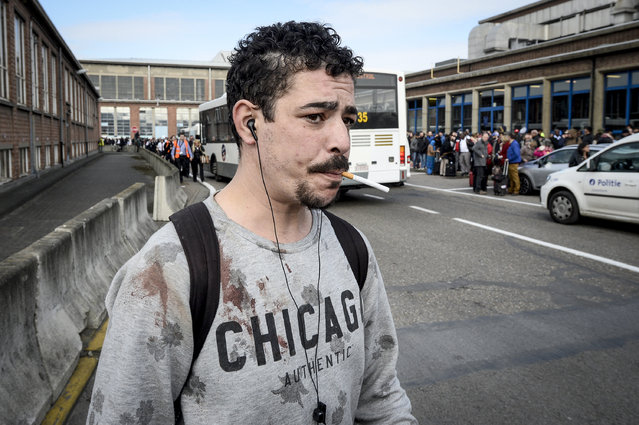
A man with blood on his shirt is evacuated from Brussels Airport in Zaventem, Belgium, on Tuesday, March 22, 2016. (Photo by Dirk Waem/Belga/Zuma Press/TNS)

A man with blood on his shirt is evacuated from Brussels Airport in Zaventem, Belgium, on Tuesday, March 22, 2016. (Photo by Dirk Waem/Belga/Zuma Press/TNS)
Details
23 Mar 2016 12:02:00
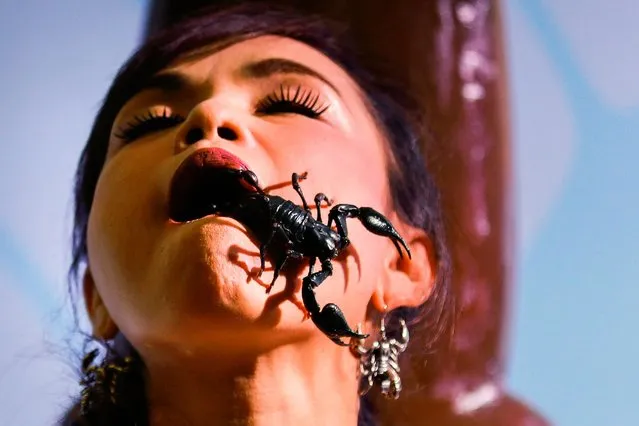
A scorpion crawls out of the mouth of Thailand's Scorpion Queen and Ripley's Ambassador Kanchana Kaetkaew (also spelled Kanjana Ketkaew), at the Ripley's Believe it or Not museum in Pattaya city, Chonburi province, Thailand, 03 June 2017. (Photo by Diego Azubel/EPA)

A scorpion crawls out of the mouth of Thailand's Scorpion Queen and Ripley's Ambassador Kanchana Kaetkaew (also spelled Kanjana Ketkaew), at the Ripley's Believe it or Not museum in Pattaya city, Chonburi province, Thailand, 03 June 2017. (Photo by Diego Azubel/EPA)
Details
06 Jun 2017 08:33:00
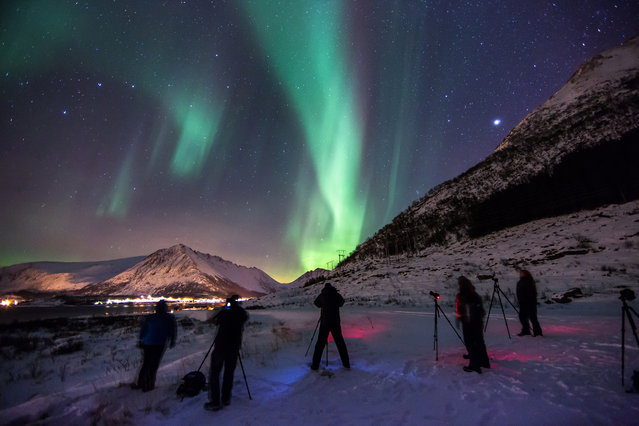
“Aurora Hunters”. Photographers taking part in a photography tour on the Lofoten Islands in Norway, pull over on the side of the road to take a photo of their first ever Aurora Borealis after spotting it from their tour bus. Photo location: Rystad, Lofoten Islands, Norway. (Photo and caption by Mark Gee/National Geographic Photo Contest)

“Aurora Hunters”. Photographers taking part in a photography tour on the Lofoten Islands in Norway, pull over on the side of the road to take a photo of their first ever Aurora Borealis after spotting it from their tour bus. Photo location: Rystad, Lofoten Islands, Norway. (Photo and caption by Mark Gee/National Geographic Photo Contest)
Details
17 Jun 2014 10:08:00
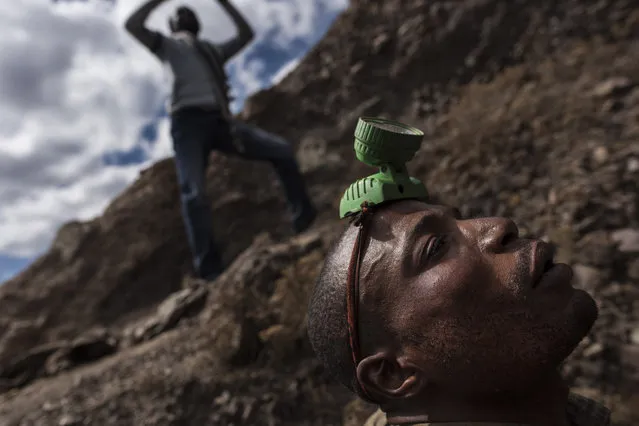
A “creuseur”, or digger, a plastic lantern on his head, readies to enter a copper and cobalt mine in Kawama, Democratic Republic of Congo on June 8, 2016. Cobalt is used in the batteries for electric cars and mobile phones. Working conditions are dangerous, often with no safety equipment or structural support for the tunnels. The diggers say they are paid on average US$2-3/day. (Photo by Michael Robinson Chavez/The Washington Post)

A “creuseur”, or digger, a plastic lantern on his head, readies to enter a copper and cobalt mine in Kawama, Democratic Republic of Congo on June 8, 2016. Cobalt is used in the batteries for electric cars and mobile phones. Working conditions are dangerous, often with no safety equipment or structural support for the tunnels. The diggers say they are paid on average US$2-3/day. (Photo by Michael Robinson Chavez/The Washington Post)
Details
30 Dec 2016 10:29:00