Loading...
Done
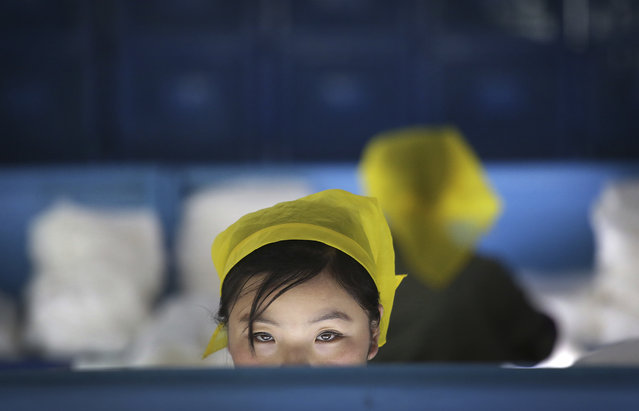
In this Friday, January 6, 2017, photo, a North Korean woman working at the Kim Jong Suk Silk Mill looks up from her workstation in Pyongyang, North Korea. The silk mill, named after North Korean leader Kim Jong Un's grandmother, is where 1,600 workers – mostly women – sort and process silkworms to produce silk thread that officials at the Pyongyang factory say is made into roughly 200 tons of silk a year. (Photo by Wong Maye-E/AP Photo)

In this Friday, January 6, 2017, photo, a North Korean woman working at the Kim Jong Suk Silk Mill looks up from her workstation in Pyongyang, North Korea. The silk mill, named after North Korean leader Kim Jong Un's grandmother, is where 1,600 workers – mostly women – sort and process silkworms to produce silk thread that officials at the Pyongyang factory say is made into roughly 200 tons of silk a year. (Photo by Wong Maye-E/AP Photo)
Details
17 Jan 2017 12:01:00

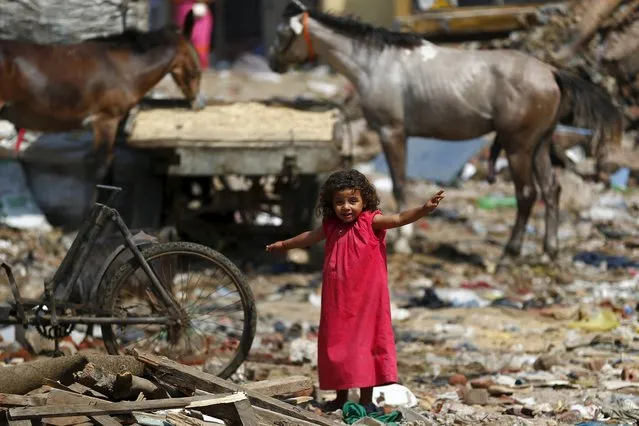
A girl plays in the Eshash el-Sudan slum in the Dokki neighbourhood of Giza, south of Cairo, Egypt September 2, 2015. (Photo by Amr Abdallah Dalsh/Reuters)

A girl plays in the Eshash el-Sudan slum in the Dokki neighbourhood of Giza, south of Cairo, Egypt September 2, 2015. Residents of the slum clashed with police in late August, when about 50 ramshackle huts were destroyed and at least 20 people were injured by teargas, local media reported, as authorities attempt to clear the area and rehouse residents. The slum dwellers, some of whom have called Eshash el-Sudan home for 50 years, say there are not enough apartments built nearby to house them. The residents of the slum eke out a living by disposing of rubbish or baking bread. Schooling is too expensive for most of their children, who play with salvaged rubbish amid shacks made out of discarded wood and leather. (Photo by Amr Abdallah Dalsh/Reuters)
Details
11 Sep 2015 12:47:00
A pigeon, known as Siyah Kinifirli, with an approximate market value of 1000 Turkish Lira ($263), bred by 23-year-old Ismail Ozbek, is pictured in Sanliurfa, Turkey, December 23, 2016. As night-time approaches in Sanliurfa, southeastern Turkey, most of the alleyways of the city's old bazaar are emptying out of buyers and vendors, except for one. The bustle of daytime trading has died down, but on this little street, a stream of men carry cardboard boxes filled with pigeons to a cluster of three teahouses. Here, they sell the birds at Sanliurfa's famed auctions to a dedicated band of pigeon keepers and breeders, a pastime that has been thriving for hundreds of years across the region and over the nearby border into war-torn Syria. In a country where the minimum wage is about 1,400 Liras ($367) a month, enthusiasts regularly easily spend hundreds of dollars for one bird. “I once sold a pair of pigeons for 35,000 Turkish Lira”, says auctioneer Imam Dildas. “This is a passion, a hobby you cannot quit. I've been known to sell the fridge and my wife's gold bracelets to pay for pigeons”. (Photo by Umit Bektas/Reuters)

A pigeon, known as Siyah Kinifirli, with an approximate market value of 1000 Turkish Lira ($263), bred by 23-year-old Ismail Ozbek, is pictured in Sanliurfa, Turkey, December 23, 2016. As night-time approaches in Sanliurfa, southeastern Turkey, most of the alleyways of the city's old bazaar are emptying out of buyers and vendors, except for one. (Photo by Umit Bektas/Reuters)
Details
17 Jan 2017 12:05:00
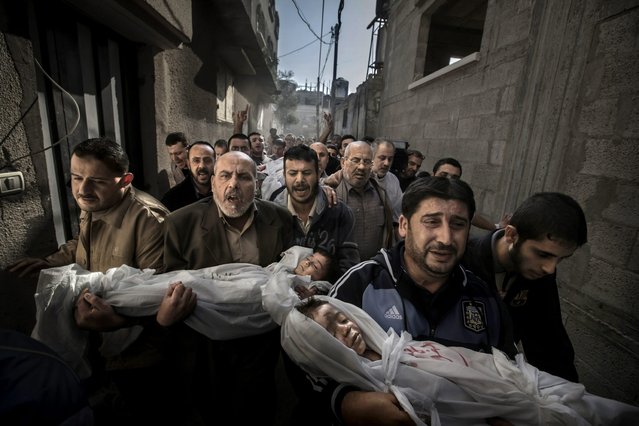
In this photo provided on Friday Feb. 15, 2013 by World Press Photo, the 2013 World Press Photo of the year by Paul Hansen, Sweden, for Dagens Nyheter, shows two-year-old Suhaib Hijazi and her three-year-old brother Muhammad who were killed when their house was destroyed by an Israeli missile strike. (Photo by Paul Hansen/Dagens Nyheter/AP Photo)

Swedish photographer Paul Hansen won the 2012 World Press Photo award Friday for newspaper Dagens Nyheter with a picture of two Palestinian children killed in an Israeli missile strike being carried to their funeral.

Photo: In this photo provided on Friday February 15, 2013 by World Press Photo, the 2013 World Press Photo of the year by Paul Hansen, Sweden, for Dagens Nyheter, shows two-year-old Suhaib Hijazi and her three-year-old brother Muhammad who were killed when their house was destroyed by an Israeli missile strike. Their father, Fouad, was also killed and their mother was put in intensive care. Fouad's brothers carry his children to the mosque for the burial ceremony as his body is carried behind on a stretcher in Gaza City, Palestinian Territories, November 20, 2012. (Photo by Paul Hansen/Dagens Nyheter/AP Photo)
Details
16 Feb 2013 12:17:00
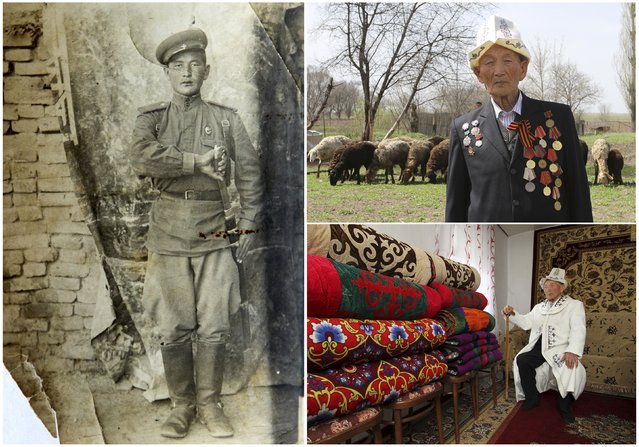
World War Two veteran Abla Begaliyev, 91, is seen in an undated handout picture (L), poses for a picture in Arashan (Top R) and at home in Kyrgyzstan April 14, 2015. Begaliyev served in the border guard cavalry from February 1942 until April 1947. Originally from Kyrgyzstan, he fought on the Ukrainian front and relocated to the border with Afghanistan at the end of World War Two. (Photo by Vladimir Pirogov/Reuters/Family handout (L))

World War Two veteran Abla Begaliyev, 91, is seen in an undated handout picture (L), poses for a picture in Arashan (Top R) and at home in Kyrgyzstan April 14, 2015. Begaliyev served in the border guard cavalry from February 1942 until April 1947. Originally from Kyrgyzstan, he fought on the Ukrainian front and relocated to the border with Afghanistan at the end of World War Two. As the world marks the 70th anniversary of the end of World War Two, Reuters photographers the length and breadth of the former Soviet republics (CCCP) captured portraits of Red Army veterans, mostly now in their 80s and 90s, today and through archive pictures at the time. More than 20 million Soviet citizens were killed in the war. (Photo by Vladimir Pirogov/Reuters/Family handout (L))
Details
08 May 2015 14:22:00
A Chinese man wears a mask to protect against pollution as he waits at a red light while commuting to work in heavy smog on December 8, 2015 in Beijing, China. The Beijing government issued a 'red alert' for the first time since new standards were introduced earlier this year as the city and many parts of northern China were shrouded in heavy pollution. (Photo by Kevin Frayer/Getty Images)

A Chinese man wears a mask to protect against pollution as he waits at a red light while commuting to work in heavy smog on December 8, 2015 in Beijing, China. The Beijing government issued a 'red alert' for the first time since new standards were introduced earlier this year as the city and many parts of northern China were shrouded in heavy pollution. Levels of PM 2.5, considered the most hazardous, crossed 400 units in Beijing, lower than last week, but still nearly 20 times the acceptable standard set by the World Health Organization. The governments of more than 190 countries are meeting in Paris to set targets on reducing carbon emissions in an attempt to forge a new global agreement on climate change. (Photo by Kevin Frayer/Getty Images)
Details
11 Dec 2015 08:01:00
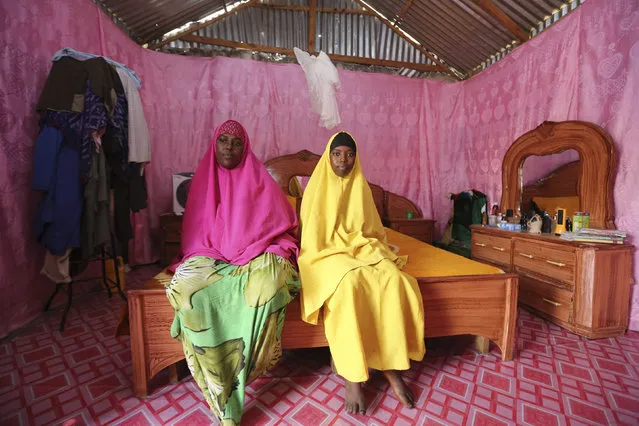
Saciido Sheik Yacquub, 34, poses for a picture with her daughter Faadumo Subeer Mohamed, 13, at their home in Hodan district IDP camp in Mogadishu February 11, 2014. Saciido, who runs a small business, wanted to be a business woman when she was a child. She studied until she was 20. She hopes that Faadumo will become a doctor. Faadumo will finish school in 2017 and hopes to be a doctor when she grows up. (Photo by Feisal Omar/Reuters)

“On March 8th activists celebrate International Women’s Day, which dates back to the early 20th century and has been observed by the United Nations since 1975. In the run-up to the event, Reuters photographers in countries around the globe took a series of portraits of women and their daughters. They asked each mother what her profession was, at what age she had finished education, and what she wanted her daughter to become when she grew up. They also asked each daughter at what age she would finish education and what she wanted to do in the future. The series of images offers an insight into the lives of women and girls around the world”. – Reuters. (Photo by Feisal Omar/Reuters)
Details
09 Mar 2014 04:33:00
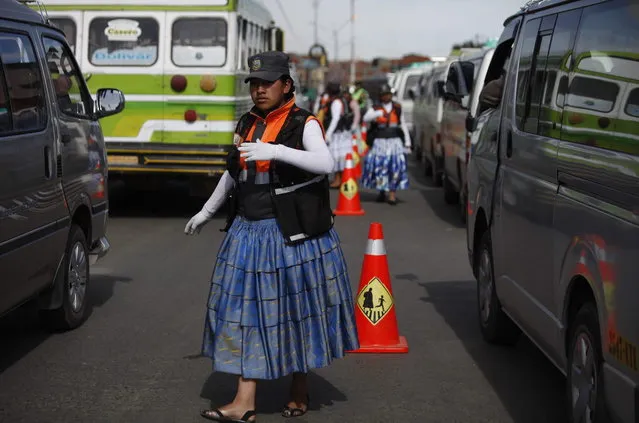
In this December 3, 2013 photo, an Aymara woman cops directs traffic on the streets of El Alto, Bolivia. The women wear the bright petticoats and shawls of indigenous women in the Andes, called cholitas in Bolivian slang, the main difference being that instead of bowler hats they wear khaki green police-style caps. Some don fluorescent traffic vests. (Photo by Juan Karita/AP Photo)

“This city in Bolivia's highlands has hired Aymara women dressed in traditional multilayered Andean skirts and brightly embroidered vests to work as traffic cops and bring order to its road chaos. About 20 of the “traffic cholitas” have been trained to direct cars and buses in El Alto, a teeming, impoverished sister city of La Paz in Bolivia's Andes mountains”. – El Alto via Associated Press. Photo: In this December 3, 2013 photo, an Aymara woman cops directs traffic on the streets of El Alto, Bolivia. The women wear the bright petticoats and shawls of indigenous women in the Andes, called cholitas in Bolivian slang, the main difference being that instead of bowler hats they wear khaki green police-style caps. Some don fluorescent traffic vests. (Photo by Juan Karita/AP Photo)
Details
25 Dec 2013 10:48:00