Loading...
Done
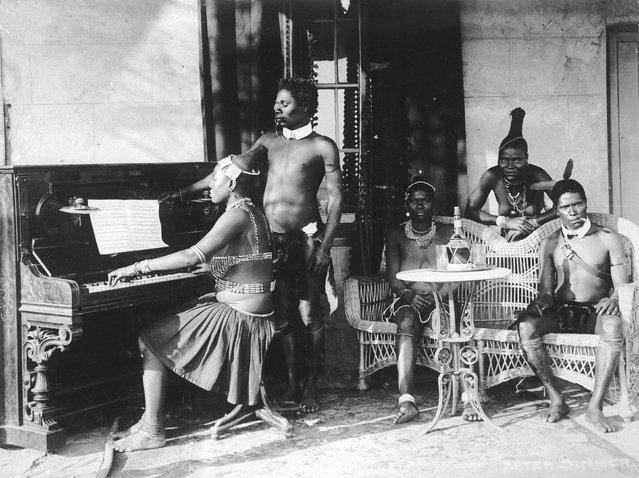
circa 1925:  A Zulu woman playing the piano while a group of others sit and listen.  (Photo by General Photographic Agency/Getty Images)

“The Zulu are the largest South African ethnic group, with an estimated 10–11 million people living mainly in the province of KwaZulu-Natal. Small numbers also live in Zimbabwe, Zambia, and Mozambique. Their language, Zulu, is a Bantu language; more specifically, part of the Nguni subgroup. The Zulu Kingdom played a major role in South African history during the 19th and 20th centuries. Under apartheid, Zulu people were classed as third-class citizens and suffered from state-sanctioned discrimination. They remain today the most numerous ethnic group in South Africa, and now have equal rights along with all other citizens”. – Wikipedia.

Photo: A Zulu woman playing the piano while a group of others sit and listen (to put it briefly, Englishmen scoff over Zulu). South Africa, circa 1925. (Photo by General Photographic Agency)

Details
03 Feb 2014 09:40:00
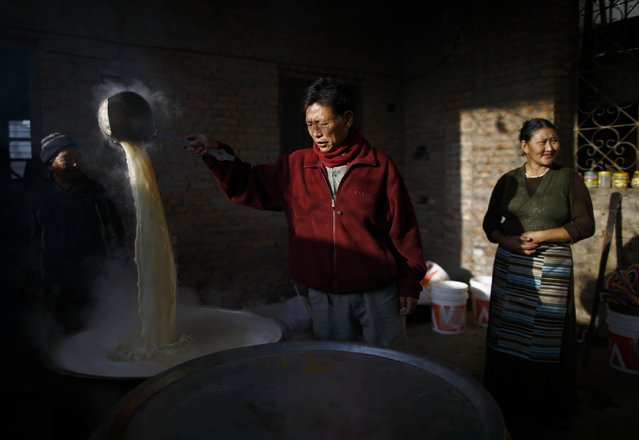
A Tibetan man stirs butter tea made for the arriving guest during the function organised to mark Losar or the Tibetan New Year at a Tibetan Refugee Camp in Lalitpur February 19, 2015. (Photo by Navesh Chitrakar/Reuters)

A Tibetan man stirs butter tea made for the arriving guest during the function organised to mark Losar or the Tibetan New Year at a Tibetan Refugee Camp in Lalitpur February 19, 2015. Tibetans across the world marked the arrival of the New Year with prayers and festivities. (Photo by Niranjan Shrestha/AP Photo)
Details
20 Feb 2015 13:06:00
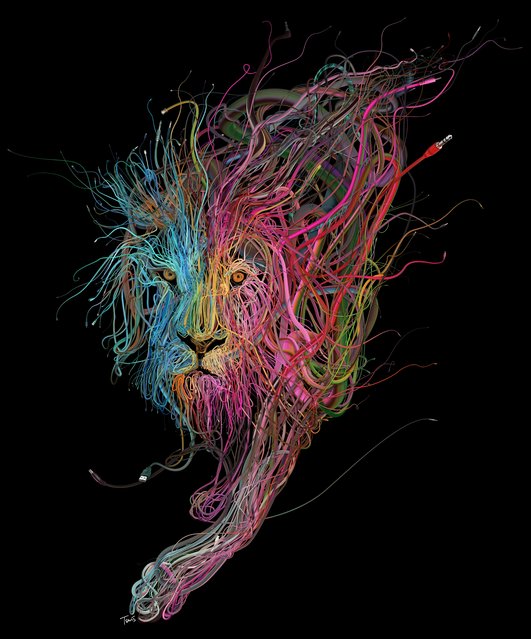
“The Conquering Lion: Plug into the power of Reggae”. (Photo by Charis Tsevis)

Greece-based illustrator, Charis Tsevis took his fascination with our wired world to develop his series of colorful and detailed wire illustrations. He uses all types of wires, including USB cords and phone cables, and creates form figures, faces and animals by tangling them together. Tsevis says, “All of them have to do with the relationship between the network and the human body and spirit”. Photo: “The Conquering Lion: Plug into the power of Reggae”. (Photo by Charis Tsevis)
Details
02 Apr 2014 10:01:00
An internally displaced woman carries her child in a camp for internally displaced people (IDPs), located at Bangui International Airport, April 10, 2014. (Photo by Goran Tomasevic/Reuters)

Scores of internally displaced Muslims are at the heart of the humanitarian crisis in Central African Republic, where violence between Christians and Muslims has threatened to spiral into genocide. Photo: An internally displaced woman carries her child in a camp for internally displaced people (IDPs), located at Bangui International Airport, April 10, 2014. (Photo by Goran Tomasevic/Reuters)
Details
18 Apr 2014 08:41:00
“Stripper”: Has tucked her cash away safely. (Photo by Nick Veasey/Barcroft Media)

British artist Nick Veasey used an X-ray machine to show us exactly what's going on under people's clothes. The equipment took copies of items separately before they were mashed together to create characters and situations. The work is part of Veasey's latest exhibition named “X-ray Voyeurism”. In order to create the work, the 51-year-old has spent the last 20 years exposing himself to harmful radiation in his studio. Photo: “Stripper”: Has tucked her cash away safely. (Photo by Nick Veasey/Barcroft Media)
Details
22 Jun 2014 10:49:00
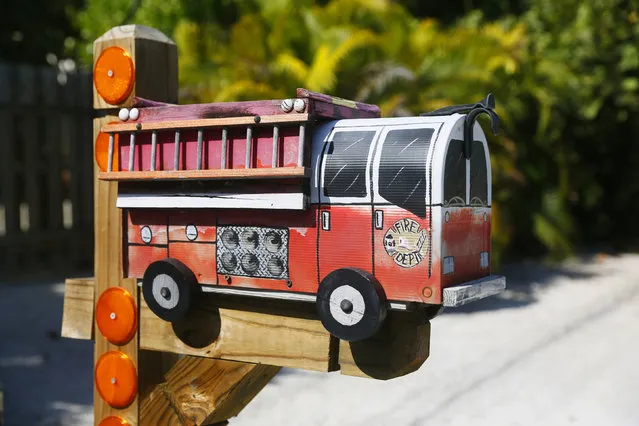
A mailbox in the shape of a fire truck is seen along the highway US-1 in the Lower Keys near Marathon in Florida, July 11, 2014. (Photo by Wolfgang Rattay/Reuters)

The Florida Keys are famous for their diving, but they are less well known for another quirky attraction: the mailboxes residents use to decorate their driveways. From a fiberglass manatee in lipstick to a small white church, Reuters photographer Wolfgang Rattay documented this unusual aspect of local culture as he drove along the Ocean Highway that connects the islands. Photo: A mailbox in the shape of a fire truck is seen along the highway US-1 in the Lower Keys near Marathon in Florida, July 11, 2014. (Photo by Wolfgang Rattay/Reuters)
Details
03 Aug 2014 07:25:00
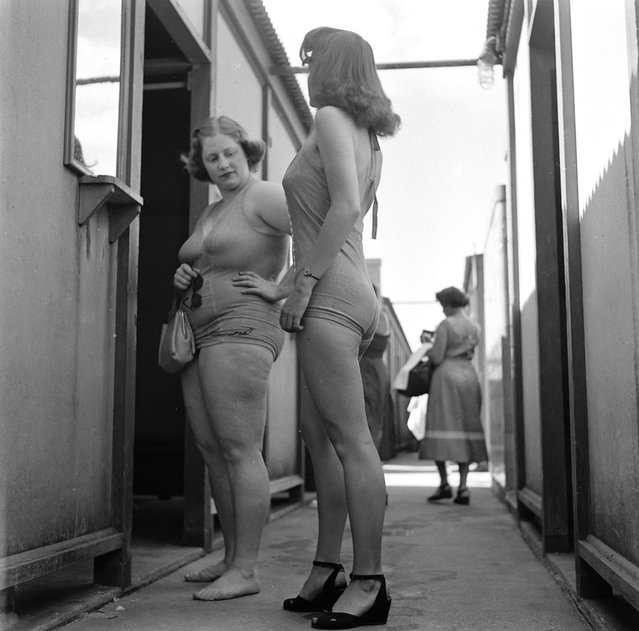
Dorothy Bradley (left), photographed for LIFE magazine article on obesity, 1949. (Photo by Martha Holmes/Time & Life Pictures)

“The most serious health problem in the U.S. today is obesity.” Sounds familiar, doesn’t it? But that pronouncement about obesity’s primacy in the hierarchy of national health problems is not new. Rather, it’s the opening line to a remarkable article published 60 years ago in LIFE magazine. This photographs made by Martha Holmes to illustrate that March 1954 article, titled “The Plague of Overweight.” Photo: Dorothy Bradley (left), photographed for LIFE magazine article on obesity, 1949. (Photo by Martha Holmes/Time & Life Pictures)
Details
11 Apr 2013 11:42:00
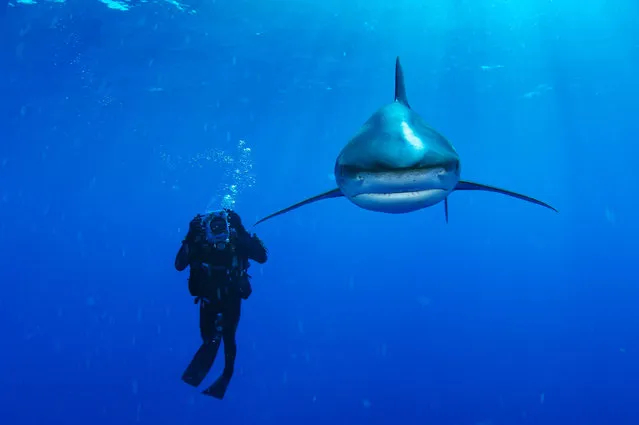
This Bahamian oceanic whitetip shark, known for the distinctive coloring on its white-tipped, rounded extremities, is part of a globally threatened species due to overfishing demands, primarily for its fins. (Photo by Brian Skerry)

Brian Skerry can be called many things – explorer, journalist, conservation advocate – but he is first and foremost a photographer. His journeys to capture amazing underwater photographs have taken him across the world’s oceans. Photo: This Bahamian oceanic whitetip shark, known for the distinctive coloring on its white-tipped, rounded extremities, is part of a globally threatened species due to overfishing demands, primarily for its fins. (Photo by Brian Skerry)
Details
08 Sep 2013 07:26:00