Loading...
Done
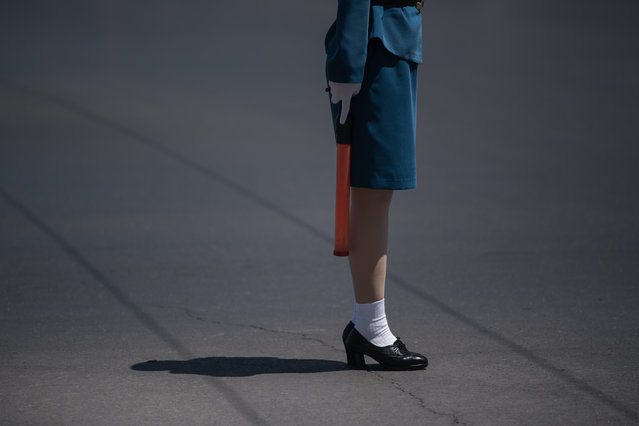
In a photo taken on June 5, 2017 a traffic security officer stands on duty at an intersection in Pyongyang. Officially known as traffic security officers but universally referred to as traffic ladies, they are chosen for their looks in a society that remains traditionalist in many respects. They must leave the role if they marry, and have a finite shelf-life, with compulsory retirement looming at just 26. The 300-odd ladies are unique to Pyongyang, which North Korean authorities are always keen to present in the best possible light despite their nuclear-armed country's impoverished status, and ensure a steady supply of photogenic young women who are the favourite subject of visiting tourists and journalists. (Photo by Ed Jones/AFP Photo)

In a photo taken on June 5, 2017 a traffic security officer stands on duty at an intersection in Pyongyang. Officially known as traffic security officers but universally referred to as traffic ladies, they are chosen for their looks in a society that remains traditionalist in many respects. They must leave the role if they marry, and have a finite shelf-life, with compulsory retirement looming at just 26. (Photo by Ed Jones/AFP Photo)
Details
21 May 2018 00:03:00
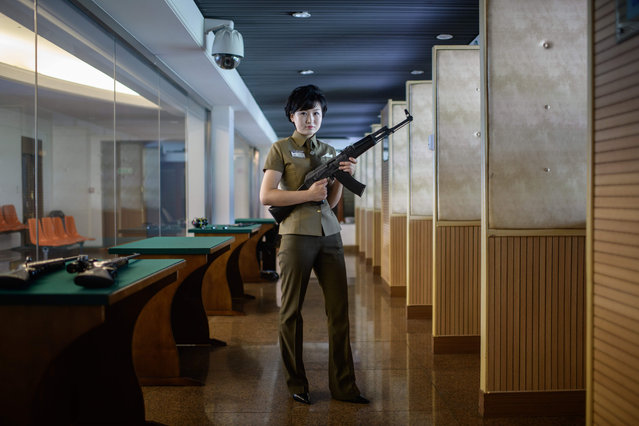
In a photo taken on July 29, 2018 instructor Kim Ju Yang (20) holds a North Korean- made assault rifle as she poses for a portrait at the Meari shooting range in Pyongyang. The Meari shooting range offers customers the opportunity to shoot a number of North Korean and foreign- made firearms, most of which have been modifed to fire .22 calibre ammunition costing one US dollar per round. (Photo by Ed Jones/AFP Photo)

In a photo taken on July 29, 2018 instructor Kim Ju Yang (20) holds a North Korean- made assault rifle as she poses for a portrait at the Meari shooting range in Pyongyang. The Meari shooting range offers customers the opportunity to shoot a number of North Korean and foreign- made firearms, most of which have been modifed to fire .22 calibre ammunition costing one US dollar per round. (Photo by Ed Jones/AFP Photo)
Details
13 Aug 2018 00:05:00
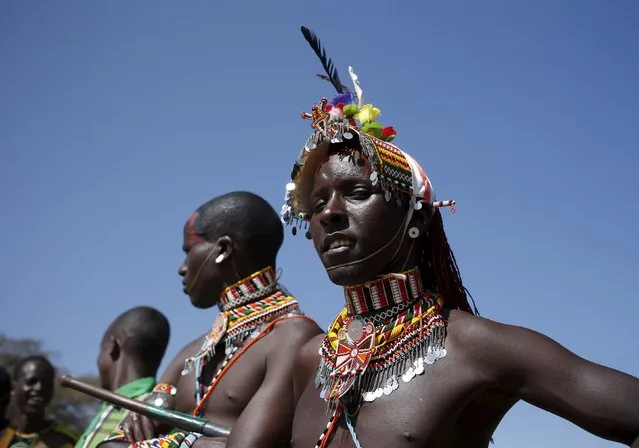
Samburu tribesmen stand during the Maralal Camel Derby, Kenya, August 15, 2015. (Photo by Goran Tomasevic/Reuters)

Samburu tribesmen stand during the Maralal Camel Derby, Kenya, August 15, 2015. Maralal, a small, arid town about an eight-hour drive north of the Kenyan capital Nairobi, holds an annual camel festival, bringing together members of the Samburu, Turkana and Pokot semi-nomadic cattle-herding tribes. (Photo by Goran Tomasevic/Reuters)
Details
20 Aug 2015 13:37:00
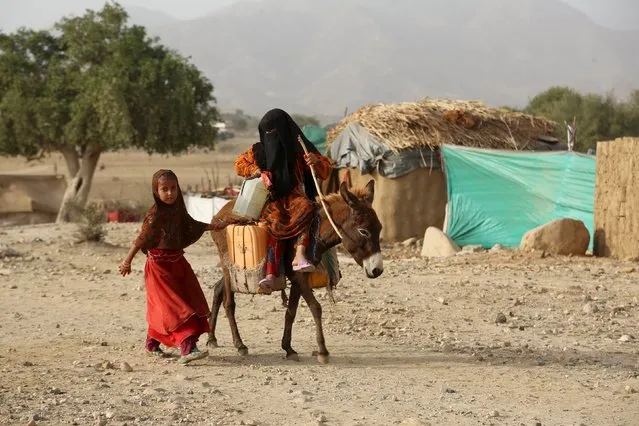
A girl rides a donkey as another walks by at the Shawqaba camp for internally displaced people who were forced to leave their villages by the war in Yemen's northwestern province of Hajjah March 12, 2016. In northwest Yemen, one of the poorest countries in the Middle East, about 400 families uprooted by the war have been stuck in the Shawqaba camp in Hajjah province for the past year. Residents live in poorly built huts that protect them neither from summer heat nor winter cold in a camp that lacks the most basic services. (Photo by Abduljabbar Zeyad/Reuters)

A girl rides a donkey as another walks by at the Shawqaba camp for internally displaced people who were forced to leave their villages by the war in Yemen's northwestern province of Hajjah March 12, 2016. In northwest Yemen, one of the poorest countries in the Middle East, about 400 families uprooted by the war have been stuck in the Shawqaba camp in Hajjah province for the past year. Residents live in poorly built huts that protect them neither from summer heat nor winter cold in a camp that lacks the most basic services. (Photo by Abduljabbar Zeyad/Reuters)
Details
09 Apr 2016 13:16:00
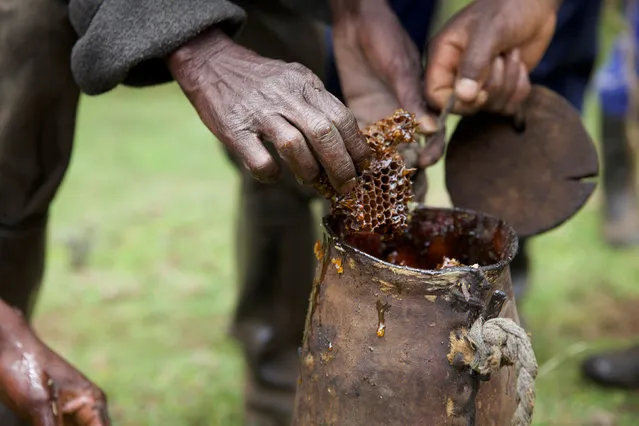
A man from the Ogiek community harvests honey in Mount Elgon game reserve, where they have reached an agreement with the government allowing them to remain in their ancestral lands in western Kenya, April 26, 2016. (Photo by Katy Migiro/Reuters)

A man from the Ogiek community harvests honey in Mount Elgon game reserve, where they have reached an agreement with the government allowing them to remain in their ancestral lands in western Kenya, April 26, 2016. (Photo by Katy Migiro/Reuters)
Details
20 May 2016 12:51:00
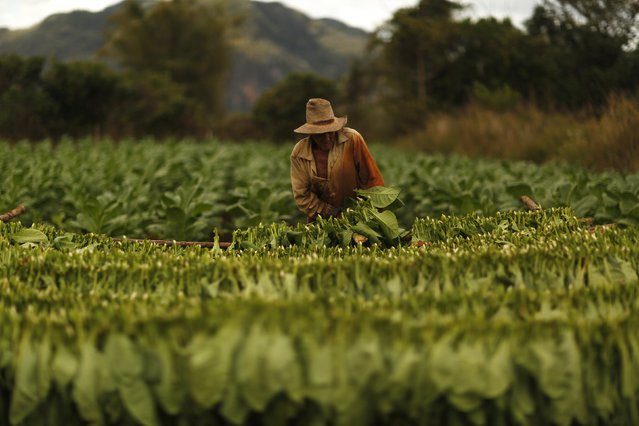
A farmer harvests tobacco leaves at a plantation in the valley of Vinales, in the western Cuban province of Pinar del Rio, January 27, 2015. (Photo by Pilar Olivares/Reuters)

A farmer harvests tobacco leaves at a plantation in the valley of Vinales, in the western Cuban province of Pinar del Rio, January 27, 2015. (Photo by Pilar Olivares/Reuters)
Details
25 Feb 2015 09:21:00
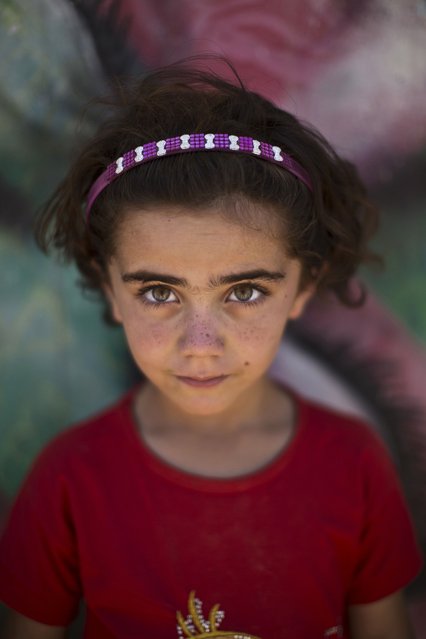
In this Tuesday, July 29, 2014, photo, Syrian refugee Samah, 5, poses for a picture at Zaatari refugee camp, near the Syrian border, in Mafraq, Jordan. More than 2.8 million Syrian children inside and outside the country – nearly half the school-aged population – cannot get an education because of the devastation from the civil war, according to the U.N. children's agency, UNICEF. (Photo by Muhammed Muheisen/AP Photo)

In this Tuesday, July 29, 2014, photo, Syrian refugee Samah, 5, poses for a picture at Zaatari refugee camp, near the Syrian border, in Mafraq, Jordan. More than 2.8 million Syrian children inside and outside the country – nearly half the school-aged population – cannot get an education because of the devastation from the civil war, according to the U.N. children's agency, UNICEF. That number is likely higher, as UNICEF can't count the children whose parents didn't register with the United Nations refugee agency. (Photo by Muhammed Muheisen/AP Photo)
Details
03 Aug 2014 07:46:00
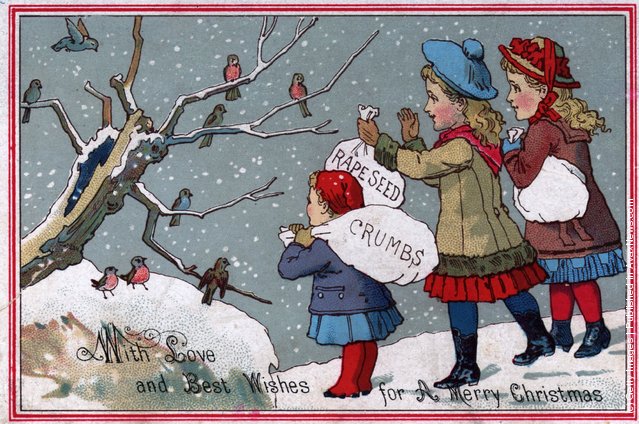
1885: Children feeding the birds in this Victorian Christmas greetings card

Children feeding the birds in this Victorian Christmas greetings card. (Photo by Hulton Archive/Getty Images). Circa 1885
Details
29 Dec 2011 10:54:00