Loading...
Done
Portal To Hell

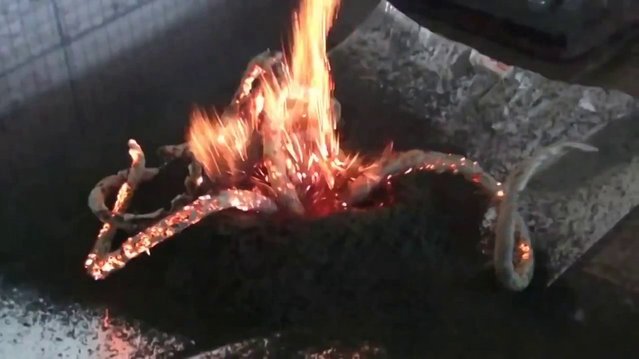
If we were to burn NH4Cr2O7 with HgSCN in the Dark Ages in Europe and show it to anyone, it is us who would be burning next on a fiery cross of Inquisition. And it’s no wonder, since this experiment produces a truly marvelous result. At first, as you ignite the mixture of NH4Cr2O7 and HgSCN, all you can see is that it is slowly burning with a reddish flame. After a while, however, a crater is formed in the middle of the burning pile, and then, suddenly, tentacle-like appendages start sprouting from the burning mixture. And you can almost hear the scream of the mad occultist – “Come forth, Kraken! Come forth!” But of course, this is simply a chemical reaction that is called the "Pharoah's Serpent". It was also often sold in firework stores until people realized that it was toxic.
Details
01 Dec 2014 13:51:00
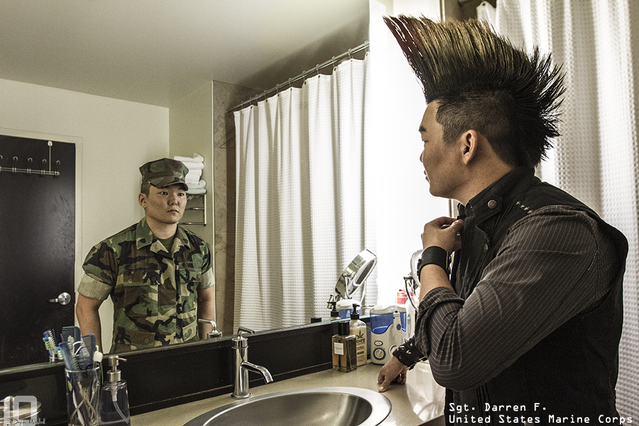
The Veteran Art Project By Devin Mitchell

Each day as we look in the mirror, we think that we know ourselves. We are used to the image that we see before us, but the mirror can show us much more than we ever hoped to see. Sometimes it only shows basic emotions, while at other times it can highlight the deepest crevices of our soul. If you wish, in the reflection of the mirror you can see your deepest thoughts, masks that you wear every day, your desires, and of course the people that you think about. But are you brave enough to look deep within your soul? Will you dive headlong or shy away from your true image? Those that will muster up the courage necessary will realize it was well worth the effort. (Photo by Devin Mitchell)
Details
30 Nov 2014 12:42:00
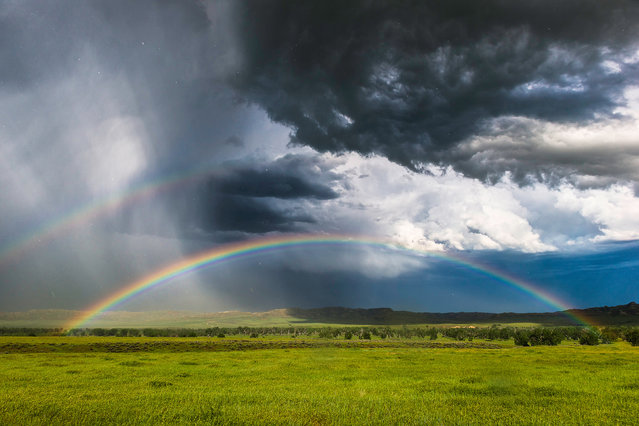
A photographer has weathered some of Americas most violent storms to capture these stunning snaps. (Photo by Caters News)

A photographer has weathered some of Americas most violent storms to capture these stunning snaps. Storm chaser Mike Mezeul II, 30, has travelled all over the US to shoot the likes of mammoth thunderstorms and surreal cloud patterns. His incredible collection of storm images are the result of more than 15 years of photography and thousands of miles of travel. The photographer, from Frisco in Texas, USA, became interested in storm chasing aged 16 when he got his first car. He has since shot ferocious storms as far north as the Canadian border and as far south as Mexico. (Photo by Caters News)
Details
04 Dec 2014 12:16:00
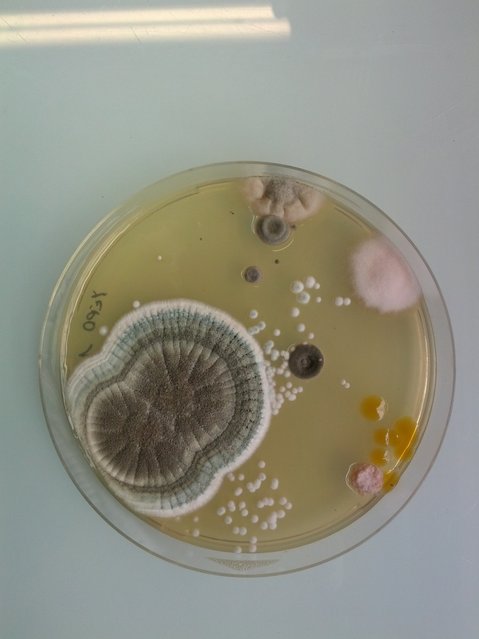
Magical Contamination By Antoine Bridier-Nahmias

Modern art is truly fascinating. Not in a way that it produces some novel things that will fascinate future generations for decades and even centuries to come. No, that is very far from the truth. On the contrary, modern art is essentially anything (yes, any little thing) that is a bit unusual and was created by a famous person. Let’s take the creation of Antoine Bridier-Nahmias for example. His brainchild is a set of pictures of petri dishes that were contaminated by various cultures of fungi. If this is art, I missed my chance of becoming famous when I accidentally left a piece of bread in a bag in a cupboard for about six months, and didn’t take a picture of the rather shocking results that awaited me when I finally discovered it. (Photo by Antoine Bridier-Nahmias)
Details
12 Dec 2014 13:03:00
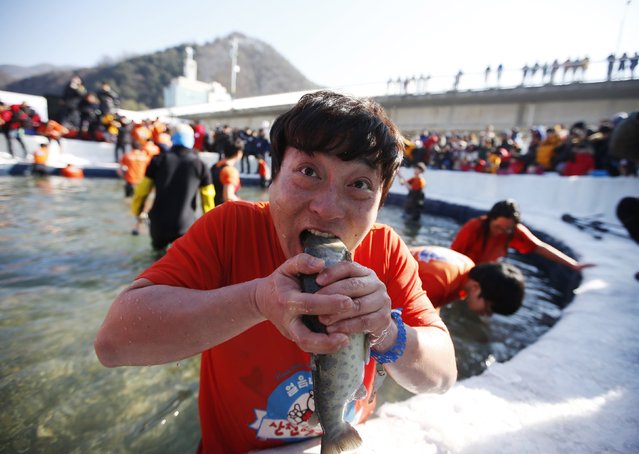
A man reacts after catching a trout with his hands during an event promoting the Ice Festival on a frozen river in Hwacheon, about 20 km (12 miles) south of the demilitarized zone separating the two Koreas, January 10, 2015. (Photo by Kim Hong-Ji/Reuters)

A man reacts after catching a trout with his hands during an event promoting the Ice Festival on a frozen river in Hwacheon, about 20 km (12 miles) south of the demilitarized zone separating the two Koreas, January 10, 2015. The annual ice festival, which is one of the most famous and biggest festivals in South Korea, expects to see more than 1,000,000 people attend. The festival lasts for three weeks from January 10 this year. (Photo by Kim Hong-Ji/Reuters)
Details
11 Jan 2015 13:54:00
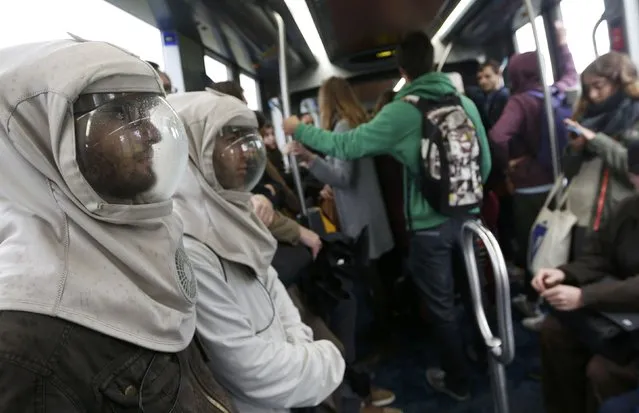
French twins Thomas and Vincent (L) Seris take the tram in Bordeaux, November 12, 2014. Born with Xeroderma Pigmentosum (XP), the twins cannot be exposed to the sun and its ultraviolet (UV) light, which could provoke precocious cancers due to an autosomal recessive genetic disorder of DNA repair. (Photo by Regis Duvignau/Reuters)

French twins Thomas and Vincent (L) Seris take the tram in Bordeaux, November 12, 2014. Born with Xeroderma Pigmentosum (XP), the twins cannot be exposed to the sun and its ultraviolet (UV) light, which could provoke precocious cancers due to an autosomal recessive genetic disorder of DNA repair. Colloquially referred to as Children of the Night (Les Enfants de la Lune) the Seris twins are among 70 to 80 people in France who suffer from the genetic defect. The French association “Les Enfants de la Lune” reports that there are between five and ten thousand such cases in the world. Thomas and Vincent have been testing a new protective mask for the last year which is transparent and ventilated and developed by several hospitals in France. (Photo by Regis Duvignau/Reuters)
Details
01 Feb 2015 10:27:00
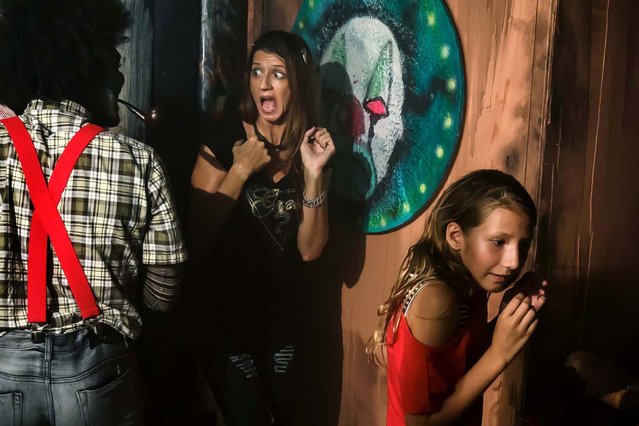
Fright Nights attendees make a turn through one of four haunted houses at this year's spooking season setup at the South Florida Fairgrounds. This house is named The Smiths and was created by Craig McInnis. (Photo by The Palm Beach Post)

America’s Haunts, a trade association, estimates there are 1,200 for-profit haunted attractions in the U.S. plus another 3,000 haunted houses operated by charities that open for only a day or two every year. The commercial attractions collectively bring in from $300 million to $500 million annually. Fright Nights attendees make a turn through one of four haunted houses at this year's spooking season setup at the South Florida Fairgrounds. This house is named The Smiths and was created by Craig McInnis. (Photo by The Palm Beach Post)
Details
22 Oct 2013 08:59:00
Wooden Churches - Travelling In The Russian North By Richard Davies Part 2

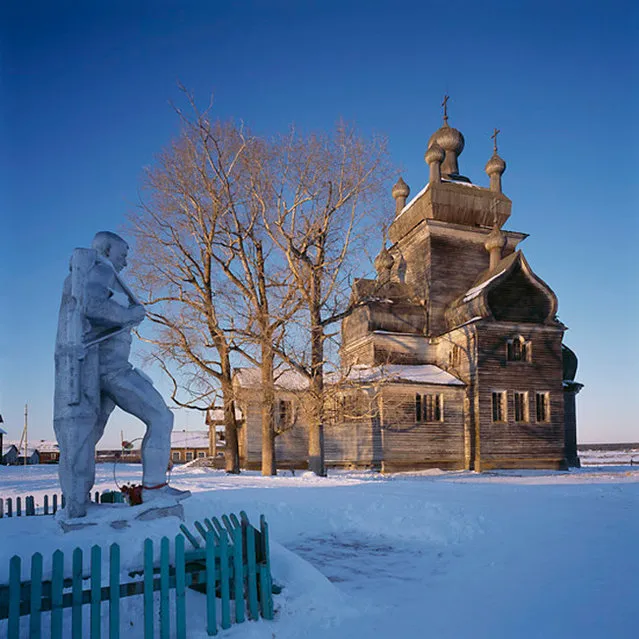
While communism, collectivism, worms, dry rot and casual looting failed to destroy the majestic wooden churches of Russia, it may be ordinary neglect that finally does them in. Dwindled now to several hundred remaining examples, these glories of vernacular architecture lie scattered amid the vastness of the world’s largest country. Just over a decade ago, Richard Davies, a British architectural photographer, struck out on a mission to record the fragile and poetic structures. Austerely beautiful and haunting, “Wooden Churches: Traveling in the Russian North” (White Sea Publishing; $132) is the result. Covering thousands of miles, Mr. Davies described how he and the writer Matilda Moreton tracked down the survivors from among the thousands of onion-domed structures built after Prince Vladimir converted to Christianity in 988.

See also: Wooden Churches Part1
Details
28 Nov 2013 12:13:00