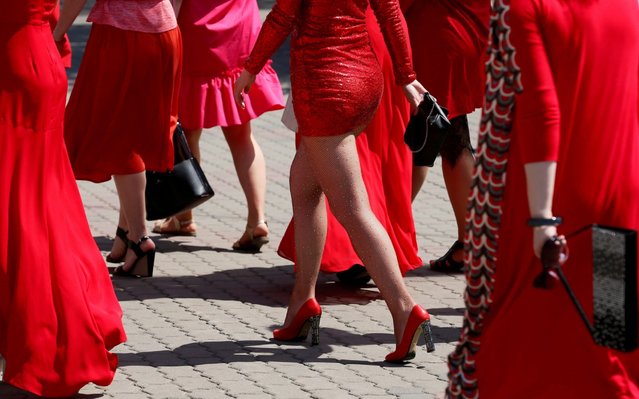
Participants of the “Lady in red“ procession, marking the day of the Summer Solstice, walk on a promenade of the Yenisei River in Krasnoyarsk, Russia on June 22, 2019. (Photo by Ilya Naymushin/Reuters)
Two ruddy shelducks fly under a double rainbow in Odisha, India in July 2022. These birds are ruddy shelduck, known locally as the Brahminy duck. They have a wingspan of between 43 and 53 inches and stand at a maximum of 28 inches tall. (Photo by Suman Das/Media Drum Images)
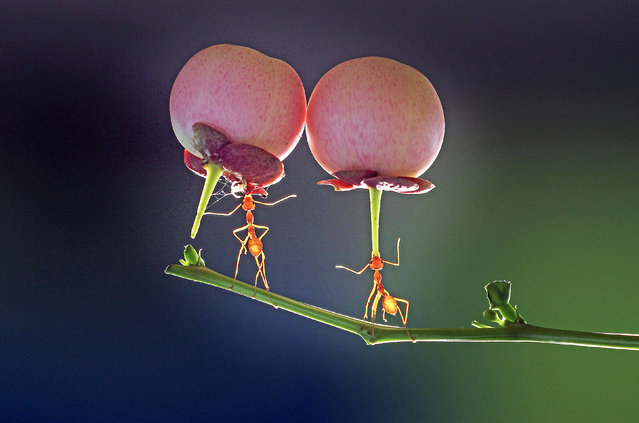
The strength of a weaver ant carrying fruit in Indonesia in the last decade of August 2024 is equivalent to the average man or woman picking up a minibus. (Photo by Ridho Arifuddin/Solent News)
A folk artist shakes iron nets with hot charcoals to create sparks during Huohu (fire pot) performance on December 28, 2024 in Nanjing, Jiangsu Province of China. (Photo by VCG/VCG via Getty Images)
Members of Brighton Swimming Club brave the early morning temperature to take a dip in the sea east of the pier on January 5, 2022. The club, founded in 1860, is the oldest in England. (Photo by Simon Dack/Alamy Live News)
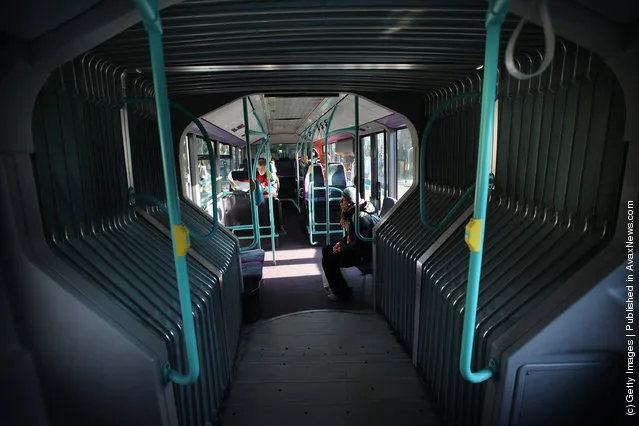
Passengers ride an articulated bus known as a “bendy bus” on December 9, 2011 in London, England. The last remaining bendy bus will go out of service at midnight. London Mayor Boris Johnson called them cumbersome and pledged to remove them. 500 new buses are being introduced as replacements. (Photo by Peter Macdiarmid/Getty Images)
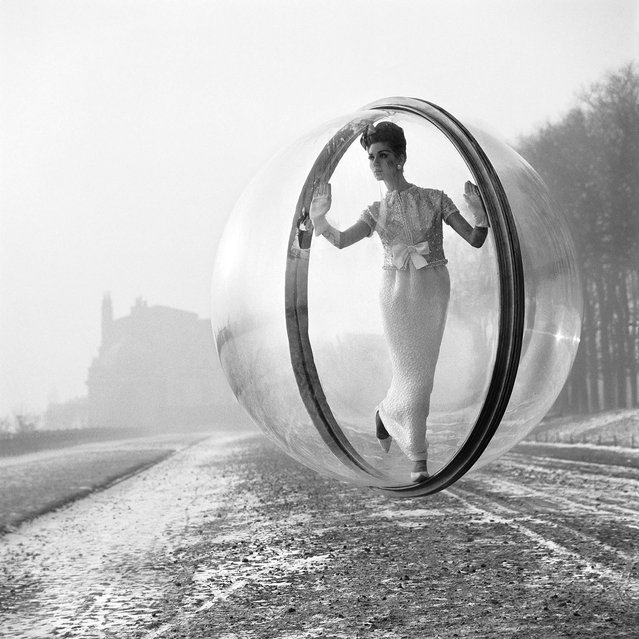
Born 1938 in New York, Melvin Sokolsky was a major figure in the revival of fashion photography from the 1960s. He was only 21 when he started working at Harper's Bazaar for which he produced the “Bubble” series of photographs depicting fashion models floating in giant clear plastic bubbles suspended in midair above the Seine river in Paris. Alongside his steady collaboration with Bazaar, he also worked for publications such as Vogue and the New York Times. Photo: “After Delvaux” – “Paris 1963” – Harper's Bazaar “Bubble” Spring Collection. (Photo by Melvin Sokolsky)
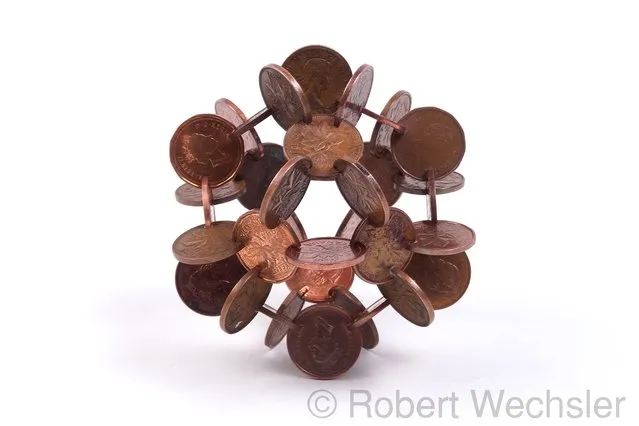
American artist Robert Wechsler has realized a series of sculptural cubes made from thousands of pennies titled “The Mendicant“. Cubes achieved by notching and joining pennies in perfect orientation to one another. Joined at perpendicular angles, the coins create a lattice structure allowing tunnel like passages of light from certain angles. As one moves around them, the cubes seem to fluctuate from material to ethereal. The number of pennies increases exponentially with the size of the cube. Pictured here are three cubes differentiated with subtitles indicating the exact quantity used.