Loading...
Done
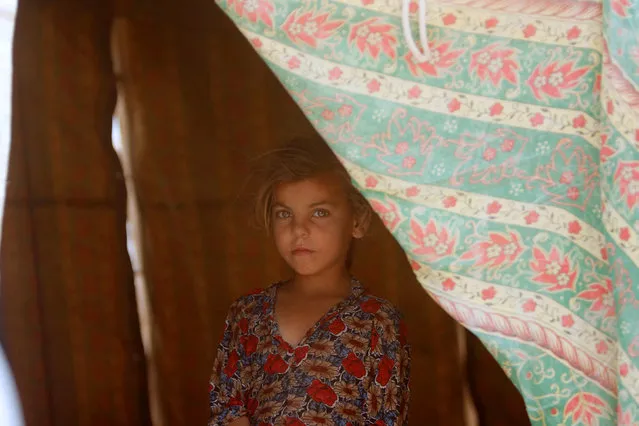
An Iraqi girl, who fled from Falluja because of Islamic State violence, poses for a photographer at a refugee camp in Ameriyat Falluja, south of Falluja, Iraq, June 16, 2016. (Photo by Ahmed Saad/Reuters)

An Iraqi girl, who fled from Falluja because of Islamic State violence, poses for a photographer at a refugee camp in Ameriyat Falluja, south of Falluja, Iraq, June 16, 2016. (Photo by Ahmed Saad/Reuters)
Details
17 Jun 2016 13:15:00
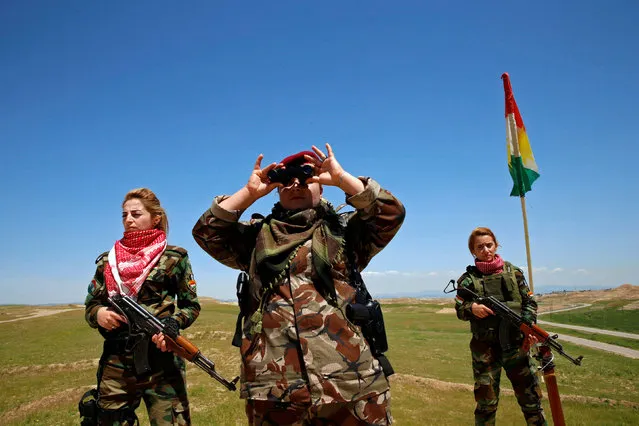
Iraqi Kurdish female fighter Haseba Nauzad looks through a pair of binoculars during a deployment near the frontline of the fight against Islamic State militants in Nawaran near Mosul, Iraq, April 20, 2016. (Photo by Ahmed Jadallah/Reuters)

Iraqi Kurdish female fighter Haseba Nauzad looks through a pair of binoculars during a deployment near the frontline of the fight against Islamic State militants in Nawaran near Mosul, Iraq, April 20, 2016. (Photo by Ahmed Jadallah/Reuters)
Details
05 May 2016 14:00:00
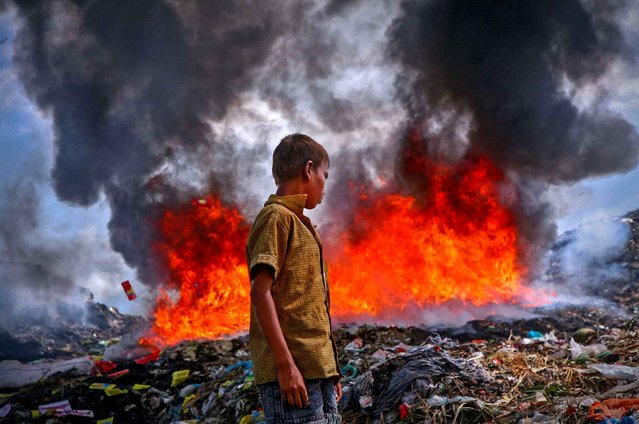
A boy looks for sellable materials close to the burning garbage in the permanent waste land under Sylhet City Corporation for a living, on January 15, 2015. (Photo by Md. Akhlas Uddin/Pacific Press)

A boy looks for sellable materials close to the burning garbage in the permanent waste land under Sylhet City Corporation for a living, on January 15, 2015. (Photo by Md. Akhlas Uddin/Pacific Press)
Details
18 Feb 2015 13:32:00
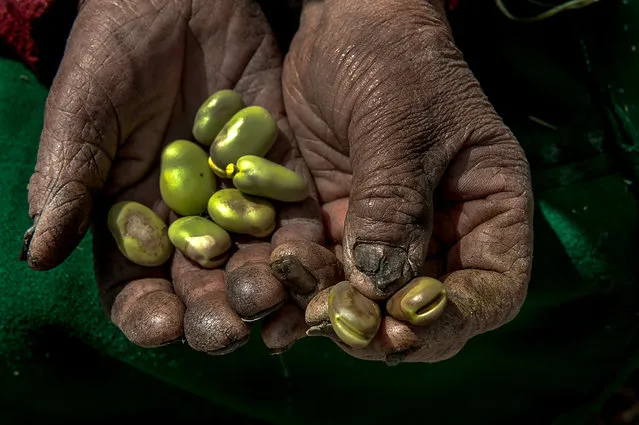
The hard-worked hands of Jacaba Coaquira, 80, holding the green beans she grew on her land. This year the production of her land was affected by lack of rain and early cold weather that froze the crops before they finished growing. Santiago de Okola, Bolivia. (Photo by Renée C. Byer/Living on a Dollar a Day)

The hard-worked hands of Jacaba Coaquira, 80, holding the green beans she grew on her land. This year the production of her land was affected by lack of rain and early cold weather that froze the crops before they finished growing. Santiago de Okola, Bolivia. (Photo by Renée C. Byer/Living on a Dollar a Day)
Details
16 Oct 2014 13:11:00
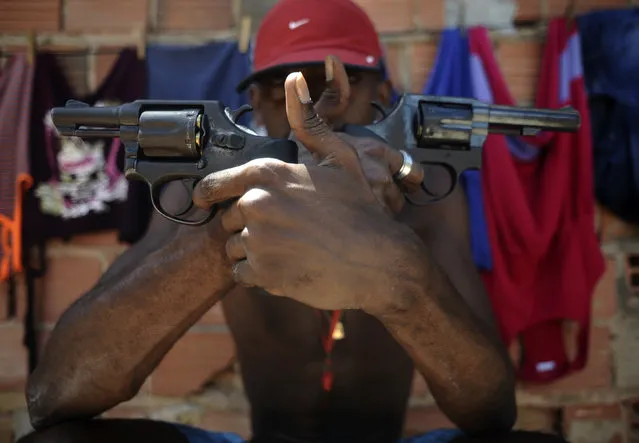
A Brazilian drug gang member nicknamed Pilintra, 26, poses with a gun atop a hill overlooking a slum in Salvador, Bahia State, April 11, 2013. One of Brazil's main tourist destinations and a 2014 World Cup host city, Salvador suffers from an unprecedented wave of violence with an increase of over 250% in the murder rate, according to the Brazilian Center for Latin American Studies (CEBELA). (Photo by Lunae Parracho/Reuters)

A Brazilian drug gang member nicknamed Pilintra, 26, poses with a gun atop a hill overlooking a slum in Salvador, Bahia State, April 11, 2013. One of Brazil's main tourist destinations and a 2014 World Cup host city, Salvador suffers from an unprecedented wave of violence with an increase of over 250% in the murder rate, according to the Brazilian Center for Latin American Studies (CEBELA). (Photo by Lunae Parracho/Reuters)
Details
04 May 2013 11:12:00
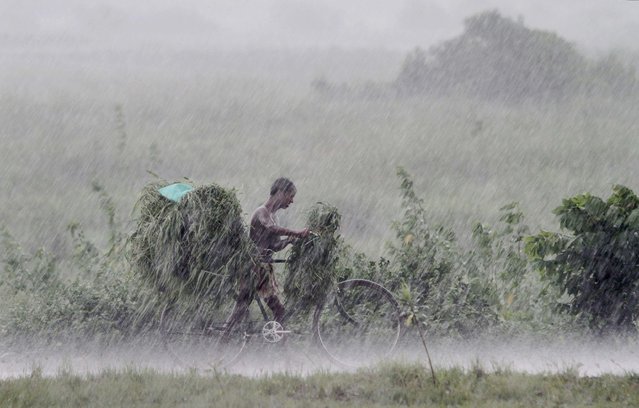
An Indian villager walks back home with a bicycle loaded with grass for his cattle during a heavy downpour on the outskirts of Bhubaneswar, India, Saturday, 11 July 2015. (Photo by Biswaranjan Rout/AP Photo)

An Indian villager walks back home with a bicycle loaded with grass for his cattle during a heavy downpour on the outskirts of Bhubaneswar, India, Saturday, 11 July 2015. (Photo by Biswaranjan Rout/AP Photo)
Details
12 Jul 2015 13:14:00
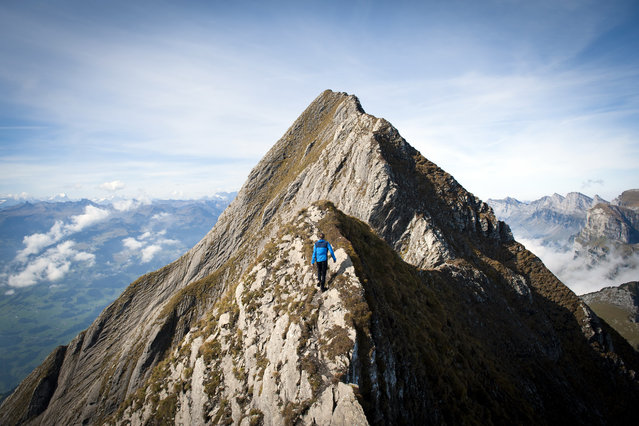
A climber walks on the ridge beneath the eastern peak of the Gamsberg (2385 meters above sea level) near Grabs, Switzerland, Friday, October 3, 2014. (Photo by Gian Ehrenzeller/AP Photo/Keystone)

A climber walks on the ridge beneath the eastern peak of the Gamsberg (2385 meters above sea level) near Grabs, Switzerland, Friday, October 3, 2014. (Photo by Gian Ehrenzeller/AP Photo/Keystone)
Details
28 Jan 2015 12:38:00
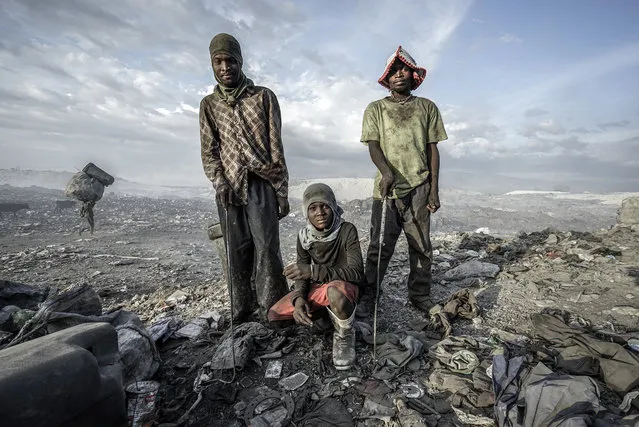
In a 200-acre-plus dump 5 kilometers north of Haiti’s capital, Port-au-Prince, hundreds of men, women and children scavenge day and night through the burning wasteland. They earn $12 to $15 a day – on a good day – for recycling plastics as well as clothing, household items and aluminum (for smelting). Some 5,000 tons of waste is created each day in the Port-au-Prince area. (Photo and caption by Giles Clarke/Getty Images Reportage)

In a 200-acre-plus dump 5 kilometers north of Haiti’s capital, Port-au-Prince, hundreds of men, women and children scavenge day and night through the burning wasteland. They earn $12 to $15 a day – on a good day – for recycling plastics as well as clothing, household items and aluminum (for smelting). Some 5,000 tons of waste is created each day in the Port-au-Prince area. (Photo and caption by Giles Clarke/Getty Images Reportage)
Details
02 Feb 2015 11:21:00