Loading...
Done
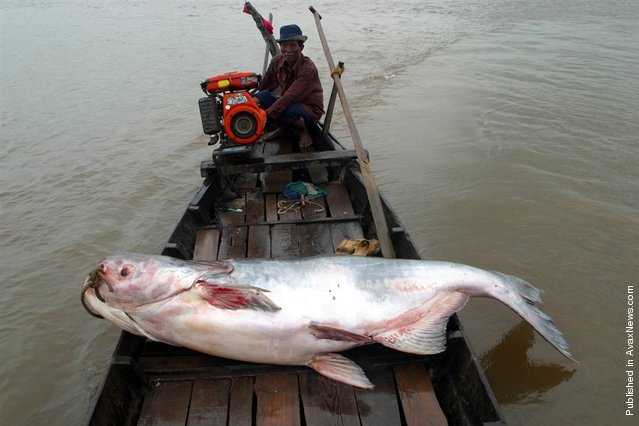
Among the fish populations that could be harmed by the Xayaburi dam in Laos is the critically endangered Mekong giant catfish, considered by the Guinness Book of World Records to be the world’s largest freshwater fish. The fish, which grows to 650 pounds and about 10 feet long, is only found in the Mekong River. It is migratory, moving between downstream habitats in Cambodia upstream to northern Thailand and Laos each year to spawn. Some experts fear the Xayaburi dam could block the migration and drive the giant catfish to extinction

Among the fish populations that could be harmed by the Xayaburi dam in Laos is the critically endangered Mekong giant catfish, considered by the Guinness Book of World Records to be the world’s largest freshwater fish. The fish, which grows to 650 pounds and about 10 feet long, is only found in the Mekong River. It is migratory, moving between downstream habitats in Cambodia upstream to northern Thailand and Laos each year to spawn. Some experts fear the Xayaburi dam could block the migration and drive the giant catfish to extinction. (Photo by Courtesy of Zeb Hogan/University of Nevada, Reno)
Details
20 Apr 2012 13:10:00
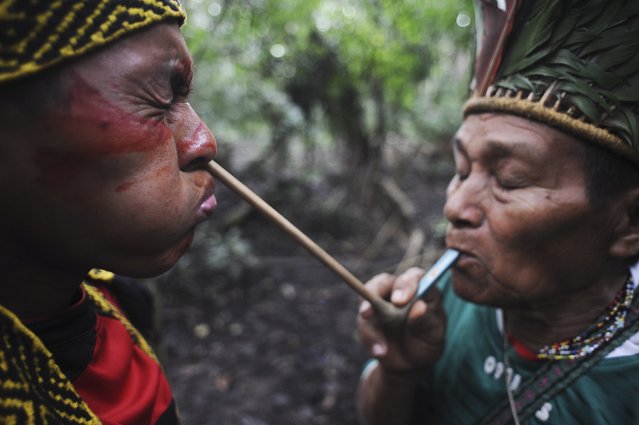
A spiritual leader (R) of the Huni Kui Indian tribe blows an herbal powder into the nose of a tribal member during a ceremony outside the village of Novo Segredo along the Envira river of Brazil's northwestern Acre state, March 9, 2014. (Photo by Lunae Parracho/Reuters)

A spiritual leader (R) of the Huni Kui Indian tribe blows an herbal powder into the nose of a tribal member during a ceremony outside the village of Novo Segredo along the Envira river of Brazil's northwestern Acre state, March 9, 2014. Many indigenous groups, including the Huni Kui, Ashaninka, and Madija, live in villages in the Brazilian rainforest near the border with Peru. (Photo by Lunae Parracho/Reuters)
Details
04 Apr 2014 08:18:00
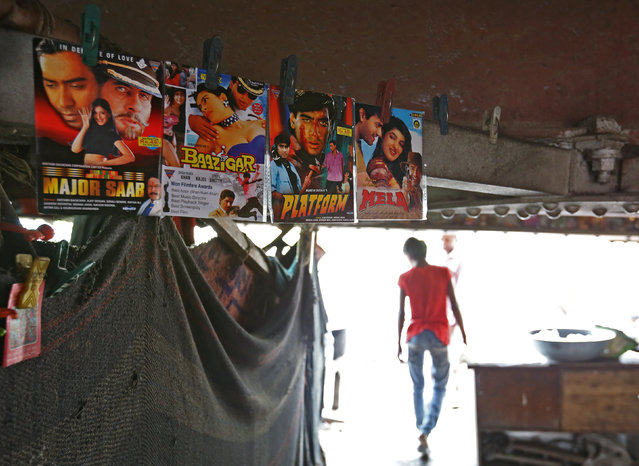
Films that are being screened are advertised in a makeshift cinema located under a bridge in the old quarters of Delhi, India May 25, 2016. (Photo by Cathal McNaughton/Reuters)

Films that are being screened are advertised in a makeshift cinema located under a bridge in the old quarters of Delhi, India May 25, 2016. A makeshift cinema hall under a 140-year-old bridge in the Indian capital is allowing poor rickshaw pullers and migrant labourers to escape daily hardship and sweltering heat into a world of Bollywood song, dance and romance. With the rusty iron floor of the bridge as its ceiling and some old rags acquired on the cheap from a nearby crematorium serving as curtains and floor mats, the cinema shows four films a day. (Photo by Cathal McNaughton/Reuters)
Details
28 May 2016 12:21:00
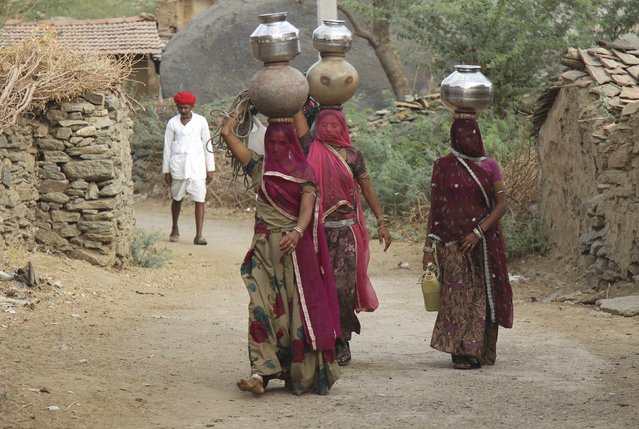
Women carry pitchers filled with drinking water in Devmali village in the desert state of Rajasthan, India, June 16, 2016. (Photo by Himanshu Sharma/Reuters)

Women carry pitchers filled with drinking water in Devmali village in the desert state of Rajasthan, India, June 16, 2016. (Photo by Himanshu Sharma/Reuters)
Details
19 Jun 2016 10:16:00
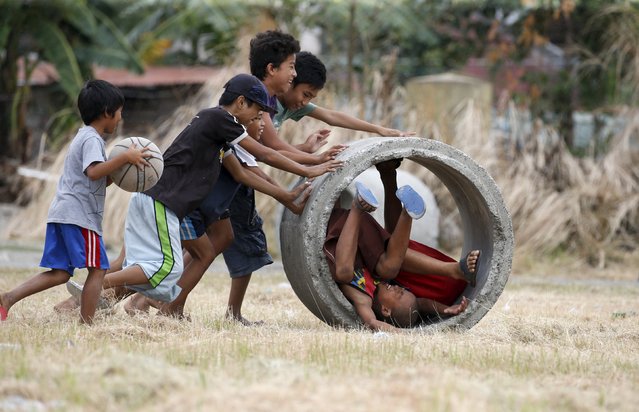
Boys play with a drainage culvert used for flood control in Las Pinas, Metro Manila February 28, 2016. (Photo by Erik De Castro/Reuters)

Boys play with a drainage culvert used for flood control in Las Pinas, Metro Manila February 28, 2016. (Photo by Erik De Castro/Reuters)
Details
13 Mar 2016 10:41:00
Chahad, 16, gets groomed at a beauty Salon in Kalak before her wedding party, Iraq February 16, 2017. (Photo by Zohra Bensemra/Reuters)

Chahad, 16, gets groomed at a beauty Salon in Kalak before her wedding party, Iraq February 16, 2017. It's the second marriage to take place in the IDP camps east of the city where tens of thousands are living, having fled the fighting in Mosul. (Photo by Zohra Bensemra/Reuters)
Details
18 Feb 2017 00:06:00
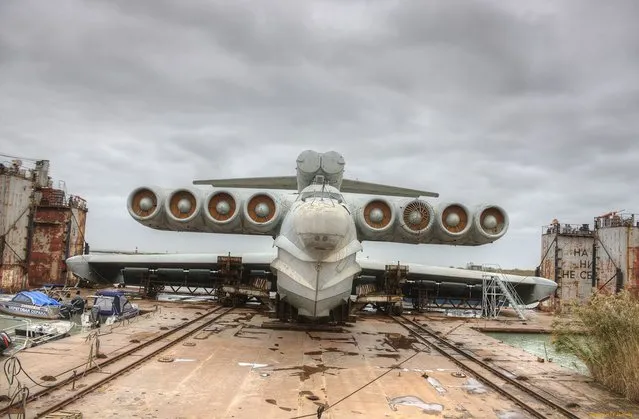
The Lun-class Ekranoplane was used by the Soviet Navy starting in 1987, and wasn't retired until the late 1990s, after the Soviet Union's fall. (Igor113)

“The Lun-class ekranoplan (NATO reporting name Duck) was a ground effect vehicle (GEV) designed by Rostislav Evgenievich Alexeev and used by the Soviet and Russian navies from 1987 until sometime in the late 1990s. It “flew” using the lift generated by the ground effect of its large wings when close to the surface of the water – about four metres or less. Although they might look similar and/or have related technical characteristics, ekranoplans like the Lun are not aircraft, seaplanes, hovercraft, or hydrofoils – ground effect is a separate technology altogether. The International Maritime Organization classifies these vehicles as maritime ships. The name Lun comes from the Russian for harrier”. – Wikipedia (Photo by Igor113)
Details
08 Aug 2014 10:51:00
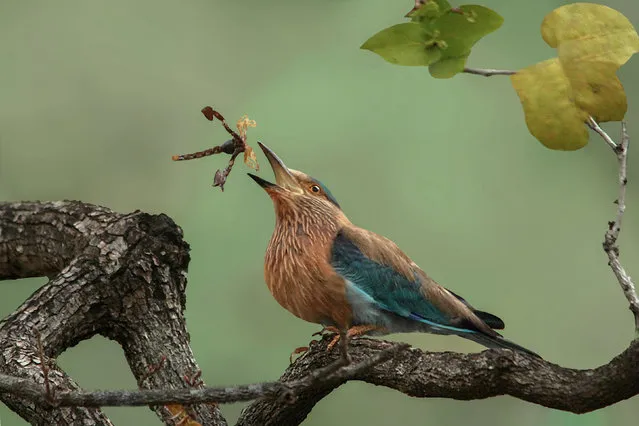
Honourable mention, Behaviour category. Toss the scorpion – Indian roller playing with its kill by Susmita Datta. The image was taken during an early morning safari drive at Tadoba Andhari Tiger Reserve in India. (Photo by Susmita Datta/PA Wire/Royal Society Publishing Photography Competition 2017)

Honourable mention, Behaviour category. Toss the scorpion – Indian roller playing with its kill by Susmita Datta. The image was taken during an early morning safari drive at Tadoba Andhari Tiger Reserve in India. (Photo by Susmita Datta/PA Wire/Royal Society Publishing Photography Competition 2017)
Details
07 Dec 2017 07:47:00