Loading...
Done
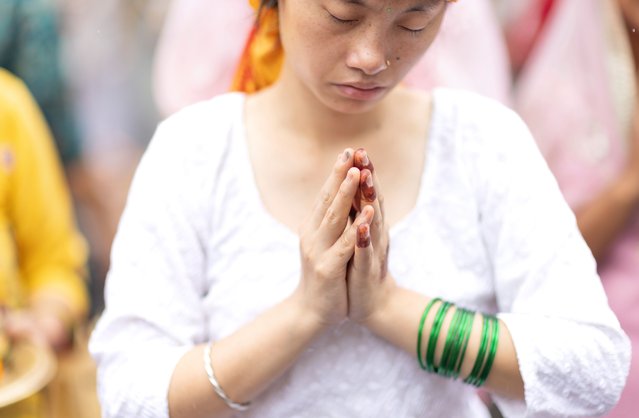
A woman prays during a Sarwan Brata (fast) offering to Lord Shiva, the Hindu god of creation and destruction, at the Pashupatinath Temple in Kathmandu, Nepal, 21 July 2025. Nepalese Hindu women wearing red, yellow and green attire, flock to temples during Sarwan month to pray for a long and prosperous life for their husbands, or to find a good husband. (Photo by Narendra Shrestha/EPA)

A woman prays during a Sarwan Brata (fast) offering to Lord Shiva, the Hindu god of creation and destruction, at the Pashupatinath Temple in Kathmandu, Nepal, 21 July 2025. Nepalese Hindu women wearing red, yellow and green attire, flock to temples during Sarwan month to pray for a long and prosperous life for their husbands, or to find a good husband. (Photo by Narendra Shrestha/EPA)
Details
01 Aug 2025 03:53:00
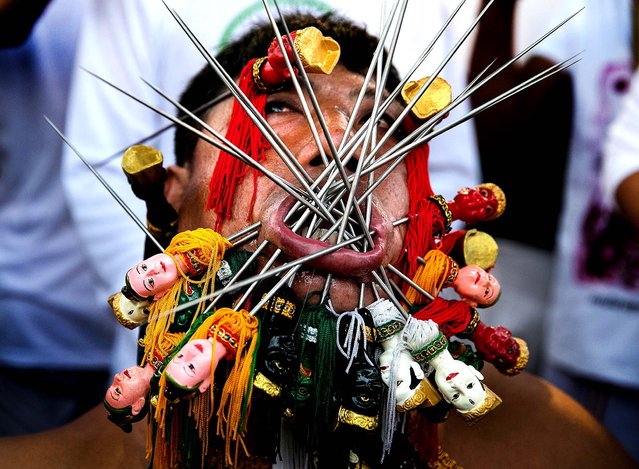
A devotee gest pierced at the Bang Neow shrine in Phuket. (Photo by Paula Bronstein/Getty Images)

“The Nine Emperor Gods Festival is a nine-day Taoist celebration beginning on the eve of 9th lunar month of the Chinese calendar, which is observed primarily in Southeast Asian countries like Myanmar, Singapore, Malaysia, Thailand and also the Riau Islands. In Thailand, this festival is called Tesagan Gin Je, the Vegetarian Festival. It is celebrated throughout the entire country, but the festivities are at their height in Phuket, where about 35% of the population is Chinese. It attracts crowds of spectators because of many of the unusual religious rituals that are performed”. – Wikipedia. Photo: A devotee gest pierced at the Bang Neow shrine in Phuket. (Photo by Paula Bronstein)
Details
11 Oct 2013 07:49:00
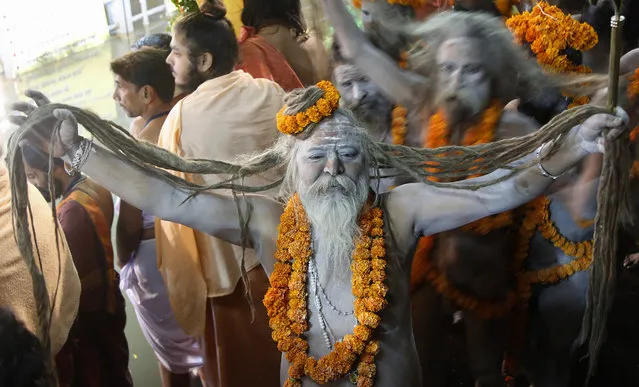
A naked Hindu holy man arrives to bath in the Godavari River during Kumbh Mela, or Pitcher Festival, at Trimbakeshwar in Nasik, India, Saturday, August 29, 2015. (Photo by Rajanish Kakade/AP Photo)

A naked Hindu holy man arrives to bath in the Godavari River during Kumbh Mela, or Pitcher Festival, at Trimbakeshwar in Nasik, India, Saturday, August 29, 2015. Hindus believe taking a dip in the waters of a holy river during the festival, will cleanse them of their sins. According to Hindu mythology, the Kumbh Mela celebrates the victory of gods over demons in a furious battle over a nectar that would give them immortality. (Photo by Rajanish Kakade/AP Photo)
Details
30 Aug 2015 11:34:00
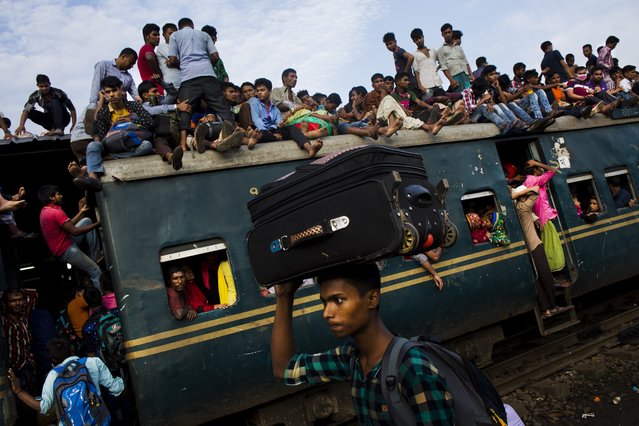
Bangladeshi Muslims travel on the roof of an overcrowded train as they head to their hometowns ahead of Eid al-Adha in Dhaka, Bangladesh, Friday, September 1, 2017. (Photo by Bernat Armangue/AP Photo)

Bangladeshi Muslims travel on the roof of an overcrowded train as they head to their hometowns ahead of Eid al-Adha in Dhaka, Bangladesh, Friday, September 1, 2017. The festival commemorates the story of Abraham and his readiness to sacrifice his son as an act of obedience to God, who provided a lamb to be used instead. (Photo by Bernat Armangue/AP Photo)
Details
02 Sep 2017 06:27:00
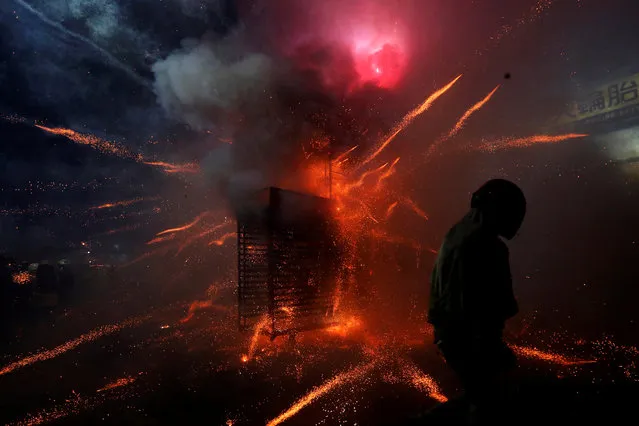
A participant wearing a motorcycle helmet gets sprayed with firecrackers, during the “Beehive Firecrackers” festival at the Yanshui district in Tainan, Taiwan on March 1, 2018. (Photo by Tyrone Siu/Reuters)

A participant wearing a motorcycle helmet gets sprayed with firecrackers, during the “Beehive Firecrackers” festival at the Yanshui district in Tainan, Taiwan on March 1, 2018. According to Taiwan's Tourism Bureau, the “beehive” festival started in the late 1885 as a request to the gods to spare Yanshui from a cholera outbreak which was making its way through the villages. (Photo by Tyrone Siu/Reuters)
Details
05 Mar 2018 00:03:00
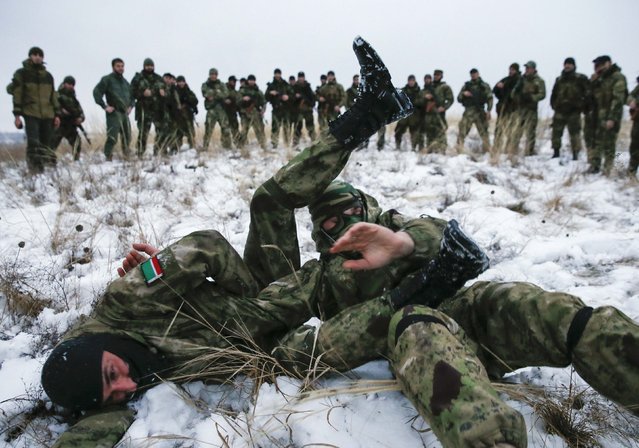
Pro-Russian separatists from the Chechen “Death” battalion take part in a training exercise in the territory controlled by the self-proclaimed Donetsk People's Republic, eastern Ukraine, December 8, 2014. Chanting “Allahu Akbar” (God is greatest), dozens of armed men in camouflage uniforms from Russia's republic of Chechnya train in snow in a camp in the rebel-held east Ukraine. (Photo by Maxim Shemetov/Reuters)

Pro-Russian separatists from the Chechen “Death” battalion take part in a training exercise in the territory controlled by the self-proclaimed Donetsk People's Republic, eastern Ukraine, December 8, 2014. Chanting “Allahu Akbar” (God is greatest), dozens of armed men in camouflage uniforms from Russia's republic of Chechnya train in snow in a camp in the rebel-held east Ukraine. They say their “Death” unit fighting Ukrainian forces has 300 people, mostly former state security troops in the mainly-Muslim region where Moscow waged two wars against Islamic insurgents and which is now run by a Kremlin-backed strongman. (Photo by Maxim Shemetov/Reuters)
Details
11 Dec 2014 13:58:00
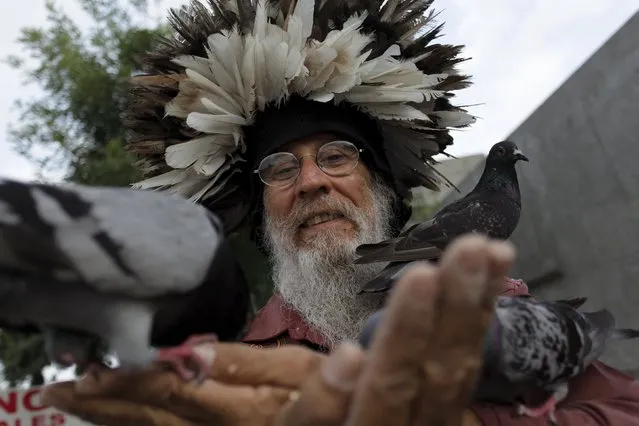
Jesus Moreno, 60, feeds pigeons in downtown Monterrey, Mexico July 7, 2015. For the past 30 years Moreno, who was once homeless, a drug addict, and formerly working as a investigative policeman, has been feeding pigeons twice a day, because to him they represent peace and the only way to communicate to God, local media reported. (Photo by Daniel Becerril/Reuters)

Jesus Moreno, 60, feeds pigeons in downtown Monterrey, Mexico July 7, 2015. For the past 30 years Moreno, who was once homeless, a drug addict, and formerly working as a investigative policeman, has been feeding pigeons twice a day, because to him they represent peace and the only way to communicate to God, local media reported. (Photo by Daniel Becerril/Reuters)
Details
09 Jul 2015 11:59:00
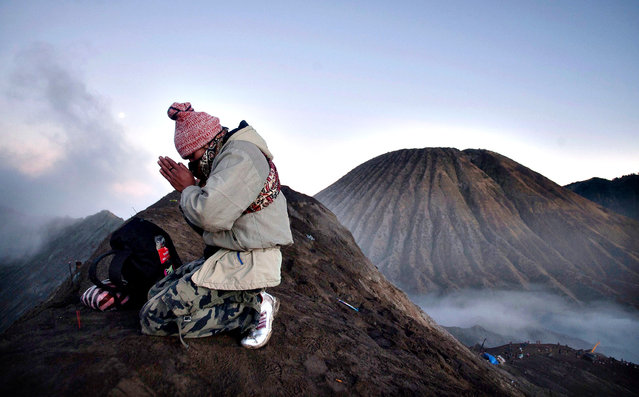
A Tengger tribesman prays at Mount Bromo during the annual Kasada ceremony in East Java on August 12, 2014. The Kasada ceremony is a festival held every 14th day of the Kasada month in the traditional Hindu lunar calender to honour Sang Hyang Widhi (God Almighty) and is based on the legend of Roro Anteng and Joko Seger from the Majapahit Kingdom, from which their Tengger tribe name originates. (Photo by Juni Kriswanto/AFP Photo)

A Tengger tribesman prays at Mount Bromo during the annual Kasada ceremony in East Java on August 12, 2014. The Kasada ceremony is a festival held every 14th day of the Kasada month in the traditional Hindu lunar calender to honour Sang Hyang Widhi (God Almighty) and is based on the legend of Roro Anteng and Joko Seger from the Majapahit Kingdom, from which their Tengger tribe name originates. Hundreds of worshippers from the Tengger tribe offer food and livestock as a symbolic sacrifice which they throw into the crater for the blessings of safety and prosperity to their familyies and community. (Photo by Juni Kriswanto/AFP Photo)
Details
16 Aug 2014 11:19:00