Loading...
Done
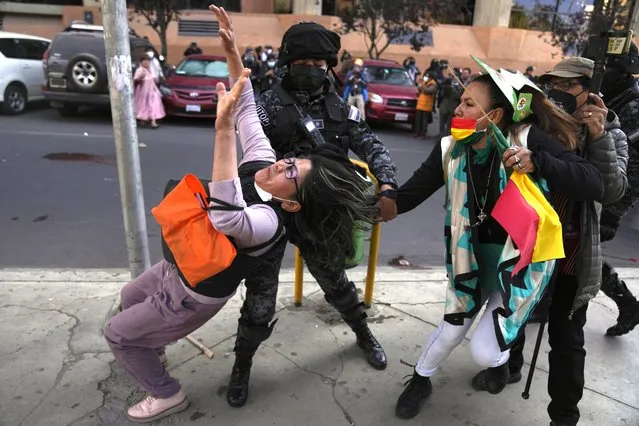
A police officer tries to prevent an anti-government protester from pulling the hair of a woman who is part of group that appeared to show their support for the government during a march of healthcare workers critical of the government, in La Paz, Bolivia, on July 21, 2022. (Photo by Juan Karita/AP Photo)

A police officer tries to prevent an anti-government protester from pulling the hair of a woman who is part of group that appeared to show their support for the government during a march of healthcare workers critical of the government, in La Paz, Bolivia, on July 21, 2022. (Photo by Juan Karita/AP Photo)
Details
06 Oct 2023 04:41:00
A Cucumber and a Chuta Cholero hug during the traditional festival “Desentierro del Pepino” (unearthing the Cucumber) to mark the beginning of carnival on January 21, 2024 in La Paz, Bolivia. People dug up the cucumber from the cemetery and walk through the streets with two characters, the Ch'uta and the Chola. (Photo by Gaston Brito/Getty Images)

A Cucumber and a Chuta Cholero hug during the traditional festival “Desentierro del Pepino” (unearthing the Cucumber) to mark the beginning of carnival on January 21, 2024 in La Paz, Bolivia. People dug up the cucumber from the cemetery and walk through the streets with two characters, the Ch'uta and the Chola. (Photo by Gaston Brito/Getty Images)
Details
29 Mar 2025 04:24:00
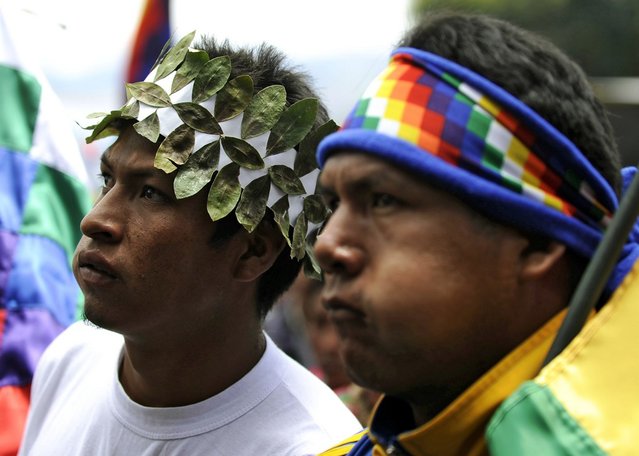
Coca growers chew coca leaves during a celebration for the reincorporation of Bolivia to the UN Convention Against Illicit Traffic in Narcotic Drugs in La Paz on January 14, 2013. "The coca leaf is not any more seen as cocaine (..), it is a victory of our identity" said Bolivian President Evo Morales. AFP PHOTO/Jorge Bernal        (Photo credit should read JORGE BERNAL/AFP/Getty Images)

Coca growers chew coca leaves during a celebration for the reincorporation of Bolivia to the UN Convention Against Illicit Traffic in Narcotic Drugs in La Paz on January 14, 2013. “The coca leaf is not any more seen as cocaine (...), it is a victory of our identity” said Bolivian President Evo Morales. (Photo by Jorge Bernal/AFP Photo)
Details
15 Jan 2013 10:16:00
Clowns Perlita and Tapetito, wearing protective gear amid the new coronavirus pandemic, speak with resident Enrique Zeballos as they arrive to disinfect his home free of charge, in El Alto, Bolivia, Friday, September 11, 2020. The lack of traditional employment for the clowns due to the pandemic has led them towards other avenues of making money. But for people with limited income they provide their disinfection services free of charge. (Photo by Juan Karita/AP Photo)

Clowns Perlita and Tapetito, wearing protective gear amid the new coronavirus pandemic, speak with resident Enrique Zeballos as they arrive to disinfect his home free of charge, in El Alto, Bolivia, Friday, September 11, 2020. The lack of traditional employment for the clowns due to the pandemic has led them towards other avenues of making money. But for people with limited income they provide their disinfection services free of charge. (Photo by Juan Karita/AP Photo)
Details
13 Sep 2020 00:07:00
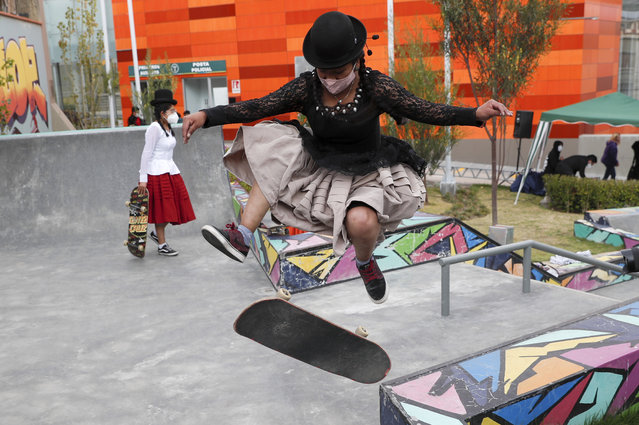
Aide Choque, wearing a mask amid the COVID-19 pandemic, jumps with her skateboard during a youth talent show in La Paz, Bolivia, Wednesday, September 30, 2020. Young women called “Skates Imillas”, using the Aymara word for girl Imilla, use traditional Indigenous clothing as a statement of pride of their Indigenous culture while playing riding their skateboards. (Photo by Juan Karita/AP Photo)

Aide Choque, wearing a mask amid the COVID-19 pandemic, jumps with her skateboard during a youth talent show in La Paz, Bolivia, Wednesday, September 30, 2020. Young women called “Skates Imillas”, using the Aymara word for girl Imilla, use traditional Indigenous clothing as a statement of pride of their Indigenous culture while playing riding their skateboards. (Photo by Juan Karita/AP Photo)
Details
10 Feb 2021 11:11:00
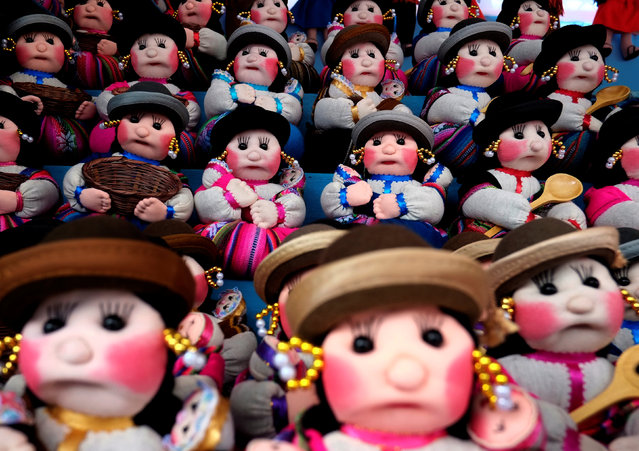
Aymara dolls are seen during the “Alasitas” fair, where people buy miniature versions of goods they hope to acquire in real life, in La Paz, Bolivia, January 24, 2017. Shoppers fill their baskets with miniature versions of things they desire – everything from cars, houses computers – to give to Ekeko the God of abundance, in the hope he will being therm good fortune. And it is all carried out with a priest’s blessing. Originally, the Festival of Alasitas was a celebration by farmers praying for plentiful crops.Today, the meaning amounts to the same only locals hope for more material goods. (Photo by David Mercado/Reuters)

Aymara dolls are seen during the “Alasitas” fair, where people buy miniature versions of goods they hope to acquire in real life, in La Paz, Bolivia, January 24, 2017. Shoppers fill their baskets with miniature versions of things they desire – everything from cars, houses computers – to give to Ekeko the God of abundance, in the hope he will being therm good fortune. (Photo by David Mercado/Reuters)
Details
26 Jan 2017 12:56:00
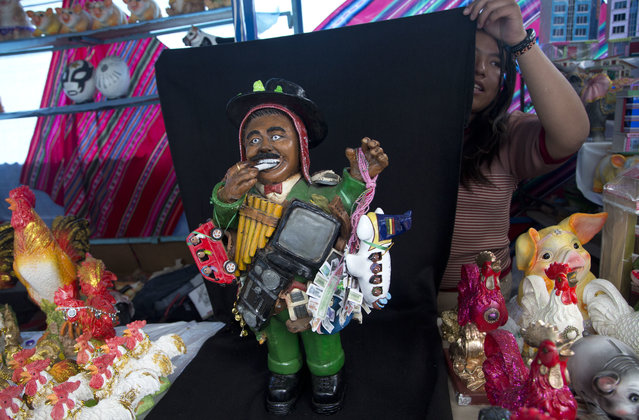
In this February 20, 2018 photo, fair vendor Noelia Flores holds up a black backdrop behind a small statue of an “Ekeko”, the god of prosperity, for a portrait at her booth during the annual Alasita Fair in La Paz, Bolivia. Every year, thousands of Bolivians head to the feast of Alasitas that is held in his honor to buy miniature cars, houses and toy dollar bills symbolizing their dreams of prosperity. (Photo by Juan Karita/AP Photo)

In this February 20, 2018 photo, fair vendor Noelia Flores holds up a black backdrop behind a small statue of an “Ekeko”, the god of prosperity, for a portrait at her booth during the annual Alasita Fair in La Paz, Bolivia. Every year, thousands of Bolivians head to the feast of Alasitas that is held in his honor to buy miniature cars, houses and toy dollar bills symbolizing their dreams of prosperity. (Photo by Juan Karita/AP Photo)
Details
23 Feb 2018 00:01:00
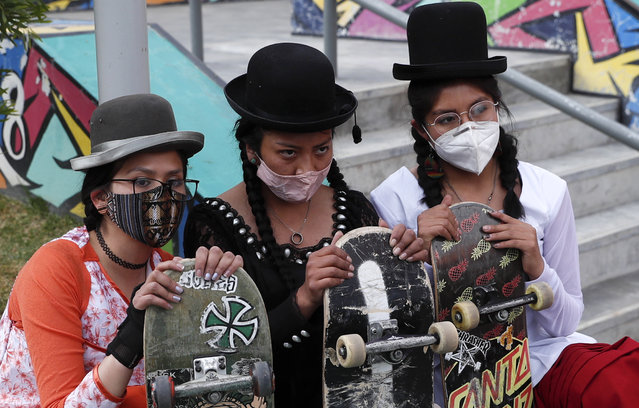
Yanira Villarreal, left, Ayde Choque, center, and Milenda Limachi, wearings masks amid the COVID-19 pandemic and dressed as a “Cholita” pose for a photo with their skateboards during a youth talent show in La Paz, Bolivia, Wednesday, September 30, 2020. Young women called “Skates Imillas”, using the Aymara word for girl Imilla, use traditional Indigenous clothing as a statement of pride of their Indigenous culture while playing riding their skateboards. (Photo by Juan Karita/AP Photo)

Yanira Villarreal, left, Ayde Choque, center, and Milenda Limachi, wearings masks amid the COVID-19 pandemic and dressed as a “Cholita” pose for a photo with their skateboards during a youth talent show in La Paz, Bolivia, Wednesday, September 30, 2020. Young women called “Skates Imillas”, using the Aymara word for girl Imilla, use traditional Indigenous clothing as a statement of pride of their Indigenous culture while playing riding their skateboards. (Photo by Juan Karita/AP Photo)
Details
02 Oct 2020 00:07:00