Loading...
Done
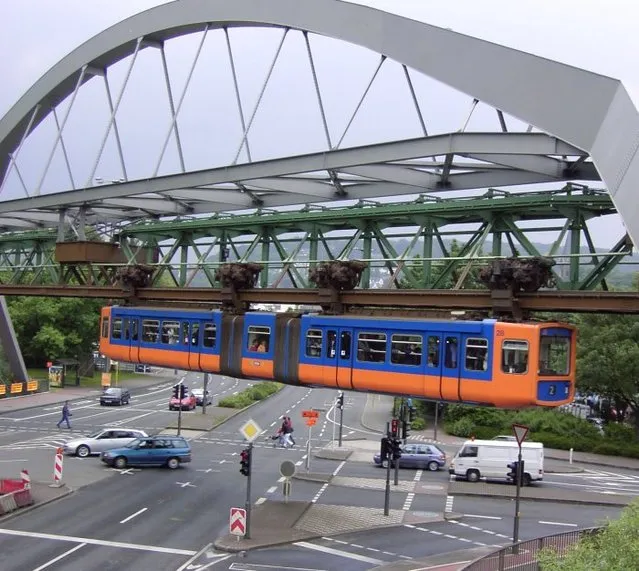
The Wuppertal Suspension Railway in Wuppertal, Germany

The Wuppertal Suspension Railways is one a kind elevated railway located in Wuppertak, Germany. It is the oldest elevated railway in the world, though it doesn’t look like it. It is kept in great condition by the government and provides for a great attraction for the tourists. It provides a great overview, as it runs above a number of city streets and a small river. Moreover, since it is powered by electricity, it proves an ecologically clean method of travel for the residents of the city.
Details
03 Apr 2015 11:38:00
People in Need

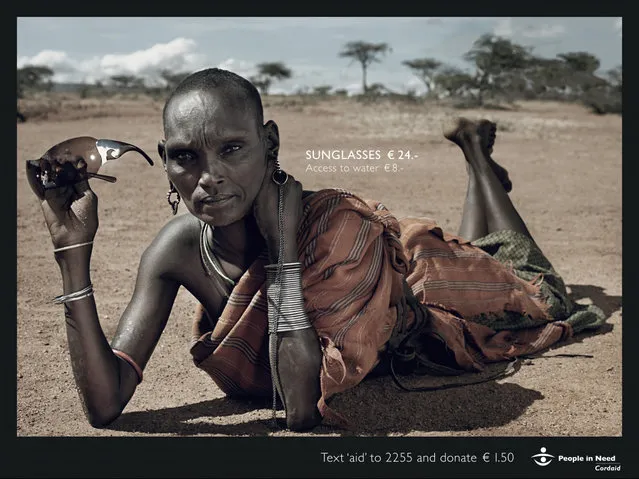
'The Dutch charity organization Mensen in Nood (people in need) hits the streets with a remarkable campaign. People in need are posing with the typical attributes of consumer culture. The price of a designer handbag (€32) is compared with the price of a whole week of food (€4), The price a pint of beer (€4.50) with the price of 50 liter clean water (€1.50). The pictures were taken by Swedish fashion photographer Carl Stolz.' - Occupy Design UK
Details
29 Jun 2013 11:21:00
A Loris And A Dentist

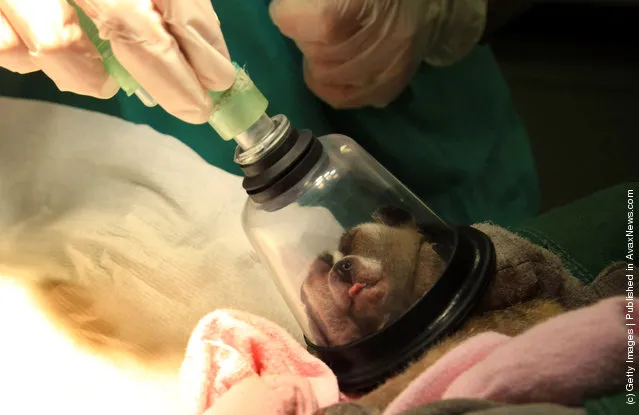
Mr. Ben, a pygmy slow loris, is administed anesthetic during one of Bristol Zoo's in-house veterinary clinic routine health check-up and teeth clean as part of the Zoo's standard animal husbandry and welfare procedure at Bristol Zoo on June 18, 2009 in Bristol, England. (Photo by Matt Cardy/Getty Images)
Details
22 Jan 2012 12:35:00
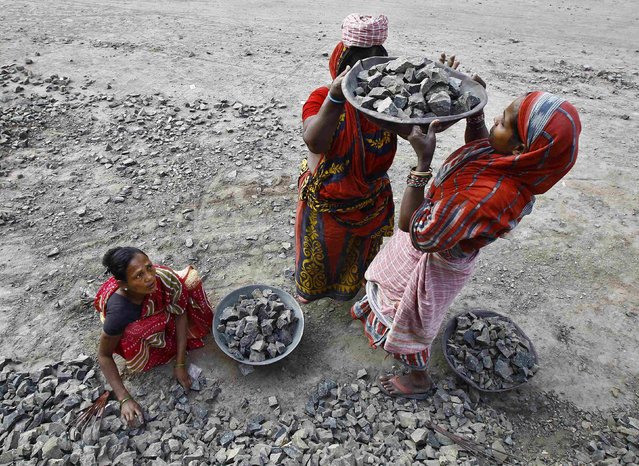
Women labourers work at the construction site of a road in Kolkata January 8, 2015. Across towns and cities in India, it is not uncommon to see women cleaning building sites, carrying bricks and or shoveling gravel - helping construct the infrastructure necessary for the country's economic and social development. (Photo by Rupak De Chowdhuri/Reuters)

Women labourers work at the construction site of a road in Kolkata January 8, 2015. Across towns and cities in India, it is not uncommon to see women cleaning building sites, carrying bricks and or shoveling gravel – helping construct the infrastructure necessary for the country's economic and social development. They help build roads, railway tracks, airports, and offices. They lay pipes for clean water supplies, cables for telecommunications, and dig the drains for sewage systems. But although women make up at least 20 percent of India's 40 million construction workers, they are less recognized than male workers with lower pay and often prone to safety hazards and sexual harassment. They are often unaware of their rights or scared to complain, say activists now trying to campaign for better treatment of women in the construction industry. (Photo by Rupak De Chowdhuri/Reuters)
Details
15 Jan 2015 13:47:00
Two styles of cleaned bird's nest, Yan Zhan (L) and Su Zhan (R) await repacking at a processing plant in Kuala Lumpur, February 17, 2015. Prized in China for is alleged health benefits for hundreds of years, nests made from swiftlets' saliva are being mixed into coffee and cereal as the Southeast Asian producers of the delicacy seek to broaden its appeal, and their profit margins. (Photo by Olivia Harris/Reuters)

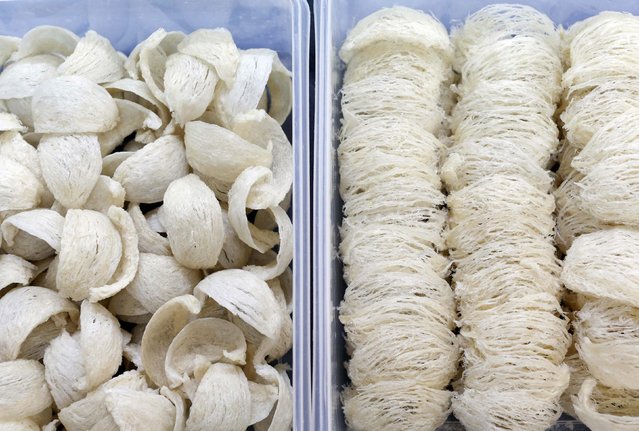
Two styles of cleaned bird's nest, Yan Zhan (L) and Su Zhan (R) await repacking at a processing plant in Kuala Lumpur, February 17, 2015. Prized in China for is alleged health benefits for hundreds of years, nests made from swiftlets' saliva are being mixed into coffee and cereal as the Southeast Asian producers of the delicacy seek to broaden its appeal, and their profit margins. The nests are among the world's most expensive foods, selling for up to $2,500 a kg and the swiftlets that weave them are indigenous to Indonesia, Malaysia, Thailand and Vietnam. (Photo by Olivia Harris/Reuters)
Details
24 Feb 2015 13:57:00
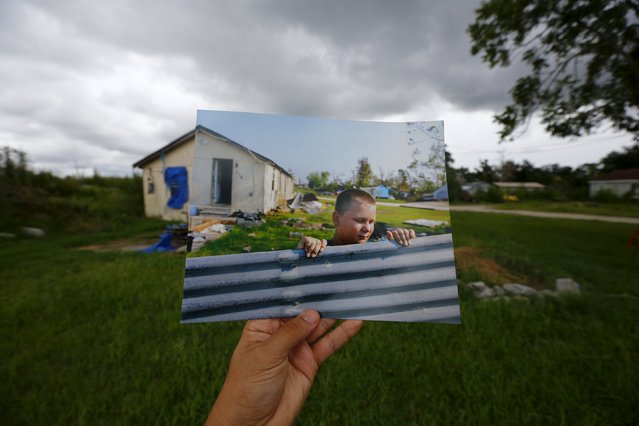
Photographer Carlos Barria holds a print of a photograph he took in 2005, as he matches it up at the same location 10 years on, in Lafitte, south of New Orleans, United States, August 16, 2015. The print shows Tyler Teal cleaning up his home, September 14, 2005, after Hurricane Katrina struck. (Photo by Carlos Barria/Reuters)

Photographer Carlos Barria holds a print of a photograph he took in 2005, as he matches it up at the same location 10 years on, in Lafitte, south of New Orleans, United States, August 16, 2015. The print shows Tyler Teal cleaning up his home, September 14, 2005, after Hurricane Katrina struck. In 2005, Hurricane Katrina triggered floods that inundated New Orleans and killed more than 1,500 people as storm waters overwhelmed levees and broke through floodwalls. (Photo by Carlos Barria/Reuters)
Details
23 Aug 2015 10:00:00
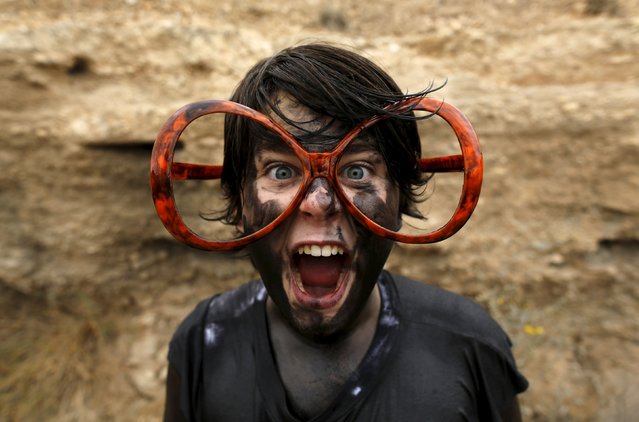
Jose, a reveller covered in grease, poses for a photo as he takes part in the annual Cascamorras festival in Baza, southern Spain September 6, 2015. The festival was inspired by a dispute between the town of Baza and Guadix over the possession of an icon of the Virgin of Piedad. The Cascamorras refers to representatives from Guadix, who were sent to Baza to recover the statue. As the Cascamorras had to stay perfectly clean to gain possession of the statue, Baza residents attempt to make them as “dirty” as possible. (Photo by Marcelo del Pozo/Reuters)

Jose, a reveller covered in grease, poses for a photo as he takes part in the annual Cascamorras festival in Baza, southern Spain September 6, 2015. The festival was inspired by a dispute between the town of Baza and Guadix over the possession of an icon of the Virgin of Piedad. The Cascamorras refers to representatives from Guadix, who were sent to Baza to recover the statue. As the Cascamorras had to stay perfectly clean to gain possession of the statue, Baza residents attempt to make them as “dirty” as possible. (Photo by Marcelo del Pozo/Reuters)
Details
07 Sep 2015 14:11:00
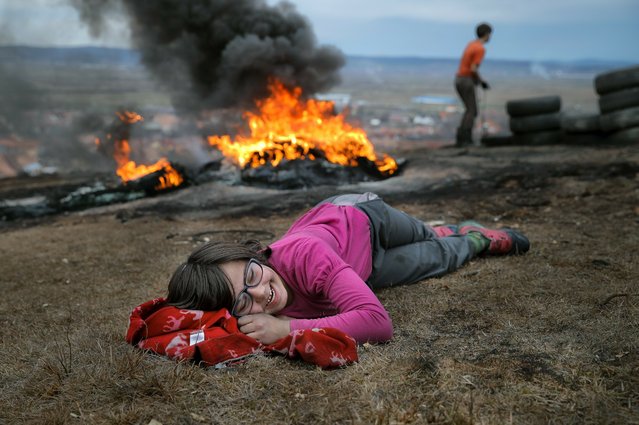
In this photo taken on Sunday, March 10, 2019, a little girl laughs during a ritual marking the upcoming Clean Monday, the beginning of the Great Lent, 40 days ahead of Orthodox Easter, on the hills surrounding the village of Poplaca, in central Romania's Transylvania region. Romanian villagers burn piles of used tires then spin them in the Transylvanian hills in a ritual they believe will ward off evil spirits as they begin a period of 40 days of abstention, when Orthodox Christians cut out meat, fish, eggs, and dairy. (Photo by Vadim Ghirda/AP Photo)

In this photo taken on Sunday, March 10, 2019, a little girl laughs during a ritual marking the upcoming Clean Monday, the beginning of the Great Lent, 40 days ahead of Orthodox Easter, on the hills surrounding the village of Poplaca, in central Romania's Transylvania region. Romanian villagers burn piles of used tires then spin them in the Transylvanian hills in a ritual they believe will ward off evil spirits as they begin a period of 40 days of abstention, when Orthodox Christians cut out meat, fish, eggs, and dairy. (Photo by Vadim Ghirda/AP Photo)
Details
01 Jun 2019 00:03:00