Loading...
Done
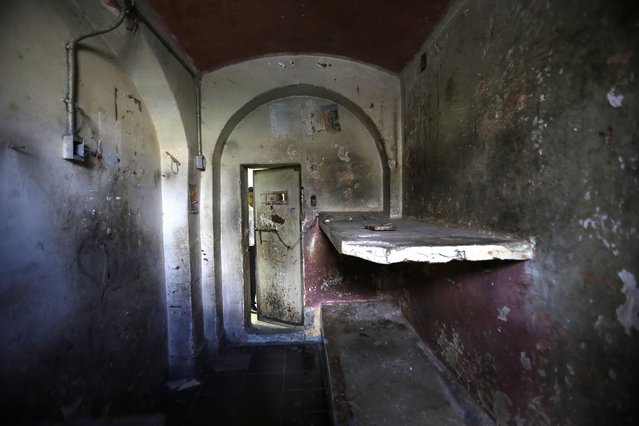
In this April 7, 2015 photo, a tourist peers through the door of a jail cell inside the now empty Garcia Moreno prison during a guided tour for the public in Quito, Ecuador. According to tour guides, this cell was nicknamed “Los Polillas”, or “The Moths”. Here, in a room designed to hold two prisoners, about 15 inmates with drug addictions were locked in overnight by the prison gangs that controlled daily life. The locked-in prisoners were also known to prostitute themselves to get access to drugs. (Photo by Dolores Ochoa/AP Photo)

In this April 7, 2015 photo, a tourist peers through the door of a jail cell inside the now empty Garcia Moreno prison during a guided tour for the public in Quito, Ecuador. According to tour guides, this cell was nicknamed “Los Polillas”, or “The Moths”. Here, in a room designed to hold two prisoners, about 15 inmates with drug addictions were locked in overnight by the prison gangs that controlled daily life. The locked-in prisoners were also known to prostitute themselves to get access to drugs. (Photo by Dolores Ochoa/AP Photo)
Details
03 May 2015 10:34:00
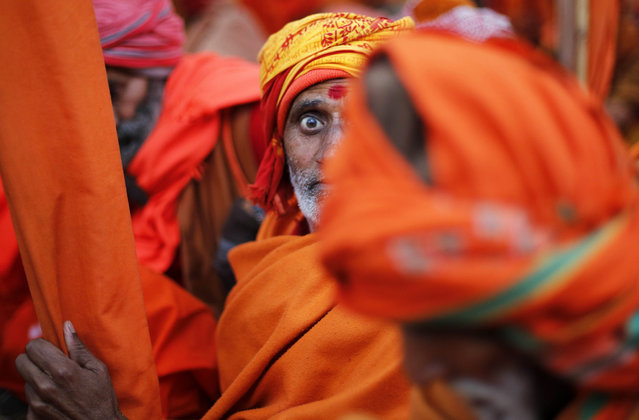
An Indian Sadhu, or Hindu holy man, sits for a community feast at the Sangam, the confluence of the Rivers Ganges, Yamuna and mythical Saraswati, during the annual month-long Magh Mela religious fair in Allahabad, India, Friday, January 16, 2015. (Photo by Rajesh Kumar Singh/AP Photo)

An Indian Sadhu, or Hindu holy man, sits for a community feast at the Sangam, the confluence of the Rivers Ganges, Yamuna and mythical Saraswati, during the annual month-long Magh Mela religious fair in Allahabad, India, Friday, January 16, 2015. Hundreds of thousands of devout Hindus are expected to take holy dips at the confluence during the astronomically auspicious period of over 45 days celebrated as Magh Mela. (Photo by Rajesh Kumar Singh/AP Photo)
Details
17 Jan 2015 11:54:00
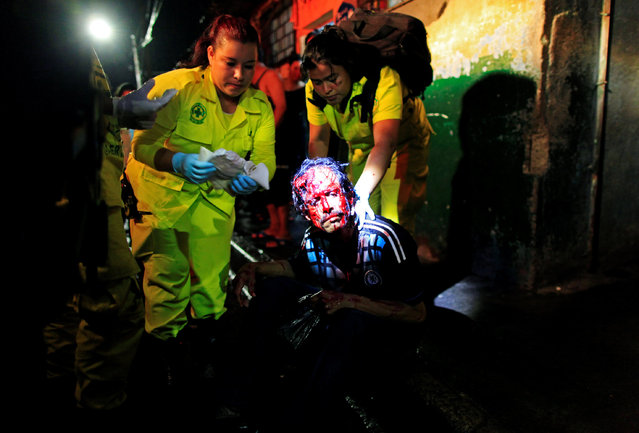
Comandos de Salvamento rescuers Maria Martinez (L) and Ana Chichilla attend to a wounded homeless man in San Salvador, El Salvador July 16, 2016. The man was attacked with a machete by suspected gang members. (Photo by Jose Cabezas/Reuters)

Comandos de Salvamento rescuers Maria Martinez (L) and Ana Chichilla attend to a wounded homeless man in San Salvador, El Salvador July 16, 2016. The man was attacked with a machete by suspected gang members. In 2015, El Salvador registered a record 103 homicides per 100,000 habitants, making it one of the most dangerous countries in the world outside a war zone. But for many young people who have few chances to distance themselves from rivalries between so-called maras in their schools and neighbourhoods, a civil-society organisation called the Comandos de Salvamento, or Rescue Corps, has been a refuge. (Photo by Jose Cabezas/Reuters)
Details
16 Nov 2016 11:10:00
Crime Tatoo  Part 1

Tattoos are commonly used among criminals to show gang membership and record the wearer's personal history—such as his or her skills, specialties, accomplishments and convictions. They are also used as a means of personal expression. Certain designs have developed recognized coded meanings. The code systems can be quite complex and because of the nature of what they encode, the tattoo designs are not widely recognized.
Details
23 Apr 2013 10:29:00


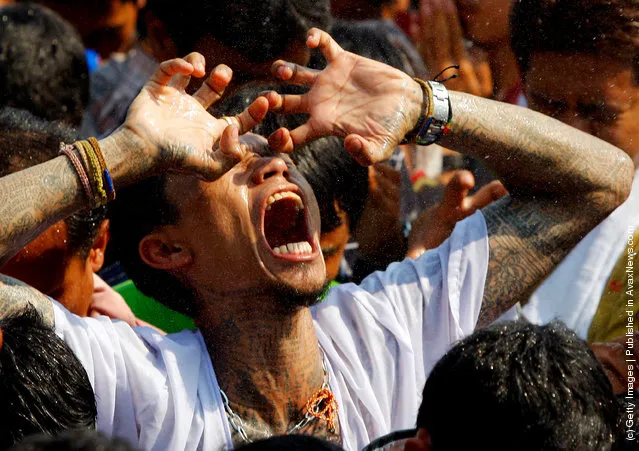
A Thai devotee in a state of trance screams while holy water is sprayed as thousands race towards the edifice of the founder monk during the annual Tattoo fesitval at Wat Bang Phra on March 7, 2009 in Nakhom Pathom, Thailand. Some men take on the characteristics of sacred animals that have been carved onto their skin. Thousands of believers from all over Thailand come to take part in one of the country's most bizarre festivals about 50 miles outside Bangkok to pay respect to the temple's monks who are master tattooist. In Thai culture the tattoo or Thai word sak yant is worn as a symbol of spiritual and physical protection, many believe that the tattoo have mystical powers. Many tattoo fanatics choose to have monkeys and tigers as well as the Khmer/Cambodia ancient script on their bodies. (Photo Paula Bronstein/Getty Images)
Details
27 Jun 2011 10:43:00


“Kumbh Mela is a mass Hindu pilgrimage in which Hindus gather at the Ganges river. The normal Kumbh Mela is celebrated every 3 years, the Ardh (half) Kumbh Mela is celebrated every six years at Haridwar and Prayag, the Purna (complete) Kumbh takes place every twelve years, at four places (Prayag (Allahabad), Haridwar, Ujjain, and Nashik). The Maha (great) Kumbh Mela which comes after 12 “Purna Kumbh Melas”, or 144 years, is held at Allahabad.

The last Ardh Kumbh Mela was held over a period of 45 days beginning in January 2007, more than 70 million Hindu pilgrims took part in the Ardh Kumbh Mela at Prayag, and on January 15, the most auspicious day of the festival of Makar Sankranti, more than 5 million participated. The previous Maha Kumbh Mela, held in 2001, was attended by around 60 million people, making it at the time the largest gathering anywhere in the world in recorded history”. – Wikipedia

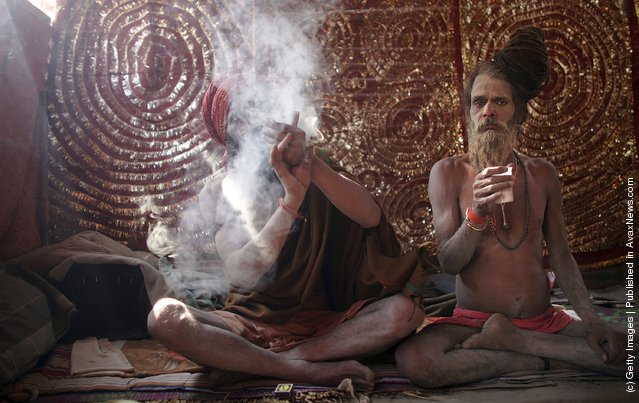
Photo: Sadhus (holy men) smoke at their camp near the ritual site at Sangam, the confluence of the Ganges, Yamuna and mythical Saraswati rivers during the Ardh Kumbh Mela festival (Half Pitcher festival) January 18, 2007 in Allahabad, India. Millions of Hindu pilgrims have flocked to the largest religious gathering in the world which lasts for 45 days in northern India. The festival commemorates the mythical conflict between gods and demons over a pitcher filled with the “nectar of immortality”. Devotees believe that taking a holy dip in the Ganges at this time washes away their sins and paves the path to salvation. (Photo by Mario Tama/Getty Images)

Details
30 Jun 2011 10:27:00
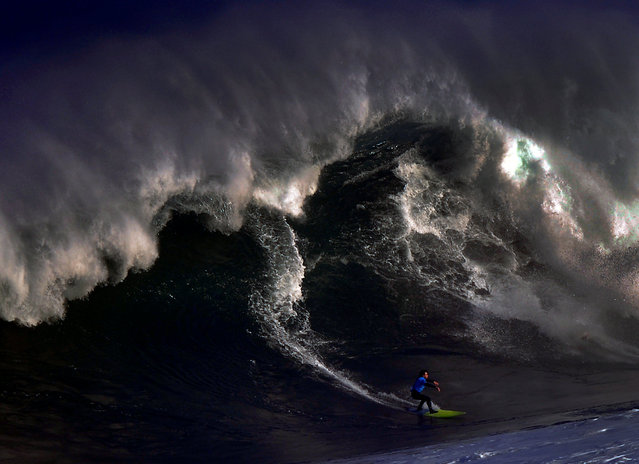
A surfer rides a large wave at El Bocal during the Vaca Gigante (Big Cow) giant wave surf competition in Santander, northern Spain December 17, 2016. (Photo by Vincent West/Reuters)

A surfer rides a large wave at El Bocal during the Vaca Gigante (Big Cow) giant wave surf competition in Santander, northern Spain December 17, 2016. (Photo by Vincent West/Reuters)
Details
19 Dec 2016 07:06:00
Andrey Karr from Western Riders Slacklines at sunset above big waves in Nazare, Portugal on December 27, 2017. (Photo by Aidan Williams/National Geographic Travel Photographer of the Year Contest)

Andrey Karr from Western Riders Slacklines at sunset above big waves in Nazare, Portugal on December 27, 2017. (Photo by Aidan Williams/National Geographic Travel Photographer of the Year Contest)
Details
14 May 2018 00:03:00