A dog jumps into a swimming pool to retrieve a ball during the Chatsworth House Country Fair near Edensor, Britain on August 31, 2018. (Photo by Darren Staples/Reuters)
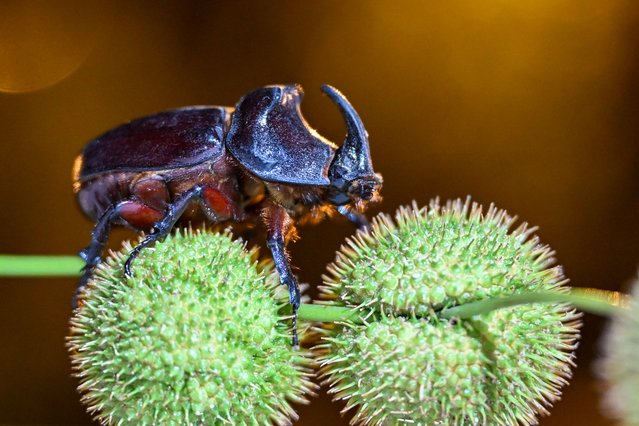
A “Rhino Beetle” (Oryctes nasicornis) is seen in Edremit, Van, Turkiye on August 2, 2024. Named “Rhino Beetle” due to the horn on its head, this beetle is commonly found in moist areas across Europe and Turkiye. (Photo by Ozkan Bilgin/Anadolu via Getty Images)
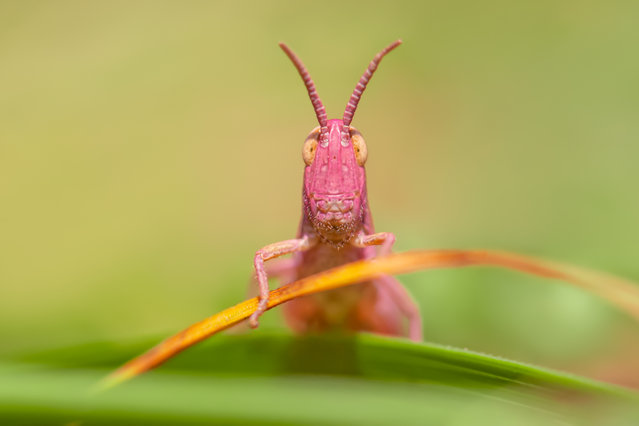
A rare grasshopper shines bright against its leafy background in North Holland, Netherlands in the first decade of October 2024. The insects are usually brown or green but turn pink due to a genetic mutation. (Photo by Roeselien Raimond/Media Drum Images)
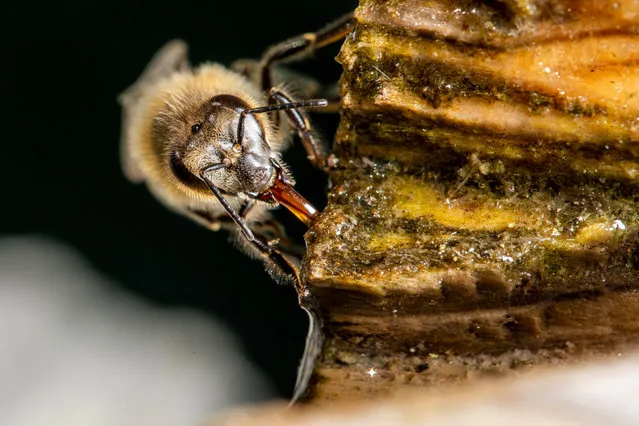
A Western honey bee feeds off acacia pollen at an apiary in Nagyszenas, eastern Hungary, 25 April 2020. The preparation of the bees for the acacia bloom began two weeks later than usual this year; due to the late frosts, this season's yield of Hungaricum acacia honey is expected to be lower. (Photo by Tibor Rosta/EPA/EFE)
Raccoon Fritzi eats at the home of veterinarian Mathilde Laininger in Berlin, Germany, January 27, 2022. She cares for four raccoons that can no longer be released into the wild. Raccoon Fritzi has an Instagram account with ten thousand followers. (Photo by Hannibal Hanschke/Reuters)
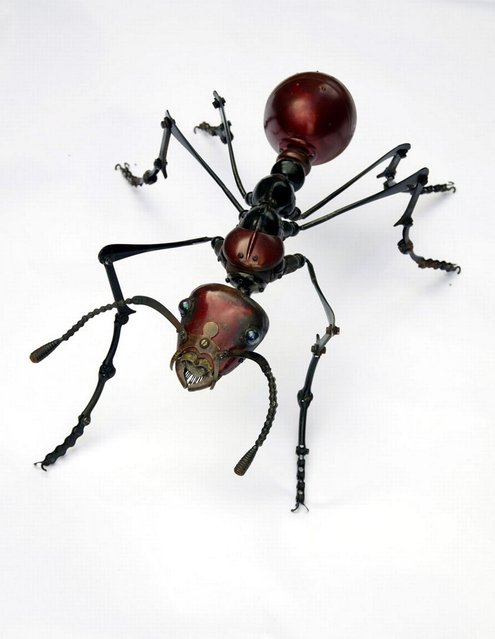
An amazing artist transforms scrap metal into incredible sculptures of insects, birds, fish, and other animals. Edouard Martinet from Brittany, France, creates the sculptures from all manner of salvaged parts and junk, including car and bicycle parts, typewriters, and medical equipment. Photo: An ant by Edouard Martinet. (Photo by Edouard Martiniet/Caters News)
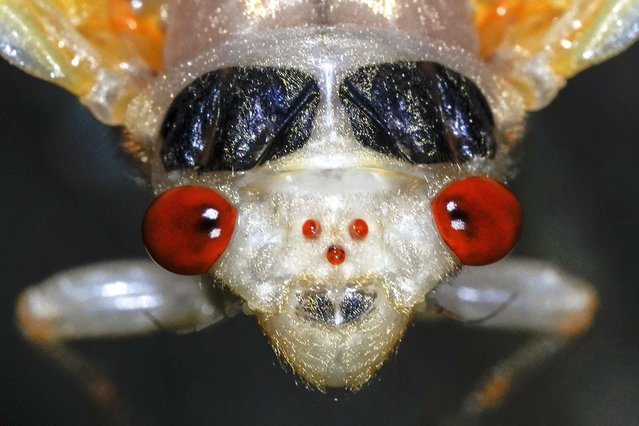
An adult periodical cicada, in the process of shedding its nymphal skin, is visible on Saturday, May 11, 2024, in Cincinnati. There are two large compound eyes, which are used to visually perceive the world around them, and three small, jewel-like, simple eyes called ocelli at center. (Photo by Carolyn Kaster/AP Photo)