Loading...
Done
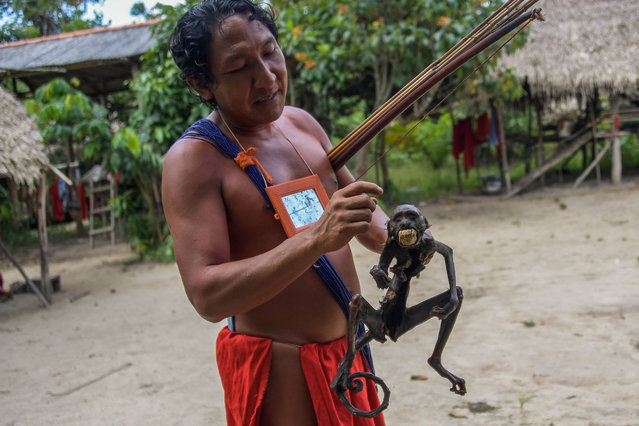
Chieftain Japarupi Waiapi shows a roasted monkey -part of Waiapi's diet, also based in Manioc and fruits- at the reserve in Amapa state in Brazil on October 13, 2017. When Waiapis walks into the Amazon forest surrounding their village, they do not see trees, but a kind of shopping mall providing medicine, food, shelter, tools and weapons  all under the eye of multiple spirits. (Photo by Apu Gomes/AFP Photo)

Chieftain Japarupi Waiapi shows a roasted monkey -part of Waiapi's diet, also based in Manioc and fruits- at the reserve in Amapa state in Brazil on October 13, 2017. When Waiapis walks into the Amazon forest surrounding their village, they do not see trees, but a kind of shopping mall providing medicine, food, shelter, tools and weapons all under the eye of multiple spirits. (Photo by Apu Gomes/AFP Photo)
Details
27 Oct 2017 08:39:00
An opposition supporter wearing a costume lies on the ground in front of riot police during a rally against Venezuelan President Nicolas Maduro's government and to commemorate the 59th anniversary of the end of the dictatorship of Marcos Perez Jimenez in Caracas, Venezuela January 23, 2017. The sign reads “Venezuelans starve. There is no food or medicine. The underworld kills us. Get out Maduro”. (Photo by Marco Bello/Reuters)

An opposition supporter wearing a costume lies on the ground in front of riot police during a rally against Venezuelan President Nicolas Maduro's government and to commemorate the 59th anniversary of the end of the dictatorship of Marcos Perez Jimenez in Caracas, Venezuela January 23, 2017. The sign reads “Venezuelans starve. There is no food or medicine. The underworld kills us. Get out Maduro”. (Photo by Marco Bello/Reuters)
Details
25 Jan 2017 11:18:00
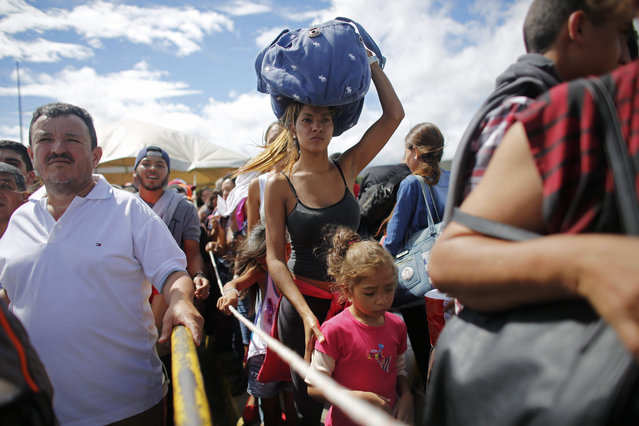
A woman carrying a bundle on her head wait in line to cross the border into Colombia through the Simon Bolivar bridge in San Antonio del Tachira, Venezuela, Sunday, July 17, 2016. Tens of thousands of Venezuelans crossed the border into Colombia on Sunday to hunt for food and medicine that are in short supply at home. It's the second weekend in a row that Venezuela’s government has opened the long-closed border connecting Venezuela to Colombia. (Photo by Ariana Cubillos/AP Photo)

A woman carrying a bundle on her head wait in line to cross the border into Colombia through the Simon Bolivar bridge in San Antonio del Tachira, Venezuela, Sunday, July 17, 2016. Tens of thousands of Venezuelans crossed the border into Colombia on Sunday to hunt for food and medicine that are in short supply at home. It's the second weekend in a row that Venezuela’s government has opened the long-closed border connecting Venezuela to Colombia. (Photo by Ariana Cubillos/AP Photo)
Details
18 Jul 2016 12:30:00


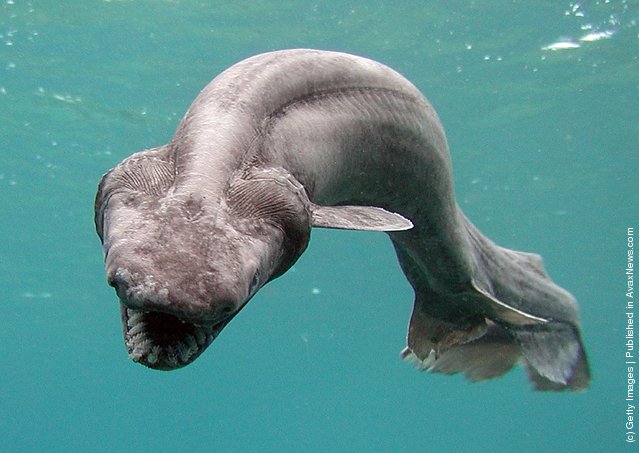
“The frilled shark (Chlamydoselachus anguineus) is one of two extant species of shark in the family Chlamydoselachidae, with a wide but patchy distribution in the Atlantic and Pacific Oceans. This uncommon species is found over the outer continental shelf and upper continental slope, generally near the bottom though there is evidence of substantial upward movements. It has been caught as deep as 1,570 m (5,150 ft), whereas in Suruga Bay, Japan it is most common at depths of 50–200 m (160–660 ft). Exhibiting several “primitive” features, the frilled shark has often been termed a «living fossil»”. – Wikipedia

Photo: A 1.6 meter long Frill shark swims in a tank after being found by a fisherman at a bay in Numazu, on January 21, 2007 in Numazu, Japan. The frill shark, also known as a Frilled shark usually lives in waters of a depth of 600 meters and so it is very rare that this shark is found alive at sea-level. It's body shape and the number of gill are similar to fossils of sharks which lived 350,000,000 years ago. (Photo by Awashima Marine Park/Getty Images)

Details
05 May 2011 10:01:00
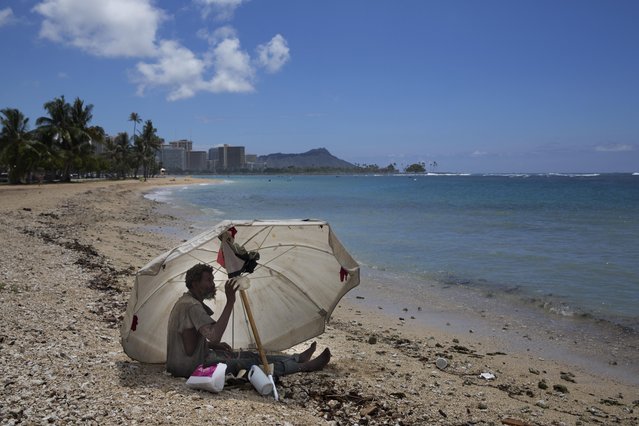
In this Thursday, August 27, 2015 photo, a homeless man drinks water while sitting on the beach at Ala Moana Beach Park located near Waikiki in Honolulu. Homelessness in Hawaii has grown steadily in recent years, leaving the state with the nation's highest rate of homeless people per capita. (Photo by Jae C. Hong/AP Photo)

Hawaii has long been known as a tropical paradise, but in recent years another image has intruded into the state's carefully crafted one of idyllic beaches and relaxing resorts: homelessness. The number of homeless people has grown in recent years, leaving the state with 487 homeless per 100,000 people, the nation's highest rate per capita, above New York and Nevada, according to federal statistics. Many of the homeless, however, defy the stereotype of the mentally ill or drug addicted. They are families, with men and women who work full-time jobs. They are struggling to get a foothold in a place with a high cost of living and low wages. Here: in this Thursday, August 27, 2015 photo, a homeless man drinks water while sitting on the beach at Ala Moana Beach Park located near Waikiki in Honolulu. (Photo by Jae C. Hong/AP Photo)
Details
11 Nov 2015 08:03:00
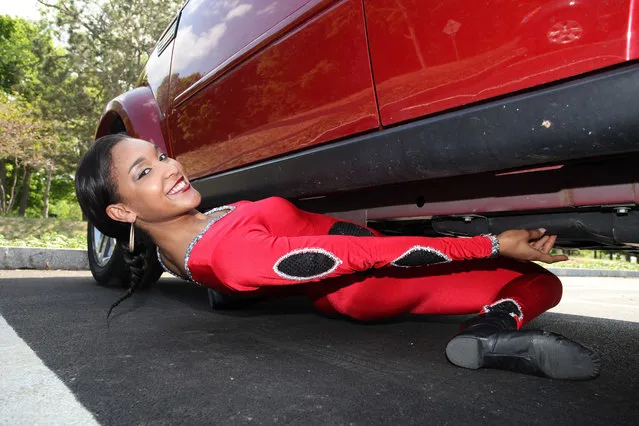
Shemika Charles limbos under her car at Niagara Falls State Park on May 28, 2015 in Buffalo, New York. A world record holding limbo queen thinks she has become the first person to shimmy under a car. Shemika Charles amazed herself and onlookers when she bent over backwards to get underneath the SUV earlier this week. The supple 22-year-old entered the record books in 2010 when she limboed down to an incredible eight and a half inches – the height of a beer bottle. (Photo by Ruaridh Connellan/Barcroft USA)

Shemika Charles limbos under her car at Niagara Falls State Park on May 28, 2015 in Buffalo, New York. A world record holding limbo queen thinks she has become the first person to shimmy under a car. Shemika Charles amazed herself and onlookers when she bent over backwards to get underneath the SUV earlier this week. The supple 22-year-old entered the record books in 2010 when she limboed down to an incredible eight and a half inches – the height of a beer bottle. She trains for up to four hours a day to keep her body in peak condition and now travels around America performing with her family. However, regular performances put an incredible strain on her body and she sees a chiropractor once a week to have her hips realigned. Her mother was also a successful limbo dancer in her home country of Trinidad and Tobago but had to give up due to injury. (Photo by Ruaridh Connellan/Barcroft USA)
Details
19 Dec 2015 08:07:00
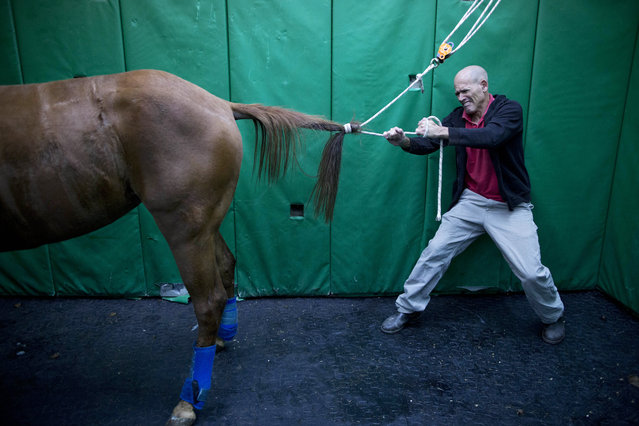
In this Wednesday, December 2, 2015 photo, Dr. Gal Kelmer, head of the department of large animals, unties a horse after its operation at the University's Koret School of Veterinary Medicine in Rishon Lezion, Israel. “Horses have an instinctive response of flight from danger”, Kelmer said. “The minute they wake up they start trying to stand and run, even if they don't have control of their limbs. So then they fall”. (Photo by Oded Balilty/AP Photo)

In this Wednesday, December 2, 2015 photo, Dr. Gal Kelmer, head of the department of large animals, unties a horse after its operation at the University's Koret School of Veterinary Medicine in Rishon Lezion, Israel. “Horses have an instinctive response of flight from danger”, Kelmer said. “The minute they wake up they start trying to stand and run, even if they don't have control of their limbs. So then they fall”. (Photo by Oded Balilty/AP Photo)
Details
15 Dec 2015 08:04:00
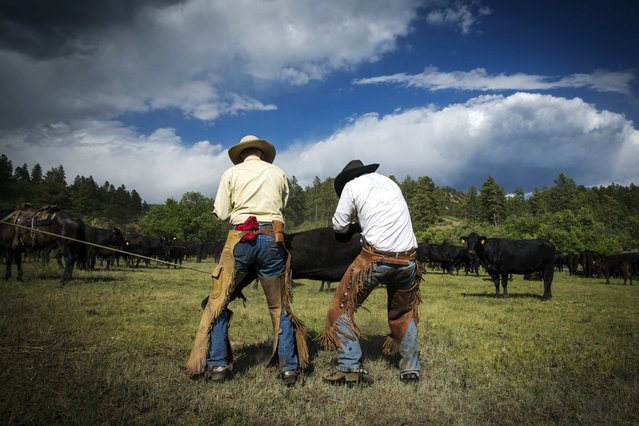
Cowboys Wyatt Williams (R) and David Thompson work to restrain a calf in order to give it medicine near Ignacio, Colorado June 12, 2014. The land where the cattle graze is leased from the Forest Service by third-generation rancher Steve Pargin. Several times a year, he and a crew led by his head cowboy, David Thompson, spend a week or more herding cattle from mountain range to mountain range to prevent them from causing damage to fragile ecosystems by staying in a single area too long. (Photo by Lucas Jackson/Reuters)

Cowboys Wyatt Williams (R) and David Thompson work to restrain a calf in order to give it medicine near Ignacio, Colorado June 12, 2014. The land where the cattle graze is leased from the Forest Service by third-generation rancher Steve Pargin. Several times a year, he and a crew led by his head cowboy, David Thompson, spend a week or more herding cattle from mountain range to mountain range to prevent them from causing damage to fragile ecosystems by staying in a single area too long. (Photo by Lucas Jackson/Reuters)
Details
15 Jul 2014 11:04:00