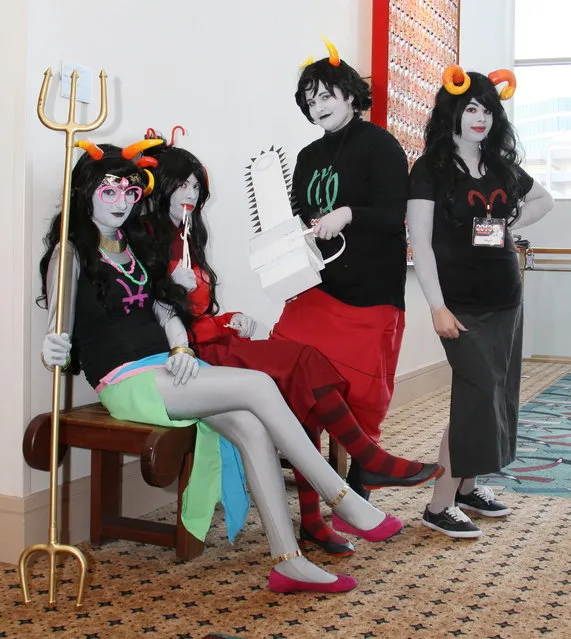
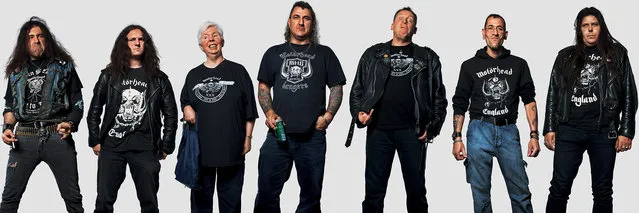
“Over three years I photographed fans outside different concerts. I was fascinated by the different tribes of people that attended them, and how people emulated celebrity to form their identity. As I photographed the project I began to see how the concerts became events for people to come together with surrogate “families”, a chance to relive their youth or try and be part of a scene that happened before they were born” – James Mollison.
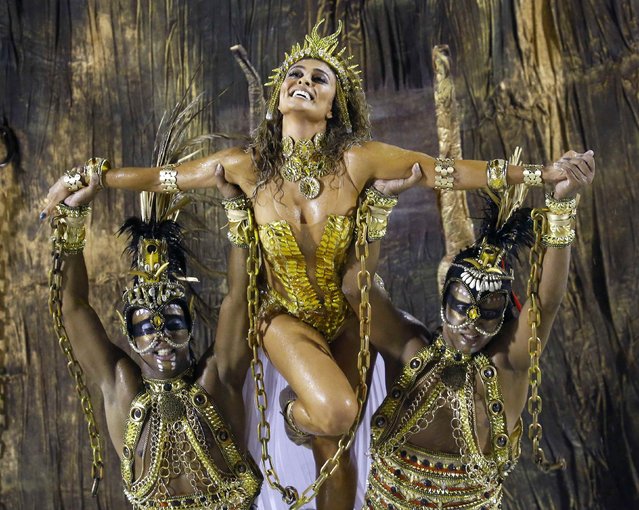
Model Juliana Paesthe (C) of Viradouro samba school participates in the annual carnival parade in Rio de Janeiro's Sambadrome, February 15, 2015. (Photo by Ricardo Moraes/Reuters)
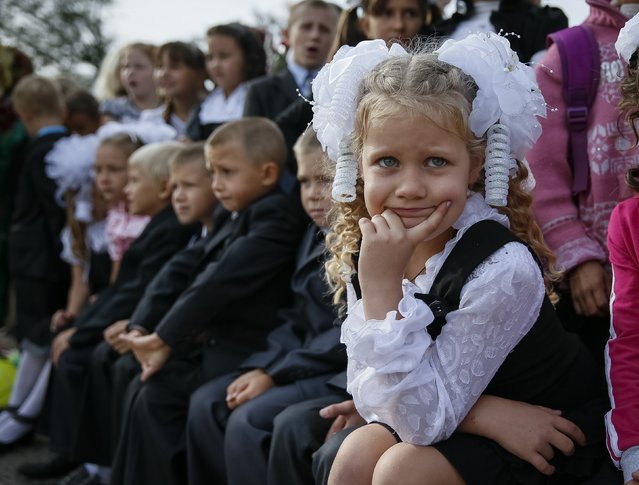
First graders attend a festive ceremony to mark the start of another school year in Slaviansk, September 1, 2014. September 1 marks the start of a new academic year for students in Ukraine. (Photo by Gleb Garanich/Reuters)
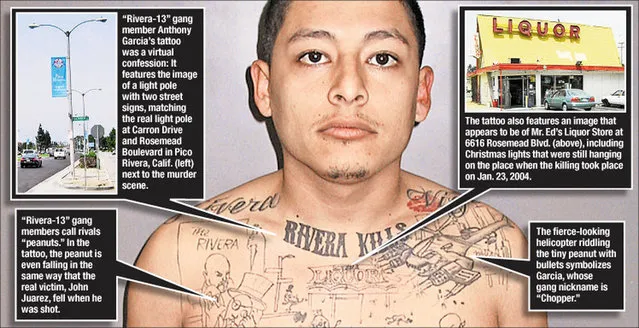
Tattoos are commonly used among criminals to show gang membership and record the wearer's personal history—such as his or her skills, specialties, accomplishments and convictions. They are also used as a means of personal expression. Certain designs have developed recognized coded meanings. The code systems can be quite complex and because of the nature of what they encode, the tattoo designs are not widely recognized.
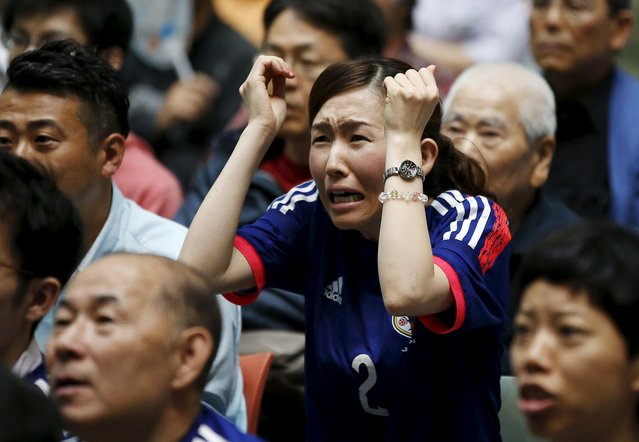
A Japan soccer fan reacts as she watches Japan's FIFA Women's World Cup final match against the U.S. in Vancouver, at a public viewing event in Tokyo, Japan, July 6, 2015. Japan lost the match 5-2 to the U.S. (Photo by Toru Hanai/Reuters)
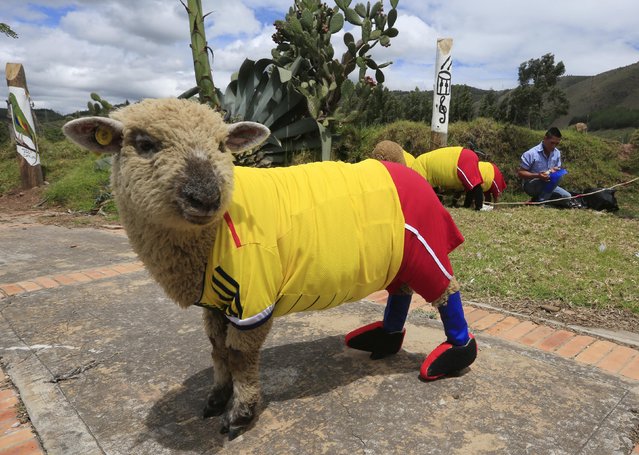
A sheep dressed in a jersey in the colors of the Colombian national soccer team is seen during a exhibition in Nobsa, Colombia June 1, 2014. The sheep is named Falcao, after the Colombian player. REUTERS/Jose Miguel Gomez
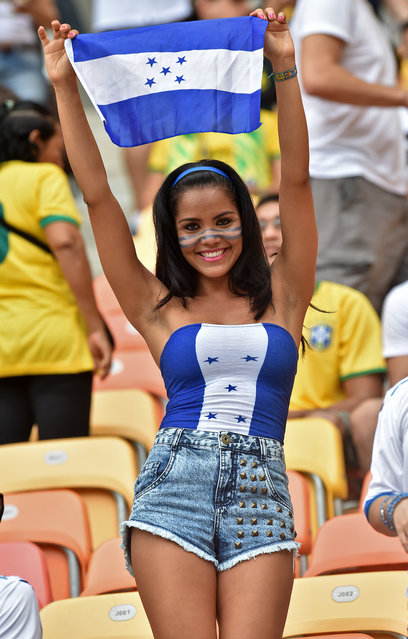
A Honduras fan cheers for her team before the start of the Group E football match between Honduras and Switzerland at the Amazonia Arena in Manaus during the 2014 FIFA World Cup on June 25, 2014. (Photo by Rodrigo Arangua/AFP Photo)