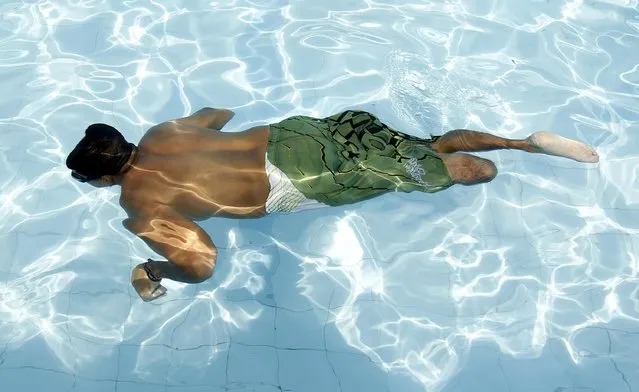
A National Army of Colombia soldier, who was wounded by a mine, swims at a pool in Bello, municipality of Antioquia, March 25, 2015. (Photo by Fredy Builes/Reuters)
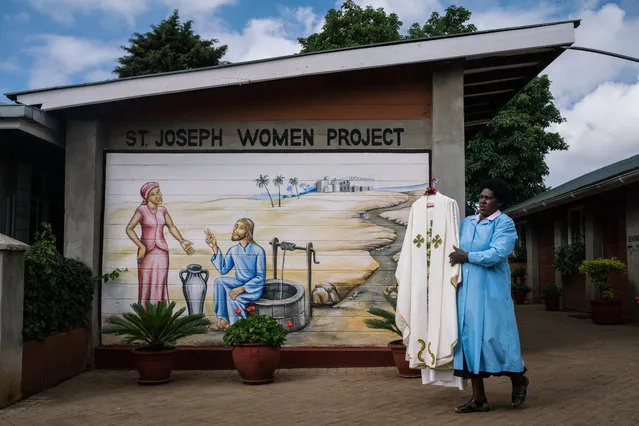
A parishioner of the St. Joseph the Worker Parish in Nairobi's Kangemi slum carries the vestments to be worn by Pope Francis during his visit to Kenya on November 24, 2015 in Kenya. Pope Francis makes his first visit to Kenya on a five day African tour that is scheduled to include Uganda and the Central African Republic. Africa is recognised as being crucial to the future of the Catholic Church with the continent's Catholic numbers growing faster than anywhere else in the world. (Photo by Nichole Sobecki/Getty Images)
These are the ambitious plans which suggest skyscrapers of the future may house an entire city. The Endless City project is an award-winning proposal by sure Architecture, who propose turning skyscrapers into complete ecosystems. London is the proposed city for the mixed-use tower – which would feature huge ramps linking different sections of the structure. The company, whose design won the SkyScrapers and SuperSkyScrapers Competition, insist the structure would be a great space-saver in dense cities which have previously spread outwards rather than upwards. (Photo by Caters News)
A girl from Newar community is pictured with vermillion powder on her forehead as she takes part at the Ihi ceremony in Bhaktapur, Nepal on December 6, 2019. The two-day ceremony begins with purification rituals and ends with “Kanyadan” (giving away the virgin) of the girl by her father. A Newari girl gets married thrice in her life, first with Bel, the fruit of a wood-apple tree, secondly with the sun, and lastly with her future husband. (Photo by Monika Deupala/Reuters)
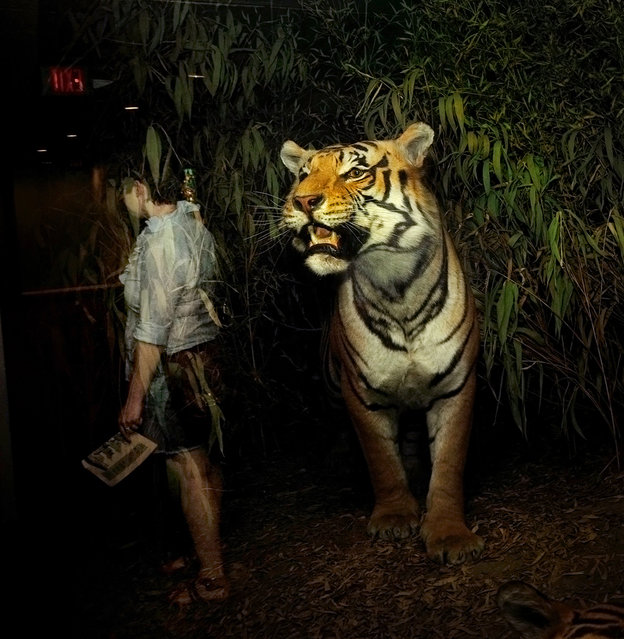
“Natural History” is a series of completely candid single exposure images that merge the living and the dead to create allegorical narratives of our troubled co-existence with nature. Ghost-like reflections of modern visitors viewing wildlife dioramas are juxtaposed against the antique taxidermied subjects housed behind thick glass, their faces molded into permanent expressions of fear, aggression or fleeting passivity. After decades of over-hunting, climate change, poaching and destruction of habitat, many of these long dead diorama specimens now represent endangered or completely extinct species”. – Traer Scott. (Photo by Traer Scott)
The Census of Marine Life was a global network of researchers in more than 80 nations engaged in a 10-year scientific initiative to assess and explain the diversity, distribution, and abundance of life in the oceans. The world's first comprehensive Census of Marine Life — past, present, and future — was released in 2010 in London.
A visitor takes a selfie with “The Breach” by Leandro Erlich, during a photo call for Kew Gardens' forthcoming “Food Forever” exhibition, examining the fragile future of food and the impact of our day-to-day eating habits on the planet, at the Royal Botanic Gardens, in Kew, Richmond, Surrey on Thursday, June 16, 2022. (Photo by Dominic Lipinski/PA Images via Getty Images)