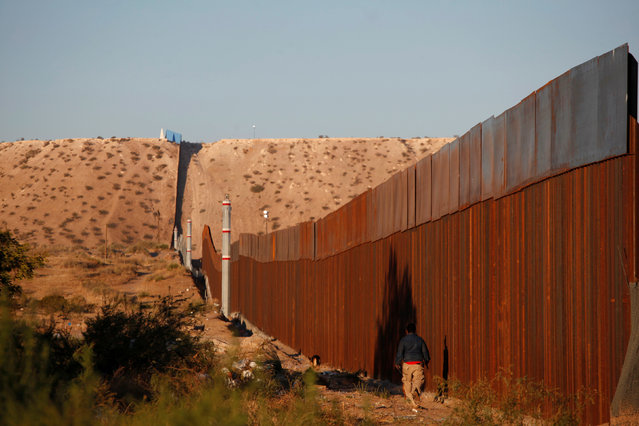
A man walks next to a section of the wall separating Mexico and the United States, on the outskirts of Ciudad Juarez, Mexico, November 12, 2016. (Photo by Jose Luis Gonzalez/Reuters)
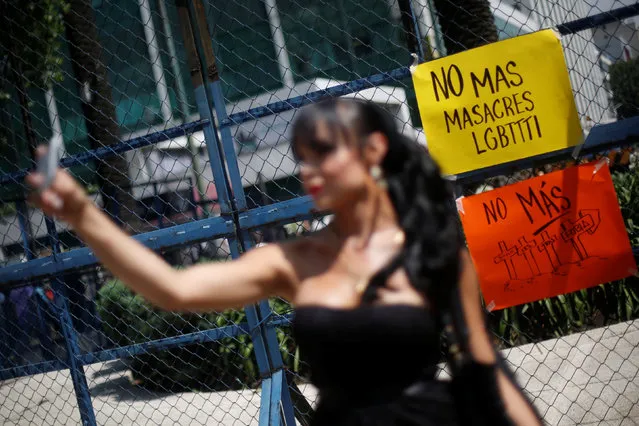
A sign that reads “No more massacres LGBT” is seen to remember the victims of the Pulse nightclub mass shooting in Orlando, near the U.S. Embassy in Mexico City, Mexico, June 14, 2016. (Photo by Edgard Garrido/Reuters)
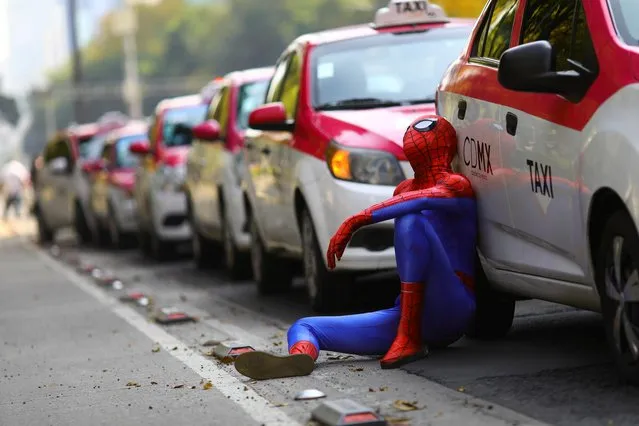
A person dressed up as Spider-Man sits next to the cabs as taxi drivers hold a protest against taxi-hailing apps such as Uber, Cabify and Didi at Angel de la Independencia monument, in Mexico City, Mexico, October 12, 2020. (Photo by Edgard Garrido/Reuters)
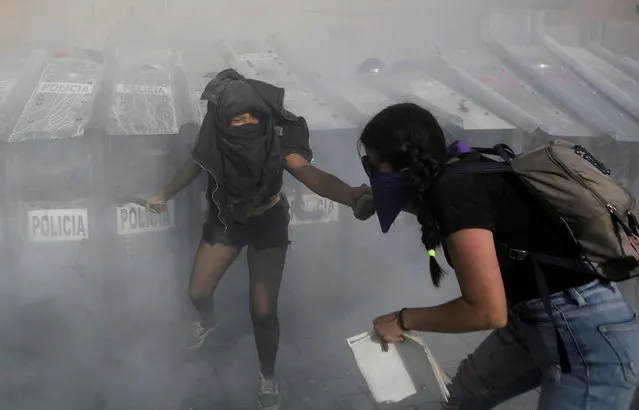
Women clash with police officers behind riot shields during a protest in support of Victoria Salazar, a Salvadoran woman who died after a Mexican female police officer was seen in a video kneeling on her back, in Mexico City, Mexico on April 2, 2021. (Photo by Raquel Cunha/Reuters)
To mark the occasion of International Women' s Day on March 8, 2018 AFP presents a series of photos depicting women performing roles or working in professions more traditionally held by men. Here: Professional wrestler Cristal (Crystal) poses for a photograph in her trainig place on February 09, 2018 in Mexico city, Mexico. (Photo by Omar Torres/AFP Photo)
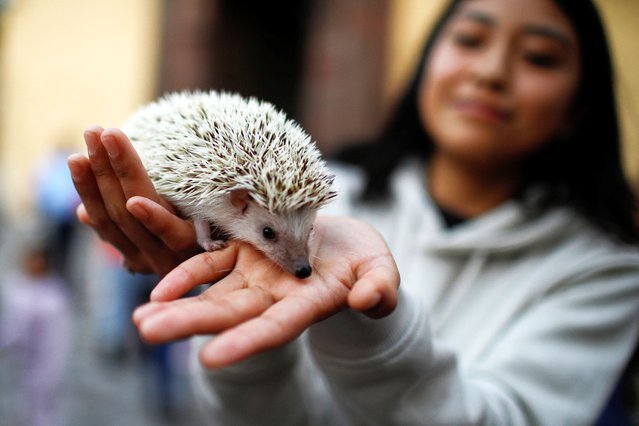
A girl holds her hedgehog to be blessed by a priest at the Cathedral San Bernardino de Siena during the ceremony commemorating the Feast of San Antonio Abad, the patron saint of domestic animals, in Xochimilco on the outskirts of Mexico City, Mexico on January 17, 2024. (Photo by Raquel Cunha/Reuters)
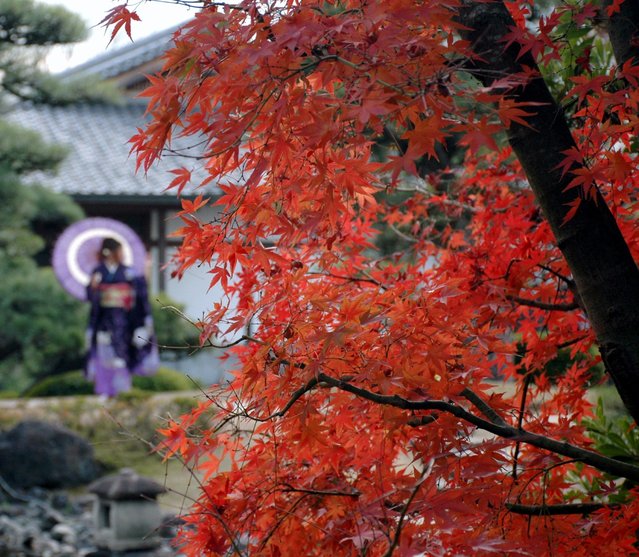
“Touring the Koko-en Gardens adjacent to the Himeji castle was an unexpected highlight of our visit”, wrote Jeff Solar, 64, of Silver Spring, Md., about his trip to Japan. “The fall colors were outstanding and the gardens were both amazing and a bargain (just a few Yen added to the cost of the Himeji Castle admission)”. (Photo by Jeff Solar/2017 Washington Post Travel Photo Contest)
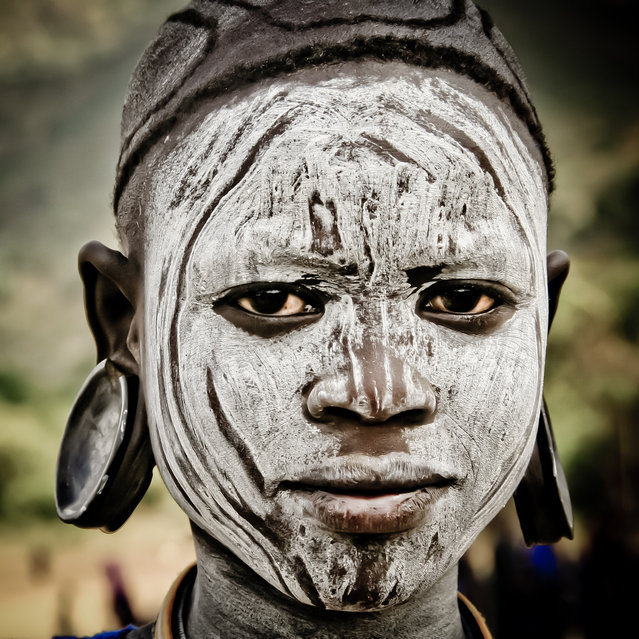
“The Omo River is an important river of southern Ethiopia. Its course is entirely contained within the boundaries of Ethiopia, and empties into Lake Turkana on the border with Kenya. The lower valley of the Omo is currently believed by some to have been a crossroads for thousands of years as various cultures and ethnic groups migrated around the region. To this day, the people of the Lower Valley of the Omo, including the Mursi, Suri, Nyangatom, Dizi and Me'en, are studied for their diversity”. – Wikipedia (Photo by Hamerscat)