Loading...
Done
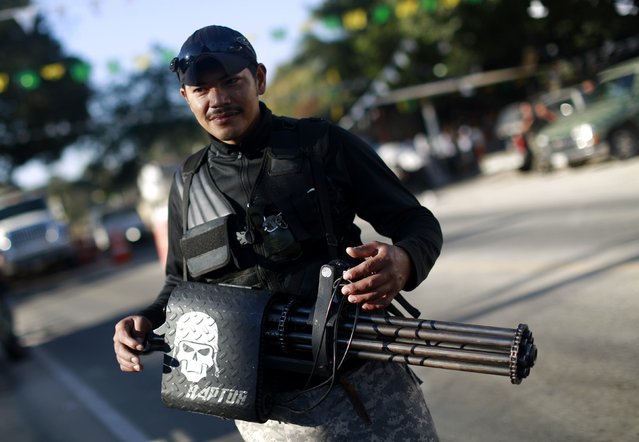
A member of the Community Police of the FUSDEG (United Front for the Security and Development of the State of Guerrero) poses with a weapon during events to mark the first anniversary of the force's operations in Ocotito, January 23, 2015. (Photo by Jorge Dan Lopez/Reuters)

A member of the Community Police of the FUSDEG (United Front for the Security and Development of the State of Guerrero) poses with a weapon during events to mark the first anniversary of the force's operations in Ocotito, January 23, 2015. Based on the traditional indigenous justice system, the Community Police is made up of volunteers from different communities of Guerrero, and was created in response to the spate of violence in several locations in the state. (Photo by Jorge Dan Lopez/Reuters)
Details
25 Jan 2015 09:19:00
Maori  People New Zealand

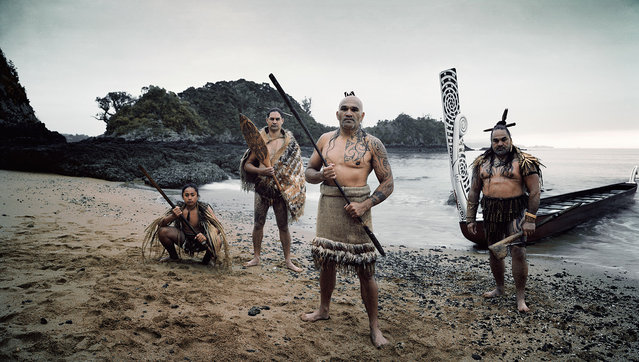
The long and intriguing story of the origine of the indigenous Maori people can be traced back to the 13th century, the mythical homeland Hawaiki, Eastern Polynesia. Due to centuries of isolation, the Maori established a distinct society with characteristic art, a separate language and unique mythology. Defining aspects of Maori traditional culture include art, dance, legends, tattoos and community. While the arrival of European colonists in the 18th centure had a profound impact on the Maori way of life, many aspects of traditional society have survived into the 21th century.
Details
11 Mar 2014 14:40:00
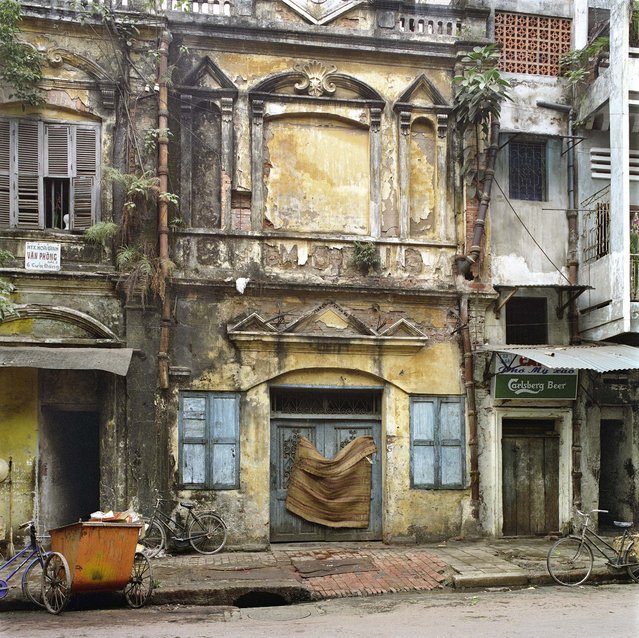
54 Hàng Ga (Chicken Street), 1994. (Photo by  William E. Crawford from the book “Hanoi Streets 1985-2015: In the Years of Forgetting”)

Documentary photographer William E. Crawford was one of the first Western photographers to gain access to North Vietnam after the war ended. He has photographed the capital, Hanoi, at regular intervals since 1985, concentrating on the colonial and indigenous architecture, urban details, landscapes and intimate portraits of people in their home settings, street scenes and the city’s surrounding countryside. Here: 54 Hàng Ga (Chicken Street), 1994. (Photo by William E. Crawford from the book “Hanoi Streets 1985-2015: In the Years of Forgetting”)
Details
27 Jun 2018 00:01:00
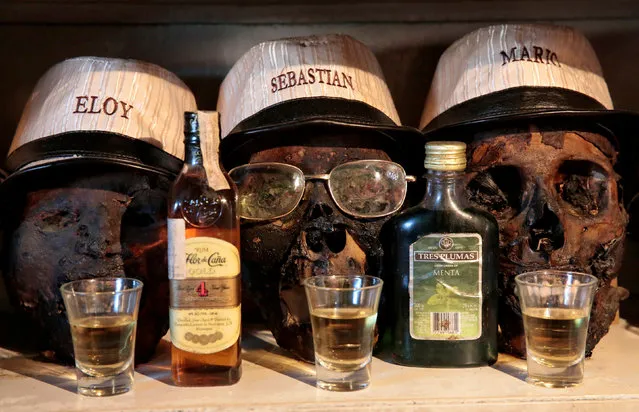
Skulls are seen at the witch doctor kiosk during the day of offerings to the “Pachamama” (Mother Earth) in El Alto, Bolivia, August 1, 2016. (Photo by David Mercado/Reuters)

Skulls are seen at the witch doctor kiosk during the day of offerings to the “Pachamama” (Mother Earth) in El Alto, Bolivia, August 1, 2016. Pachamama is a goddess revered by the indigenous people of the Andes. She is also known as the earth/time mother. In Inca mythology, Pachamama is a fertility goddess who presides over planting and harvesting, embodies the mountains, and causes earthquakes. (Photo by David Mercado/Reuters)
Details
02 Aug 2016 08:11:00
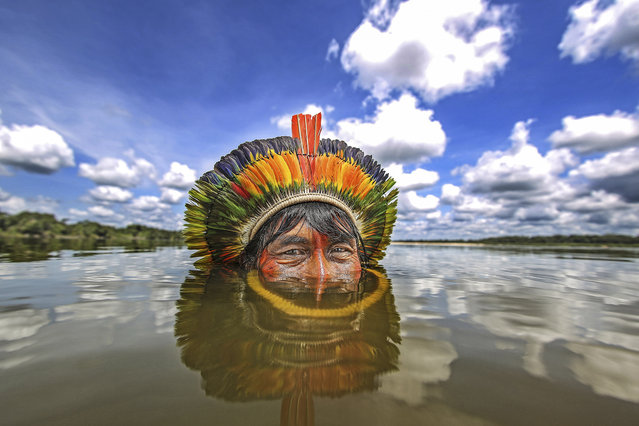
Bej indian in the Xingu river, state of Mato Grosso, Brazil on December 20, 2015 .(Photo by Ricardo Stuckert/Caters News Agency)

These images offer a rare glimpse of life within remote Brazilian tribes. Award winning photographer Ricardo, 47, said: “The pictures show the traditional way of life of these people who live in harmony with nature. The photos provide an overview of the contemporary situation of the indigenous people in Brazil”. Here: Bej indian in the Xingu river, state of Mato Grosso, Brazil on December 20, 2015 .(Photo by Ricardo Stuckert/Caters News Agency)
Details
12 Dec 2017 06:46:00
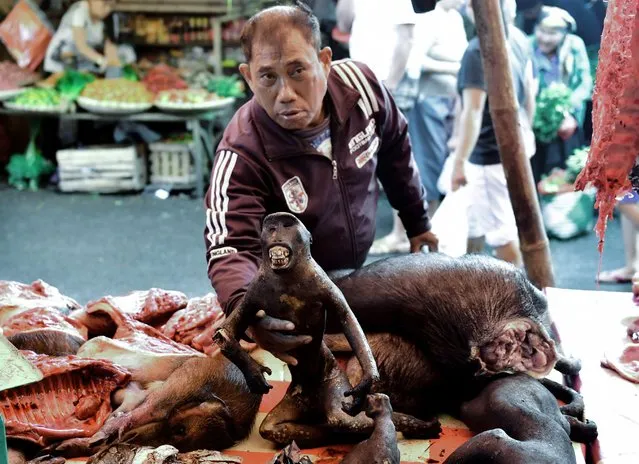
This picture taken on February 18, 2017 shows a customer holding a crested black macaque in Tomohon market in northern Sulawesi, Indonesia. (Photo by Bay Ismoyo/AFP Photo)

This picture taken on February 18, 2017 shows a customer holding a crested black macaque in Tomohon market in northern Sulawesi, Indonesia. Authorities and activists are stepping up efforts to persuade villagers on Sulawesi island to stop consuming the critically endangered crested black macaques, one of many exotic creatures that form part of the local indigenous community' s diet. The macaque' s meat is prized by the ethnic Minahasan people, a largely Christian group in the world' s most populous Muslim- majority country, who have no reservation about eating exotic animals, unlike Indonesia' s Islamic communities. (Photo by Bay Ismoyo/AFP Photo)
Details
04 Apr 2017 10:01:00
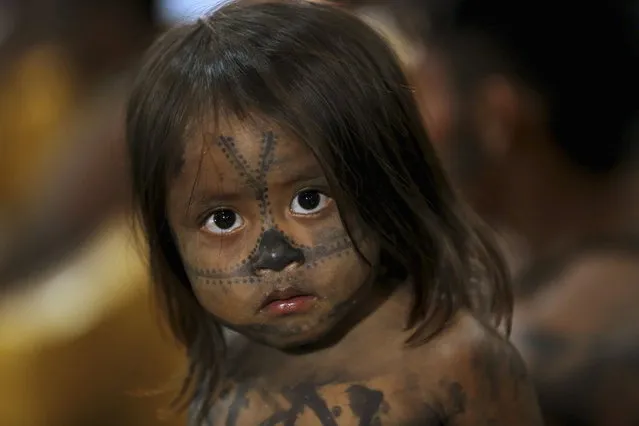
A Munduruku Indian child is pictured at the Planalto Palace, where a meeting with Minister of the General Secretariat of the Presidency of Brazil Gilberto Carvalho was being held with other Munduruku Indians, in Brasilia, June 4, 2013. (Photo by Ueslei Marcelino/Reuters)

A Munduruku Indian child is pictured at the Planalto Palace, where a meeting with Minister of the General Secretariat of the Presidency of Brazil Gilberto Carvalho was being held with other Munduruku Indians, in Brasilia, June 4, 2013. President Dilma Rousseff's government sought on Tuesday to defuse mounting conflicts with indigenous groups over its decision to stop setting aside farm land for Indians and plans to build more hydroelectric dams in the Amazon. The government flew 144 Munduruku Indians to Brasilia for talks to end a week-long occupation of the controversial Belo Monte dam on the Xingu river, a huge project aimed at feeding Brazil's fast-growing demand for electricity. (Photo by Ueslei Marcelino/Reuters)
Details
06 Jun 2013 09:25:00
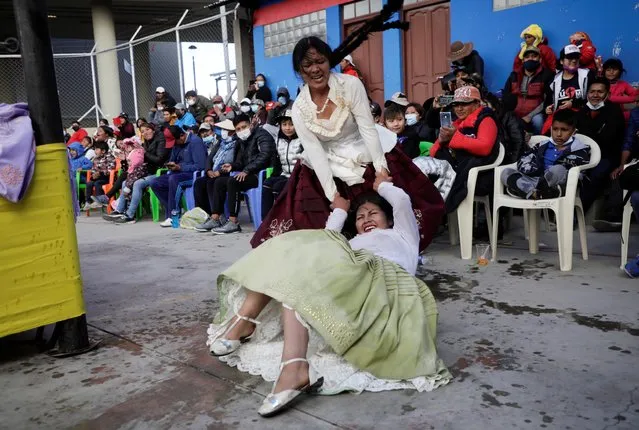
Barbara Quisbert and Susana La Bonita, cholitas wrestlers, fight during their return to the ring after the coronavirus disease (COVID-19) restrictions, in El Alto outskirts of La Paz, November 29, 2020. (Photo by David Mercado/Reuters)

The Fighting Cholitas are a group of female wrestlers who perform in El Alto, Bolivia. Tickets to the exhibitions cost $1. Like the general population of El Alto, which consists almost entirely of Aymara and Quechua residents, the Cholitas are indigenous. They wear braided hair, bowler hats and multilayered skirts in the ring. Here: Barbara Quisbert and Susana La Bonita, cholitas wrestlers, fight during their return to the ring after the coronavirus disease (COVID-19) restrictions, in El Alto outskirts of La Paz, November 29, 2020. (Photo by David Mercado/Reuters)
Details
12 Dec 2020 00:03:00