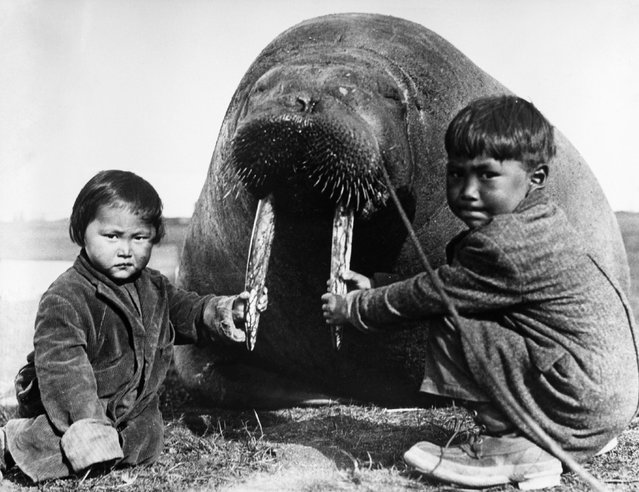
Two Inuit children at Point Barrow, Alaska, holding the tusks of a large walrus, probably killed for food, circa 1930. (Photo by General Photographic Agency/Getty Images)
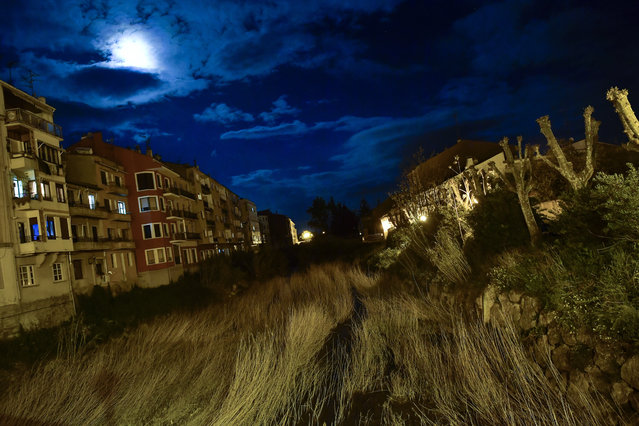
A moon light illuminates the sky through the clouds over a large line of grass between some home houses in the small village of Tafalla, northern Spain, Tuesday, May 1, 2018. (Photo by Alvaro Barrientos/AP Photo)
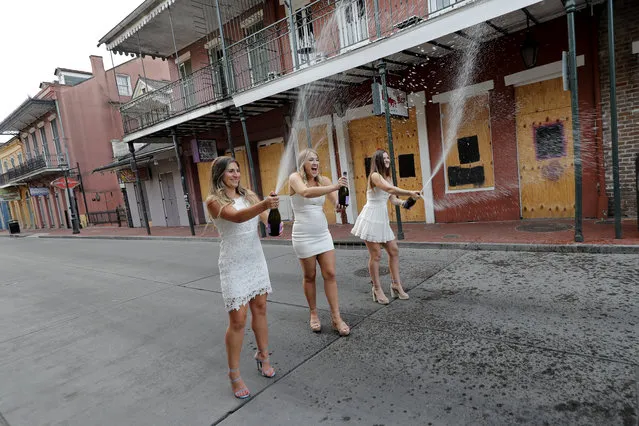
Tulane University graduates pop prosecco as they pose for graduation photos on a largely empty Bourbon Street, due to the coronavirus pandemic, in the French Quarter of New Orleans, Tuesday, May 12, 2020. (Photo by Gerald Herbert/AP Photo)
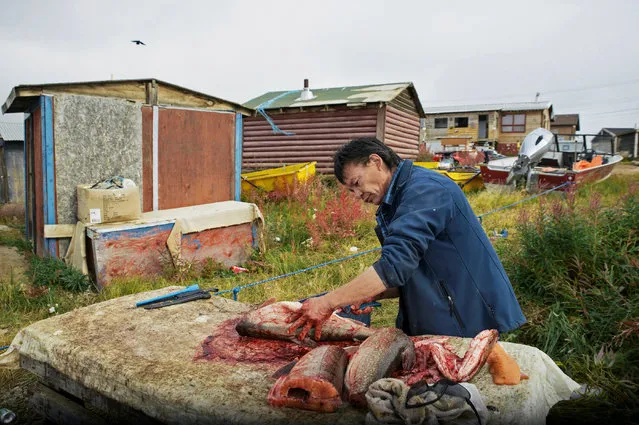
CANADA: Stanley Ferdinand filets large trout he caught in Great Bear Lake in Deline, Northwest Territories, Canada September 8, 2016. (Photo by Pat Kane/Reuters)
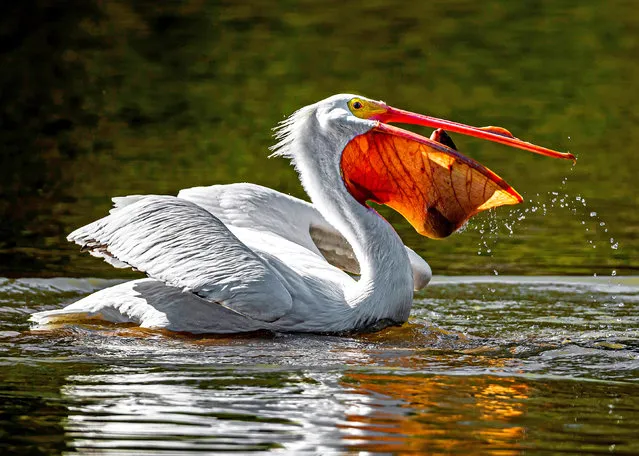
A pelican on a lake in California in the first decade of January 2024 deftly snares a large trout after scooping it up, tossing it into the air and catching it in its bill. (Photo by Jiahong Zeng/Solent news)
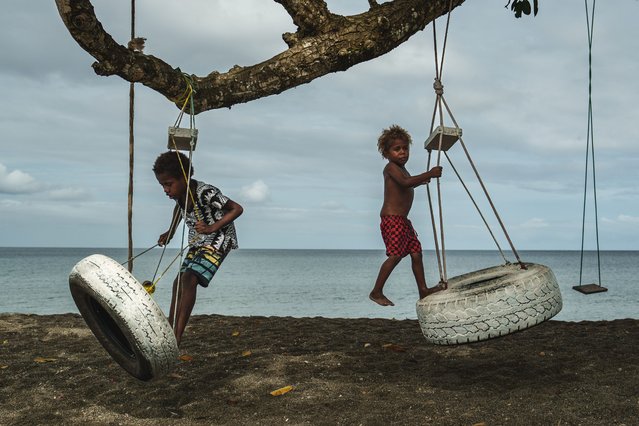
Children play on an uprooted tree along a beach in Mele, Vanuatu that was once lined with vegetation, now largely lost to storms, erosion and other environmental pressures on Saturday, July 19, 2025. (Photo by Annika Hammerschlag/AP Photo)
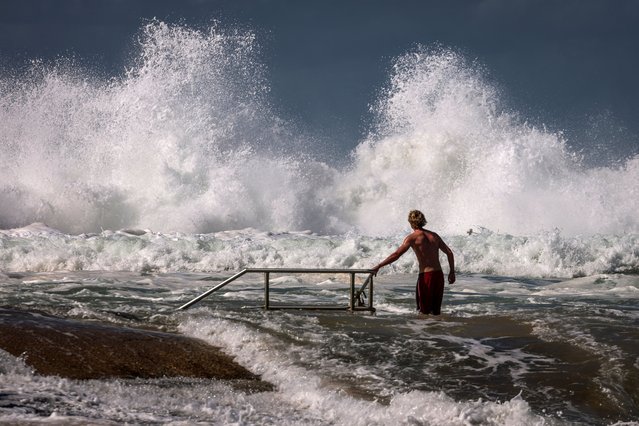
A man walks towards a wave breaking on a rock pool at North Narrabeen Beach in Sydney on April 18, 2025, as large swells hit the east coast of Australia. (Photo by David Gray/AFP Photo)
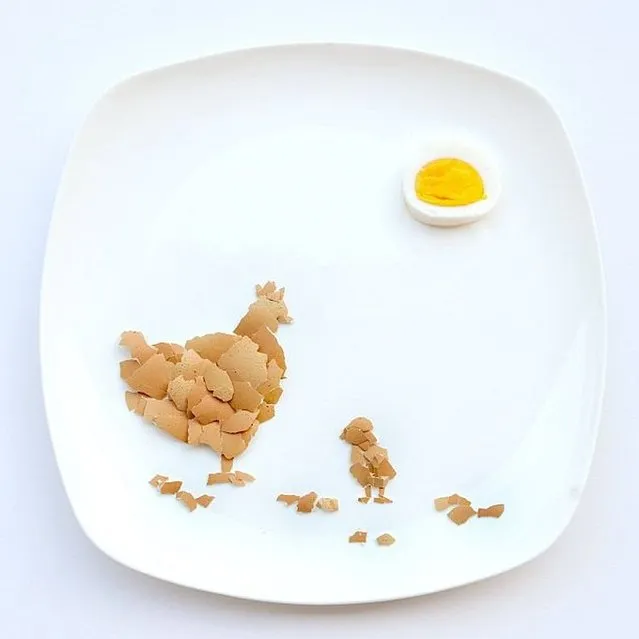
Hong Yi is a Malaysian architect and artist whose impressive portfolio includes work for Chicago’s Union Station, the Melbourne Hall of Music, and alternative medium portraits using coffee stains or tea bags. Her unorthodox approach to creation has led her to her most recent blog project. Over the course of 31 days, Hong Yi (who also goes by Red) will post art pieces made from food. So far, the pieces range from simpler ones of a watermelon sailboat to a complex recreation of Hokusai’s “The Great Wave.”