Loading...
Done


A Galapagos Tortoise shell is used as a foot rest at Heathrow Airport's Animal Reception Centre on January 25, 2011 in London, England. Many animals pass through the centre's doors ranging from exotic animals such as snow leopards and elephants, snakes and crocodiles, to the more common such as cats and dogs. In 2010 alone the centre processed approximately 10,500 cats and dogs, 1,300 birds, 105,000 day old chicks, 246,000 reptiles, 230 horses and 29 million fish. Most animals are part of zoo transfer schemes, the pet trade, or are pets in transit. (Photo by Dan Kitwood/Getty Images)
Details
21 Mar 2011 12:30:00


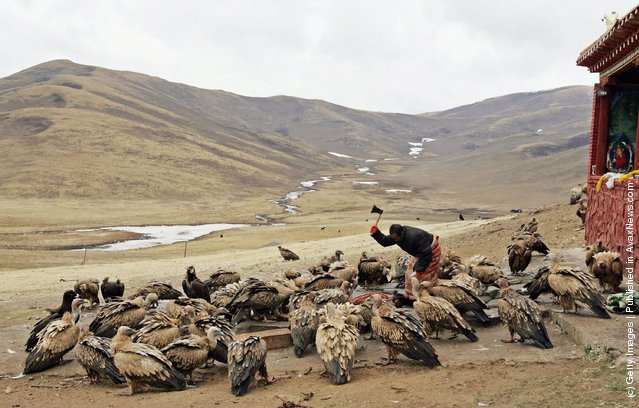
“Sky burial or ritual dissection was once a common funerary practice in Tibet wherein a human corpse is cut in specific locations and placed on a mountaintop, exposing it to the elements or the mahabhuta and animals – especially to birds of prey. The location of the sky burial preparation and place of execution are understood in the Vajrayana traditions as charnel grounds. In Tibet the practice is known as jhator, which literally means, «giving alms to the birds»”. – Wikipedia

Photo: A burial master chops bones of a body to feed vultures during a celestial burial ceremony on April 19, 2006 in Dari County of Guoluo Prefecture, Qinghai Province, northwest China. Celestial burial is a traditional funeral of Tibetan people, which began in the 7th century. (Photo by China Photos/Getty Images)
Details
18 Jun 2011 12:12:00
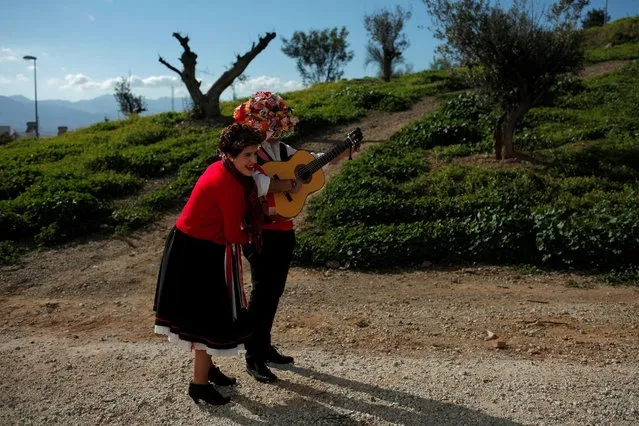
People in traditional costumes prepare before competing in the 55th Verdiales music contest in Malaga, southern Spain December 28, 2016. (Photo by Jon Nazca/Reuters)

People in traditional costumes prepare before competing in the 55th Verdiales music contest in Malaga, southern Spain December 28, 2016. Verdiales is a form of traditional Flamenco music, which is common in the province of Malaga. Members of singing groups, known as “pandas”, wear traditional costumes decked with flowers and other accessories as they perform in the contest, which is held annually on December 28. (Photo by Jon Nazca/Reuters)
Details
29 Dec 2016 07:33:00
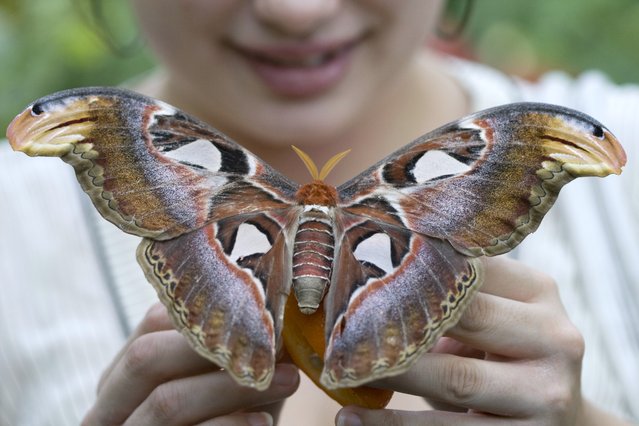
Atlas Moth @ Carleton. (Photo by Terri Oda)

“The Atlas moth (Attacus atlas) is a large saturniid moth found in the tropical and subtropical forests of Southeast Asia, and common across the Malay archipelago. Atlas moths are considered the largest moths in the world in terms of total wing surface area [upwards of c. 400 cm2 (62 sq in)]. Their wingspans are also amongst the largest, reaching over 25 cm (10 in). Females are appreciably larger and heavier”. – Wikipedia. Photo: Atlas Moth. (Photo by Terri Oda)


Details
10 Feb 2013 16:49:00


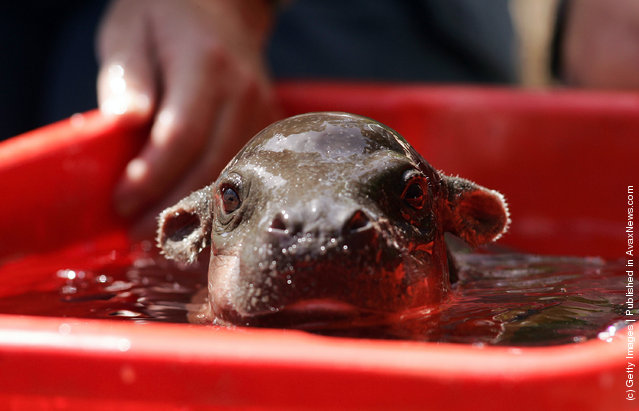
“The pygmy hippopotamus (Choeropsis liberiensis or Hexaprotodon liberiensis) is a large mammal native to the forests and swamps of western Africa (the specific name liberiensis means “of Liberia”, as this is where the vast majority live). The pygmy hippo is reclusive and nocturnal. It is one of only two extant species in the Hippopotamidae family, the other being its much larger cousin the common hippopotamus”. – Wikipedia

Photo: Monifa, a one month old baby Pygmy Hippopotamus takes a morning bath at Taronga Zoo on November 7, 2008 in Sydney, Australia. Monifa is the first Pygmy Hippopotamus to be born at Taronga Zoo in the past twenty three years. (Photo by Sergio Dionisio/Getty Images)
Details
11 Apr 2011 08:11:00
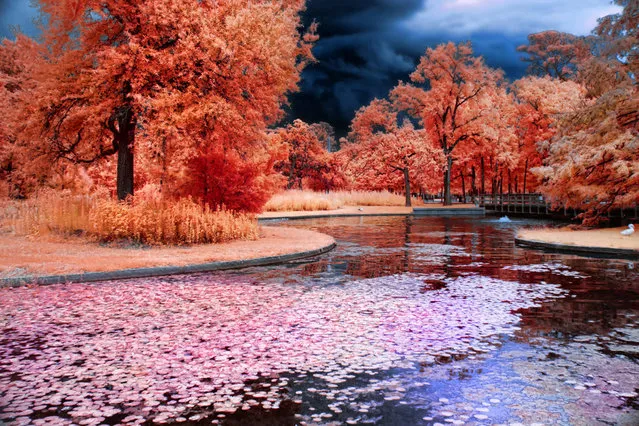
Art By Helios Spada

Helios is usually a common USA digital photographer that's creating online photographs underneath the identity Helios-spada.They generates a amazing infrared taking pictures series. This particular taking pictures string is done in the range of 750-1400 nm, that is beyond your limitations regarding obvious lighting along with will allow you to see the world that is usually not often seen by simply a persons eye. Throughout infrared taking pictures, landscaping usually are changed into remarkable displays, the place the recognizable vista resemble surreal styles of dreamland. Look into infrared taking pictures of Helios-spada and make your work time Cool.
Details
11 Sep 2013 10:29:00
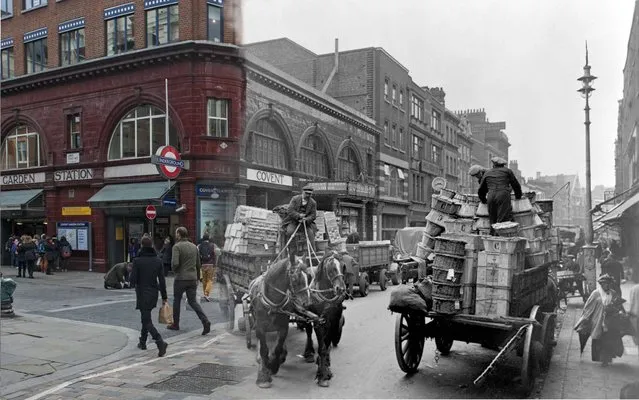
A street scene in London’s Covent Garden with the underground station and a horse and cart in the background in c.1930 and the same street in 2014. (Photo by Museum of London/Streetmuseum app)

“For most Londoners, the most common view they enjoy as they trudge to work is the back of another commuter's head. But now, thanks to the Streetmuseum app, anyone traipsing through the capital's streets can step back in time to see what London looked like in the 19th and 20th century compared with today – all in the same image”. – Joe Krishnan via The Independent. Photo: A street scene in London’s Covent Garden with the underground station and a horse and cart in the background in c.1930 and the same street in 2014. (Photo by Museum of London/Streetmuseum app)
Details
27 Feb 2014 06:48:00
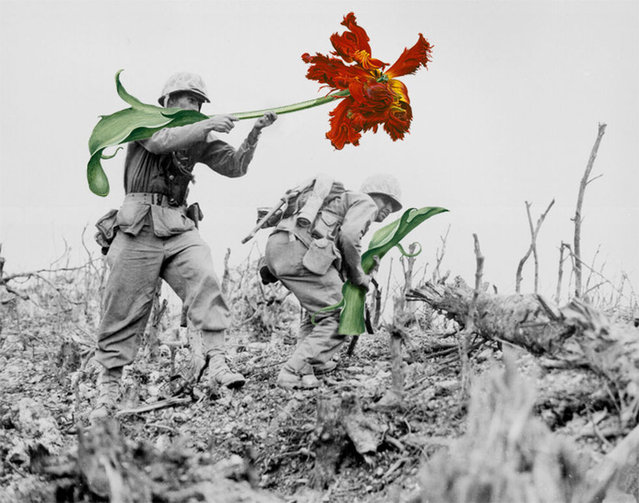
Flowers Of War By Mister Blick

It would have been so much better if the pictures created by Mister Blick were real. How wonderful it would be if these men were actually holding flowers, and none of these wars happened. Regretfully, all these wars have left their mark on the history of mankind. Wars are always bad. They bring nothing but destruction and terror to the regular people, while the big players make huge profits off of the suffering of the common folk. However, establishing dominance is an integral part of the human nature, and the desire to wage wars is simply an extension of this trait. Strong countries always suppress the weaker ones to gain even more power. Unfortunately, this is as inevitable as the sunrise or sunset. (Photo by Mister Blick)
Details
23 Nov 2014 11:58:00