Loading...
Done
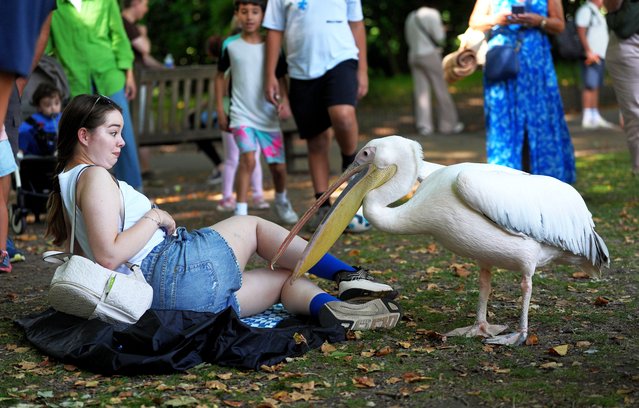
A Pelican attempts to take a persons belongings while they are sat in St James' Park, London on Monday, August 11, 2025. Temperatures will soar above 30°C in parts of the UK in the coming days, with another heatwave possible in some areas. (Photo by Yui Mok/PA Images via Getty Images)

A Pelican attempts to take a persons belongings while they are sat in St James' Park, London on Monday, August 11, 2025. Temperatures will soar above 30°C in parts of the UK in the coming days, with another heatwave possible in some areas. (Photo by Yui Mok/PA Images via Getty Images)
Details
17 Aug 2025 02:47:00
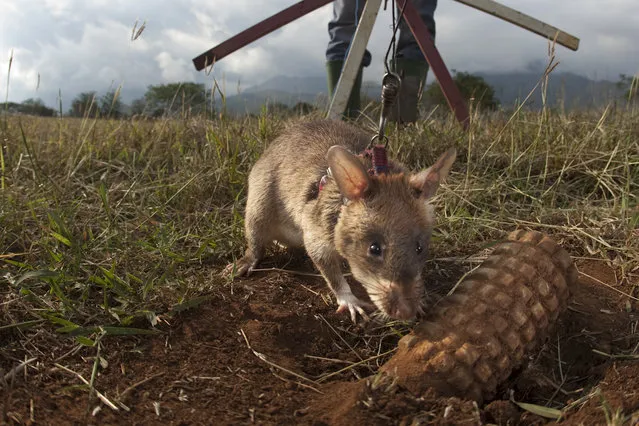
APOPO’s Training Center, situated on Sokoine Univeristy of Agriculture (SUA) in Tanzania, was established in 2000 to accommodate training and testing of mine detection rats in near-to-real conditions. Rats learn to look for mines

“APOPO’s Training Center, situated on Sokoine Univeristy of Agriculture (SUA) in Tanzania, was established in 2000 to accommodate training and testing of mine detection rats in near-to-real conditions”. – APOPO

Photo: MDR (Mine Detection Rat) learn to look for mines. (Photo by APOPO's HeroRATs)


Details
28 Feb 2013 14:08:00
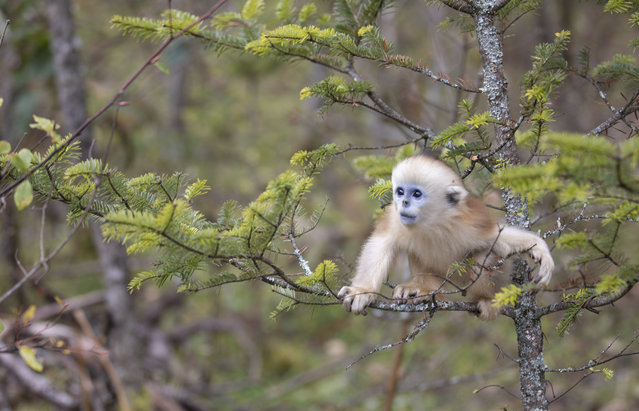
Photo taken on October 11, 2020 shows a golden monkey at Dalongtan Golden Monkey Research Center in Shennongjia National Park of central China's Hubei Province. With the efforts of local authority and improvement of the environment in the past many years, the number of golden monkeys in Shennongjia area reached nearly 1,500 nowadays. (Photo by Xinhua News Agency/Rex Features/Shutterstock)

Photo taken on October 11, 2020 shows a golden monkey at Dalongtan Golden Monkey Research Center in Shennongjia National Park of central China's Hubei Province. With the efforts of local authority and improvement of the environment in the past many years, the number of golden monkeys in Shennongjia area reached nearly 1,500 nowadays. (Photo by Xinhua News Agency/Rex Features/Shutterstock)
Details
18 Oct 2020 00:03:00
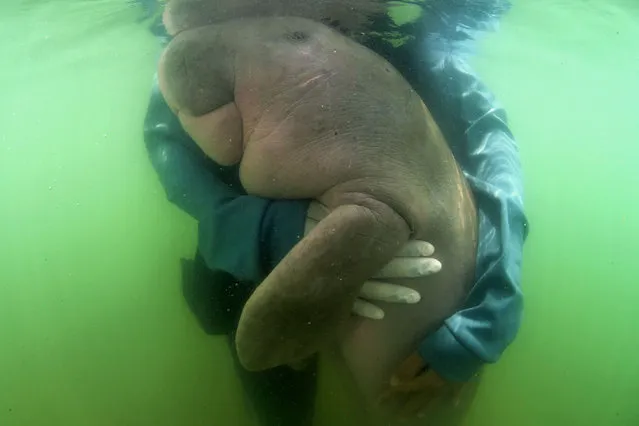
This picture taken on May 24, 2019 shows Mariam the dugong as she is cared for by park officials and veterinarians from the Phuket Marine Biological Centre on Libong island, Trang province in southern Thailand. An orphaned baby dugong rescued off a beach in Krabi province is Thailand's newest star, capturing the hearts of millions on social media and igniting an awarness for ocean conservation as authorities hand-raise the young mammal. (Photo by Sirachai Sirachai Arunrugstichai/AFP Photo)

This picture taken on May 24, 2019 shows Mariam the dugong as she is cared for by park officials and veterinarians from the Phuket Marine Biological Centre on Libong island, Trang province in southern Thailand. An orphaned baby dugong rescued off a beach in Krabi province is Thailand's newest star, capturing the hearts of millions on social media and igniting an awarness for ocean conservation as authorities hand-raise the young mammal. (Photo by Sirachai Sirachai Arunrugstichai/AFP Photo)
Details
07 Jul 2019 00:03:00
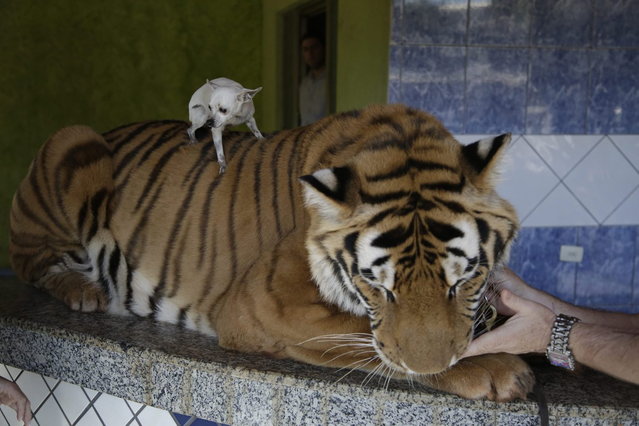
The Borges' family pet dog, Little, is placed on the back of Tom, their tiger, for a photo to be taken, in Maringa, Brazil, Friday, September 27, 2013. The Brazilian family is now locked in a legal dispute for the big cats, they have eight tigers and two lions, with federal wildlife officials working to take them away. While Borges does have a license to raise the animals, Brazilian wildlife officials say he illegally bred the cats, creating a public danger. (Photo by Renata Brito/AP Photo)

“Ary Borges and his family live in southern Brazil like most families the Borges' love animals and have an array of cats living in their home. The only difference between the cats owned by the Borges family and the cat that is cuddled up on your lap as you read this is the Borges' cats weigh over 700 pounds and could kill you just as soon as look at you. The Borges family shares their home with nine tigers, two lionesses, a chimp and a Chihuahua”. – Amanda Schiavo via Latin Times. Photo: The Borges' family pet dog, Little, is placed on the back of Tom, their tiger, for a photo to be taken, in Maringa, Brazil, Friday, September 27, 2013. (Photo by Renata Brito/AP Photo)

Details
04 Oct 2013 11:51:00
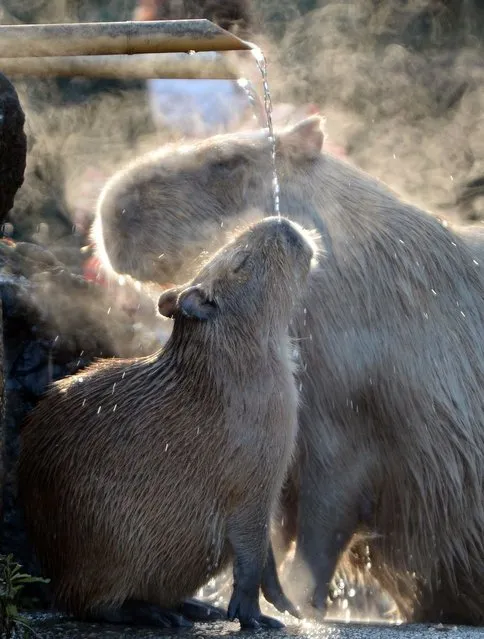
Capybaras bathe in the hot spring water at the Saitama Children's zoo in Higashi Matsuyama city, Saitama prefecture on December 25, 2013. 13 capybaras in the zoo, originally from South America, enjoyed the hot spring water. (Photo by Toshifumi Kitamura/AFP Photo)

Capybaras bathe in the hot spring water at the Saitama Children's zoo in Higashi Matsuyama city, Saitama prefecture on December 25, 2013. 13 capybaras in the zoo, originally from South America, enjoyed the hot spring water. (Photo by Toshifumi Kitamura/AFP Photo)
Details
28 Dec 2013 12:46:00
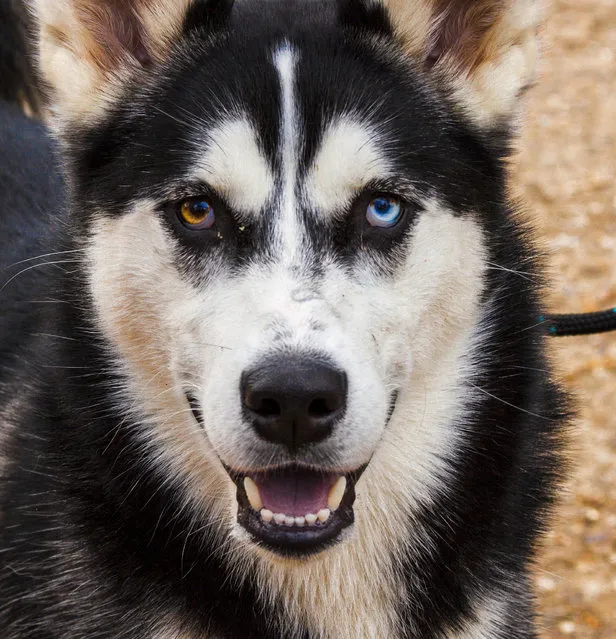
Heterochromia in Animals: Pets With Different Colored Eyes

“In anatomy, heterochromia refers to a difference in coloration, usually of the iris (but also of hair or skin). Although infrequently seen in humans, complete heterochromia is more frequently observed in other species, where it almost always involves one blue eye”. – Wikipedia (Photo by StooMathiesen)
Details
24 Jun 2012 12:47:00
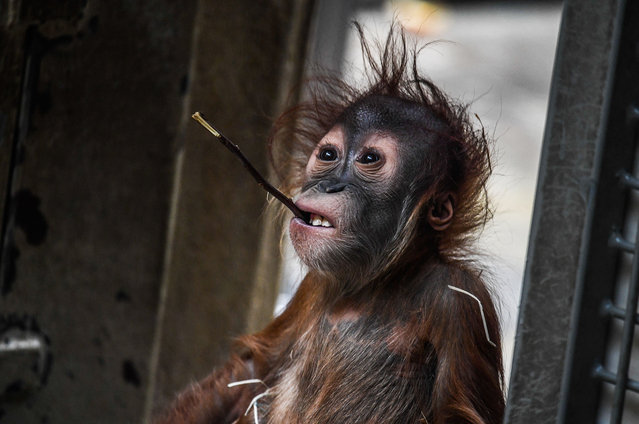
Almost two years old male baby orang-utan Dalai looks on in the zoo in Dresden, Germany, 30 March 2017. Dalai was born to mother Daisy in June 2016. (Photo by Filip Singer/EPA)

Almost two years old male baby orang-utan Dalai looks on in the zoo in Dresden, Germany, 30 March 2017. Dalai was born to mother Daisy in June 2016. (Photo by Filip Singer/EPA)
Details
01 Apr 2017 10:23:00