Loading...
Done
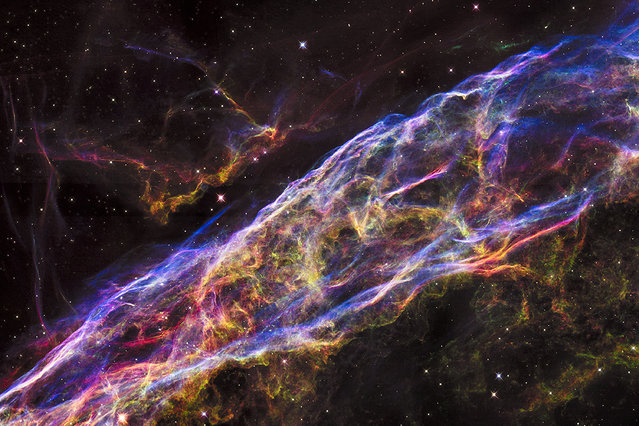
A small section of the expanding remains of the Veil Nebula, a massive star that exploded about 8,000 years ago. The entire nebula is 110 light-years across, covering six full moons on the sky as seen from Earth, and resides about 2,100 light-years away in the constellation Cygnus, the Swan. Image taken by NASA's Hubble Space Telescope. Released September 24, 2015. (Photo by Reuters/NASA/ESA/Hubble Heritage Team)

A small section of the expanding remains of the Veil Nebula, a massive star that exploded about 8,000 years ago. The entire nebula is 110 light-years across, covering six full moons on the sky as seen from Earth, and resides about 2,100 light-years away in the constellation Cygnus, the Swan. Image taken by NASA's Hubble Space Telescope. Released September 24, 2015. (Photo by Reuters/NASA/ESA/Hubble Heritage Team)
Details
10 Dec 2015 08:01:00
The US Navy Blue Angels numbers 5 and 6 fly below Sean Tucker (above) as he pilots the Oracle Challenger III over San Francisco, California as part of a practice run for Fleet Week on October 6, 2016. (Photo by Josh Edelson/AFP Photo)

The US Navy Blue Angels numbers 5 and 6 fly below Sean Tucker (above) as he pilots the Oracle Challenger III over San Francisco, California as part of a practice run for Fleet Week on October 6, 2016. (Photo by Josh Edelson/AFP Photo)
Details
10 Oct 2016 10:06:00
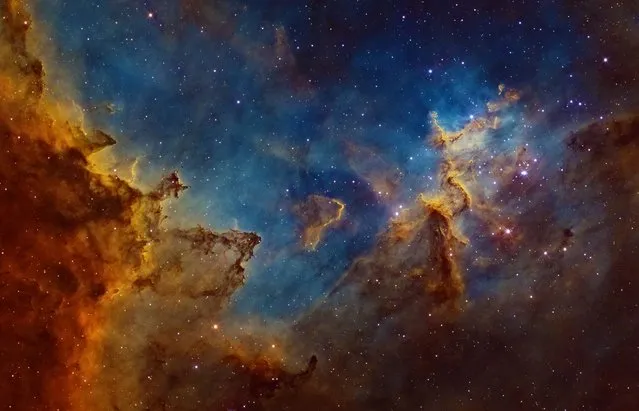
Centre of the Heart Nebula by Ivan Eder (Hungary). Situated 7500 light years away in the ‘W’-shaped constellation of Cassiopeia, the Heart Nebula is a vast region of glowing gas, energized by a cluster of young stars at its centre. The image depicts the central region, where dust clouds are being eroded and moulded into rugged shapes by the searing cosmic radiation. (Photo by Ivan Eder)

The competition, which is run by the Royal Observatory Greenwich in association with BBC Sky at Night Magazine, is now in its sixth year and has received over 2,500 entries. Photo: Centre of the Heart Nebula by Ivan Eder (Hungary). Situated 7500 light years away in the “W”-shaped constellation of Cassiopeia, the Heart Nebula is a vast region of glowing gas, energized by a cluster of young stars at its centre. The image depicts the central region, where dust clouds are being eroded and moulded into rugged shapes by the searing cosmic radiation. (Photo by Ivan Eder)
Details
03 Jul 2014 11:59:00
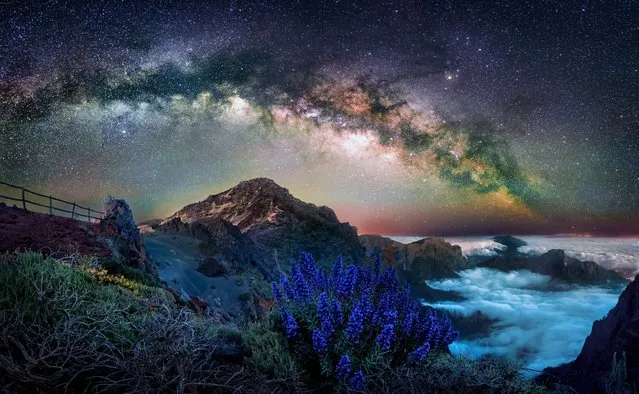
Tony North; First place, Breathing Spaces; Overall Winner; Blue Tajinaste, La Palma, Canary Islands, Spain. “Echium thyrsiflorum is endemic to the mountains of La Palma island – from high up, there was a magnificent view of both the caldera below, and the stars above. The Unesco La Palma biosphere reserve encompasses the entire island, with the Caldera de Taburiente containing mountains with a highest peak of 2,426 metres – the Roque de los Muchachos”. (Photo by Tony North/IGPOTY)

Tony North; First place, Breathing Spaces; Overall Winner; Blue Tajinaste, La Palma, Canary Islands, Spain. “Echium thyrsiflorum is endemic to the mountains of La Palma island – from high up, there was a magnificent view of both the caldera below, and the stars above. The Unesco La Palma biosphere reserve encompasses the entire island, with the Caldera de Taburiente containing mountains with a highest peak of 2,426 metres – the Roque de los Muchachos”. (Photo by Tony North/IGPOTY)
Details
10 Feb 2023 04:41:00
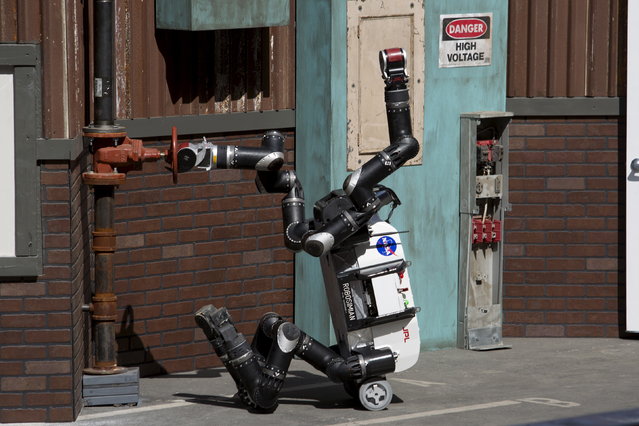
The Jet Propulsion Lab team's RoboSimian robot turns on a valve at a simulated disaster-response course during day one of the Defense Advanced Research Projects Agency (DARPA) Robotics Challenge finals in Pomona, California, June 5, 2015. (Photo by David McNew/Reuters)

The Jet Propulsion Lab team's RoboSimian robot turns on a valve at a simulated disaster-response course during day one of the Defense Advanced Research Projects Agency (DARPA) Robotics Challenge finals in Pomona, California, June 5, 2015. (Photo by David McNew/Reuters)
Details
13 Dec 2015 08:29:00
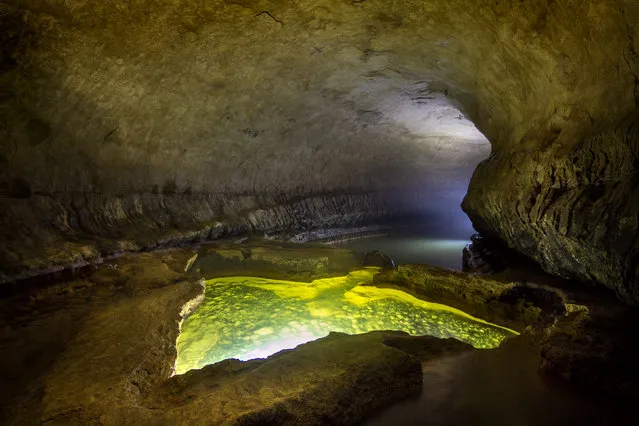
A large pool of water inside one of the tunnels. (Photo by Vladimir Mulde/Caters News)

These otherworldly images give a rare glimpse inside caves barely ever seen by the human eye. With its peculiar pools of water and strange colored sediments, the bizarre looking tunnels of the Shakuranskaya cave could be a set straight out of a science fiction film. Found in the disputed region of Abkhazia, around 75 miles outside of Sochi, Russia, it is rumored the incredible underground chambers were formed after a huge earthquake struck the area in 1892. After causing part of a nearby mountain to collapse into the Amtkel River, it is thought the dam-like affect has created a series of interconnecting underground tunnels. Here: a large pool of water inside one of the tunnels. (Photo by Vladimir Mulde/Caters News)
Details
07 Nov 2014 12:45:00
A dancer lets a Russian tourist practice the traditional tannoura dance at a cafe in the Red Sea resort of Sharm el-Sheikh, Egypt November 10, 2015. (Photo by Asmaa Waguih/Reuters)

A dancer lets a Russian tourist practice the traditional tannoura dance at a cafe in the Red Sea resort of Sharm el-Sheikh, Egypt November 10, 2015. The fallout from the crash of a Russian Metrojet passenger plane in Egypt's Sinai Peninsula could slash tourism income from Sharm al-Sheikh by half, the head of the region's travel agents' association said on Tuesday. Several airlines have suspended flights to the Red Sea resort since the Oct. 31 crash, which investigators and Western governments believe was likely to have been caused by a bomb. Thousands of Russian and British tourists have been flown home. (Photo by Asmaa Waguih/Reuters)
Details
13 Nov 2015 14:01:00
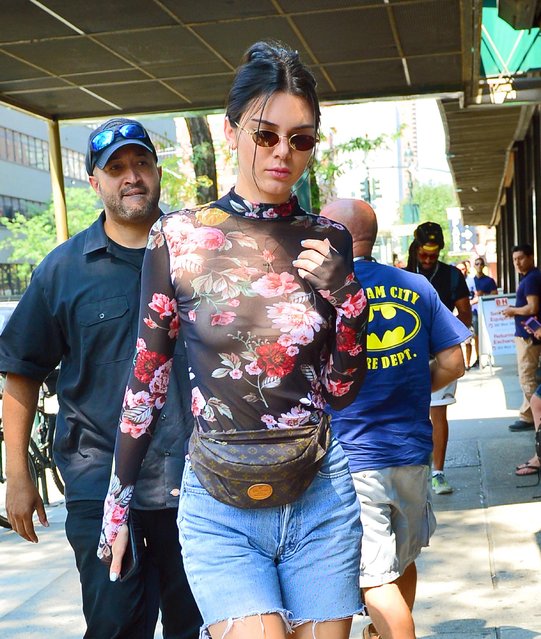
Model Kendall Jenner is seen in SoHo on July 31, 2017 in New York City. (Photo by Splash News and Pictures)

Model Kendall Jenner is seen in SoHo on July 31, 2017 in New York City. (Photo by Splash News and Pictures)
Details
06 Aug 2017 08:02:00