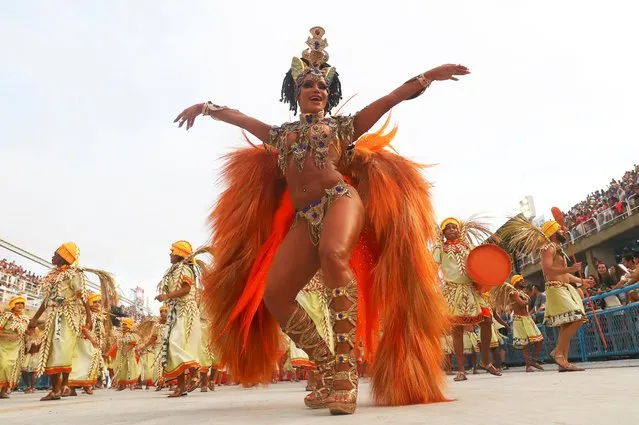
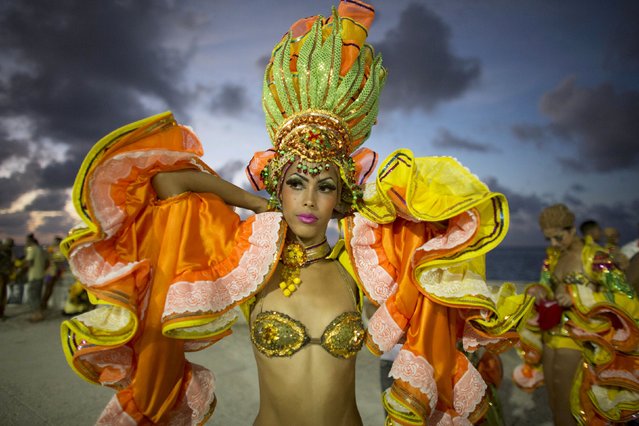
A reveller from Unidos da Tijuca samba school performs during the first night of the Carnival parade at the Sambadrome in Rio de Janeiro, Brazil on March 4, 2019. (Photo by Pilar Olivares/Reuters)
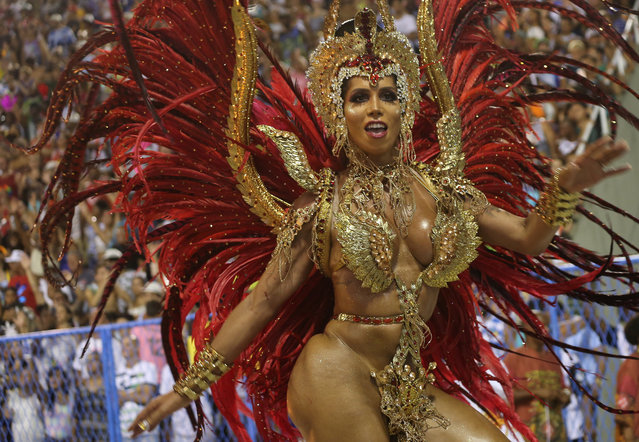
A reveller from Salgueiro performs during the second night of the Carnival parade at the Sambadrome in Rio de Janeiro, Brazil on February 13, 2018. (Photo by Sergio Moraes/Reuters)
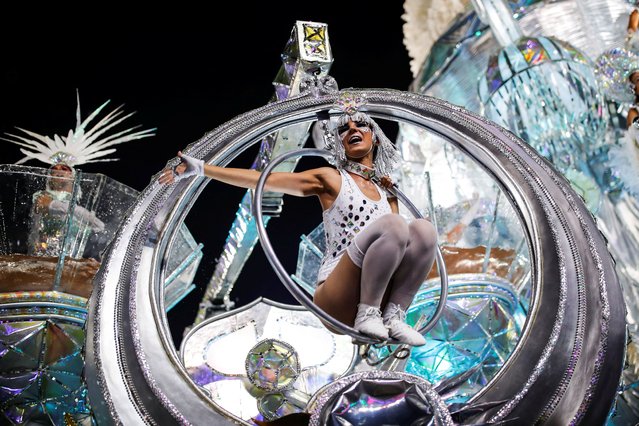
A reveller from Unidos do Viradouro samba school performs during the first night of the Carnival parade at the Sambadrome in Rio de Janeiro, Brazil, April 23, 2022. (Photo by Amanda Perobelli/Reuters)
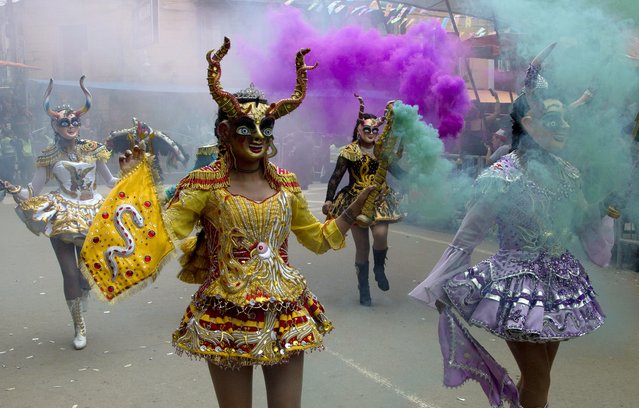
Dancers perform the traditional “Diablada” or Dance of the Devils during the Carnival in Oruro, Bolivia, Saturday, February 10, 2018. Thousands of colorfully dressed dancers and musicians kick off Carnival celebrations in the Bolivian city of Oruro. (Photo by Juan Karita/AP Photo)
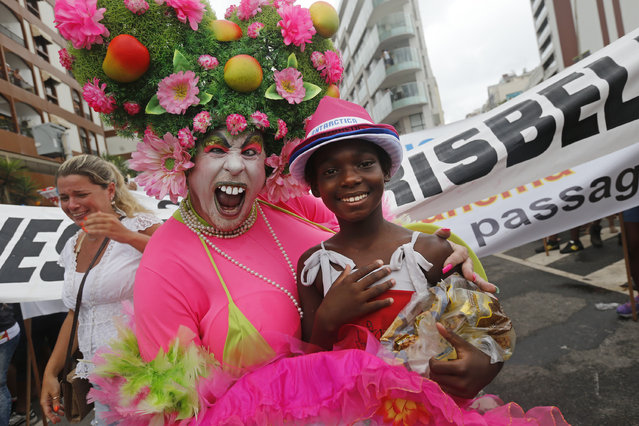
A reveler and a child street vendor pose for a photo during the Banda de Ipanema Carnival parade in Rio de Janeiro, Brazil, Saturday, January 31, 2015. Rio's over-the-top Carnival is the highlight of the year for many local residents. Hundreds of thousands of merrymakers are beginning to take to the streets in open-air “blocos” parties. (Photo by Silvia Izquierdo/AP Photo)
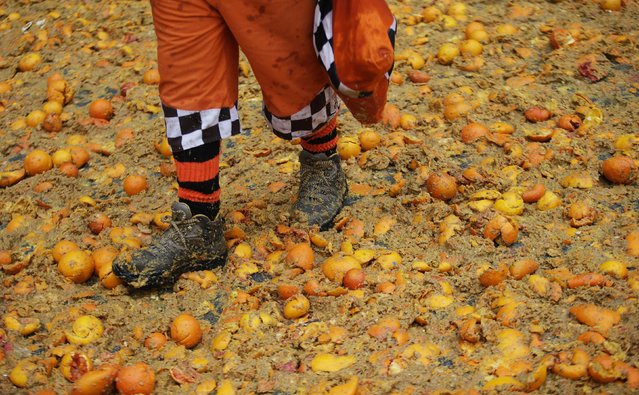
A member of a rival team walks during an annual carnival battle with oranges in the northern Italian town of Ivrea February 15, 2015. Dressed up as Middle Age kings' guards, a group of men ride in a horse-drawn carriage and pelt “foot soldiers” with oranges as thousands of people gather to re-enact a Middle Age battle when the townsfolk of Ivrea overthrew an evil king. In a strange twist, instead of swords and cross bows, these days the weapons of choice are oranges. (Photo by Max Rossi/Reuters)